


An Underground Garbage Compressor is an innovative waste management system that combines underground waste storage with hydraulic compression technology. Unlike traditional above-ground dumpsters and waste containers, the majority of the system is installed below ground level, while only the waste disposal inlet remains visible on the surface.
The equipment compresses waste automatically or semi-automatically, significantly reducing waste volume and increasing storage capacity. It is widely used in residential communities, commercial centers, public parks, tourist attractions, hospitals, schools, airports, and smart city projects where efficient waste collection and environmental protection are priorities.
As cities continue to develop and land resources become increasingly limited, underground garbage compressors have become an ideal solution for improving urban sanitation, reducing collection frequency, and enhancing the overall appearance of public spaces.


Reduced Surface Impact: The system minimizes the need for multiple waste bins on streets, thereby reducing visual clutter and odor.
Improved Efficiency: Automated collection processes reduce the frequency and cost of waste pickup and can lead to more efficient waste management.
Environmental Benefits: By reducing the number of garbage trucks needed, underground waste systems can lower greenhouse gas emissions and traffic congestion.
Hygiene and Safety: These systems can improve overall cleanliness and hygiene in urban areas and reduce the risk of accidents associated with waste collection.
| Feature | Underground Garbage Compressor | Traditional Dumpster |
|---|---|---|
| Waste Capacity | Very High | Limited |
| Compression Function | Yes | No |
| Odor Control | Excellent | Moderate |
| Visual Impact | Minimal | High |
| Collection Frequency | Low | High |
| Pest Prevention | Excellent | Average |
| Smart Monitoring | Available | Rare |
| Environmental Performance | Superior | Standard |
The visible part of the system allows users to dispose of waste conveniently. Multiple inlet designs are available, including:
Pedestrian-friendly waste chutes
Smart sensor-operated inlets
Access-controlled disposal systems
Multi-stream recycling openings
This chamber houses the hydraulic compaction system and storage container. Being underground helps maintain lower temperatures and reduces odor emissions.
The hydraulic unit generates powerful compression force, reducing waste volume by up to 70%-80%, depending on waste type.
The high-capacity container stores compressed waste until collection. Various capacities are available to suit different project requirements.
Modern underground garbage compressors can be equipped with:
Fill-level monitoring
Remote management
Overload protection
Automatic compression cycles
GSM/IoT communication modules
Smart city integration
Model | ZYM-6 | ZYM-9 | ZYM-12 | ZYM-15 | ZYM-18 |
Volume (m ⊃3;) | 6 | 9 | 12 | 15 | 18 |
Tank Dimensions (L*W*H)(mm) | 3980*2210*2200 | 4770*2210*2200 | 5080*2260*2250 | 5560*2300*2300 | 6150*2480*2410 |
Power(kw) | 11 | 11 | 11 | 15 | 15 |
| Foundation measurement design Additional controls e.g. emergency stops Custom filling hopper Drainage system 2-phase discharge door opening mechanism Top hinged discharge door Ozone generator / cooler device (odor control) Bin lift (integrated / stationary) Lid opening system (hydraulic / electronic) Auto start system | ||||
Optional | Garbage Bins: 240L*4 / 660L*2 (Garbage bins can be used for sorting or storing garbage temporarily when the tank is transferred.) Pit Flushing: high-pressure large volume water flow flushing, 6 nozzles for one-time automatic flushing; 500L sewage collection tank; automatic sewage discharge by sewage pump. (This technology is protected by independent intellectual property rights.) Remote Monitoring | ||||


Lifting mode

Landing mode
The hydraulic compaction system greatly reduces waste volume, allowing more waste to be stored within the same footprint.
Most of the equipment is hidden underground, preserving the aesthetics of urban landscapes and public spaces.
The underground environment naturally reduces odor dispersion. Additional deodorization systems can further improve sanitation conditions.
Because compressed waste occupies less space, collection intervals can be extended, reducing transportation costs and fuel consumption.
The enclosed structure prevents litter scattering, pest infestation, and rainwater infiltration, helping maintain cleaner surroundings.
Optional smart sensors provide real-time data on container fill levels, equipment status, and maintenance requirements.
The working principle of an underground garbage compressor is based on hydraulic compaction technology:
Residents or staff deposit waste through the surface inlet.
Waste falls into the underground storage chamber.
When the waste reaches a preset level, the hydraulic system activates the compression mechanism.
The garbage is compressed into a high-density mass, significantly reducing its volume.
When the container reaches capacity, a collection vehicle lifts and transports the compressed waste to a treatment facility.
This process minimizes manual handling while improving waste collection efficiency.
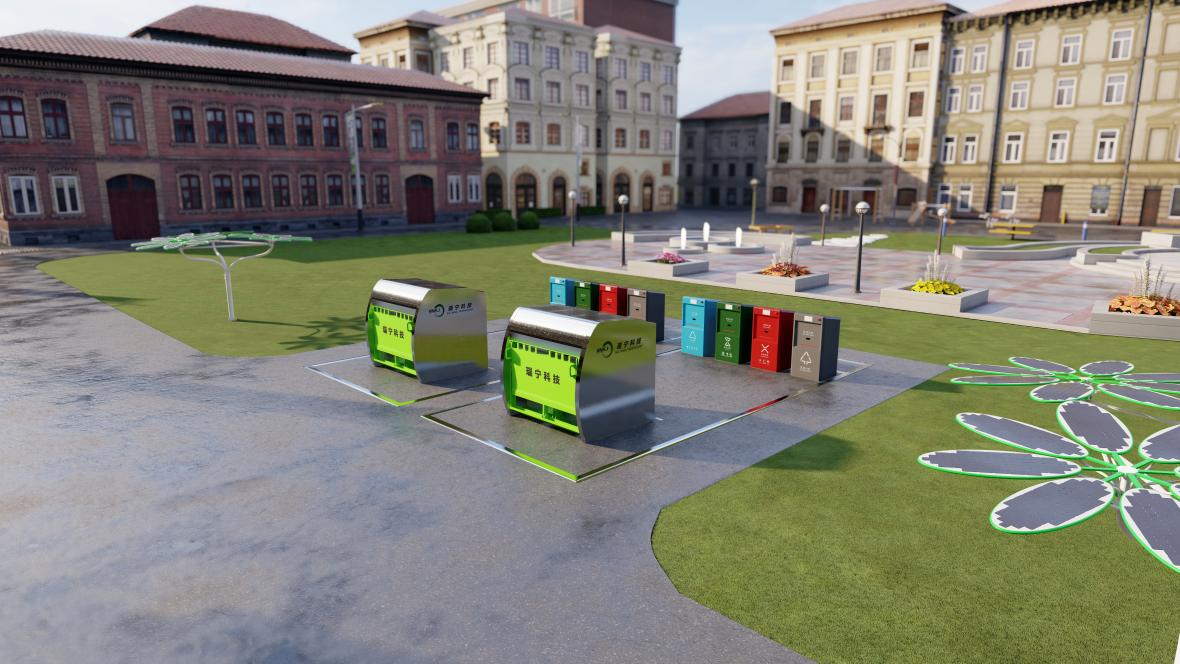
Landing Effect
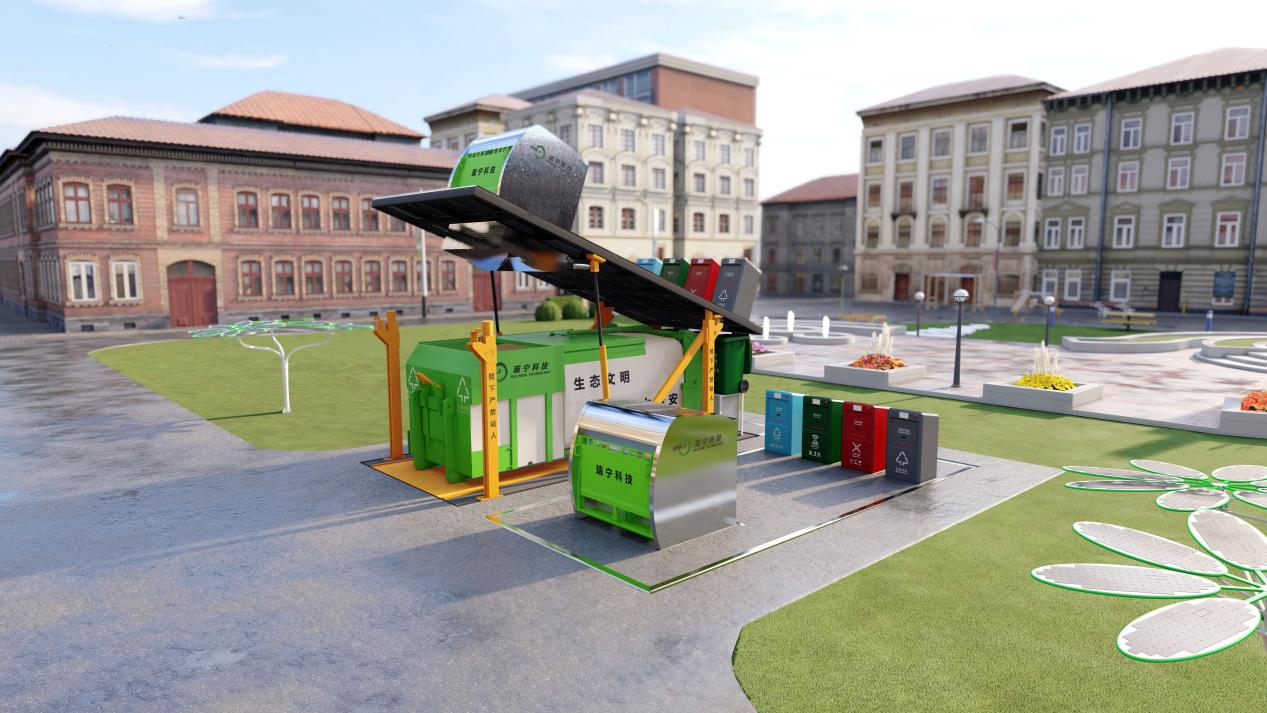
Lift Effect
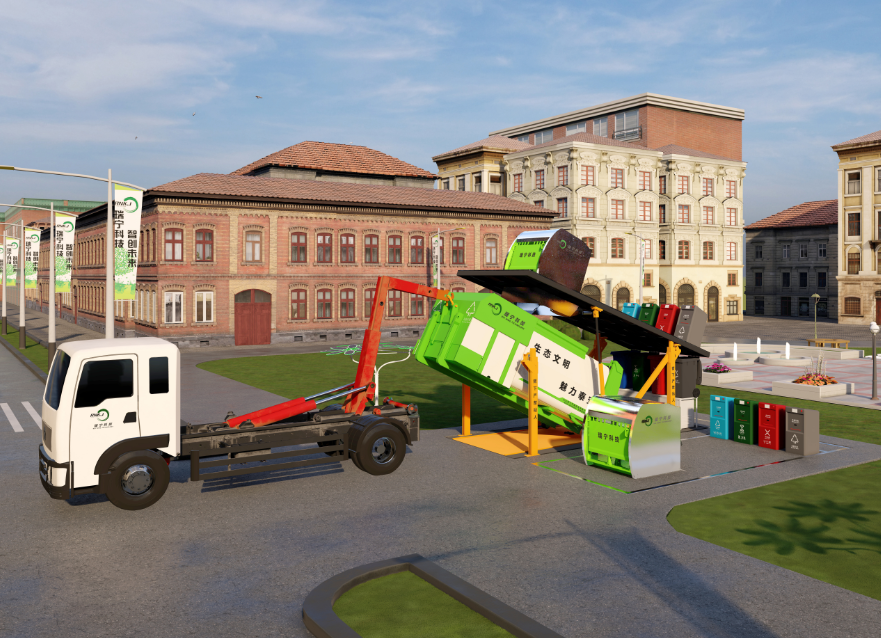
Loading Effect
Transit Effec
Traditional waste bins can negatively impact city landscapes. Underground garbage compressors keep waste storage largely hidden from view, creating cleaner and more attractive public spaces.
By reducing waste volume, municipalities and waste management companies can significantly decrease transportation frequency and operating expenses.
Compression technology effectively multiplies the storage capacity of each container, making the system suitable for high-density urban environments.
The enclosed underground design minimizes odor, insect breeding, and exposure to waste, improving sanitary conditions for residents and visitors.
Integrated monitoring systems enable data-driven waste collection routes and more efficient resource allocation.
Apartment complexes and housing developments use underground garbage compressors to maintain clean living environments and reduce collection frequency.
Shopping malls and business districts generate large volumes of waste daily. Compression technology helps optimize waste handling efficiency.
Scenic areas require aesthetically pleasing infrastructure. Underground systems keep waste management facilities hidden while maintaining cleanliness.
Hospitals benefit from hygienic waste containment and reduced exposure risks.
Schools and universities use underground waste systems to improve campus cleanliness and sustainability.
High passenger traffic creates substantial waste volumes, making underground compression systems a practical solution.
The discreet underground design preserves landscape aesthetics while ensuring efficient waste collection.
Modern underground garbage compressors can be customized with advanced technologies, including:
Fill-level sensors
GPS positioning
Remote diagnostics
Solar-powered operation
RFID access control
Mobile app management
Cloud-based monitoring platform
Smart city integration systems
These features help operators optimize collection schedules and reduce operational costs.
As urban populations grow and environmental regulations become stricter, waste management systems must become more efficient, hygienic, and sustainable. An Underground Garbage Compressor offers a comprehensive solution by combining:
Large-capacity waste storage
Powerful hydraulic compression
Reduced transportation costs
Improved environmental performance
Enhanced urban aesthetics
Smart waste management capabilities
For municipalities, property developers, waste management companies, and commercial facility operators, investing in an underground garbage compressor is an effective way to improve operational efficiency while supporting sustainable urban development.
Depending on the waste composition, the compression ratio can typically reach 3:1 to 5:1, reducing waste volume by approximately 70%-80%.
Yes. Underground garbage compressors are specifically designed to minimize noise, odor, and visual impact, making them ideal for residential communities.
Absolutely. Many models support IoT technology, remote monitoring, fill-level sensors, and cloud-based management platforms.
The system is suitable for municipal solid waste, household waste, commercial waste, packaging materials, and other non-hazardous waste streams.
Collection frequency depends on waste generation volume and container capacity. Due to compression technology, collection intervals are generally much longer than those of traditional waste bins.
We are a professional manufacturer of sanitation machinery, providing customers with ex-factory prices and on-demand customization services. You can contact us via WhatsApp or email.


