



| Quantity: | |
|---|---|
 Product Overview
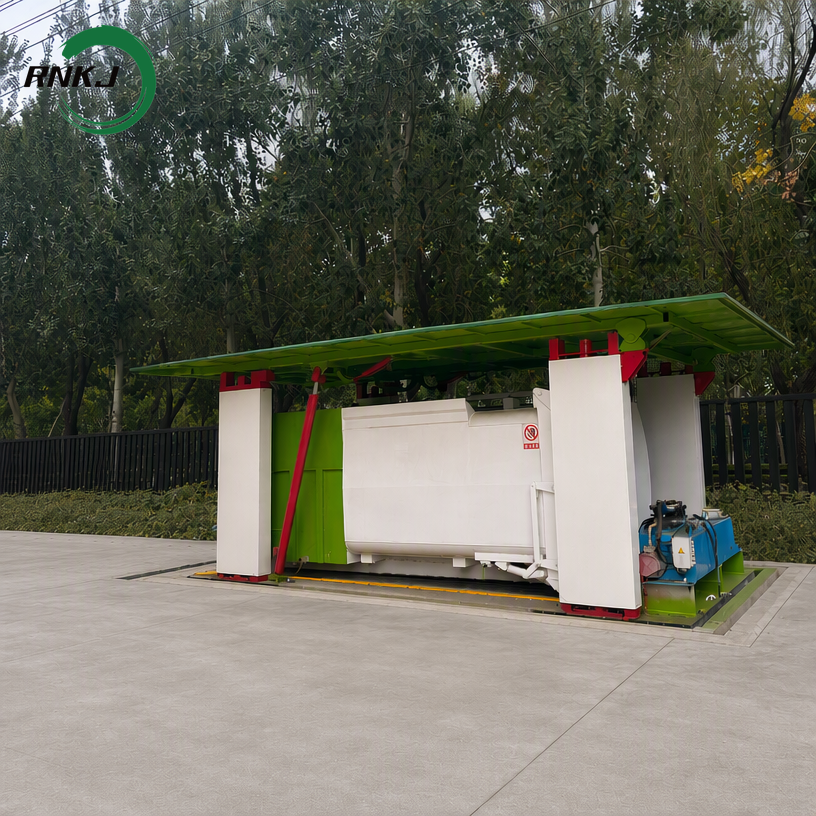
The Custom High-Efficiency Hydraulic Lifting Underground Waste Compactor is designed for modern waste collection projects that require efficient garbage handling, underground equipment installation, and better utilization of limited ground space. By combining a hydraulic lifting structure with a waste compaction system, this equipment provides a practical solution for collecting and compressing municipal solid waste in residential communities, commercial complexes, public facilities, industrial parks, and other centralized waste collection areas.
Unlike conventional above-ground waste collection equipment, an underground waste compactor places its main container and associated equipment below ground level. The ground surface can be designed with a lifting platform, loading opening, or other project-specific structures, depending on the equipment configuration. This arrangement helps reduce the amount of ground-level space occupied by waste containers and creates a cleaner, more organized waste collection area.
The hydraulic lifting system is one of the key structural features of this Hydraulic Lifting Underground Waste Compactor. It allows the designated equipment platform or container assembly to move between its underground operating position and an accessible maintenance or collection position. The exact lifting arrangement depends on the project design and the selected equipment configuration.
With customizable capacity, lifting dimensions, container structure, hydraulic components, and control options, this custom underground waste compactor can be configured to meet different site conditions and waste collection requirements. It is suitable for projects seeking a more space-conscious alternative to conventional above-ground waste collection arrangements.
Hydraulic Lifting Structure for Convenient OperationThe hydraulic lifting mechanism is a central component of the Custom High-Efficiency Hydraulic Lifting Underground Waste Compactor. It is designed to move the designated platform or equipment assembly vertically, making the underground waste handling area more accessible when required.
The hydraulic system generally consists of a hydraulic power unit, hydraulic cylinders, lifting structure, connecting components, and associated control devices. These components work together to provide controlled lifting and lowering according to the equipment design.
Compared with a fixed underground installation, a hydraulic lifting structure can provide better access to selected equipment components and collection areas. This is particularly valuable when the equipment needs to be inspected, cleaned, maintained, or accessed during waste collection operations.
The lifting height, platform dimensions, rated lifting capacity, and operating method can be customized according to the site layout and project requirements. For example, a residential community may require a compact lifting arrangement, while a larger centralized waste collection project may need a different platform size or lifting configuration.
The hydraulic lifting system can also be designed with appropriate safety measures, such as lifting-limit controls, maintenance supports, and protective devices, depending on the final configuration.
For buyers comparing different types of underground waste handling equipment, it is important to distinguish the hydraulic lifting function from the waste compaction function. The lifting system provides vertical movement and access, while the compaction mechanism applies pressure to reduce the volume of collected waste. Their arrangement and operating sequence should be confirmed according to the selected model.
Underground Waste Collection and CompactionThe Custom High-Efficiency Hydraulic Lifting Underground Waste Compactor combines underground waste storage with mechanical compaction to support centralized garbage collection.
During normal operation, waste is deposited through the designated loading opening or collection interface. The waste enters the receiving or compaction area according to the equipment structure. When the compaction function is activated, the hydraulic compaction mechanism applies pressure to the waste, reducing its volume and allowing the container to accommodate more material than an equivalent uncompressed collection arrangement.
The actual compaction performance depends on the waste composition, moisture content, material characteristics, machine configuration, and operating conditions. Different waste streams may require different compaction forces, chamber dimensions, and equipment arrangements.
For residential communities, this system can support the centralized collection of household waste. In commercial complexes, it can help manage waste generated by shops, offices, restaurants, and shared public areas, subject to the selected equipment's suitability for the waste type. Public facilities and municipal projects can also use customized underground waste compactors to organize waste collection points and improve the management of frequently used areas.
The equipment can be configured around the required collection volume, loading method, container dimensions, and compaction requirements. These options allow project owners to select an underground garbage compactor that better matches their expected waste output instead of relying on a standard configuration that may not fit the site.
For projects handling wet waste or waste with a high liquid content, the container sealing, drainage, and leachate collection requirements should be evaluated separately. These functions should be included in the equipment specification when required rather than assumed to be standard features.
Better Ground-Space UtilizationOne of the main advantages of an Underground Waste Compactor with Hydraulic Lifting System is its ability to place the primary waste collection equipment below ground level.
Traditional above-ground waste containers can occupy valuable space and may interfere with pedestrian movement, vehicle access, landscaping, or the overall appearance of a property. An underground waste compactor provides another layout option by positioning much of the equipment beneath the surface and keeping the visible collection area more compact.
This arrangement can be especially useful in locations where available ground space is limited, including:
Residential communities with landscaped outdoor areas.
Commercial properties where pedestrian access needs to remain clear.
Public squares, parks, and other shared facilities.
Office campuses and industrial parks with centralized waste collection points.
Urban redevelopment projects where waste equipment must fit into an existing site layout.
The above-ground portion can be designed around the project's access requirements and architectural environment. Depending on the installation, it may incorporate a compact loading opening, a lifting platform, or a customized surface structure.
By reducing the visible footprint of conventional waste containers, an underground garbage compaction system can help project managers organize collection areas more effectively. It may also make it easier to integrate waste handling into a wider site plan that includes pedestrian paths, landscaping, parking, and service access.
However, underground installation requires sufficient subsurface space and proper engineering. Before selecting a model, buyers should assess excavation dimensions, underground utilities, groundwater conditions, drainage, foundation requirements, and the access needed for waste removal and equipment maintenance.
Customizable Capacity and Equipment ConfigurationDifferent projects have different waste generation rates, available installation areas, collection schedules, and waste transportation arrangements. For this reason, the Custom High-Efficiency Hydraulic Lifting Underground Waste Compactor can be developed around the requirements of an individual project.
The storage and compaction capacity should be selected according to the expected daily waste volume, peak collection demand, waste characteristics, and collection frequency. A smaller system may suit a residential compound or a limited collection point, while a larger system may be more appropriate for a commercial complex or a centralized municipal waste collection project.
Capacity options should be confirmed with the manufacturer based on the required container volume, compaction chamber dimensions, lifting load, and installation conditions. If a standard size does not meet your requirements, customized dimensions and capacity can be discussed during the quotation process.
The lifting structure can be designed according to the required platform dimensions, lifting height, rated load, and access arrangement. The hydraulic power unit and cylinder specifications should be matched to the total moving load and the required operating cycle.
Buyers can provide their available installation space, required lifting height, and preferred collection arrangement so that the manufacturer can evaluate a suitable configuration.
The compaction mechanism should match the type and volume of waste being handled. Important considerations include the compaction chamber size, hydraulic pressure requirements, loading arrangement, operating cycle, and maintenance accessibility.
The compaction configuration can be discussed according to whether the project primarily handles household waste, commercial waste, or other compatible municipal solid waste streams.
The control system can be configured according to the required level of automation and operating procedures. Depending on the design, possible options may include electrical control cabinets, lifting and lowering controls, compaction controls, limit switches, interlocks, and emergency-stop devices.
The final safety configuration should be confirmed against the equipment design, installation environment, and applicable project standards.
Underground projects often have strict space limitations. Container dimensions, loading openings, lifting platforms, foundation interfaces, and maintenance access should therefore be considered together during the design stage.
Providing a site drawing or installation dimensions allows the manufacturer to assess whether the proposed equipment can fit the available space and identify any necessary design adjustments before production.
Suitable Applications for Underground Hydraulic Waste CompactorsThe Custom High-Efficiency Hydraulic Lifting Underground Waste Compactor can be considered for a variety of waste collection projects where underground installation, centralized collection, and efficient use of surface space are priorities.
Centralize household waste collection while reducing the visible presence of large waste containers in shared outdoor areas.
Organize waste collection points while preserving pedestrian circulation and the usable area around buildings.
Support planned waste collection infrastructure in locations where underground installation is practical and compatible with local operating requirements.
Provide an alternative to conventional above-ground collection points in selected landscaped or high-traffic areas.
Manage waste from multiple buildings through designated collection points, provided the equipment is appropriately specified for the waste stream.
Each application should be evaluated individually. Site dimensions, waste composition, collection vehicle access, underground conditions, local regulations, and the required operating schedule all influence the most appropriate equipment configuration.
Key Factors to Consider Before PurchasingSelecting an underground hydraulic waste compactor involves more than choosing a container volume. A well-matched configuration should address the complete waste collection process, from depositing waste to compaction, lifting access, and final removal.
Before requesting a quotation, consider the following factors:
Waste type and daily volume: Identify the material being collected and estimate the typical and peak waste output.
Required capacity: Determine the preferred container volume and collection frequency. Discuss customization if standard capacities do not fit the project.
Available installation space: Provide the proposed installation area, excavation dimensions, and any existing site drawings.
Hydraulic lifting requirements: Specify the desired lifting height, moving load, platform dimensions, and access requirements.
Waste removal method: Confirm the collection vehicle, container removal arrangement, and available vehicle access.
Groundwater and drainage conditions: Evaluate waterproofing, foundation design, drainage, and any leachate management requirements relevant to the site.
Maintenance and operating requirements: Consider access to hydraulic components, electrical controls, cleaning areas, and replaceable parts.
Automation and safety: Identify the preferred control method, required safety devices, and any applicable local standards.
Preparing this information in advance helps the manufacturer evaluate the project more accurately and recommend an appropriate underground waste compactor configuration.
Product Effects

Lifting mode

Landing mode
Why Choose a Custom High-Efficiency Hydraulic Lifting Underground Waste Compactor?Choosing a customized underground waste compactor allows project owners to coordinate capacity, hydraulic lifting performance, installation dimensions, and waste handling requirements within one equipment specification.
The hydraulic lifting structure provides access to designated underground equipment areas when required, while the compaction system helps reduce the volume of compatible waste. The underground arrangement offers an alternative way to organize collection points in locations where ground-level space is limited.
Customization also helps address differences between projects. Rather than selecting equipment based only on nominal capacity, buyers can discuss the lifting structure, container dimensions, compaction requirements, control configuration, and site conditions with the manufacturer before placing an order.
For engineering contractors, municipal project developers, property managers, and equipment distributors, early communication with the manufacturer can help clarify technical requirements, installation constraints, and quotation details before the project advances to procurement.
The objective is to select a configuration that matches the actual application, not simply to purchase a machine with a particular capacity.
Request a Custom Underground Waste Compactor QuotationLooking for a Custom High-Efficiency Hydraulic Lifting Underground Waste Compactor for your next project? Tell us about your waste collection requirements, and our team can help evaluate a suitable capacity, hydraulic lifting arrangement, compaction configuration, and installation layout.
We welcome inquiries from municipal authorities, engineering contractors, property developers, waste management companies, and equipment distributors seeking customized underground waste compaction solutions.
When contacting us, please share the following information if available:
Required capacity: Your target storage volume or estimated daily waste output.
Project location and application: Residential community, commercial complex, municipal project, industrial park, or another site.
Installation dimensions: Available ground space, excavation dimensions, lifting height, or site drawings.
Equipment configuration: Preferred hydraulic lifting arrangement, compaction requirements, container design, and control options.
Procurement requirements: Estimated quantity, project schedule, delivery destination, and any applicable technical standards.
Not sure which configuration is right for your site? Send us your project details or available drawings. We can discuss the technical requirements, evaluate customization options, and prepare a quotation based on your specified application and equipment configuration.
Contact us today to discuss your custom underground waste compactor project, request manufacturer pricing, and explore a hydraulic lifting solution designed around your capacity, site layout, and waste collection needs.


