



| Quantity: | |
|---|---|
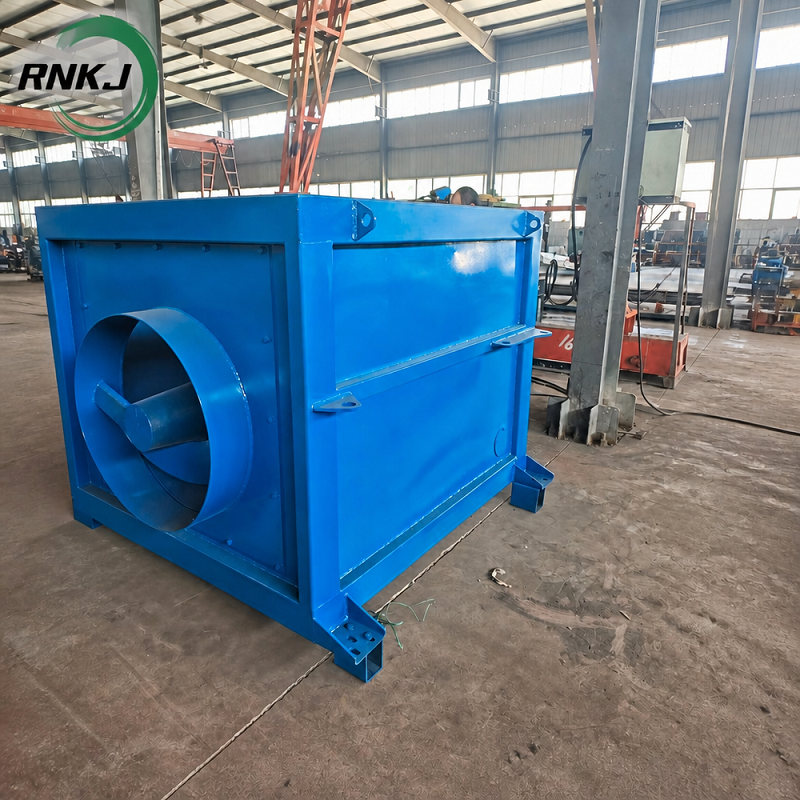
The Factory Customized Capacity High Compression Industrial Screw Waste Compactor is a heavy-duty waste compaction solution designed for industrial facilities, commercial properties, municipal waste collection projects, recycling centers, logistics facilities, manufacturing plants, and other sites that generate large volumes of solid waste.
Unlike conventional batch-type compactors, the screw compaction system uses a continuously rotating screw mechanism to convey, break up, compress, and push waste into the connected container. This working principle allows waste to be fed continuously while the screw compactor is operating, making it suitable for applications where a stable and uninterrupted waste-handling process is required. Continuous screw compaction is widely used for bulky materials such as cardboard, paper, packaging waste, wood waste and other suitable commercial or industrial waste streams.
The equipment can be factory customized according to required container capacity, waste characteristics, feeding method, installation conditions, electrical requirements, and transportation requirements. Different capacity configurations can be developed for individual projects instead of forcing every customer to use the same standard specification.
 Continuous Screw Compression Principle
The main working component of the machine is a heavy-duty screw mechanism installed horizontally inside the compaction channel. When the equipment starts, the screw rotates continuously and transports the incoming waste toward the discharge end.
As the available space becomes progressively restricted, the material is forced together and compacted before entering the receiving container. The rotating screw performs several functions within the same operating process:
Waste conveying
Material movement
Progressive compression
Space utilization inside the container
Continuous discharge of compacted material
Because feeding and compression can take place as part of the same continuous process, the machine is particularly suitable for applications where waste arrives at relatively regular intervals rather than in isolated batches.
The screw configuration can also be selected according to the characteristics of the material being handled. Different waste streams may require different feeding arrangements, screw dimensions, operating parameters, or compression configurations.
Heavy-Duty Construction for Industrial ApplicationsIndustrial waste handling can expose equipment to considerable mechanical loads. Heavy cardboard, packaging materials, mixed commercial waste, plastic materials, bulky refuse, and other difficult waste streams can place additional demands on the conveying and compression system.
The heavy-duty configuration is therefore developed around a reinforced machine structure and a robust screw-driven compression system. Key structural areas can be engineered according to the intended working conditions, including the feeding section, screw assembly, compression chamber, drive system, discharge connection, and supporting frame.
Wear-resistant components can be selected for areas that experience frequent contact with waste. This helps the equipment maintain stable operation when handling abrasive or irregular materials.
For projects with particularly demanding working conditions, the machine can be further customized in terms of material selection, structural reinforcement, drive configuration, hopper design, and other mechanical components.
Designed for Continuous Material FeedingOne of the defining characteristics of this screw compactor is its ability to accommodate continuous or frequent waste feeding.
Waste can enter through a suitable hopper, conveyor, bin-tipping system, or other customized feeding arrangement. Once the material reaches the screw chamber, the rotating screw takes over the conveying and compression process.
This creates a continuous material path:
Waste Feeding → Screw Conveying → Progressive Compression → Container Filling
The feeding system can be selected according to the source of the waste. For example, a project receiving waste from wheeled bins may require a bin-tipping arrangement, while an industrial production line may be better suited to a conveyor or direct discharge connection.
For larger waste-generation facilities, the feeding system can also be integrated with the customer's existing material handling equipment.
Large-Capacity Waste CollectionThe compactor can be matched with different receiving container capacities according to the expected waste generation rate and available installation space.
Larger containers can be used for facilities where waste accumulates continuously over long operating periods. Smaller configurations may be appropriate where installation space is limited or where collection vehicles visit the site more frequently.
Container dimensions and connection arrangements can be coordinated with the customer's transportation equipment. This makes it possible to develop a complete system rather than treating the compactor and waste container as completely independent components.
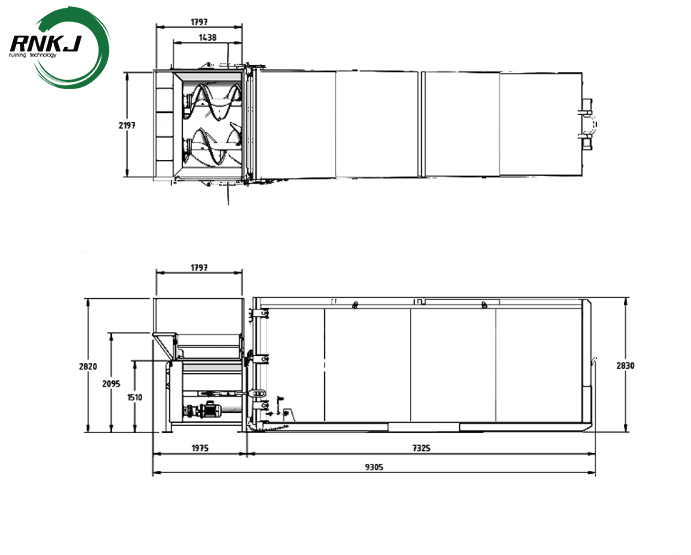
For projects requiring special dimensions, the container capacity, machine layout, hook height, connection position, and overall equipment dimensions can be customized according to the application.

Suitable for Different Industrial Waste StreamsThe Continuous Compression Heavy Duty Industrial Screw Waste Compactor can be configured for different types of dry and general solid waste.
Potential applications include:
Municipal solid waste
Commercial waste
Industrial solid waste
Packaging waste
Cardboard and paper waste
Plastic packaging
Manufacturing waste
Distribution and logistics waste
Retail waste
General residual waste
The actual configuration should be selected according to the physical properties of the material. Waste containing oversized, extremely hard, hazardous, or unsuitable materials may require pre-treatment or a specially designed feeding and crushing system.
For mixed waste applications, the feeding opening and screw configuration can be reviewed according to the expected material composition before production.
Flexible Feeding System ConfigurationDifferent waste sources create different loading requirements. For this reason, the screw compactor does not have to be limited to one fixed feeding method.
Depending on the project, the machine can be designed with:
A large hopper can be installed above the screw chamber for centralized waste loading. This arrangement is suitable for facilities where waste is collected and discharged into one fixed loading point.
For municipal or commercial waste generated in wheeled bins, an automatic or hydraulic bin-tipping system can be integrated with the compactor.
A conveyor can transfer waste directly from a production or sorting line into the compaction chamber. This configuration is particularly useful when the compactor forms part of a larger waste handling process.
For special industrial applications, the feeding opening and connection structure can be designed around existing equipment, production lines, discharge points, or building layouts.
Stable Mechanical CompressionThe screw mechanism provides a different operating approach from conventional reciprocating compactors.
Instead of repeatedly moving a compression plate forward and backward, the screw continuously rotates to transport and compress material. This allows the incoming waste to remain within a moving material flow while the machine progressively builds the compacted load.
The compression characteristics are affected by several factors, including:
Screw geometry
Motor power
Waste composition
Moisture content
Material size
Feeding rate
Container configuration
Operating parameters
For this reason, the machine should be configured according to the actual waste stream rather than relying on a single standard configuration for every project.
Automatic and Manual Operating OptionsThe control system can be configured according to the customer's preferred operating method.
An automatic configuration can coordinate the feeding and screw operation with sensors or preset control logic. Manual controls can also be provided for inspection, maintenance, testing, and special operating conditions.
Depending on project requirements, the control cabinet can incorporate functions such as:
Start and stop control
Emergency stop
Motor protection
Automatic operating control
Manual operating mode
Overload protection
Fault indication
Sensor-based control
Customized control interfaces
The exact control functions can be adjusted according to the electrical standards and operating requirements of the destination market.
Compact Layout for Fixed Waste Handling StationsThe equipment can be installed as a stationary waste compaction unit in a designated waste handling area.
Its horizontal working configuration allows the feeding point, compression section, and container connection to be arranged along a relatively straightforward material flow. This can simplify integration with existing waste collection areas, production facilities, loading zones, or transfer stations.
Before installation, the available floor area, vehicle access, container replacement route, loading height, electrical supply, and maintenance clearance should be considered.
For projects with limited space, the equipment layout can be adjusted around the customer's site conditions.
Container Replacement and Waste TransferThe compaction unit works together with a receiving container that stores the compacted waste.
As the container reaches its required filling level, it can be removed for transportation and replaced with an empty container, depending on the selected system configuration.
This arrangement separates the stationary compaction function from the subsequent waste transportation process. The compactor remains positioned at the waste generation site while the filled container is transported away.
For projects using hook lift transportation, the container connection can be designed to match the customer's hook lift truck requirements.
Customization for Different ProjectsNot every waste management project has the same waste volume, site conditions, or transportation system. The Continuous Compression Heavy Duty Industrial Screw Waste Compactor can therefore be developed as a project-specific solution.
Customization may include:
Waste container capacity
Screw configuration
Motor power
Feeding hopper size
Bin-tipping system
Conveyor connection
Container connection
Hook lift compatibility
Machine dimensions
Installation layout
Electrical voltage
Control system
Material and wear-resistant components
Surface treatment
Safety protection
Additional sensors and monitoring functions
Customers can provide information about their waste type, daily waste volume, preferred container capacity, available installation area, and collection method. These details can then be used to determine a suitable equipment configuration.
Why Choose a Continuous Screw Waste Compactor?The value of this equipment is not based on a single compression cycle or one fixed operating condition. Its main advantage is the combination of continuous material movement, mechanical compression, heavy-duty construction, and configurable system integration.
Key characteristics include:
Continuous screw-driven material movement
Progressive compression during conveying
Heavy-duty structure for demanding applications
Flexible feeding arrangements
Multiple container capacity options
Customizable equipment dimensions
Automatic and manual control modes
Integration with existing waste handling systems
Suitable for stationary industrial installations
Adaptable to different transportation methods
The final configuration should always be selected according to the actual waste material, expected loading frequency, container size, site conditions, and transportation requirements.
A reliable waste compaction system starts with understanding how waste is generated and moved through the facility.
Instead of selecting a machine only by container volume, it is important to consider the complete process from the first loading point to final transportation. The feeding method, waste characteristics, compression requirements, container arrangement, vehicle compatibility, and available installation space all influence the final design.
RNKJ can provide customized Continuous Compression Heavy Duty Industrial Screw Waste Compactor solutions based on specific project requirements. Customers can specify the expected waste type, capacity, container size, feeding method, electrical requirements, and installation conditions so that the equipment can be configured for the intended application.
We are an established equipment manufacturer equipped with state-of-the-art production facilities, including CNC laser cutting machines, CNC bending machines and machining centers. These ensure our products’ superior quality and exquisite finish.
We accommodate custom design requirements based on drawings, backed by a robust technical team and skilled welding professionals. We look forward to cooperating with you.


