


Spiral Waste Compactor is a specialized environmental protection equipment that utilizes the principles of spiral conveying and compression to achieve waste reduction, dehydration and compaction. It is commonly used in municipal, catering and industrial settings, and has advantages such as continuous processing, small footprint and good sealing.

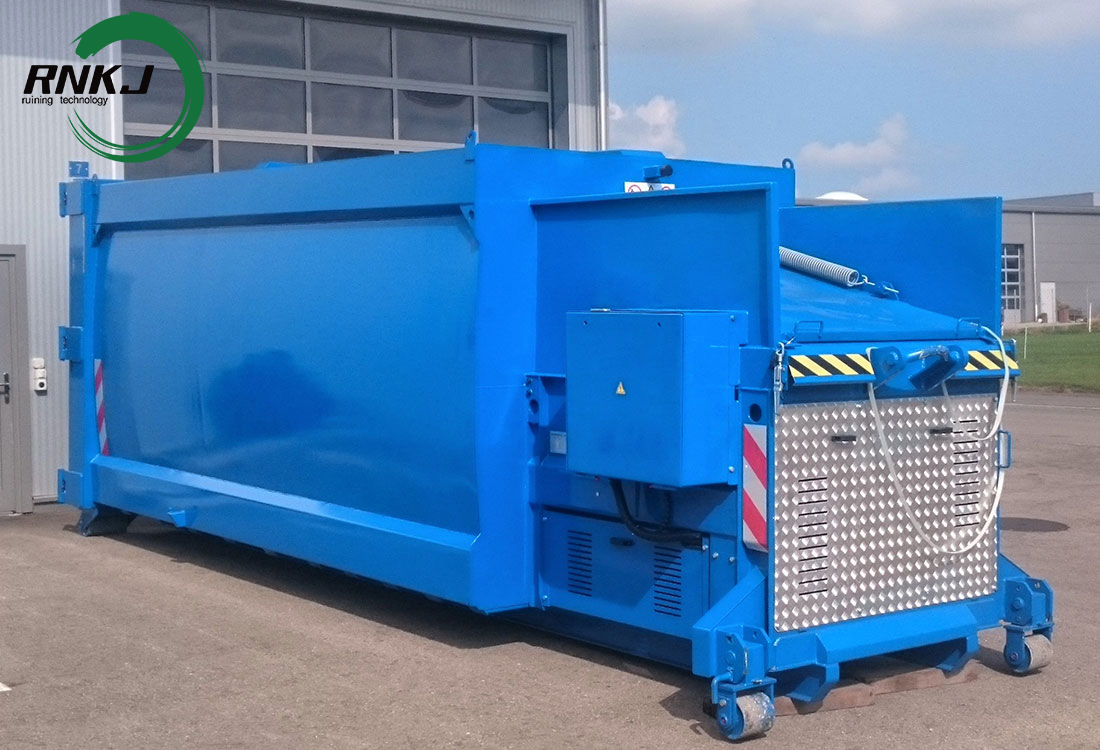
 Advantages of a Spiral Waste Compactor
Continuous operation has high efficiency and is suitable for processing volumes ranging from small to medium scales.
Fully enclosed operation, reducing odors and secondary pollution, meeting environmental protection requirements.
The structure is simple and easy to maintain. There are few wear-prone parts and the energy consumption is lower than that of hydraulic compactors.
It can flexibly integrate modules such as crushing, cleaning and automatic packaging, and is suitable for various material scenarios.
Core Component OfSpiral Garbage Compactor
Spiral
This is the core compression execution component of the entire machine, which directly comes into contact with the material and completes the pushing and compaction actions.
Drive system
Provides rotational power for the spiral, determining the processing efficiency and squeezing force of the press machine. It is mainly composed of an electric motor and a reducer.
Compression chamber
It is a sealed space for material compaction and dehydration. Screen nets / filter plates will be installed on the side walls or bottom of the chamber. The filtrate generated by the squeezing process can be discharged through the sieve holes and collected for centralized treatment. At the end of the chamber, a conical narrowing structure will be designed to reduce the space and form squeezing pressure, thereby increasing the compactness of the garbage.
Discharge control mechanism
Used to regulate the density and start/stop of the discharge, common types include cone valves, gate valves or hydraulic push rods
Sealing and frame components
Sealing parts: include chamber sealing gaskets, shaft end seals, etc., to prevent the leakage of waste leachate and the spread of odors, avoiding secondary pollution;
Frame: made of steel sections welded together, supporting all core components, requiring sufficient strength and rigidity to withstand the reactive forces during the compression process.
Control system
Including PLC controller, operation panel, sensors, etc.
Product Parameters
Performance Parameters | |
Compression | Horizontal |
Waste bin volume (m³) | 6m³, 9m³,12m³ ,15m³ ,18m³,Custom sizes |
Hook centre height (mm) | 1570 |
Density of compressed rubbish block(kg/m³) | 750kg/m³ |
Compression cycle time (s) | 45s |
Max. lifting force of tipping bucket | 1t,1.5t,2t,2.5t,2.5t |
Tipping bucket volume (m³) | 1.5m³,2.5m³,3.2m³,4.1m³,4.1m³ |
Rated power of motor(kW) | 5KW,5.5KW, 7.5KW |
Machine weight (kg) | 4800kg,5500kg,6080kg,6580kg, |
Power supply | Local working voltage |
Operation mode | Automatic + manual |
Size | 6m³: 4180 * 2440 * 2600 (mm); Tipping bucket falling height 2410mm. 9m³: 5080 * 2440 * 2600 (mm); Tipping bucket falling height 2410mm. 12m³ :4180 * 5280 * 2600 (mm); Tipping bucket falling height 2410mm. |
Working principle
After the garbage enters through the feed hopper, it is pushed by the rotating spiral blades to the compression zone. Through the gradual change of the spiral pitch, the narrowing of the cavity diameter or the conical outlet, a compressive force is formed to achieve volume compression. At the same time, the separated water during the squeezing process is discharged through the screen / filter plate, significantly reducing the moisture content and transportation costs.
Scope of Application and Limitations
Applicable: Kitchen waste, municipal sludge, screen residue, paper, foam plastic, etc. - loose or highly humid materials.
Limitation: For high-hardness large-sized materials, pre-treatment is required; otherwise, they may get stuck in the machine or cause wear on the screw.

What are the core advantages and application limitations of the Spiral Waste Compactor?
Efficient continuous operation, stable reduction effect
Relying on the continuous pushing and squeezing of the spiral blades, an uninterrupted feeding - compaction - discharging process can be achieved, without the need for frequent start-stop; the conventional reduction ratio is stable at 1:3 - 1:5, and at the same time, it can simultaneously complete dehydration, reducing the moisture content of the garbage and the subsequent transportation cost, and meeting the continuous processing requirements of small and medium-sized scales.
High environmental protection, controllable secondary pollution
With a fully enclosed cavity design, the filtrate generated during compression can be centrally discharged through the cavity wall screen/filtration plate, preventing leakage; at the same time, it can effectively block the diffusion of garbage odors, especially suitable for food waste, municipal sludge and other easily decomposable and prone-to-offer-offensive-smells materials, meeting environmental protection treatment standards.
The structure is simple and the maintenance cost is low
The core components are only the spiral body, the driving system and the compression chamber, without complex hydraulic pipelines and other structures; the wear-prone parts are mostly spiral blades and sealing components, which have low procurement and replacement costs, and the operation threshold is not high, and ordinary maintenance personnel can complete the daily maintenance.
Lower energy consumption, good operational economy
Compared with hydraulic garbage compaction machines, no high-pressure hydraulic system is required to provide the squeezing force. It only relies on the motor to drive the screw to rotate. The energy consumption per unit processing volume is lower, and the electricity cost during long-term operation is more economical.
The models are flexible and can be adapted to various installation scenarios
There are two mainstream models: the horizontal type is suitable for places with ample space such as garbage transfer stations and sewage treatment plants; the vertical type occupies less space and can be directly deployed in narrow spaces like buildings and small food waste processing points. Moreover, it can utilize gravity to assist in feeding, thereby improving the compaction efficiency.
The material adaptation is flexible and highly scalable
It is equipped with two types of spiral structures: the shafted spiral has higher strength and is suitable for slightly harder and loose materials; the non-shafted spiral has no central axis obstruction and can effectively prevent materials such as cloth strips and plastics from getting stuck.
Application limitations
Not resistant to impact from hard objects, it requires pre-treatment and sorting
If metals, bricks, stones, large pieces of hard plastic, etc. are mixed in the materials, it is very likely to cause wear and deformation of the spiral blades, and even lead to the machine getting stuck and stopping. Therefore, before feeding, the garbage must be sorted and pre-treated.
The processing capacity is limited
Due to the restrictions of the spiral diameter and rotational speed, it is more suitable for small and medium-sized waste treatment scenarios; when it comes to large-scale centralized processing demands of landfill sites and incineration plants, its efficiency is inferior to that of hydraulic compaction machines.
Weak handling capacity for high-viscosity materials
For thick and sticky materials, they tend to adhere to the spiral blades and the cavity walls, which not only reduces the compaction efficiency but also requires frequent shutdown for cleaning, thereby affecting the duration of continuous operation.
We are an established equipment manufacturer equipped with state-of-the-art production facilities, including CNC laser cutting machines, CNC bending machines and machining centers. These ensure our products’ superior quality and exquisite finish.
We accommodate custom design requirements based on drawings, backed by a robust technical team and skilled welding professionals. We look forward to cooperating with you.


