





| Quantity: | |
|---|---|
The High-Efficiency Underground Horizontal Waste Compactor for Industrial Park is a space-saving waste handling solution designed for industrial parks, factories, logistics centers, commercial facilities, transfer stations, and other locations that generate large volumes of solid waste.
This Underground Horizontal Waste Compactor combines high-density horizontal compression with an underground recessed installation design. The main compaction unit is positioned below ground level, helping reduce the visual impact of conventional waste collection equipment while making better use of limited surface space.
The system uses a hydraulic scissor lift mechanism to raise the compaction unit when collection or maintenance is required. During normal operation, the equipment remains recessed underground, creating a cleaner and more organized waste management area.
With its heavy-duty structure, hydraulic compression technology, underground installation concept, and centralized control system, this industrial underground waste compactor is suitable for facilities that require efficient waste volume reduction, reliable storage, and convenient waste transfer.
For industrial parks with continuous waste generation, an underground horizontal compaction system can help optimize the entire waste handling process from collection and temporary storage to final transportation.
 What Is an Underground Horizontal Waste Compactor?
An Underground Horizontal Waste Compactor is a waste compression machine installed in an underground or recessed pit. Unlike conventional above-ground garbage containers, the main equipment is positioned below the ground surface, allowing the available site area to be used more efficiently.
The waste is fed into the receiving area and compressed horizontally by a hydraulic compaction mechanism. The horizontal compression process gradually reduces the volume of accumulated waste and increases the effective storage density.
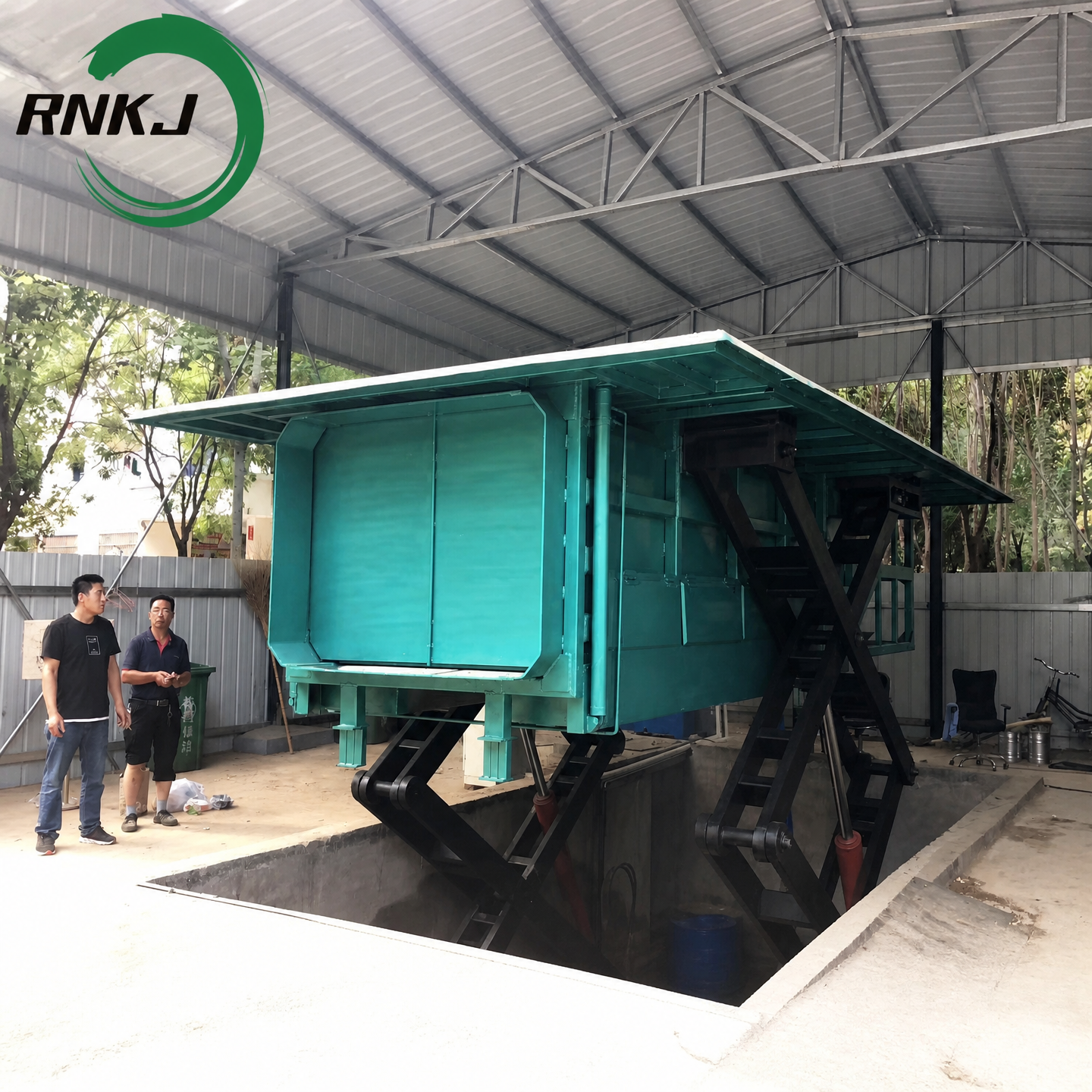
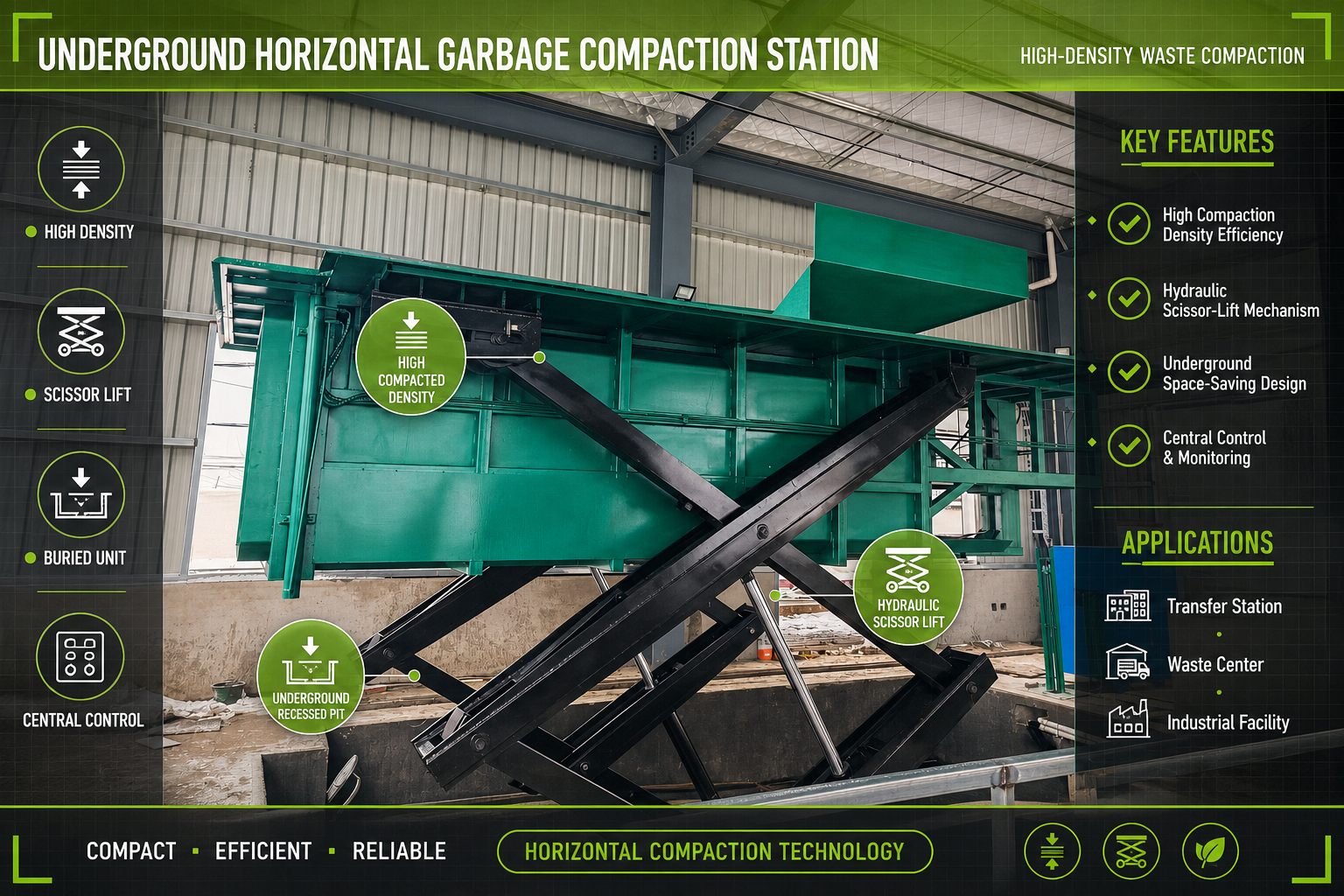
The equipment shown in the system uses a hydraulic scissor lift to move the underground compaction unit vertically. When the equipment needs to be accessed for waste transfer, inspection, or maintenance, the lift raises the unit to the required working position.
This configuration makes the system particularly suitable for industrial parks and other sites where:
Ground space is limited
Large quantities of waste are generated
Conventional garbage bins occupy valuable working areas
A cleaner waste collection environment is required
High-density waste storage is needed
Frequent waste collection trips need to be reduced
Underground installation can be incorporated into the site design
High-Density Horizontal Waste CompactionOne of the main advantages of this high-density underground waste compactor is its horizontal compression technology.
Instead of allowing loose waste to accumulate naturally, the hydraulic compression mechanism pushes waste horizontally inside the compaction chamber. Continuous compression increases the density of waste and makes better use of the available container volume.
For industrial facilities, this can provide several operational benefits:
Loose waste often contains a large amount of empty space. Horizontal compression reduces unnecessary voids between waste materials, allowing more waste to be stored within the available volume.
Compaction reduces the occupied volume of general solid waste, helping facilities manage larger quantities of waste without immediately increasing the physical size of the waste storage area.
Higher storage density can allow waste to remain on site for longer before collection, depending on waste generation rates and the selected system configuration. This can help optimize collection schedules and transportation resources.
Industrial parks often need to reserve space for production, warehouses, vehicle movement, loading operations, parking, and fire access. An underground waste compaction system can reduce the surface footprint associated with conventional waste storage.
High-density waste compaction is widely used as a way to improve collection logistics because increasing waste density can reduce the number of trips required to move the same quantity of material.
Underground Recessed Design for Industrial ParksThe underground structure is one of the defining characteristics of this Underground Horizontal Waste Compactor.
The compaction unit is installed inside a recessed underground pit, while the upper area can be integrated into the surrounding industrial environment.
Compared with large above-ground waste containers, the underground configuration can provide a cleaner appearance and help reduce the amount of equipment occupying the surface.
Industrial parks frequently face the challenge of balancing waste management requirements with limited available land.
An underground waste compactor can be positioned in designated waste collection areas without creating a large permanent above-ground equipment footprint.
This makes the system suitable for:
Industrial parks
Manufacturing plants
Logistics parks
Warehouse complexes
Commercial districts
Factory campuses
Waste transfer facilities
Large property developments
Municipal waste collection points
The underground concept is especially useful when the waste handling area needs to be integrated into an existing architectural or landscaping plan. Underground compactor systems are commonly designed around the principle of keeping the main equipment below ground while providing hydraulic lifting access when servicing or collection is required.
Hydraulic Scissor Lift MechanismThe hydraulic scissor lift is an important part of the system shown in the product design.
The scissor-lift structure provides controlled vertical movement of the underground compaction unit. When the compactor needs to be raised, the hydraulic cylinders extend and the crossed lifting arms gradually raise the equipment.
The mechanism provides several functional advantages:
The scissor structure distributes lifting forces through multiple mechanical support points, helping provide stable movement during raising and lowering.
The compaction unit can be brought upward for inspection, maintenance, waste transfer, or other required operations.
The lifting mechanism allows the compactor to remain underground during normal operation while still providing access when necessary.
For industrial applications, the lift structure can be engineered according to the equipment weight, lifting height, pit dimensions, and project requirements.
The exact lifting capacity, stroke, dimensions, and hydraulic specifications should be configured according to the customer's waste volume, installation depth, vehicle requirements, and site conditions.
Main Components of the Underground Horizontal Waste CompactorThe complete system consists of several key mechanical, hydraulic, and electrical components.
The compaction chamber is the main working area where waste is received and compressed.
Its internal structure is designed to withstand repeated hydraulic compression forces and continuous waste handling. Reinforced steel construction can be used for demanding industrial environments.
The hydraulic compression head applies horizontal pressure to the waste.
During operation, the compression head moves forward into the waste chamber and pushes loose materials together. After completing the compression cycle, it returns to its original position for the next cycle.
The repeated compression process gradually increases the density of stored waste.
The hydraulic scissor lift supports the vertical movement of the underground compaction unit.
The lift system is composed of heavy-duty crossed arms, hydraulic cylinders, pivot points, and supporting structures. Its design can be customized according to the required lifting height and equipment weight.
The hydraulic power unit supplies the pressure required for the compression and lifting operations.
It normally includes hydraulic pumps, motors, valves, cylinders, hydraulic hoses, tanks, and related control components.
The hydraulic system is the power source for both the high-force compaction movement and the vertical lifting mechanism.
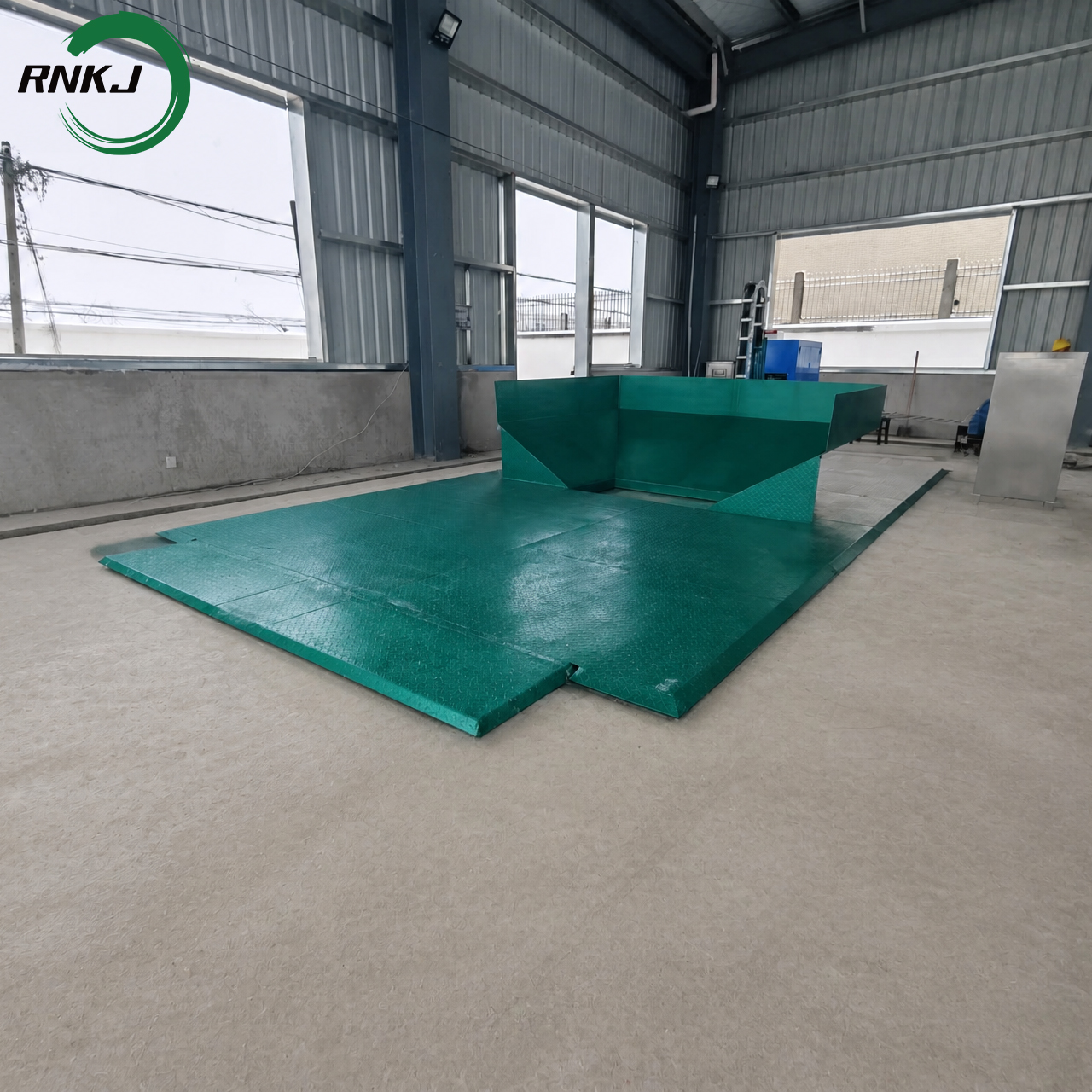
The feeding area provides the entry point for waste.
Depending on the project configuration, the feeding system can be designed for manual loading, garbage bin tipping, conveyor feeding, or other waste transfer methods.
The system shown in the image is equipped with a central control and monitoring system.
The control cabinet can coordinate the operating sequence of the hydraulic system, compression mechanism, and lifting system.
A centralized control concept helps operators manage equipment operation more conveniently and can incorporate safety interlocks, emergency stop functions, operating indicators, and customized automation functions.
Modern waste compactors can also integrate sensors and monitoring functions for equipment status and operational data, helping operators improve collection planning and maintenance management.
Main Technical Parameters| Item | Specification |
|---|---|
| Effective Compression Bin Volume | 12 m³ |
| Installation Style | Underground buried type |
| Compression Mode | Horizontal hydraulic compression |
| Discharging Method | Hydraulic direct push‑out onto garbage truck |
| Lifting Structure | Heavy‑duty scissor lift platform |
| Applicable Waste Type | Residential domestic garbage, municipal household waste |
| Compression Ratio | 3‑4 : 1 |
| Control Mode | Automatic / Manual dual‑mode control |
| Working Environment | Residential community, residential compound, property service area |
How Does an Underground Horizontal Waste Compactor Work?The operating process can be divided into several basic stages.
General solid waste from the industrial park is delivered to the designated waste collection point.
Waste enters the compaction chamber through the configured feeding system.
The hydraulic system activates the compression head. The compaction head moves horizontally and pushes the waste forward, reducing its occupied volume.
The compression head returns and repeats the process according to the control program.
Multiple compression cycles can be performed as waste continues to enter the system.
After repeated compression, waste is stored at a higher density than loose garbage.
When the system needs to be accessed, the hydraulic scissor lift raises the underground unit to the required working position.
The compacted waste can then be transferred according to the configured collection and transportation method.
This process creates a more organized connection between waste collection, compaction, temporary storage, and transportation.

Why Choose an Underground Horizontal Waste Compactor for an Industrial Park?Industrial parks often produce multiple types of general and commercial waste from manufacturing, packaging, warehousing, offices, canteens, and logistics operations.
Using conventional garbage bins for these applications may result in frequent collection requirements and inefficient use of available space.
A High-Efficiency Underground Horizontal Waste Compactor provides a more integrated solution.
The underground installation reduces the amount of equipment exposed above ground and helps industrial facilities make better use of their available land.
Horizontal hydraulic compression improves waste storage density and helps reduce the volume occupied by loose waste.
Keeping the main compaction equipment below ground can create a more organized waste collection area compared with large exposed containers.
The system combines waste collection and compaction into one integrated process, reducing the need to manually move loose waste between multiple storage containers.
The scissor lift provides controlled access to the underground equipment for collection operations and maintenance.
The central control system simplifies equipment operation and can be configured with safety protection and monitoring functions.
Industrial parks, factories, warehouses, and logistics centers can generate substantial quantities of waste every day. High-density compaction allows the available storage capacity to be used more efficiently.
Product Style
|
|
Designed for Efficient Waste Collection and TransportationWaste transportation can represent a significant part of the operating cost of a waste management system.
When waste is transported in a loose state, trucks may reach their available volume before reaching their potential payload. Compaction can increase the amount of waste handled per collection cycle, depending on waste characteristics and vehicle configuration.
This can help operators optimize:
Collection frequency
Truck utilization
Fuel consumption
Driver working time
Waste transfer scheduling
Overall logistics efficiency
The actual transportation savings depend on waste density, daily waste generation, collection distance, truck capacity, compaction performance, and local operating conditions. High-density compaction is nevertheless widely used to reduce the volume requiring transportation.
Custom Underground Waste Compaction SolutionsEvery industrial park has different site conditions and waste generation patterns. Therefore, the Underground Horizontal Waste Compactor can be engineered according to project requirements.
Customization may include:
Compaction capacity
Equipment dimensions
Underground pit dimensions
Lifting height
Hydraulic scissor lift configuration
Feeding method
Waste chamber volume
Compression force
Control system
Electrical specifications
Safety protection
Drainage system
Waste transportation interface
Surface cover and landscaping integration
Before installation, the project should consider available space, underground utilities, foundation structure, drainage, electrical supply, vehicle access, waste generation volume, and maintenance access.
FAQAn Underground Horizontal Waste Compactor is a hydraulic waste compression system installed in an underground or recessed pit. It uses horizontal compression to reduce waste volume and increase storage density while minimizing the surface footprint of the waste handling equipment.
It can be used in industrial parks, factories, logistics centers, warehouses, commercial facilities, waste transfer stations, and other locations that generate large quantities of suitable solid waste.
The hydraulic scissor lift raises and lowers the underground compaction unit through a crossed-arm lifting structure powered by hydraulic cylinders. This allows the equipment to remain underground during normal operation and be raised when access is required.
Underground installation can reduce the visible equipment footprint, improve space utilization, create a cleaner waste collection area, and make the system easier to integrate into industrial park layouts.
It can help reduce transportation requirements by increasing waste density and reducing the volume of waste that needs to be transported. Actual cost savings depend on waste type, collection frequency, transportation distance, truck capacity, and operating conditions.
We are a professional manufacturer of sanitation machinery, providing customers with ex-factory prices and on-demand customization services. You can contact us via WhatsApp or email.


