





| Quantity: | |
|---|---|
The Custom Capacity Hydraulic Lifting Underground Horizontal Garbage Compactor is a heavy-duty waste compaction machine developed for projects that require underground installation, horizontal waste compression, flexible equipment dimensions, and direct waste transfer.
The system combines a hydraulic lifting structure with a horizontal compression chamber. Waste is processed inside the underground unit rather than remaining in conventional above-ground containers. Once the waste enters the compression chamber, a powerful hydraulic pushing mechanism moves from one direction to compress the material. After the required compression level is reached, the waste is formed into a denser mass and pushed directly toward the waiting waste collection or transport truck.
The equipment can be customized according to required capacity, installation dimensions, waste volume, compression requirements, and vehicle connection conditions, making it suitable for different municipal, commercial, residential, and public waste collection projects.
 Horizontal Compression Designed for Direct Waste Transfer
The defining feature of this compactor is its horizontal compression and direct push-out operation.
Instead of simply storing waste in an underground container, the machine actively compresses the collected material and then pushes the compacted waste horizontally toward the discharge side.
The basic operating sequence is:
Waste Loading → Horizontal Chamber Filling → Hydraulic One-Direction Compression → Dense Waste Formation → Direct Push-Out → Waste Truck Collection
This working principle creates a continuous relationship between waste loading, compression, and transportation.
Once the waste has accumulated inside the horizontal compression chamber, the hydraulic pushing mechanism applies force from one direction. The material is gradually compressed toward the discharge side until the required compression condition is achieved.
The compacted waste is then pushed out of the chamber toward the waiting waste collection or transport truck.
How the Hydraulic Horizontal Compaction Process WorksCollected municipal or commercial waste is loaded into the horizontal compression chamber.
The loading opening can be configured according to the project requirements and surrounding collection arrangement. Waste can enter the chamber through the designated loading area without requiring the entire compression system to be positioned above ground.
As waste continues to enter, the compression chamber provides temporary space for the incoming material before the hydraulic compression cycle begins.
Once the waste reaches the required operating condition, the hydraulic system activates the pushing mechanism.
The hydraulic pusher moves horizontally in one direction and applies substantial pressure to the waste inside the chamber. Instead of compressing the material from multiple directions, the machine uses a controlled one-direction pushing movement.
This allows the compression process to remain straightforward and mechanically organized.
The hydraulic cylinder and pushing plate work together to move the waste toward the discharge side while reducing unnecessary void space within the material.
As the hydraulic pushing mechanism continues its movement, loose waste becomes increasingly compressed.
The material is consolidated into a denser mass inside the horizontal chamber. The final density and compression condition depend on factors such as waste composition, moisture content, material characteristics, chamber dimensions, and hydraulic system configuration.
This process allows a greater quantity of waste to be handled within the available chamber volume compared with loose, uncompacted waste.
After reaching the required compression level, the hydraulic pushing mechanism continues toward the discharge position.
The compacted waste is directly pushed out from the compression chamber toward the waiting waste collection or transport truck.
This direct push-out configuration is one of the key characteristics of the equipment. The compressed material does not simply remain inside the machine for an additional manual unloading process. Instead, the horizontal compression mechanism also performs the transfer movement toward the vehicle.
The exact discharge interface can be designed according to the customer's waste collection truck, transfer equipment, and site layout.
Horizontal Hydraulic Waste Compaction TechnologyThe core working principle of this equipment is horizontal hydraulic compression.
Unlike vertical garbage compactors that compress waste from top to bottom, the compression plate of this machine moves horizontally inside the compression chamber.
When loose municipal waste enters the chamber, the hydraulic power unit drives the hydraulic cylinders. The cylinders push the compression head forward, gradually squeezing the waste against the opposite side of the chamber.
This process helps:
Reduce the volume of loose waste.
Increase the density of collected garbage.
Create a more compact waste mass.
Improve the utilization of transportation space.
Reduce unnecessary handling during waste transfer.
The horizontal compression configuration is particularly suitable for projects where waste needs to be compressed and then discharged in a controlled horizontal direction toward a transport vehicle.
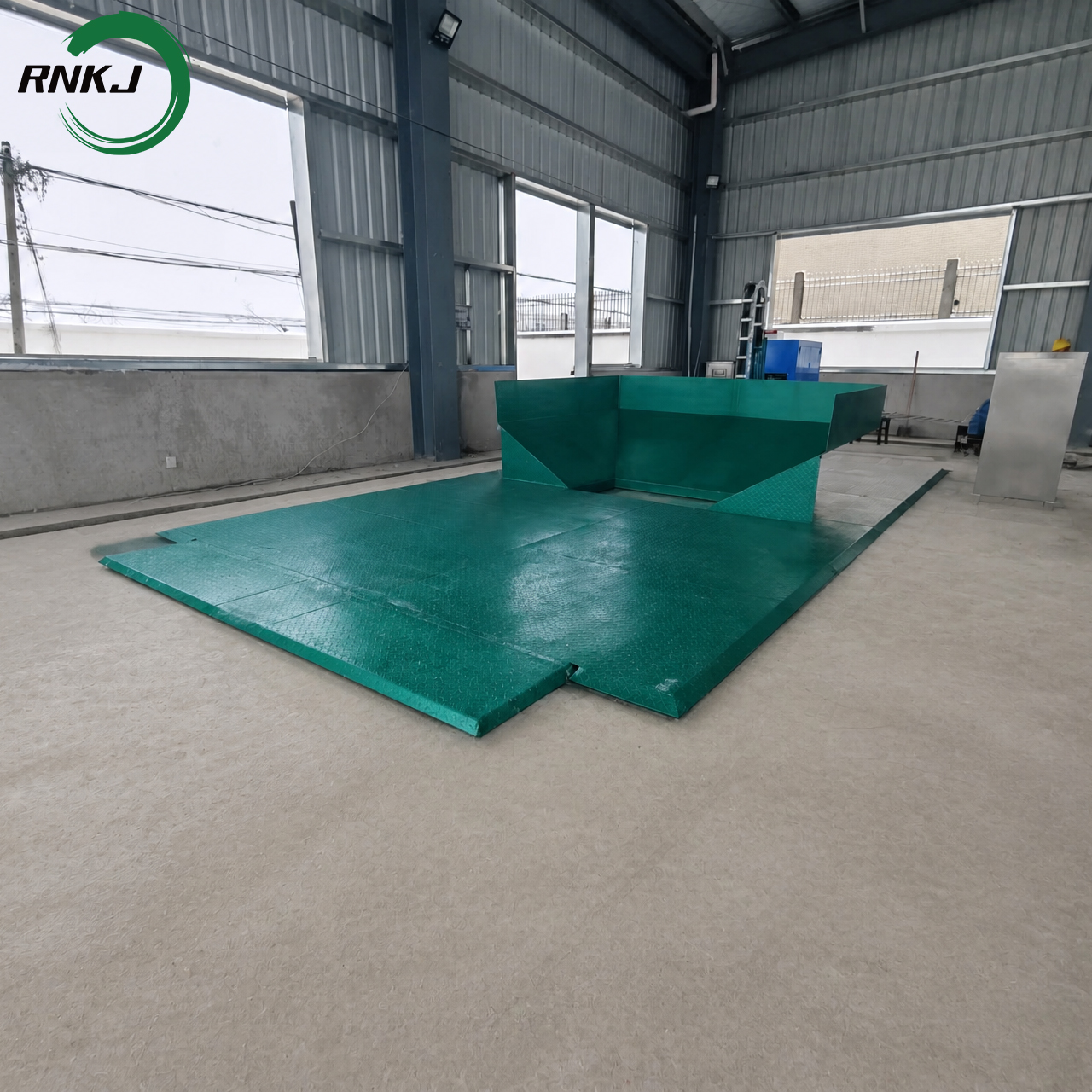
Underground InstallationThe compression equipment is designed for underground installation, allowing the main body of the machine to be positioned below ground level.
This configuration can help reduce the visible footprint of the waste handling equipment and make better use of limited urban space.
For residential communities, municipal collection points, commercial developments, public facilities, and other locations where ground-level space is valuable, placing the main compaction equipment underground can provide a more integrated installation arrangement.
The above-ground area can be used for vehicle access, pedestrian movement, landscaping, or other site functions, depending on the overall project design.
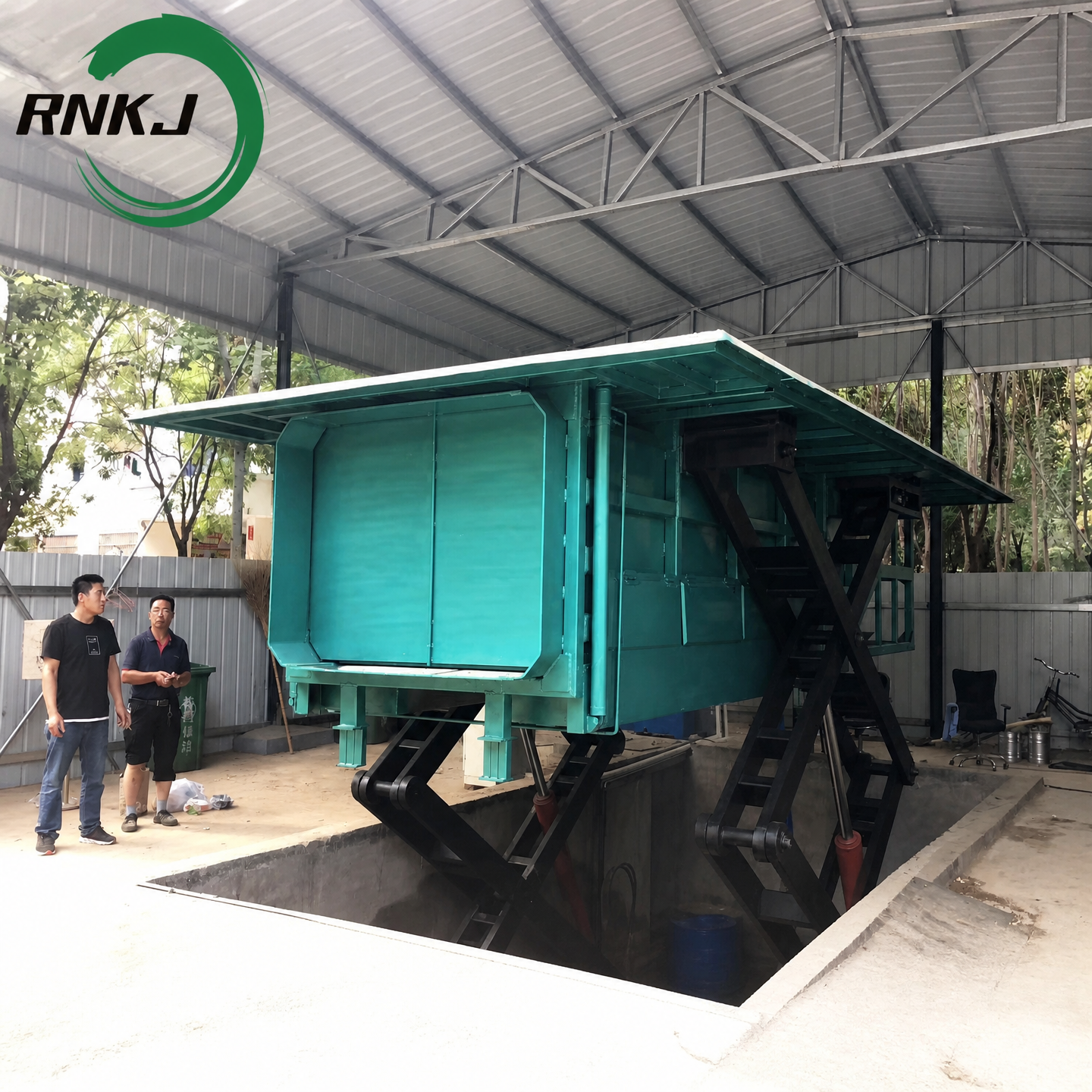
Hydraulic Lifting SystemThe hydraulic lifting mechanism is an important part of the overall equipment configuration.
Because the compactor is installed underground, controlled lifting is required to provide access to the machine and coordinate the equipment with its operating and maintenance requirements.
The lifting structure can be designed according to:
Underground installation depth
Equipment dimensions
Required lifting height
Available site space
Maintenance access
Waste transfer arrangement
Customer-specific civil construction conditions
The lifting system and horizontal compression unit can be designed as an integrated solution so that the equipment works properly within the underground pit.
Custom Capacity for Different Waste VolumesThe word “Custom Capacity” represents one of the major advantages of this model.
Different customers generate different quantities and types of waste. A compact residential collection point may require a different chamber size from a municipal waste transfer location or a large commercial development.
Therefore, the equipment can be developed according to the customer's actual waste handling requirements rather than being restricted to one fixed configuration.
Capacity-related customization may include:
Compression chamber volume
Overall equipment dimensions
Chamber length and width
Hydraulic pushing stroke
Hydraulic cylinder configuration
Loading opening dimensions
Discharge dimensions
Underground installation dimensions
Lifting height
Control system configuration
The final capacity should be selected according to the expected waste volume, collection frequency, waste characteristics, and transportation arrangement.
One-Direction Hydraulic Pushing MechanismThe horizontal pushing mechanism is the core working component of the machine.
A hydraulic cylinder drives the pushing plate along the horizontal compression chamber. The plate applies force to the waste from one direction, gradually moving the material toward the discharge end.
This design creates a clear movement path:
Loading Side → Compression Zone → Discharge Side
The controlled pushing direction also makes the equipment suitable for applications where waste needs to be discharged toward a predetermined vehicle position.
The hydraulic system can be configured according to the required pushing force, chamber size, waste characteristics, and operating frequency.
Direct Connection with Waste Collection VehiclesThe machine is designed around a direct transfer concept.
When the compression process is complete, the compacted waste is pushed toward the waiting collection or transportation truck. This reduces the need for an additional manual handling step between compression and transportation.
The vehicle position, discharge height, discharge direction, and connection arrangement can be considered during equipment customization.
For projects with specific vehicle models or fixed collection routes, these factors can be incorporated into the equipment design before manufacturing.
Suitable for Urban Waste CollectionThe underground configuration makes the compactor suitable for locations where conventional above-ground waste equipment may occupy valuable space.
Typical applications include:
Residential communities
Apartment developments
Municipal waste collection points
Commercial complexes
Shopping areas
Public buildings
Schools and campuses
Industrial parks
Tourist facilities
Urban public service areas
The equipment can be configured according to the expected waste volume and the available underground installation area.
Product Style
|
|
Waste Handling Capacity and Compression PerformanceThe actual performance of a horizontal garbage compactor depends on several factors rather than capacity alone.
Important considerations include:
Waste composition
Waste moisture
Waste density
Waste particle size
Daily waste volume
Compression chamber dimensions
Hydraulic pushing force
Compression stroke
Operating frequency
For this reason, capacity and hydraulic specifications should be selected based on the customer's actual waste stream.
For example, municipal household waste may behave differently from commercial packaging waste, industrial solid waste, or mixed public-area waste. A customized hydraulic configuration can therefore provide a more appropriate solution for different waste characteristics.
Structural ConfigurationThe main body of the compactor consists of a horizontal compression chamber, hydraulic pushing mechanism, hydraulic power system, lifting structure, control components, and supporting steel structure.
The compression chamber provides the working space for waste loading and compaction.
The hydraulic pushing mechanism provides the force required to consolidate the waste and move it toward the discharge side.
The lifting structure supports the underground installation arrangement and provides controlled movement when access to the equipment is required.
The control system coordinates the main operating functions and can be configured according to the desired operating method.
Heavy-Duty Hydraulic SystemThe hydraulic system is responsible for generating the force required for horizontal waste compression and pushing.
Depending on the selected configuration, the hydraulic system can be customized according to:
Required compression force
Hydraulic cylinder size
Pushing stroke
Operating cycle
Motor and pump specifications
Working pressure
Waste characteristics
Equipment capacity
Hydraulic components can be selected according to the intended operating environment and project requirements.
For high-frequency municipal waste applications, the hydraulic system can be configured to support repeated compression cycles.
Customizable Equipment DimensionsCapacity is not the only parameter that can be customized.
The physical dimensions of the machine can also be adjusted according to the installation location.
Customization may cover:
The chamber dimensions can be designed around the required waste volume and available underground space.
The loading opening can be adjusted according to the method used to introduce waste into the machine.
The discharge position can be coordinated with the location and height of the waste collection truck.
The lifting arrangement can be designed according to the underground pit depth and required operating position.
The overall length, width, and height can be considered together with the available installation area.
This approach makes the machine suitable for projects with non-standard site conditions.
Designed for Project-Specific Waste Management RequirementsA major advantage of this machine is that its configuration does not have to be limited to a standard product size.
The equipment can be developed around the actual requirements of the project.
Before production, customers can provide:
Required capacity
Daily waste generation
Waste type
Available underground space
Pit dimensions
Required compression level
Collection truck information
Truck loading height
Discharge direction
Power supply
Automation requirements
These parameters can then be used to determine the appropriate compression chamber, hydraulic system, lifting structure, discharge arrangement, and control configuration.
Main FeaturesCustomizable waste handling capacity
Underground installation configuration
Horizontal hydraulic compression
One-direction hydraulic pushing
Dense waste mass formation
Direct push-out toward the waste collection truck
Hydraulic lifting mechanism
Customizable compression chamber dimensions
Flexible discharge configuration
Automatic or controlled operating options
Suitable for municipal and commercial waste
Project-specific equipment design
Adaptable to different site conditions
Customized Underground Horizontal Garbage Compaction SolutionThe Custom Capacity Hydraulic Lifting Underground Horizontal Garbage Compactor is designed for waste management projects that require a combination of underground installation, controlled hydraulic compression, flexible capacity, and direct vehicle transfer.
Its working process is straightforward:
Waste is loaded into the horizontal compression chamber → the hydraulic pushing mechanism compresses the waste from one direction → the material is consolidated into a dense mass → the compacted waste is directly pushed toward the waiting waste collection or transport truck.
With customizable chamber dimensions, hydraulic specifications, lifting configuration, and discharge arrangement, the equipment can be adapted to different waste volumes, site layouts, and transportation requirements.
It provides a project-oriented solution for customers looking to integrate underground waste collection, horizontal hydraulic compaction, and direct waste transfer into a single system.
We are a professional manufacturer of sanitation machinery, providing customers with ex-factory prices and on-demand customization services. You can contact us via WhatsApp or email.


