




| Quantity: | |
|---|---|
 Product Overview
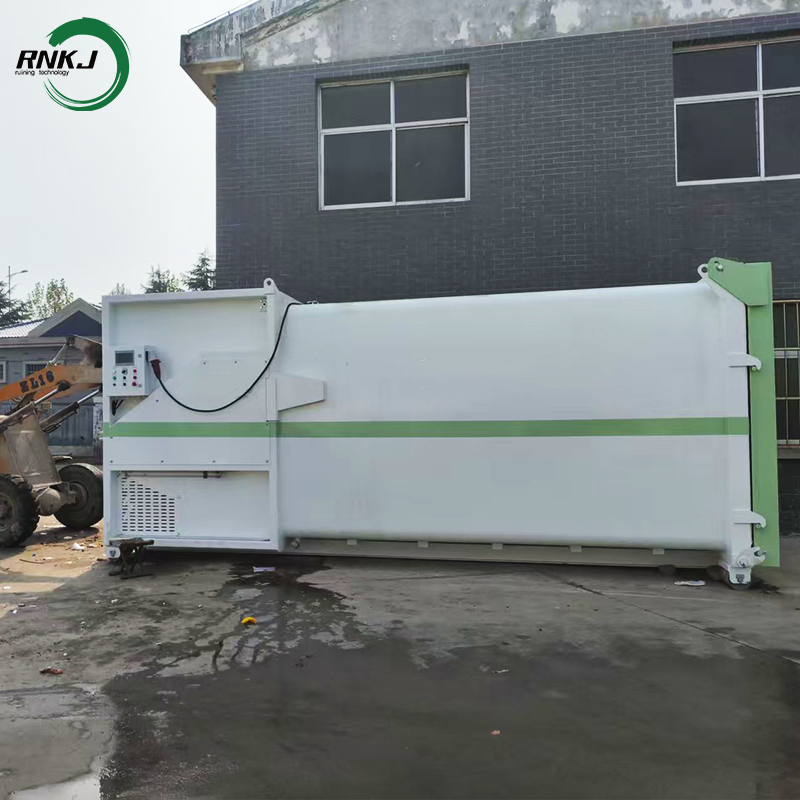
The Custom 6–30 CBM Heavy-Duty Hydraulic Mobile Garbage Compactor for Hook Lift Truck Transport is designed for industrial facilities, commercial properties, waste transfer stations, logistics centers, and other sites that require an integrated solution for waste compaction and transportation. With a customizable container capacity ranging from 6 to 30 CBM, the system can be configured to accommodate different waste generation rates, installation conditions, and collection schedules.
Unlike a conventional waste container that simply stores refuse, this mobile garbage compactor combines a hydraulic compression mechanism with a transportable collection container. Waste is loaded into the equipment and compressed by a hydraulically driven mechanism, allowing more material to be accommodated within the available container volume, depending on the waste composition and operating conditions.
A key feature of this equipment is its compatibility with a hook lift truck for whole-unit transportation. When the container reaches its designated loading level, the compactor can be collected and transported as a complete mobile unit, subject to the truck's lifting capacity, hook dimensions, chassis configuration, and equipment interface requirements. This arrangement gives waste operators a practical way to coordinate on-site compaction with off-site transportation.
The equipment is particularly suitable for projects where waste is generated continuously but collection vehicles do not need to enter the site after every loading cycle. Capacity, container dimensions, hydraulic configuration, loading arrangement, and other project-specific details can be evaluated according to the customer's waste handling requirements.
Customizable 6–30 CBM Capacity for Different ProjectsOne of the main advantages of this custom mobile garbage compactor is its broad capacity selection. The 6–30 CBM range provides flexibility for customers who need to balance installation space, waste volume, transportation frequency, and vehicle compatibility.
Rather than selecting a machine based only on nominal container volume, buyers can evaluate the actual waste output of their facility and the operating conditions of the collection point.
6–8 CBM configuration: Suitable for smaller commercial sites, compact waste collection areas, and facilities with relatively limited daily waste output, subject to the selected loading and transport requirements.
10–15 CBM configuration: Can be considered for medium-sized commercial properties, manufacturing workshops, warehouses, and centralized waste collection points.
20–30 CBM configuration: Designed for projects requiring a larger collection volume, such as industrial parks, large commercial facilities, distribution centers, and waste transfer locations, provided the site and hook lift truck can accommodate the selected unit.
These ranges are preliminary selection references rather than fixed application limits. Actual capacity selection should take into account the type of waste, bulk density, daily waste generation, expected compaction level, available installation area, and transportation restrictions.
The customization process can cover several major aspects of the equipment:
Container capacity: Select a suitable volume within the 6–30 CBM range according to the project.
Container dimensions: Evaluate length, width, height, and overall equipment footprint against site restrictions and truck requirements.
Hydraulic compression configuration: Determine the appropriate compression arrangement and operating parameters for the intended waste stream.
Waste loading arrangement: Assess the loading opening, feeding height, and interface with the customer's existing waste collection method.
Sealing and liquid management: Evaluate enclosure design, drainage, and liquid collection requirements when handling wet or moisture-containing waste.
Hook lift compatibility: Confirm the container interface and lifting geometry with the intended hook lift truck.
Control configuration: Select suitable operating controls and safety interlocks according to the equipment design and operating environment.
This project-based approach allows buyers to specify a mobile compactor around their existing waste handling process instead of adapting their entire operation to a standard-sized machine.
Heavy-Duty Hydraulic Structure for Demanding Working ConditionsThe heavy-duty structure is an important consideration for a mobile garbage compactor because the equipment must handle repeated compression cycles, the weight of accumulated waste, and the mechanical forces involved in loading and transportation.
For the Custom 6–30 CBM Heavy-Duty Hydraulic Mobile Garbage Compactor, the main body, compression chamber, hydraulic mounting structure, and hook lift connection can be evaluated as an integrated mechanical system. Each component must work with the selected capacity and expected operating load.
The main container provides the space for receiving and storing compressed waste. Its structural design needs to account for the weight of the waste, pressure generated during compaction, and forces experienced during transportation.
Depending on the project requirements, the structure can be configured with:
Reinforced steel panels and supporting members for structural stability.
A compression chamber designed around the movement of the compression mechanism.
Wear protection in areas exposed to repeated contact with waste.
Reinforced connection points for the hydraulic components.
A container base and support arrangement designed for the selected loading and transport conditions.
For industrial applications, material selection should consider the waste composition rather than capacity alone. General packaging waste, mixed commercial refuse, and abrasive industrial residues can create different structural and wear requirements.
The steel grade, plate thickness, reinforcement layout, and protective coating should therefore be confirmed during technical design. These details are not necessarily identical across every capacity.
A mobile compactor experiences different loads during its operating cycle. During compression, the structure must withstand the reaction force generated by the hydraulic mechanism. During transportation, the container and lifting interface must withstand the loads associated with lifting, loading onto the truck, road movement, and unloading.
For this reason, the equipment should be designed around its complete operating cycle rather than treating the waste container as a standalone steel box.
The selected hook lift truck's rated lifting capacity, the loaded compactor's gross weight, the distribution of waste inside the container, and the truck's interface dimensions are all important design considerations.
Hydraulic Compression System and Working PrincipleThe hydraulic compression system is responsible for applying the force required to compact waste inside the machine. Instead of relying only on the available container volume, the equipment uses a hydraulically driven compression mechanism to reduce the bulk volume of suitable waste materials.
The system can be designed around the required compression stroke, chamber dimensions, operating cycle, and type of waste being handled.
Hydraulic power unit: Supplies pressurized hydraulic oil to operate the compression mechanism. Motor power, pump capacity, and other hydraulic parameters should be selected according to the required operating conditions.
Hydraulic cylinders: Convert hydraulic pressure into linear mechanical force to drive the compression movement. Cylinder dimensions and operating pressure influence the available force and operating characteristics.
Compression ram or push head: Transfers the force generated by the hydraulic cylinders to the waste. Its geometry and movement path are designed according to the compression chamber configuration.
Hydraulic valves and pipelines: Control the direction and movement of hydraulic oil throughout the system. Proper component selection supports controlled operation and helps protect the equipment against unsuitable operating conditions.
Electrical control system: Coordinates the operating sequence and can incorporate suitable limit switches, interlocks, and emergency stop functions according to the final configuration.
The hydraulic system should be matched to the container size and intended material. Increasing the nominal container capacity does not automatically mean the machine will achieve a particular compression ratio or processing rate. Those performance figures depend on the complete equipment design and the properties of the waste.
Step 1 — Waste feeding
Waste is deposited through the designated loading opening or feeding arrangement. The loading method can be selected according to the site's existing bins, trolleys, or waste transfer procedures.
Step 2 — Hydraulic compression
The hydraulic cylinders drive the compression ram, applying force to the incoming material and moving it into the designated storage area.
Step 3 — Continued collection
Additional waste is loaded and compressed according to the machine's operating sequence. The equipment continues collecting material until the designated fill level or operating limit is reached.
Step 4 — Whole-unit transportation
Once collection is complete, a compatible hook lift truck lifts the mobile compactor as a complete unit and transports it to the designated waste treatment or disposal facility.
This integrated process allows waste to be compacted at the collection point before transportation. It can help reduce the frequency of collection trips compared with transporting the same loose waste volume, although the actual reduction depends on waste density, container capacity, compaction performance, and vehicle payload limits.
Hook Lift Truck Transport: A Mobile Collection SolutionThe hook lift transport arrangement is one of the defining features of this mobile garbage compactor. The compaction equipment and waste storage body form a mobile unit that can be lifted onto a compatible hook lift truck for transportation.
This arrangement differs from a fixed garbage compaction station, which normally remains installed at a designated location and requires a separate arrangement for moving the collected waste.
Positioning: The mobile compactor is installed on a suitable, stable operating surface with sufficient clearance for feeding, servicing, and truck access.
Collection: Waste is loaded into the machine and compressed according to the configured operating cycle.
Truck connection: When transportation is required, the hook lift truck approaches the unit and aligns its lifting mechanism with the compactor's designated connection points.
Lifting and loading: The truck's hook lift system pulls the complete unit onto the chassis in accordance with the truck and equipment operating procedures.
Transportation: The loaded unit is secured using the truck's applicable locking arrangements before the vehicle departs.
Return and reuse: Following unloading at the receiving facility, the compactor can be returned to the collection point when the operating arrangement allows.
The exact loading procedure depends on the hook lift system and the equipment design. Truck alignment, ground conditions, stabilizer requirements, lifting limits, and locking procedures must be considered before operation.
Hook lift systems are not universally interchangeable. A compactor designed for one truck may not fit another truck without adjustments to the lifting interface.
Before manufacturing, the following information should be confirmed:
Parameter | Why it matters |
|---|---|
Hook height and hook center | Ensures alignment between the truck and compactor |
Container length and width | Determines physical fit and transport compatibility |
Rail and roller arrangement | Supports the intended loading movement |
Truck lifting capacity | Confirms the truck can handle the loaded unit |
Maximum gross weight | Accounts for the equipment and the collected waste |
Locking arrangement | Helps secure the container during transport |
Rear clearance and loading area | Allows safe loading and unloading at the site |
Providing the hook lift truck model or technical drawings during the quotation stage can help the manufacturer evaluate compatibility and avoid dimensional mismatches.
For customers who already operate hook lift trucks, the compactor can be evaluated against their existing fleet. For new projects, the compactor and transportation equipment can be planned together.
Applications in Industrial and Commercial Waste ManagementThe 6–30 CBM capacity range and mobile configuration make this equipment relevant to projects with different waste generation patterns. The appropriate configuration depends on the waste stream, loading method, operating schedule, and transport arrangements.
Production facilities may generate packaging, plastic waste, general refuse, and other non-hazardous waste streams. A hydraulic mobile garbage compactor can provide a centralized collection point where suitable waste is compressed before being transported off-site.
Warehouses and distribution centers can generate recurring volumes of packaging waste and general refuse. Equipment capacity and loading arrangements can be evaluated according to daily waste output and the available space around loading docks.
Commercial sites may need to consolidate waste from multiple departments or collection points. A mobile compactor can be installed in a designated service area and collected by a compatible truck when required.
The mobile design supports a collection-and-transfer workflow in which waste is compacted before the entire unit is moved to a receiving facility. The selected capacity should align with the site's collection schedule and transport capacity.
Where several collection locations are served by a shared transportation fleet, compatible mobile compactors can be positioned at selected points. Collection routes and pickup schedules can then be planned around the volume accumulated at each location.
The equipment can be evaluated for suitable general solid waste, packaging waste, commercial refuse, and selected industrial waste streams.
However, not every waste material is suitable for the same compression configuration. Large rigid objects, highly abrasive materials, hazardous waste, and materials that require specialized containment may need additional assessment or a different type of equipment.
For wet or moisture-containing waste, sealing, drainage, and liquid collection requirements should be discussed before production. The final configuration should reflect the actual material rather than assuming one standard machine is suitable for all waste types.
Product Configuration and Customization OptionsThe Custom 6–30 CBM Heavy-Duty Hydraulic Mobile Garbage Compactor can be specified according to project requirements. The following table provides a practical starting point for technical discussions.
Configuration item | Customization considerations |
|---|---|
Nominal capacity | Select a suitable volume within the proposed 6–30 CBM range |
Main body | Confirm dimensions, steel grade, plate thickness, and reinforcement |
Compression mechanism | Evaluate compression direction, ram arrangement, and operating stroke |
Hydraulic power unit | Select motor, pump, cylinders, and control valves according to design requirements |
Waste feeding | Confirm loading opening, feeding height, and optional bin-tipping arrangement |
Hook lift interface | Match hook dimensions, container geometry, and truck lifting capacity |
Sealing and drainage | Assess rear-door sealing and liquid collection requirements |
Electrical controls | Confirm local power supply, operating controls, and safety devices |
Surface protection | Select coating and corrosion protection appropriate for the working environment |
These are configurable design considerations, not a claim that every feature is included in the standard model. The final bill of materials and technical specifications should be confirmed in the quotation and approved drawings.
Key Factors to Confirm Before OrderingFor an industrial or commercial project, the following information helps establish a more accurate equipment specification.
Daily waste volume: Estimate how much waste the site produces and how frequently the unit will be collected.
Waste composition: Identify the main materials, approximate bulk density, moisture content, and any unusual handling requirements.
Available installation space: Confirm the equipment footprint, loading clearance, truck access, and lifting area.
Required capacity: Select a nominal container volume based on the actual collection plan rather than choosing the largest available size automatically.
Truck compatibility: Provide the existing hook lift truck's specifications, lifting capacity, and interface dimensions.
Power supply: Confirm local voltage, frequency, and other electrical requirements.
Operating environment: Consider outdoor exposure, cleaning needs, corrosion protection, and maintenance access.
Discharge arrangements: Confirm how the compacted waste will be unloaded at the receiving facility.
These details help determine whether a 6 CBM, 12 CBM, 20 CBM, or larger customized configuration is appropriate for the intended operation.
Why Choose a Customized Mobile Garbage Compactor?
The value of a customized mobile garbage compactor lies in how well the equipment fits the customer's complete waste handling process.
A properly specified unit can combine waste collection, hydraulic compaction, enclosed storage, and hook lift transportation in one coordinated system. Rather than treating the compactor, container, and truck as unrelated items, the design process considers their mechanical and operational compatibility.
For industrial and commercial customers, this means the equipment can be evaluated against actual site conditions, daily waste output, truck specifications, and the requirements of the receiving facility.
The 6–30 CBM capacity range also provides a basis for discussing different project sizes, while customization can address dimensions, hydraulic components, loading arrangements, and other technical requirements. The final design should be established through engineering review instead of relying on capacity alone.
Request a Customized Mobile Garbage Compactor Quotation
Are you looking for a Custom 6–30 CBM Heavy-Duty Hydraulic Mobile Garbage Compactor for Hook Lift Truck Transport for your industrial facility, commercial complex, or waste transfer project?
Our team can discuss your application requirements and evaluate a suitable equipment configuration based on your waste type, required storage capacity, hydraulic compression needs, installation conditions, and hook lift truck specifications.
To help us assess your project, please provide:
Required capacity: 6–30 CBM or your preferred volume.
Main waste type and estimated daily output.
Preferred loading method and operating conditions.
Existing hook lift truck model or technical specifications.
Special requirements for sealing, liquid collection, or container construction.
Contact us to discuss your project and request a customized mobile garbage compactor quotation. Share your technical requirements with our team so that the equipment dimensions, hydraulic configuration, and transport interface can be evaluated before production.
We are a professional manufacturer of sanitation machinery, providing customers with ex-factory prices and on-demand customization services.
If you would like to obtain more customized specifications or purchase this garbage compaction station at factory price, please contact us via website message or WhatsApp(+86-18853809997).


