
English





| Quantity: | |
|---|---|
The 12 CBM Hydraulic Lifting Municipal Underground Horizontal Waste Compactor is a high-capacity waste compression solution designed for municipal sanitation projects, urban waste transfer stations, residential communities, industrial parks, commercial areas, and other locations where large volumes of municipal solid waste need to be collected and transferred efficiently.
Unlike conventional vertical waste compactors, this system adopts a horizontal waste compression method. Waste is loaded into the horizontal compression chamber, where a powerful hydraulic pushing mechanism compresses the material from one direction. After reaching the required compression level, the compacted waste is formed into a dense mass and directly pushed out toward the waiting waste collection or transport truck.
The hydraulic lifting structure allows the compactor to be installed below ground or integrated into a recessed waste collection area. By combining underground installation, horizontal compaction, hydraulic lifting, and direct discharge, the system helps reduce the footprint of waste collection facilities while improving the efficiency of municipal waste handling.
 Efficient Horizontal Waste Compression for Municipal Applications
The main feature of this 12 CBM Underground Horizontal Waste Compactor is its horizontal compression configuration.
During operation, collected garbage enters the large-capacity compression chamber through the upper feeding area. The hydraulic system drives the compression plate forward, gradually squeezing the waste inside the chamber. As the compression cycle continues, loose municipal waste is compressed into a much denser and more compact form.
Once the compression process is completed, the hydraulic pushing mechanism moves the compacted waste toward the discharge side. The compressed waste can then be directly pushed onto a waste transfer truck, eliminating the need for unnecessary intermediate handling.
This direct-discharge design makes the equipment particularly suitable for projects where fast waste transfer, reduced manual handling, and efficient truck loading are important.
High-Capacity 12 CBM Waste Compression SolutionWith a nominal capacity of 12 CBM, the system is designed for medium- to high-volume waste collection applications.
The large compression chamber provides sufficient space for temporary waste accumulation while allowing the hydraulic compression mechanism to continuously reduce the volume of loose garbage.
For municipal waste management projects, this means that a larger quantity of waste can be processed within a relatively compact installation area.
The system is especially useful where:
Daily waste generation is relatively high
Waste needs to be compressed before transportation
Truck loading efficiency is important
Available surface space is limited
Underground installation is preferred
Manual waste handling needs to be reduced
Waste transfer operations need to be streamlined
A customized municipal sanitation solution is required
The 12 CBM capacity can also be customized according to the customer's project requirements, allowing the equipment dimensions and working configuration to be adapted to different installation environments.
Horizontal Hydraulic Waste Compaction TechnologyThe core working principle of this equipment is horizontal hydraulic compression.
Unlike vertical garbage compactors that compress waste from top to bottom, the compression plate of this machine moves horizontally inside the compression chamber.
When loose municipal waste enters the chamber, the hydraulic power unit drives the hydraulic cylinders. The cylinders push the compression head forward, gradually squeezing the waste against the opposite side of the chamber.
This process helps:
Reduce the volume of loose waste.
Increase the density of collected garbage.
Create a more compact waste mass.
Improve the utilization of transportation space.
Reduce unnecessary handling during waste transfer.
The horizontal compression configuration is particularly suitable for projects where waste needs to be compressed and then discharged in a controlled horizontal direction toward a transport vehicle.
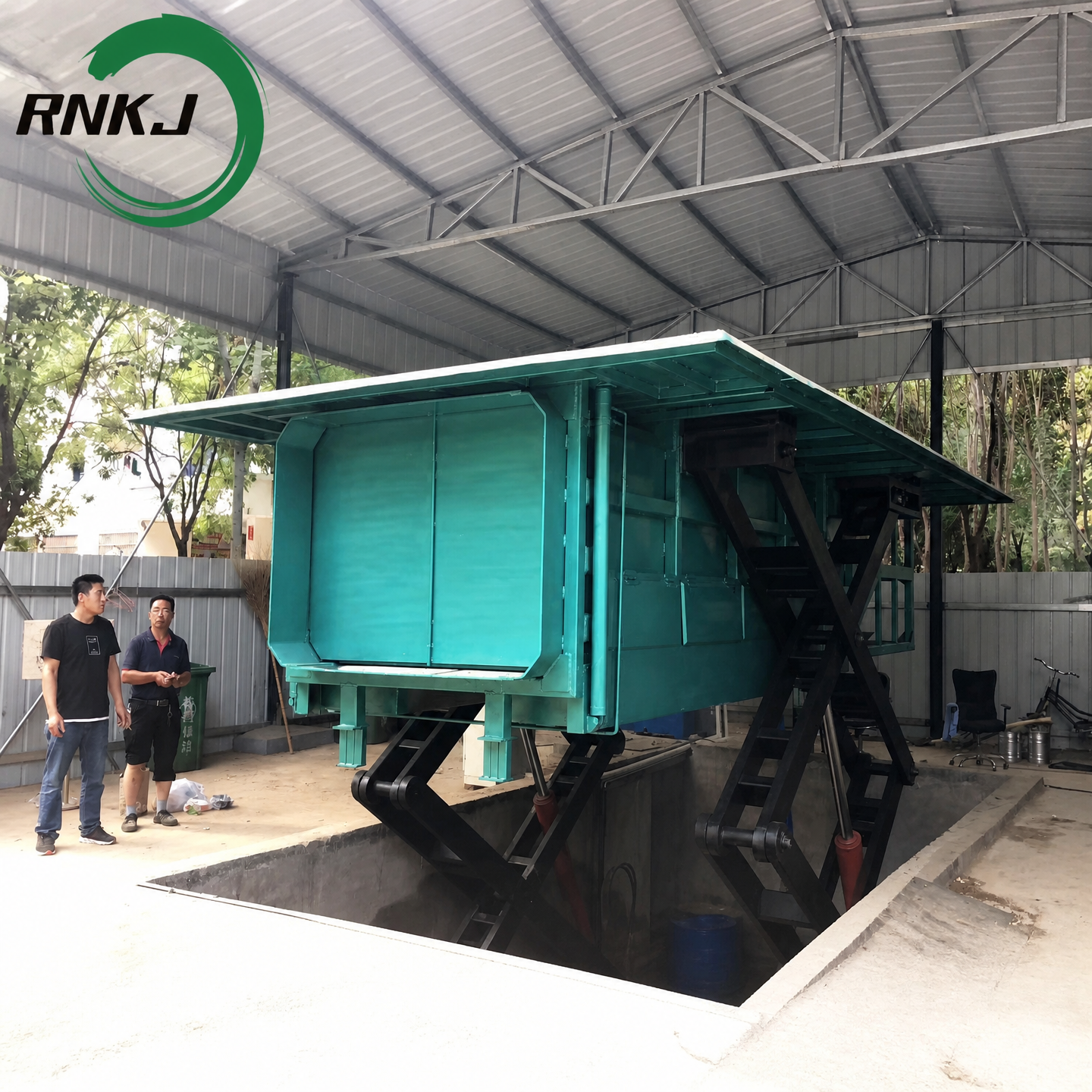
Hydraulic Lifting Underground StructureThe equipment a hydraulic lifting mechanism supporting the main waste compaction unit.
The lifting structure allows the compactor to be installed in an underground pit while keeping the main working equipment accessible when maintenance or inspection is required.
The hydraulic lifting mechanism can be used to raise the equipment from the underground installation position, providing operators with improved access to key components.
This configuration is particularly useful for underground waste management projects because the main equipment can remain below ground during normal operation while being lifted when service work is required.
The lifting system can be designed according to:
Underground pit depth
Equipment dimensions
Required lifting height
Site conditions
Maintenance requirements
Local installation standards
Customer's civil engineering design
Underground Installation for Space-Saving Waste ManagementUrban waste management projects often face limited land availability. Traditional above-ground garbage stations can occupy valuable space and may affect the appearance of residential or commercial areas.
The Underground Horizontal Waste Compactor provides another approach.
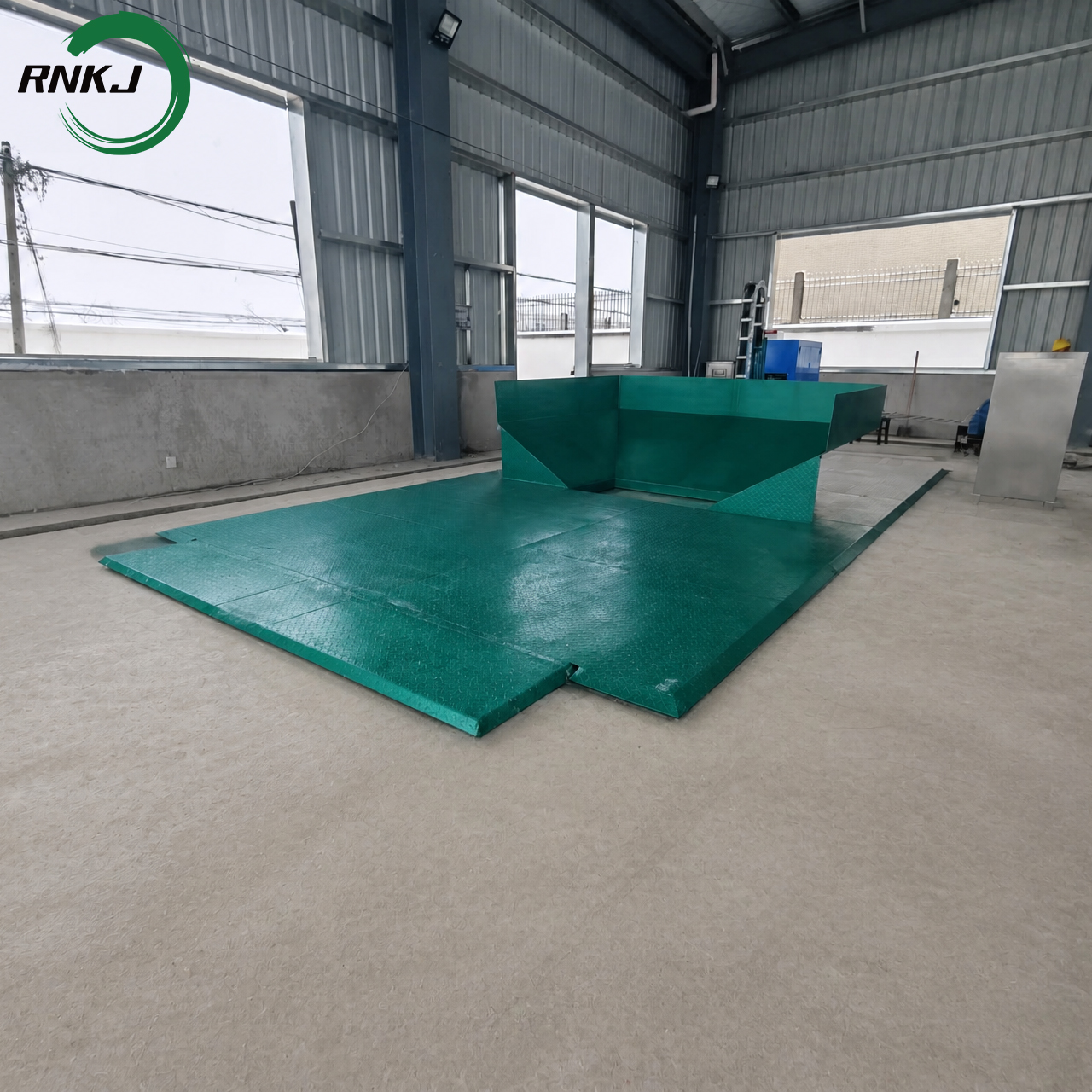
The main compaction equipment can be positioned inside a prepared underground concrete pit, while the waste feeding and operating areas remain accessible from the surface.
This arrangement can help:
Reduce above-ground equipment footprint
Make better use of limited urban land
Keep heavy mechanical equipment below ground
Improve the overall appearance of waste collection areas
Create a more organized waste management zone
Support centralized municipal waste collection
For residential communities, city sanitation projects, commercial complexes, and industrial parks, underground installation can provide a cleaner and more organized alternative to scattered conventional garbage containers.
Main Components of the 12 CBM Underground Waste CompactorThe system consists of several important mechanical and hydraulic components working together.
The compression chamber provides the main space for receiving and compacting municipal solid waste.
Its dimensions and internal configuration can be customized based on the required capacity, waste characteristics, and project layout.
The hydraulic cylinder provides the pushing force required for horizontal garbage compression.
The hydraulic system allows the compression mechanism to operate smoothly and repeatedly during daily waste management operations.
The push plate is responsible for transferring hydraulic force to the garbage.
As the plate moves horizontally, loose waste is compressed toward the discharge direction, increasing the density of the material inside the chamber.
The lifting mechanism supports underground installation and allows the equipment to be raised when inspection, cleaning, or maintenance is required.
The hydraulic power unit supplies the pressure and flow required to operate the compression and lifting mechanisms.
Its configuration can be selected according to the equipment capacity and required working cycle.
The control cabinet manages the hydraulic system and operating sequence.
Depending on the project, the system can be configured for manual, semi-automatic, or automatic operation.
The discharge section is designed to guide the compacted waste toward the receiving truck after the compression process is completed.
Main Technical Parameters| Item | Specification |
|---|---|
| Effective Compression Bin Volume | 12 m³ |
| Installation Style | Underground buried type |
| Compression Mode | Horizontal hydraulic compression |
| Discharging Method | Hydraulic direct push‑out onto garbage truck |
| Lifting Structure | Heavy‑duty scissor lift platform |
| Applicable Waste Type | Residential domestic garbage, municipal household waste |
| Compression Ratio | 3‑4 : 1 |
| Control Mode | Automatic / Manual dual‑mode control |
| Working Environment | Residential community, residential compound, property service area |
How Does the Underground Horizontal Waste Compactor Work?The working process of the hydraulic underground horizontal waste compactor can be divided into several simple stages:
Municipal solid waste is deposited into the upper feeding area of the compactor. The large loading opening is designed to accommodate continuous waste input during normal collection operations.
After the waste enters the compression chamber, the hydraulic power unit activates the hydraulic cylinders. The compression plate moves horizontally and applies high pushing force to the waste.
This horizontal compaction process reduces the volume of loose garbage and increases the density of the waste inside the chamber.
Repeated hydraulic compression creates a relatively dense and stable mass of compressed municipal waste. Compared with loose garbage, the compacted material occupies considerably less space, helping improve the utilization of waste transport vehicles.
When the compression cycle is completed, the hydraulic pushing mechanism moves the compacted waste toward the discharge outlet. The compressed garbage is then directly discharged onto a waste collection truck or transfer vehicle.
This direct pushing process helps minimize secondary handling and can simplify the overall waste transfer workflow.

Key Features of the 12 CBM Hydraulic Waste CompactorWith a nominal capacity of 12 cubic meters, the system provides a substantial waste receiving and compression space for municipal and commercial waste collection applications.
The large chamber is suitable for locations with relatively high daily waste generation, helping reduce the frequency of waste removal and improve collection efficiency.
The machine uses a horizontal hydraulic compression system rather than a conventional vertical compaction structure.
Hydraulic cylinders provide strong and controlled pushing force, allowing the system to compress large quantities of loose waste into a denser form.
The hydraulic lifting structure shown in the system allows the equipment to be integrated with an underground or recessed installation.
The lifting mechanism can raise the main equipment when required for inspection, cleaning, maintenance, or servicing, providing easier access to critical components.
One of the most important advantages of this system is its direct discharge configuration.
After compression, the compacted waste is pushed directly toward the waste transfer vehicle. This reduces unnecessary intermediate transfer steps and can help improve the efficiency of municipal waste transportation.
By compressing loose garbage before transportation, the system increases waste density and allows more waste to be handled within the available transport capacity.
This can help reduce the number of transportation trips required for a given quantity of waste and improve the overall efficiency of waste logistics.
The compactor is designed for demanding municipal waste handling environments. Its hydraulic cylinders, compression mechanism, structural frame, and waste chamber are engineered for repeated compression cycles.
The robust structure makes it suitable for applications requiring frequent operation and high-volume waste processing.
Product Style
|
|
Custom 12 CBM Underground Horizontal Waste CompactorDifferent cities and projects have different requirements, so the equipment does not have to follow a completely fixed configuration.
As a professional custom underground horizontal waste compactor, the system can be engineered according to the customer's site conditions.
Possible customization includes:
The basic configuration is designed around a 12 CBM capacity, while other capacities can be considered for different waste volumes.
The equipment length, width, height, feeding opening, and discharge position can be adjusted according to the available site.
Hydraulic cylinder specifications, power unit configuration, operating pressure, and working cycle can be selected according to project requirements.
The control system can be configured according to the required operating mode, including manual, semi-automatic, or automatic functions.
The hydraulic lifting mechanism can be designed according to the underground pit depth and required maintenance access.
The discharge configuration can be adapted to the receiving waste truck to facilitate direct transfer of compacted garbage.
Why Choose a 12 CBM Hydraulic Horizontal Waste Compactor?The value of this system comes from integrating several functions into one waste management solution.
The 12 CBM chamber is suitable for projects with substantial waste generation.
Hydraulic cylinders provide the force required for horizontal waste compaction.
The equipment can be integrated into underground waste collection infrastructure.
The lifting mechanism provides convenient access for inspection and maintenance.
Compacted waste can be pushed directly toward the receiving waste truck.
The integrated compression and discharge process can simplify waste transfer operations.
Dimensions, hydraulic configuration, control system, lifting structure, and discharge arrangement can be customized.
The equipment is designed for municipal solid waste collection and transfer applications.
A Complete Solution for Modern Waste TransferThe 12 CBM Hydraulic Lifting Municipal Underground Horizontal Waste Compactor is more than a conventional garbage compression machine. It is an integrated solution designed to connect waste collection, waste compression, underground installation, and transportation into a streamlined process.
Its horizontal hydraulic compression mechanism reduces the volume of loose garbage, while the hydraulic lifting structure supports underground installation and maintenance access. After compression, the compacted waste can be directly pushed toward the receiving waste truck, reducing unnecessary transfer steps.
For municipalities, sanitation contractors, property developers, industrial parks, transfer stations, and commercial facilities looking for a high-capacity underground waste compaction system, this equipment can be customized to match the project's waste volume, installation conditions, transportation vehicles, and operating requirements.
With a 12 CBM capacity, hydraulic horizontal compression, underground installation, hydraulic lifting, and direct truck discharge, the system provides a practical approach to improving the efficiency and organization of modern municipal solid waste management.

FAQIt is a 12-cubic-meter waste compression machine that uses horizontal hydraulic pushing to compact municipal solid waste before transferring it to a waste transport vehicle.
Waste enters the compression chamber from the feeding area. A hydraulic cylinder drives the compression plate horizontally to compact the garbage. Once compressed, the waste is pushed toward the discharge opening and transferred to the receiving truck.
Yes. The system is designed with a direct discharge configuration, allowing compacted waste to be pushed toward a compatible waste transport vehicle.
Yes. The hydraulic lifting structure is designed to support underground or recessed installation and provide access to the equipment for maintenance.
It is mainly designed for general municipal solid waste. The exact configuration should be evaluated according to the waste composition, moisture level, density, and particle size.
Yes. Capacity, dimensions, hydraulic system, lifting height, feeding opening, discharge configuration, electrical system, and truck interface can be customized according to project requirements.
Yes. Its large capacity, horizontal hydraulic compression, and direct discharge configuration make it suitable for municipal waste transfer and centralized waste collection applications.
Yes. An underground installation normally requires a suitable concrete pit and supporting civil structure. The pit dimensions and installation requirements should be confirmed during project engineering.
We are a professional manufacturer of sanitation machinery, providing customers with ex-factory prices and on-demand customization services. You can contact us via WhatsApp or email.


