




| Quantity: | |
|---|---|
 Product Overview
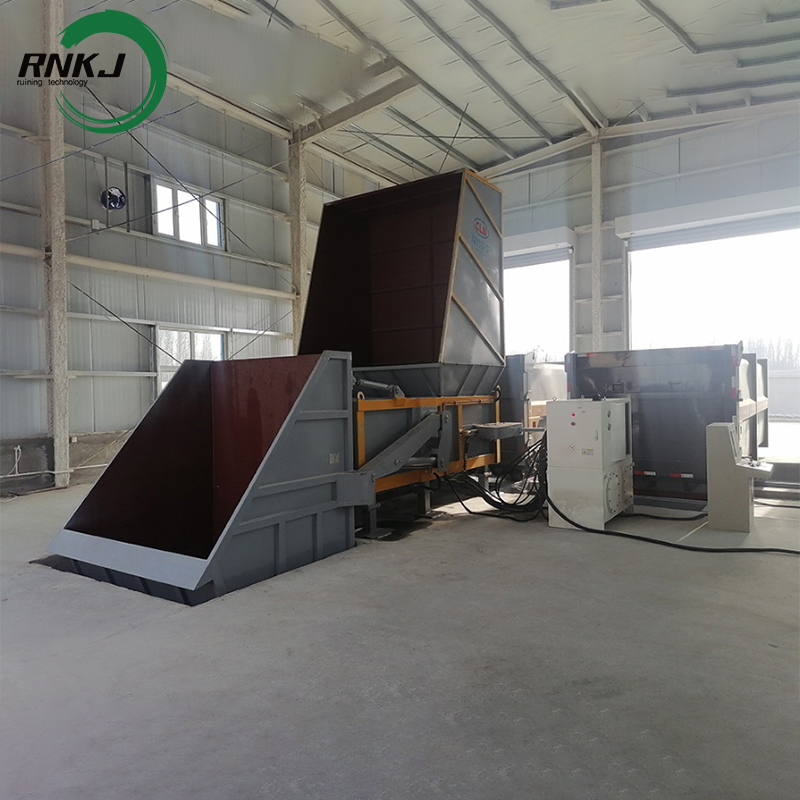
The Hydraulic Split-Type Garbage Compactor with Hook Lift Container is a waste handling solution designed for centralized garbage collection, volume reduction, and convenient transportation. It combines a stationary hydraulic compression unit with a separate waste collection container, allowing the compaction process and container transportation to be handled independently. This configuration is suitable for waste transfer stations, municipal sanitation facilities, residential communities, commercial areas, industrial sites, and other locations that generate substantial amounts of waste.
Unlike an integrated garbage compactor that combines the compression mechanism and collection container into one transportable unit, this split-type system separates the compression equipment from the container after the waste has been compacted. The hydraulic compression unit remains installed at the designated collection site, while the full container can be detached and transported by a compatible hook lift truck. An empty container can then be positioned for the next collection cycle, helping reduce interruptions caused by container transportation.
The system supports customized capacities from 6 CBM to 30 CBM, allowing customers to select a suitable configuration according to waste generation, available installation space, collection frequency, and transportation requirements. Its hydraulic compression mechanism, separate container design, and hook lift transportation method make it a practical option for organized waste collection and transfer operations.

Split-Type Structure for Flexible Waste HandlingThe defining feature of the Hydraulic Split-Type Garbage Compactor with Hook Lift Container is its separated compression and storage arrangement. The system consists primarily of a hydraulic compression unit and a detachable hook lift container. Each component performs a specific function during the waste handling process.
The hydraulic compression unit is installed at the designated operating position. It contains the compression mechanism and associated hydraulic components used to push and compact the waste. The hook lift container serves as the receiving and storage unit for the compacted material. Once the container reaches its required filling level, it can be removed for transportation without requiring the entire compression installation to be moved.
This configuration is especially useful for waste collection points that need to remain operational while full containers are transported for disposal or further processing. Rather than moving the complete machine whenever waste needs to be removed, the operator can arrange for the full container to be exchanged for an empty one.
The split-type design also allows the compression equipment and container to be considered separately during project planning. Container dimensions, capacity, installation layout, and truck compatibility can be evaluated according to the requirements of the intended application.
Product Type

Hydraulic Compression SystemThe hydraulic system provides the power required to compress waste inside the compression chamber. During operation, the hydraulic mechanism drives the compression plate or pushing mechanism forward, applying pressure to the loaded waste and reducing the space it occupies.
Depending on the waste material and the equipment configuration, the compression process can help reduce the volume of common municipal, commercial, and certain industrial waste. Loose materials that would otherwise occupy considerable space can be compacted into a denser mass, allowing the collection container to accommodate more waste within its available volume.
The hydraulic compression system is designed to provide controlled pushing movement during the compaction cycle. Hydraulic components, including the power unit, cylinders, valves, and related controls, can be configured according to the machine capacity and operating requirements.
The compression force, cycle time, and achievable volume reduction depend on factors such as the hydraulic system design, waste composition, moisture content, material density, and loading conditions. For this reason, the final equipment configuration should be selected according to the actual waste stream rather than relying on a single compression ratio for every application.
For facilities handling regular quantities of loose waste, a hydraulic split-type compactor can help create a more structured collection process and reduce the space occupied by uncompacted garbage.

Hook Lift Container for Convenient TransportationThe hook lift container is an important part of the Hydraulic Split-Type Garbage Compactor with Hook Lift Container. It is designed to work with a compatible hook lift truck, allowing the container to be loaded onto the vehicle, transported to the designated destination, and returned or exchanged when required.
During the collection cycle, waste is loaded into the system and compacted by the hydraulic compression unit. As the container fills, the operator can arrange transportation according to the site's collection schedule. When the container reaches its designated capacity, the compatible hook lift truck removes the full container for transportation.
An empty container can then be installed in the operating position, allowing the stationary compression unit to continue serving the collection point. Where site conditions and equipment arrangements permit, preparing a spare container in advance can further simplify the exchange process.
The hook lift transportation method is suitable for waste collection operations that require containers to travel between collection points, transfer stations, disposal facilities, or other designated locations. The container can be configured to match the lifting and transportation requirements of the selected vehicle.
For reliable operation, the container dimensions, lifting structure, loading method, overall weight, and truck specifications should be checked together before production. The truck must be compatible with the container and capable of handling its loaded weight safely.
Customized Capacity from 6 CBM to 30 CBMThe Hydraulic Split-Type Garbage Compactor with Hook Lift Container supports customized capacities ranging from 6 CBM to 30 CBM. This broad capacity range allows the equipment to be adapted to different waste collection volumes, installation environments, and transportation arrangements.
Smaller configurations can be considered for commercial properties, residential communities, small transfer points, and other locations with limited installation space or moderate waste generation. A compact container may be suitable where collection takes place regularly and transportation access is restricted.
Medium-capacity configurations are suitable for many commercial facilities, municipal collection points, residential developments, and waste transfer operations. They provide additional storage volume for locations that generate substantial daily waste while maintaining a manageable container size for the selected transportation equipment.
Larger configurations can be considered for high-volume waste collection points, industrial facilities, logistics centers, and centralized waste transfer stations. The increased container capacity can reduce the frequency of container exchanges when the actual waste density, loading conditions, and collection schedule allow.
The capacity range is customizable rather than limited to only three standard sizes. Final dimensions and usable capacity can be discussed according to project requirements, site conditions, waste characteristics, and hook lift truck specifications.
It is important to distinguish container volume from actual waste payload. A larger container does not automatically mean that the truck can carry more waste, because the permissible payload is also affected by material density, container weight, vehicle limits, and applicable transport regulations.
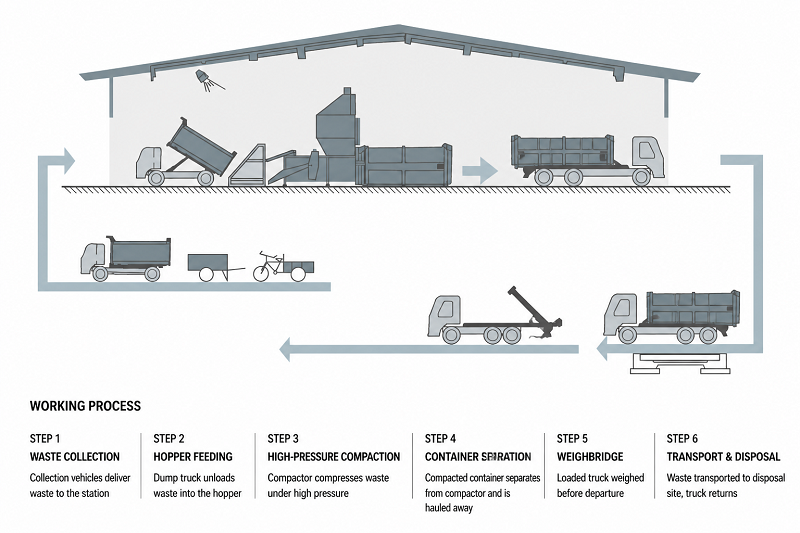
A Practical Waste Compaction and Container Exchange ProcessThe Hydraulic Split-Type Garbage Compactor with Hook Lift Container is designed to organize waste collection into a series of manageable operating steps.
Waste is delivered to the designated collection point and loaded into the system according to the equipment's feeding arrangement. The loading method depends on the installation layout and the type of waste being handled.
After loading, the hydraulic compression mechanism pushes the waste through the compression chamber. The applied pressure reduces the volume of suitable waste materials and allows more material to be accommodated in the available container space.
The compacted waste is collected in the hook lift container. The operator monitors the filling condition and arranges container exchange when the designated filling level or operating requirement is reached.
A compatible hook lift truck removes the full container from the compression station. The container is then transported to the designated waste transfer, treatment, or disposal facility.
An empty container is positioned at the station according to the equipment's installation and connection requirements. After the system is correctly positioned and checked, waste collection can resume.
This operating arrangement separates the stationary compaction task from container transportation. It can help improve collection scheduling and reduce the need to relocate the main compression equipment during routine waste removal.
Fully Enclosed Configuration and Environmental ConsiderationsFor waste collection points in residential, commercial, or municipal environments, equipment enclosure and sealing arrangements are important considerations. The hydraulic split-type garbage compactor can be configured with an appropriate enclosed compression chamber and container interface to help control waste exposure during normal operation.
Depending on the selected design, sealing components and suitable structural connections can help limit the escape of loose waste, odors, and liquid leakage around relevant interfaces. These features are particularly important when handling wet household waste or mixed municipal garbage.
Actual sealing performance depends on the enclosure structure, door design, seals, drainage arrangements, maintenance condition, and the characteristics of the waste being processed. Where leakage control is a project priority, the required sealing level and any liquid collection provisions should be specified before manufacture.
The installation site should also provide appropriate access for loading, routine cleaning, equipment inspection, and container exchange. A well-planned layout can help maintain a cleaner operating environment and make daily waste handling more convenient.
Main Components and Customization OptionsThe equipment can be configured according to the required capacity, installation environment, waste type, and transportation arrangement. Depending on the selected model, the main components may include:
Hydraulic Compression Unit: Provides the driving force for pushing and compacting waste.
Compression Chamber: Guides the waste during the compression cycle and supports the movement of the compression mechanism.
Hook Lift Container: Receives and stores compacted waste for subsequent transportation.
Hydraulic Power Unit: Supplies hydraulic power to the compression mechanism.
Electrical Control System: Supports equipment operation and control according to the selected configuration.
Structural Frame and Supporting Components: Provide the structural support required for installation and operation.
Sealing and Enclosure Components: Can be specified according to environmental and leakage-control requirements.
Customization may cover container capacity, overall dimensions, steel material and thickness, hydraulic system configuration, electrical controls, feeding arrangements, enclosure structure, and compatibility with the customer's hook lift truck.
Because truck systems and site conditions can differ, customers should provide available vehicle specifications, installation dimensions, and waste information when requesting a quotation. These details help determine a suitable configuration before manufacturing.
Applications of Hydraulic Split-Type Garbage CompactorsThe Hydraulic Split-Type Garbage Compactor with Hook Lift Container can be considered for a range of waste collection and transfer applications.
Municipal Waste Collection: Suitable for designated municipal collection points that need to compact collected waste before transportation.
Residential Communities: Can be installed at centralized waste collection areas in residential developments, helping organize daily waste loading and container removal.
Commercial Buildings and Shopping Centers: Supports waste handling in facilities that generate regular quantities of packaging, general refuse, and other suitable commercial waste.
Industrial Facilities: Can be configured for selected industrial waste streams, provided the material is compatible with the equipment's feeding, compression, and structural specifications.
Waste Transfer Stations: The separate compression unit and transportable container arrangement is useful for centralized sites where waste is compacted before being moved to another facility.
Logistics Parks and Large Properties: Offers a configurable option for locations where waste is generated across a large site and collected at a designated transfer point.
Waste type should be confirmed before equipment selection. Hazardous waste, hot materials, pressurized containers, oversized rigid objects, and other unsuitable materials should not be loaded unless the equipment has been specifically designed and approved for them.
Advantages of the Split-Type DesignThe main advantage of this system is the independent arrangement of the compression equipment and the hook lift container. This provides several practical benefits for waste collection operations.
The main compression unit remains at the designated site during routine container transportation, reducing the need to move the complete installation.
A full container can be removed and replaced with an empty one, helping organize the collection schedule.
The 6–30 CBM capacity range provides options for different waste volumes and site requirements.
The hydraulic mechanism helps compact suitable waste before transportation, potentially reducing the number of transport trips required for a given waste volume.
The hook lift container can be transported by a compatible truck, supporting movement between collection points and designated waste facilities.
Container dimensions, structural specifications, controls, and other components can be customized to suit the intended operating conditions.
The actual benefits depend on the type and quantity of waste, the selected capacity, transport distance, operating schedule, and compatibility between the container and the vehicle.
How to Select the Right ConfigurationBefore selecting a Hydraulic Split-Type Garbage Compactor with Hook Lift Container, buyers should evaluate several factors.
First, estimate the daily or weekly waste volume and determine how frequently the container should be exchanged. This helps establish whether a 6 CBM, 10 CBM, 15 CBM, 20 CBM, or larger configuration is appropriate.
Second, identify the type of waste being processed. Municipal refuse, commercial packaging, and selected industrial materials have different densities, feeding characteristics, and compression requirements. The hydraulic system and chamber should be selected accordingly.
Third, confirm the hook lift truck specifications. The container must match the vehicle's lifting arrangement, dimensions, loading method, and permissible payload. Vehicle compatibility is essential for safe container removal and transportation.
Fourth, assess the installation environment. Available space, ground conditions, vehicle access, drainage, electrical supply, and maintenance clearance can affect the final design.
Finally, specify any environmental requirements, such as an enclosed structure, liquid leakage control, or particular corrosion protection. Providing these details early helps ensure that the finished equipment meets the project's operational requirements.
FAQsA Hydraulic Split-Type Garbage Compactor with Hook Lift Container is a waste compaction system consisting of a stationary hydraulic compression unit and a separate waste collection container. The hydraulic unit compresses waste, while a compatible hook lift truck transports the full container for disposal or further processing.
The equipment supports customized capacities from 6 CBM to 30 CBM. The appropriate capacity depends on daily waste generation, available installation space, container exchange frequency, and hook lift truck specifications.
Waste is loaded into the system and compressed by the hydraulic mechanism before being collected in the container. When the container reaches its designated filling level, a compatible hook lift truck removes the full container. An empty container can then be installed so the compression unit can resume operation.
Yes. Customization options may include container capacity, dimensions, steel specifications, hydraulic system configuration, feeding arrangements, electrical controls, and enclosure design. The equipment can be configured for suitable municipal, commercial, and selected industrial waste applications according to project requirements.
Key considerations include container capacity, waste type and density, hook lift truck compatibility, maximum payload, installation dimensions, and transportation requirements. The container's lifting structure and dimensions must match the selected truck to ensure safe loading, removal, and transportation.
The Hydraulic Split-Type Garbage Compactor with Hook Lift Container combines hydraulic waste compression, a separate collection container, and hook lift truck transportation in one coordinated waste handling system. Its split-type structure allows the main compression unit to remain at the collection site while the full container is transported away and replaced when necessary.
With customizable capacities from 6 CBM to 30 CBM, the system can be configured for municipal waste collection, residential communities, commercial facilities, industrial sites, and waste transfer stations. Capacity, container dimensions, hydraulic specifications, enclosure design, and vehicle compatibility can all be evaluated according to the actual project requirements.
For customers seeking a stationary hydraulic compaction solution with a transportable hook lift container, this equipment offers a flexible approach to organizing waste collection, reducing waste volume, and coordinating container transportation.
We are a professional manufacturer of sanitation machinery, providing customers with ex-factory prices and on-demand customization services. You can contact us via WhatsApp or email.


