




| Quantity: | |
|---|---|
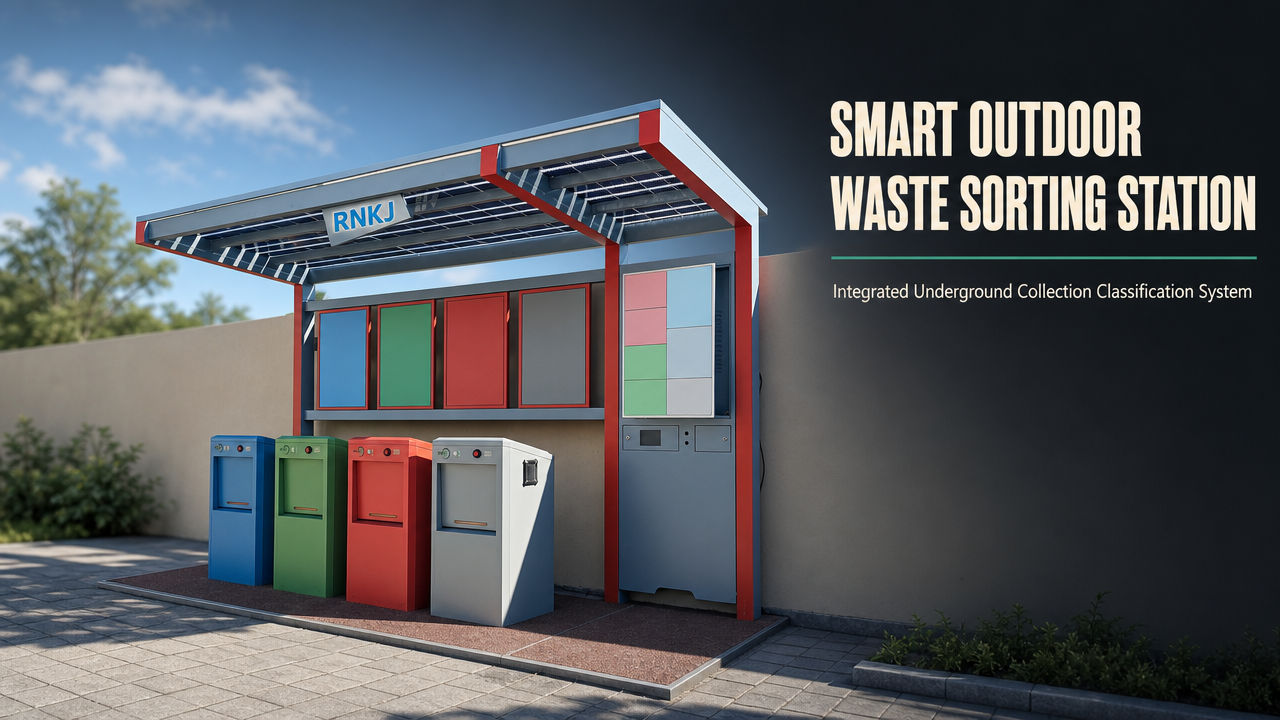
The Factory Customization 1100 Liters Underground Garbage Classification Collection Station is a modern waste collection solution designed to combine waste sorting, underground storage, environmental protection, and convenient collection in one integrated system. By moving large-capacity waste bins below ground while keeping only the waste classification and disposal facilities above ground, the system helps create a cleaner, more organized, and space-efficient waste collection area.
Designed for residential communities, commercial areas, public facilities, parks, schools, industrial parks, and other urban environments, this Underground Garbage Classification Collection Station provides a practical alternative to conventional above-ground waste bins and open waste collection points.
The underground configuration can be factory customized according to project requirements, including garbage bin capacity, number of waste categories, feeding-port arrangement, station dimensions, lifting configuration, appearance, and other functional options. The garbage bin capacity can be customized according to the application, with 1100L, 660L, 240L and other capacities available depending on the project design.
 Customized 1100L Underground Garbage Collection System
The 1100L underground garbage collection system is particularly suitable for locations that generate relatively high volumes of household or municipal waste. Instead of placing large waste bins directly on the ground, the containers are installed in an underground pit, while the surface area is mainly used for classified disposal openings and the station structure.
The 1100-liter configuration provides a larger storage volume than smaller waste bins and can help reduce the frequency of manual bin handling and collection operations.
For projects with different waste-generation levels, the system does not have to be limited to one fixed configuration. 240L, 660L, 1100L or other customized garbage bin capacities can be selected according to the required storage volume, available underground space, waste classification requirements, and local collection methods.
This makes the equipment suitable for both small community waste collection points and larger centralized waste sorting areas.
Underground Design for a Cleaner Surface EnvironmentOne of the main advantages of an Underground Garbage Classification Collection Station is its underground storage structure.
Traditional waste collection areas often require multiple large garbage bins to remain above ground, which can occupy considerable public space and affect the appearance of residential or commercial areas. With an underground waste collection station, most of the waste storage equipment is positioned below ground.
Only the necessary disposal ports, classification signs, operating components, and station structure remain visible at ground level.
This design helps:
Reduce the visual impact of large waste containers
Make better use of limited surface space
Keep waste storage areas more organized
Improve the appearance of residential and public areas
Reduce direct exposure of waste containers
Create a cleaner waste disposal environment
The underground design is especially suitable for locations where appearance, cleanliness, and efficient use of public space are important considerations.
Factory Customized Garbage Bin CapacityDifferent waste collection projects have different capacity requirements. Therefore, this customized underground garbage classification station is designed with flexible garbage bin configurations rather than a single standard capacity.
The system can be configured for:
1100L garbage bins
660L garbage bins
240L garbage bins
Customized bin capacities according to project requirements
The number of bins can also be arranged according to the required waste classification categories. For example, the station can be designed with multiple collection points for different waste streams.
This allows customers to create a customized underground waste classification system based on the actual requirements of their project rather than adapting the project to a fixed equipment configuration.
For large residential communities or public areas, 1100L bins can provide higher storage capacity. For smaller waste streams or specific classification requirements, 240L or 660L bins can also be considered.
Multiple Waste Classification ConfigurationsThe station can be configured with multiple waste disposal ports to support different waste categories.
Depending on the project, the above-ground collection points can be designed for categories such as:
Recyclable waste
Household waste
Kitchen or organic waste
Hazardous waste
Other residual waste
Clear labels, colors, icons, and classification information can be incorporated into the station design to help users identify the correct disposal point.
This makes the equipment more than a simple underground garbage bin. It functions as an integrated underground garbage sorting station that combines classified disposal with underground waste storage.
The number and arrangement of feeding ports can be customized according to the number of waste categories and the required station layout. Existing configurations include multi-port arrangements such as four- and six-port systems.
Hydraulic Lifting System for Convenient CollectionThe underground garbage bins are installed inside the underground pit and can be raised through the station's lifting system when collection or maintenance is required.
During normal operation, the garbage bins remain below ground. When the containers need to be emptied, the lifting system raises the underground platform or container assembly to an accessible position, allowing sanitation workers to perform collection and maintenance operations.
This lifting structure is particularly useful for 1100L underground garbage bins, which can be difficult to move manually when fully loaded.
The lifting system can therefore help simplify the waste collection process while reducing the need for workers to manually move heavy containers over long distances.
The manufacturer's existing underground classification station configurations use hydraulic lifting structures with customized lifting height and lifting capacity according to the equipment model.
Sealed Underground Waste StorageAnother important feature of this Underground Garbage Classification Collection Station is the separation between the above-ground disposal area and the underground storage area.
After users place waste through the corresponding classification opening, the waste enters the underground collection container. The underground structure helps keep large waste containers away from direct public contact.
For projects requiring improved environmental control, the system can incorporate features such as:
Sealed waste storage
Deodorization equipment
Leachate drainage
Sewage collection
Anti-corrosion treatment
Anti-seepage measures
Protective covers
Weather-resistant external materials
These configurations can help address common problems associated with conventional waste collection points, including odor, rainwater exposure, leakage, and scattered waste. Existing system configurations include deodorization and sewage-management components.
Intelligent and User-Friendly Waste DisposalThe Underground Garbage Classification Collection Station can be equipped with different operating configurations depending on project requirements.
Possible options include:
Foot-operated opening systems
Waste classification signs
Full-bin detection
Warning indicators
Intelligent monitoring
Deodorization systems
Sensor or controlled opening mechanisms can reduce direct hand contact during waste disposal, while classification signs help users identify the correct disposal point.
For projects requiring more advanced management, sensors and monitoring functions can be integrated into the system to provide information about equipment status and waste-container capacity.
Customizable Station LayoutEvery installation site has different space limitations and waste collection requirements. For this reason, the station can be factory customized according to the customer's site conditions.
Customization can include:
Choose different capacities such as 1100L, 660L, 240L, or other project-specific sizes.
The station can be designed with different numbers of disposal ports depending on the required classification system.
The position, number, size, and configuration of the disposal openings can be adjusted to match the internal garbage bin arrangement.
The underground pit can be designed according to the selected garbage bin dimensions, lifting mechanism, and site conditions.
Hydraulic lifting capacity and lifting height can be selected according to the weight and size of the underground waste containers.
The canopy, kiosk, panels, colors, classification signs, and other visible components can be customized for different architectural and landscaping environments.
Power supply, voltage, control system, sensors, and other electrical components can be configured according to project requirements.
This factory customization approach makes the equipment suitable for different underground waste collection projects, rather than limiting customers to a single standard station design.
How the 1100L Underground Garbage Classification Station WorksThe basic operation process is straightforward:
Step 1 – Waste Classification
Residents, employees, or visitors identify the appropriate waste category and dispose of the waste through the corresponding collection opening.
Step 2 – Underground Collection
The waste passes through the disposal opening and enters the corresponding underground garbage bin.
Step 3 – Sealed Underground Storage
The waste remains inside the underground container until the scheduled collection or the container reaches its required capacity.
Step 4 – Hydraulic Lifting
When collection is required, the lifting system raises the underground bins to an accessible position.
Step 5 – Waste Removal
Sanitation workers remove the full garbage bins and transfer the waste according to the local waste collection process.
Step 6 – Container Reset
Empty containers are returned to the underground position and the station continues normal operation.
This operating concept combines classified disposal, underground storage, lifting collection, and centralized waste transportation into one integrated system.
Product ParametersModel number | ZFDM-2404 | ZFDM-2406 | ZFDM-6604 |
Size of Kiosk (mm) | 4200*1600*2630 | 5580*1600*2630 | 6400*2300*3000 |
Size of Pit (mm) | 4130*1280*2280 | 5510*1280*2280 | 6220*1920*2680 |
Number of Feeding Ports | 4 | 6 | 4 |
Capacity (L) | 960L (4 barrels) | 1440L (6 barrels) | 2640L (660L per barrel) |
Weight (KG) | 2980 | 3450 | 4950 |
Lift Height (mm) | 1320 | 1320 | 1700 |
Motor Power(kw) | 1.5 | 1.5 | 2.2 |
Voltage | 220V 50HZ / Customized | 220V 50HZ / Customized | 220V 50HZ / Customized |
Opening Mode | sensor | sensor | sensor |
Sewage Pump Power(kw) | 1.1 | 1.1 | 1.1 |
Lift Weight(T) | 2.8 | 3.5 | 5.5 |
Why Choose a Customized Underground Garbage Classification Collection Station?Compared with conventional above-ground garbage collection arrangements, this system provides a more integrated approach to waste classification and collection.
The 1100L configuration provides substantial waste storage capacity and is suitable for locations with relatively high waste-generation volumes.
Customers can select 1100L, 660L, 240L, or customized garbage bin capacities according to actual project requirements.
Large waste containers are positioned underground, leaving the surface area cleaner and more organized.
Multiple disposal ports and clear classification identification can support separated waste collection.
The hydraulic lifting system provides access to underground bins when collection and maintenance are required.
The station can be customized in terms of capacity, number of bins, feeding ports, dimensions, lifting system, appearance, and additional environmental functions.
Weather-resistant construction and optional rain protection make the system suitable for outdoor public environments.
Deodorization, drainage, anti-seepage, and other environmental-control features can be incorporated according to project requirements.
Factory Customization for Different Waste Management Projects
As a factory-customized solution, this Underground Garbage Classification Collection Station can be developed according to the customer's site layout and waste management requirements.
Before production, customers can provide information such as:
Required garbage bin capacity
Number of waste categories
Number of disposal openings
Daily waste volume
Available installation area
Underground pit dimensions
Required lifting height
Local power supply
Waste collection vehicle requirements
Outdoor appearance requirements
Based on these requirements, the station structure and equipment configuration can be adjusted accordingly.
For customers looking for an 1100L Underground Garbage Classification Collection Station, customized underground waste collection system, or underground garbage sorting station for residential communities, this configuration provides a flexible way to integrate waste classification and underground storage into a single facility.
The Factory Customization 1100 Liters Underground Garbage Classification Collection Station is designed for modern waste collection projects that require higher storage capacity, organized waste classification, efficient container collection, and reduced visual impact.
By placing large-capacity garbage bins underground and keeping classified disposal points above ground, the system creates a cleaner and more space-efficient waste collection environment. With customizable 1100L, 660L, 240L and other garbage bin capacities, flexible feeding-port layouts, hydraulic lifting, optional deodorization and drainage functions, and factory customization, it can be adapted to a wide range of municipal and commercial waste management applications.
For projects requiring a customized underground garbage classification collection station, the system can be configured according to the site's waste volume, classification requirements, available space, and local collection practices.
We are a professional manufacturer of sanitation machinery, providing customers with ex-factory prices and on-demand customization services. You can contact us via WhatsApp or email.


