





| Quantity: | |
|---|---|
 Product Overview
The Customizable Independent Storage Underground Dual-Classification Garbage Collection System is an integrated underground waste collection solution designed for municipal waste management, residential communities, commercial areas, public spaces, and urban environmental sanitation projects. It provides an efficient way to collect, sort, and store two different categories of waste through an independent dual-container configuration.
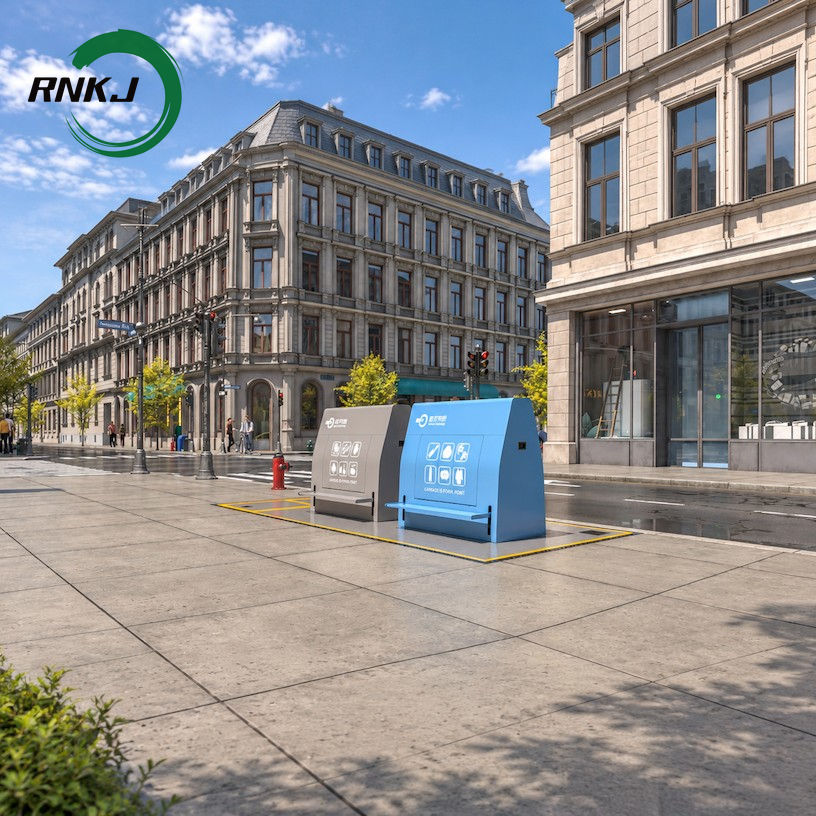
Unlike traditional above-ground garbage collection stations that place multiple waste bins directly on the ground, this underground dual-classification garbage collection system features a concealed installation structure. The main equipment platform and waste storage containers are installed below ground level, while the waste disposal openings remain accessible above the ground. This design helps reduce the visible footprint of conventional waste collection facilities and creates a cleaner, more organized waste disposal environment.
The system features two independent garbage storage containers, each corresponding to a separate waste disposal opening. Different types of waste can be deposited into their respective containers without mixing. Each container operates as an independent storage unit, making the system suitable for projects that require two-category waste separation and organized collection.
The garbage bin configuration can be customized according to project requirements, with standard options including 240L, 660L, and 1100L garbage bins. Customers can select suitable bin capacities based on daily waste generation, collection frequency, available underground installation space, and the number of users.
With its independent storage design, customizable bin configuration, underground installation structure, and convenient waste collection arrangement, this underground dual-classification garbage collection station provides a practical solution for modern municipal waste sorting and collection projects.
Independent Dual-Container Storage DesignOne of the most important features of this Underground Dual-Classification Garbage Collection System is its two-container independent storage structure.
The system is equipped with two separate garbage storage compartments, allowing two different waste categories to be collected and stored independently within the same underground installation.
Each waste disposal opening corresponds to one dedicated storage container. Users can deposit different waste types through the designated openings, and the waste is directed into the corresponding bin below.
This independent configuration offers several practical advantages:
Separate Waste Collection
The two independent containers allow different waste categories to be collected separately. For example, one container can be used for recyclable waste, while the other can collect residual waste. The classification arrangement can be adjusted according to local waste sorting policies.
Independent Storage Spaces
Each container provides its own dedicated storage space. Waste from one category does not need to share the same storage compartment with another category, helping maintain a more organized collection process.
Reduced Waste Mixing
The separate disposal openings and corresponding storage bins help reduce accidental mixing during waste disposal. This is particularly important for residential communities and municipal projects implementing waste classification systems.
Flexible Container Replacement
Because the two containers are independent, each can be handled separately during waste collection and maintenance. When one container reaches its designated filling level, it can be emptied or replaced without necessarily requiring both storage compartments to be handled at the same time.
Space-Efficient Integrated Configuration
Two waste categories can be managed within one integrated underground station instead of installing two completely separate above-ground collection facilities.
This design makes the independent dual-bin underground garbage collection system particularly suitable for projects requiring organized two-category waste collection.
According to the customer's demand, it can choose various modes of feeding port, such as garbage classification feeding port, barrel turning device, large garbage opening device, etc., which is convenient for garbage collection vehicles and cleaning personnel to dump garbage.

Customizable Garbage Bin Capacity: 240L / 660L / 1100LThe garbage storage capacity is an important factor when configuring an underground dual-classification collection system.
Different projects have different waste generation levels, collection schedules, and installation conditions. Therefore, this system supports multiple garbage bin capacity options to accommodate different application requirements.
Available garbage bin configurations include:
240L Garbage Bin
Suitable for small residential areas.
Suitable for low-volume waste collection points.
Flexible for projects with limited installation space.
660L Garbage Bin
Suitable for residential communities.
Suitable for commercial buildings and public facilities.
Provides a balanced storage capacity for daily waste collection.
1100L Garbage Bin
Suitable for high-volume waste collection points.
Suitable for municipal and large residential projects.
Reduces the need for frequent container emptying when waste volume is high.
Customized Bin Configuration
Customers can select different garbage bin capacities according to the actual requirements of their projects.
Underground Installation and Space-Saving StructureThe underground installation design is another important advantage of this waste collection system.
Traditional garbage collection points often require multiple exposed waste containers, which can occupy considerable ground space and affect the surrounding environment. This system places the main storage containers beneath the ground, while only the designated waste disposal structures remain visible and accessible.
The underground arrangement offers several benefits:
Reduced Above-Ground Space Occupation
By placing the garbage storage containers underground, the system reduces the amount of ground-level space required for waste storage. This is particularly useful in residential communities, landscaped areas, pedestrian zones, and urban public spaces.
Cleaner Public Environment
The concealed storage arrangement helps create a more organized appearance around waste collection points. It reduces the visual impact of multiple exposed garbage containers.
Integrated Equipment Structure
The system combines two waste disposal openings, two independent garbage bins, and a supporting installation platform into one integrated collection station.
Suitable for Urban Environmental Projects
The underground structure can be incorporated into municipal waste collection planning, community infrastructure projects, and modern environmental sanitation facilities.
The underground installation dimensions and platform configuration should be designed according to the selected garbage bin sizes, site conditions, and project construction requirements.
Product Effects
Lifting mode
Landing mode
Hydraulic Lifting Platform and Convenient Waste Collection
The underground dual-classification garbage collection system can be configured with a lifting platform to facilitate the handling of the underground storage containers.
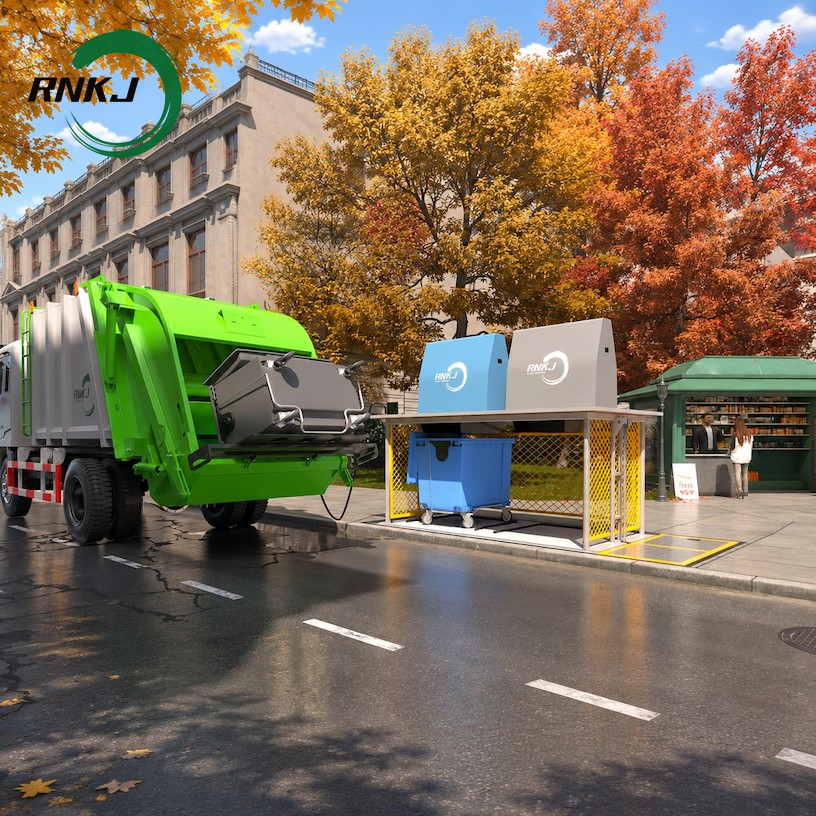
During normal operation, the garbage bins are positioned beneath the ground-level disposal openings. When waste collection or maintenance is required, the lifting platform raises the storage area to an accessible working position, allowing operators to remove and handle the garbage containers.
The lifting arrangement can provide several practical benefits:
Convenient Container Access: Raises the underground storage area for easier access during waste collection.
Organized Maintenance: Provides a more accessible working position for inspection and routine maintenance.
Independent Bin Handling: Allows the two storage containers to be handled according to their individual collection requirements.
Integrated Lifting Structure: Combines the underground storage arrangement with a supporting platform for coordinated operation.
The lifting system, platform dimensions, lifting stroke, and operating configuration can be customized according to the project requirements.
Dual-Classification Waste Collection ProcessThe system is designed to simplify the collection of two different categories of waste through clearly separated disposal openings and independent storage containers.
Its basic working process includes the following steps:
Waste Classification and Disposal
Users identify the appropriate disposal opening according to the waste category and deposit the waste into the corresponding inlet.
Independent Waste Storage
The waste enters its designated garbage bin. The two containers separately store their respective waste categories.
Underground Storage
The garbage bins remain beneath the ground-level platform during normal collection operations, maintaining an organized waste collection area.
Container Lifting and Collection
When waste collection is required, the lifting platform can raise the underground storage area to facilitate container access.
Separate Waste Removal
The two independent containers can be emptied, transported, or replaced separately according to the waste collection schedule.
This collection arrangement helps establish a more standardized waste sorting process, especially in locations where two-category waste separation is required.
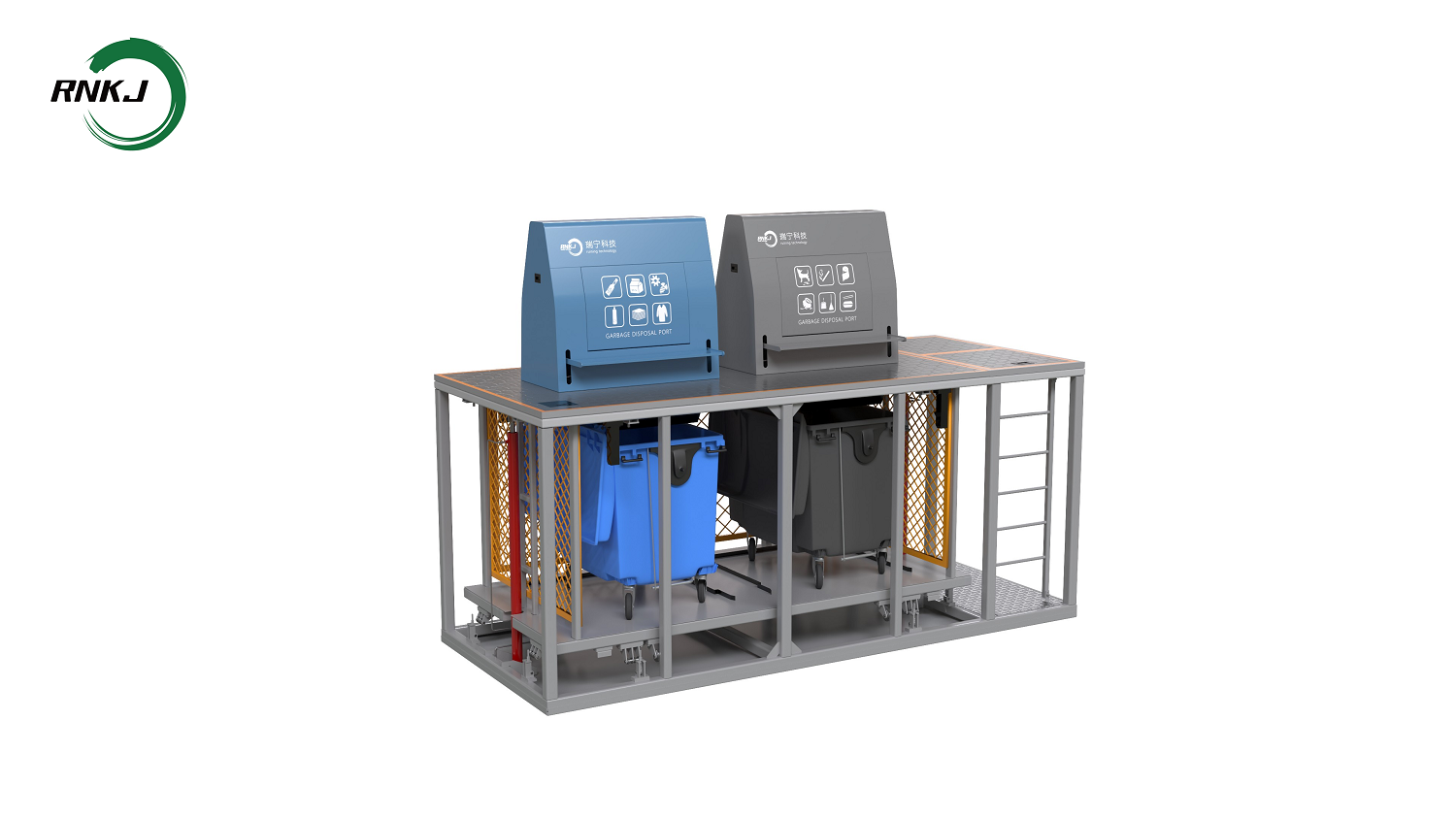
Main Structural ComponentsThe underground dual-classification garbage collection station consists of several integrated components. Each component serves a specific function within the overall collection and storage arrangement.
Component | Function |
|---|---|
Dual Waste Disposal Openings | Provides two separate waste disposal entrances. |
Independent Storage Containers | Stores two different categories of waste separately. |
Steel Supporting Frame | Supports the main equipment structure and storage platform. |
Underground Installation Platform | Provides the structural foundation for the underground collection arrangement. |
Lifting Platform | Facilitates access to underground garbage bins during collection. |
Protective Enclosure | Helps protect internal equipment and restrict access to designated areas. |
Waste Sorting Identification Panels | Identifies different disposal categories for users. |
The steel structure, protective panels, container arrangement, and lifting configuration can be adjusted according to the intended installation environment and customer requirements.
Customization Options for Different ProjectsEvery underground waste collection project has different requirements in terms of waste classification, bin capacity, installation dimensions, and operating conditions.
As a manufacturer of underground garbage collection equipment, we can provide customized configurations according to the actual project specifications.
Customization Item | Available Options |
|---|---|
Waste Classification | Two-category classification, customized waste sorting labels |
Garbage Bin Capacity | 240L / 660L / 1100L |
Bin Configuration | Two independent bins, equal or different capacities |
Installation Type | Underground installation |
Lifting Configuration | Customized lifting platform and lifting structure |
Steel Structure | Customized dimensions and structural design |
Disposal Openings | Two independent waste disposal openings |
Identification Panels | Customized waste classification symbols and labels |
Surface Platform | Customized dimensions and structural arrangement |
Project Design | Customized according to site conditions |
The two independent storage containers can be configured according to the actual waste generation volume of each category.
Why Choose Our Underground Dual-Classification Garbage Collection System?Selecting suitable underground waste collection equipment requires consideration of storage capacity, classification requirements, structural design, installation conditions, and long-term maintenance.
Our customizable underground dual-classification garbage collection system offers several advantages for municipal and commercial waste management projects.
The two-bin configuration provides separate storage spaces for two waste categories, helping prevent waste mixing and improving collection organization.
The system supports 240L, 660L, and 1100L garbage bins, with different capacity combinations available according to project requirements.
The underground installation arrangement reduces exposed storage space and helps create a more organized public environment.
The lifting platform configuration provides access to underground garbage bins during waste removal and maintenance operations.
The steel frame, platform dimensions, bin configuration, and classification arrangements can be adjusted according to the project site and operating requirements.
The equipment can be used in residential communities, public spaces, commercial areas, and municipal waste collection facilities.
Each storage bin can be handled separately, providing greater flexibility for waste collection scheduling and container maintenance.
Get a Customized Underground Dual-Classification Waste Collection Solution
Are you planning a municipal waste sorting project or looking for an underground garbage collection system with two independent storage containers?
Our Customizable Independent Storage Underground Dual-Classification Garbage Collection System provides a flexible solution for projects requiring separate collection and storage of two waste categories.
We can customize the equipment according to your project requirements, including:
Two independent garbage storage containers.
240L, 660L, and 1100L garbage bin capacity options.
Different combinations of container capacities.
Customized waste classification openings and identification panels.
Underground installation dimensions and supporting steel structures.
Customized lifting platform configurations.
Whether you need underground dual-bin waste collection equipment for a residential community, municipal sanitation project, commercial complex, or public waste collection facility, we can provide a suitable configuration based on your site conditions and waste management requirements.
Contact us today to discuss your project specifications and get a customized quotation for your underground dual-classification garbage collection system.
We are a professional manufacturer of sanitation machinery, providing customers with ex-factory prices and on-demand customization services. You can contact us via WhatsApp or email.


