


| Quantity: | |
|---|---|
 Product Overview
The Customizable Hydraulic Lifting Underground Waste Sorting System is designed for municipal waste collection, residential communities, commercial areas, public spaces, and urban environmental sanitation projects. It provides an organized solution for classified waste collection by combining underground installation, multiple independent waste bins, and a hydraulic lifting mechanism.
Unlike traditional above-ground garbage collection stations, this underground waste sorting system places the waste storage containers below ground level. Only the designated waste disposal openings and operating structures remain accessible above the ground, helping reduce the visual impact of conventional waste collection facilities while making better use of available public space.
The system supports different waste bin capacities, including 240L, 660L, and 1100L, allowing customers to select suitable containers according to waste volume, collection frequency, and installation requirements. The number of waste categories, bin arrangement, and classification configuration can also be customized to meet different municipal waste separation standards.
Equipped with a hydraulic lifting system, the underground waste sorting equipment can raise the underground storage area to ground level when waste collection or container handling is required. This design makes daily waste management more organized and provides sanitation operators with convenient access to the storage containers.
Whether used in residential neighborhoods, municipal sanitation projects, parks, commercial districts, or smart city infrastructure, this customizable underground garbage classification system can be configured according to the actual site layout and waste collection requirements.


Main Features of the Underground Waste Sorting SystemThe underground installation design is one of the main advantages of this underground waste classification system. Waste bins are arranged below ground level, reducing the amount of conventional garbage storage equipment exposed in public areas.
Compared with traditional above-ground waste collection points, the underground structure helps maintain a cleaner and more organized appearance in residential communities, commercial properties, parks, and municipal public spaces.
The system can be planned according to available installation space, ground conditions, waste disposal requirements, and local sanitation arrangements. It is particularly suitable for projects where appearance, space utilization, and classified waste collection are important considerations.
To accommodate different waste generation levels, the underground waste sorting system supports multiple standard garbage bin capacities.
240L Waste Bins: Suitable for small residential areas, pedestrian zones, parks, and locations with relatively low daily waste volumes.
660L Waste Bins: Appropriate for medium-sized residential communities, commercial buildings, office areas, and public facilities.
1100L Waste Bins: Designed for locations with higher waste generation, including large residential communities, municipal collection points, industrial parks, and commercial districts.
Customers can select the appropriate garbage bin size based on the number of users, daily waste volume, collection schedules, and available underground space.
Different bin capacities can also be combined within one waste sorting station, making it possible to allocate more storage capacity to waste categories that generate larger volumes.
Different cities, countries, and municipal sanitation departments may follow different waste separation standards. Therefore, this underground waste classification system supports customized waste sorting configurations rather than relying on a fixed number of categories.
The system can be designed with multiple independent waste collection compartments according to project requirements.
Common classification options include:
Recyclable Waste: Paper, cardboard, plastic bottles, glass, and recyclable packaging.
Food Waste: Kitchen scraps, fruit and vegetable waste, and other organic waste.
Residual Waste: Non-recyclable household waste and general municipal garbage.
Hazardous Waste: Batteries, lamps, chemical containers, and other designated hazardous materials.
The number of waste categories, garbage bin capacities, disposal openings, identification labels, and color arrangements can be customized.
For example, a residential project may require four-category waste separation, while a commercial project may only need three categories with different bin capacities. The underground waste sorting station can be configured to match these specific requirements.
The hydraulic lifting mechanism is an important component of the underground waste sorting equipment. It is designed to raise the underground waste storage section to an accessible position when collection, inspection, or maintenance is required.
During normal operation, the garbage bins remain positioned below ground level. When waste collection is scheduled, the hydraulic system operates the lifting structure to bring the storage area upward.
This arrangement provides sanitation workers with better access to the waste containers and helps simplify the container handling process.
The hydraulic lifting configuration can be customized according to the overall equipment dimensions, lifting requirements, bin arrangement, and site conditions.
The hydraulic power unit, lifting platform, structural support, and control components can be selected according to the engineering requirements of each project.
Each waste category has its own designated storage container, helping prevent different types of waste from being mixed during temporary collection.
The independent storage arrangement makes waste sorting more practical at the collection point. Residents, property management teams, and sanitation workers can identify the corresponding disposal openings and direct waste into the appropriate containers.
When different waste categories require different collection schedules, independent bins also allow each container to be handled according to its actual filling condition.
This design makes the underground garbage classification system suitable for residential waste separation programs, municipal waste collection facilities, and public environmental sanitation projects.
Every installation site has different requirements in terms of available space, underground depth, ground structure, waste volume, and container arrangement.
The underground waste sorting system can therefore be customized beyond the selection of garbage bin sizes.
Customization options include:
Number of waste classification compartments.
240L, 660L, or 1100L garbage bin selection.
Different combinations of bin capacities.
Overall equipment dimensions.
Underground installation depth.
Hydraulic lifting structure.
Waste disposal opening design.
Classification labels and color identification.
Electrical control and operating configuration.
Equipment materials and surface treatment.
Before production, the equipment configuration can be determined according to the project layout, installation conditions, local waste classification requirements, and waste collection method.
According to the customer's demand, it can choose various modes of feeding port, such as garbage classification feeding port, barrel turning device, large garbage opening device, etc., which is convenient for garbage collection vehicles and cleaning personnel to dump garbage.

Working Process of the Hydraulic Lifting Underground Waste Sorting SystemThe underground waste classification system follows a straightforward collection and lifting process.
Residents, employees, or visitors dispose of different types of waste through the designated openings. Each opening corresponds to an independent garbage storage bin.
Waste is temporarily stored in the corresponding 240L, 660L, or 1100L containers below ground level. Different waste categories remain separated during the collection stage.
When the bins need to be emptied or collected, the hydraulic lifting system raises the underground storage structure to the designated working position.
Sanitation personnel access the raised containers and remove or empty the bins according to the selected collection method.
After waste collection is completed, the lifting platform returns to its underground position, restoring the normal operating condition of the waste sorting station.
Applications of Underground Waste Classification Equipment
Applications of Underground Waste Classification EquipmentThe customizable underground waste sorting system can be used in a wide range of municipal and commercial waste collection environments.
Suitable for apartment complexes, residential neighborhoods, and property management projects. Multiple classification bins help residents separate household waste at designated collection points.
Provides an underground waste collection solution for city infrastructure and municipal environmental sanitation programs. The classification configuration can be adjusted according to local waste separation policies.
Suitable for shopping malls, office buildings, business parks, and other commercial properties where organized waste collection and a clean public environment are required.
The underground installation design is suitable for parks, squares, scenic areas, and pedestrian zones where conventional above-ground waste containers may affect the surrounding appearance.
The system can be configured with different waste categories and container capacities to meet the daily waste collection requirements of public facilities.
Product Effects
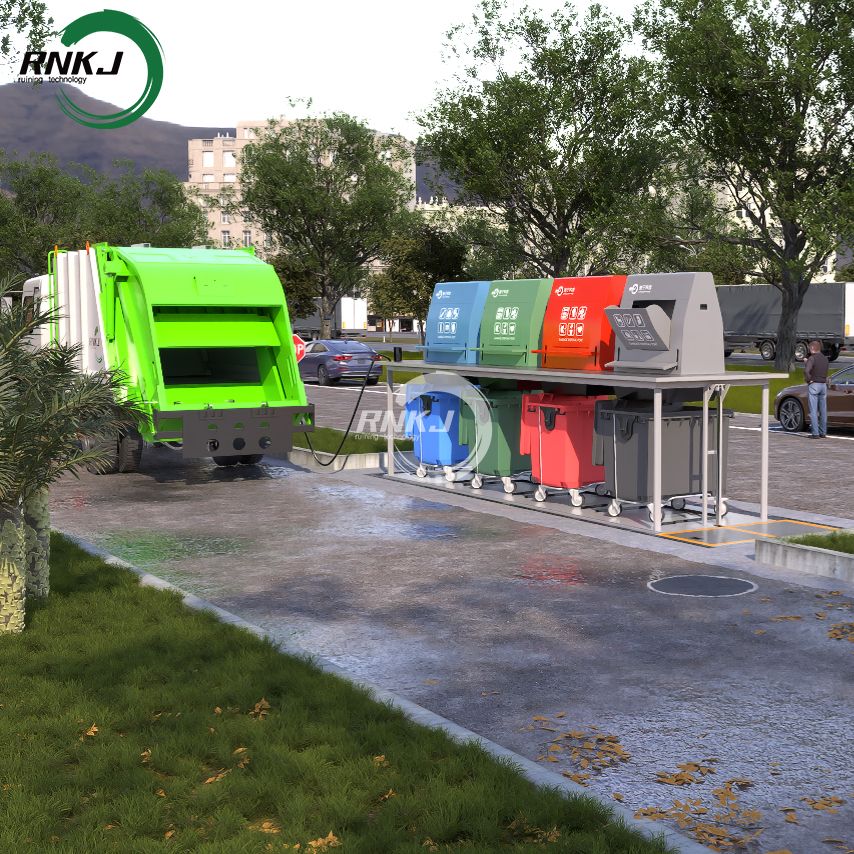
Lifting mode
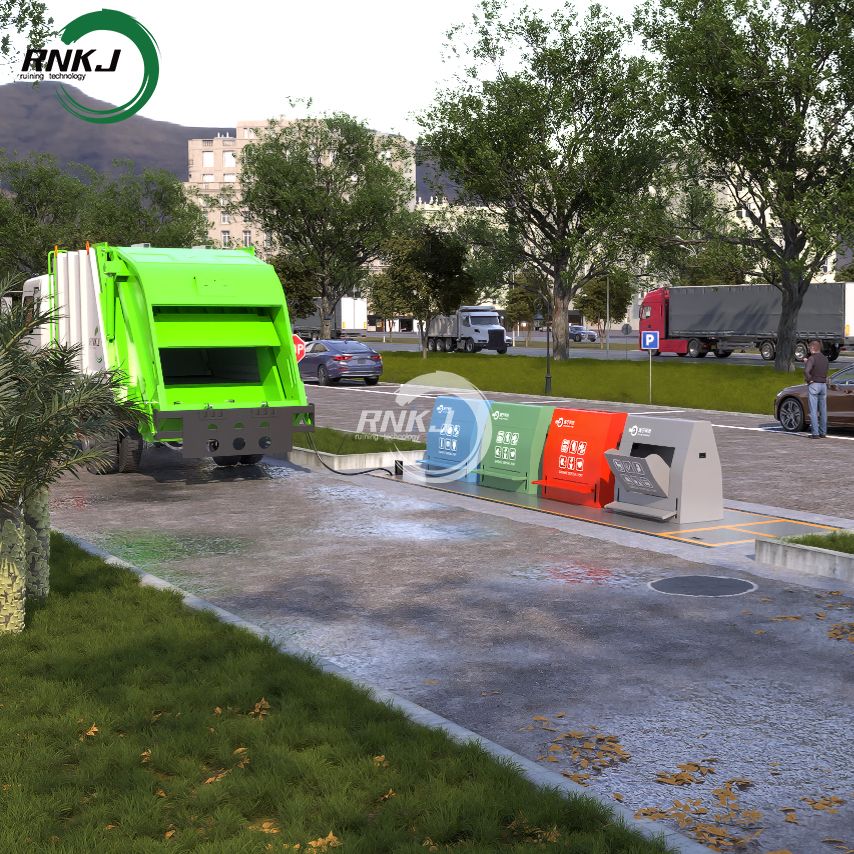
Landing mode
Why Choose Our Customizable Underground Waste Sorting System?
Choosing the right underground waste classification equipment involves more than selecting the number of garbage bins. The overall structure, lifting configuration, container capacity, classification arrangement, and installation conditions all affect the suitability of the system for a specific project.
Our customizable solution offers several purchasing advantages:
Flexible Bin Capacity: Choose 240L, 660L, or 1100L containers according to actual waste generation.
Customized Waste Categories: Configure the number of sorting compartments to match local waste separation requirements.
Hydraulic Lifting Design: Provides access to underground storage containers during collection and maintenance.
Independent Storage Structure: Keeps different waste categories in separate containers.
Project-Based Customization: Equipment dimensions, bin arrangements, and lifting configurations can be designed according to site conditions.
Multiple Application Scenarios: Suitable for municipal projects, residential communities, commercial areas, and public infrastructure.
As a waste management equipment manufacturer, we can provide customized underground waste sorting solutions based on your project specifications, including container capacity, classification requirements, equipment dimensions, and installation conditions.
FAQThe system supports 240L, 660L, and 1100L garbage bins. Customers can select one size or combine different capacities according to the daily waste volume and project requirements.
Yes. The underground waste classification system supports customized sorting configurations. The number of compartments, bin arrangement, classification labels, and corresponding waste categories can be designed according to local municipal waste separation standards.
The hydraulic lifting mechanism raises the underground storage structure when waste collection or maintenance is required. After the garbage bins are emptied or handled, the lifting platform returns to its underground position.
Yes. It is suitable for residential communities, apartment complexes, commercial districts, parks, municipal sanitation projects, and other locations requiring organized waste separation and underground storage.
Yes. Different bin sizes can be combined according to the waste generation volume of each category, available installation space, and the project's collection requirements.
To prepare a suitable quotation, customers are encouraged to provide the following information:
Required number of waste classification categories.
Preferred garbage bin capacity: 240L, 660L, or 1100L.
Estimated daily waste volume.
Installation site dimensions and underground depth.
Required hydraulic lifting configuration.
Project location and intended application.
Based on these details, we can recommend a suitable underground waste sorting system configuration and provide a project-specific quotation.
Request a Quote for Your Underground Waste Sorting SystemLooking for a customized Underground Waste Classification System for a municipal sanitation or residential waste management project?
We can configure the equipment according to your required waste categories, garbage bin capacities, installation dimensions, and hydraulic lifting requirements.
Contact us with your project details to discuss a suitable Hydraulic Lifting Underground Waste Sorting System for your application.
We are a professional manufacturer of sanitation machinery, providing customers with ex-factory prices and on-demand customization services. You can contact us via WhatsApp or email.


