



| Quantity: | |
|---|---|
 Product Overview
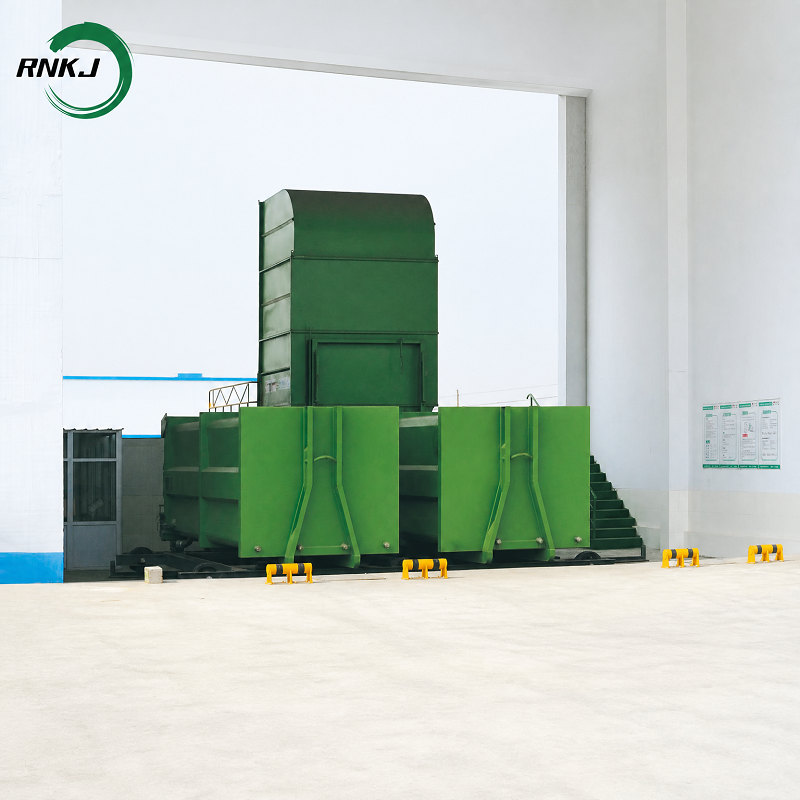
The Customizable Heavy-Duty Split-Type Garbage Compactor is an industrial-grade waste compression solution designed for municipal sanitation projects, centralized waste collection points, commercial facilities, industrial parks, and large-scale public waste management systems. It features a split-type structure that separates the hydraulic compression unit from the waste storage container, allowing each component to perform its own function during waste collection, compression, and transportation.
Unlike conventional integrated waste compactors, this hydraulic split-type garbage compactor uses an independent compression unit and a separate collection container. Waste is fed into the compression chamber, where a powerful hydraulic system drives the compression mechanism to push and compact the waste into the container. Once the container reaches its designed loading capacity, it can be disconnected and transported by a compatible hook lift truck or other suitable transportation equipment.
The compression unit remains installed at the collection site, eliminating the need to transport the entire compression machine whenever the storage container is full.
With customizable container capacity, heavy-duty structural components, and flexible hydraulic configurations, this industrial split-type waste compactor can be configured according to different waste volumes, site conditions, and municipal sanitation requirements.
Heavy-Duty Split-Type Structural DesignOne of the main characteristics of this split-type garbage compactor is its independent structural design. The equipment consists primarily of a hydraulic compression unit and a separate waste collection container.
The compression unit is the main working component of the equipment. It contains the hydraulic power system, compression chamber, pushing mechanism, and associated control components. During operation, the hydraulic cylinder drives the compression plate or pushing mechanism to compress incoming waste toward the collection container.
The compression unit stays in its designated installation position during normal operation. This arrangement makes it possible to replace a full container without moving the main compression equipment.
The collection container is designed to receive and store compressed waste. Its capacity, dimensions, structural thickness, and connection configuration can be customized according to project requirements.
When the container is full, the operator can disconnect it from the compression unit and arrange transportation using a compatible hook lift truck. An empty container can then be positioned for the next collection cycle.
The main frame and collection container are manufactured using heavy-duty steel structures to withstand repeated loading, waste compression, and transportation conditions.
Depending on the application, customers can discuss suitable steel grades, plate thicknesses, reinforcement structures, and corrosion-protection treatments.
Product Type

High-Pressure Hydraulic Waste Compression SystemThe hydraulic compression system is responsible for reducing the volume of collected municipal and industrial waste. It provides the pushing force required to move waste from the compression chamber into the storage container.
During operation, the hydraulic power unit supplies pressurized hydraulic oil to the cylinders, driving the compression mechanism through its working stroke. Waste is gradually compressed and pushed into the collection container, where it is stored in a more compact condition.
High-Pressure Hydraulic Operation: Provides the mechanical force needed for repeated waste compression.
Stable Compression Movement: The hydraulic cylinder drives the pushing mechanism through a controlled working cycle.
Configurable Hydraulic Parameters: Hydraulic pressure, cylinder specifications, motor power, and operating configurations can be evaluated according to waste characteristics and project requirements.
Industrial-Duty Components: Hydraulic components are selected according to the expected operating frequency and working environment.
Flexible Control Configuration: Manual, automatic, or semi-automatic control options can be discussed according to the project configuration.
The hydraulic compression system can be configured for different waste materials, including municipal solid waste, commercial packaging waste, general industrial waste, and other suitable compressible materials.

Customizable Container Capacity and ConfigurationDifferent municipal sanitation projects have different daily waste generation volumes and collection schedules. Therefore, the capacity and dimensions of the collection container are important factors when selecting a split-type garbage compactor.
Our heavy-duty split-type garbage compactor supports customized configurations based on the actual project requirements.
Customization item | Available configuration |
|---|---|
Container capacity | 6–30 CBM, project-dependent |
Container material | Carbon steel, Q235, Q345, or customized steel |
Container dimensions | Customized according to installation space |
Compression system | Hydraulic compression |
Hydraulic configuration | Customized cylinder and power unit specifications |
Container connection | Compatible with selected transportation system |
Surface treatment | Anti-corrosion coating or customized painting |
Control system | Manual, automatic, or semi-automatic options |
A 6–10 CBM configuration may be suitable for smaller collection points or facilities with relatively limited daily waste volumes.
A 12–20 CBM configuration can be considered for medium-sized municipal collection stations, commercial areas, and residential communities.
A 20–30 CBM configuration may be evaluated for larger centralized waste collection facilities and industrial projects.
The final capacity should be determined according to daily waste generation, waste density, available installation space, transportation frequency, and local operating conditions.
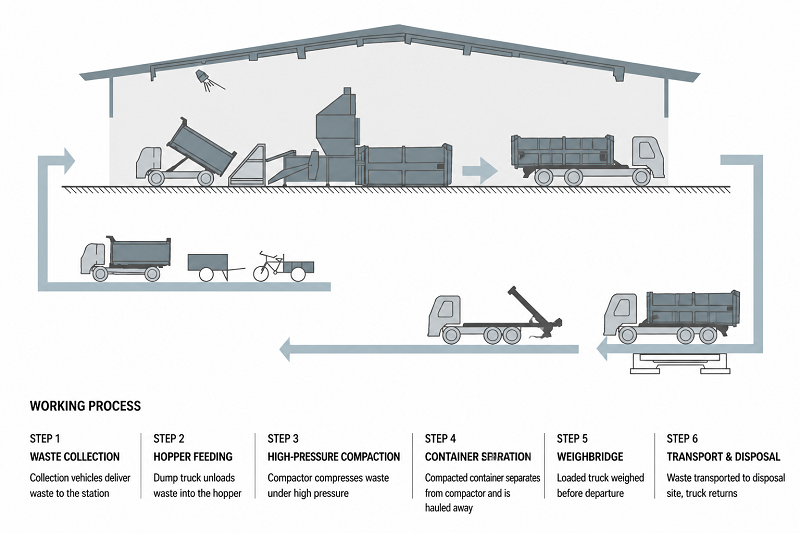
Split-Type Waste Compactor Working ProcessThe working process of a hydraulic split-type waste compactor generally includes the following stages:
Municipal or commercial waste is delivered to the feeding opening of the compression unit. Waste enters the compression chamber through the designated feeding structure.
The hydraulic system activates the compression cylinder, driving the pushing mechanism to compress the waste. The compressed material is gradually transferred into the separate collection container.
The container receives and stores the compressed waste. As additional waste enters the system, the container gradually fills to its designed loading capacity.
When the collection container reaches its specified loading condition, the connection between the compression unit and container is released according to the equipment design.
A compatible hook lift truck or other suitable transportation vehicle collects and transports the full container to a designated waste disposal or processing facility.
An empty container is positioned and connected to the compression unit, allowing the equipment to resume normal waste collection and compression operations.
This operating arrangement allows the compression unit to remain at the collection site while the storage containers are exchanged.
Applications in Municipal Sanitation ProjectsThe heavy-duty split-type garbage compactor is suitable for a wide range of centralized waste collection applications.
Municipal sanitation departments can install split-type waste compactors at designated collection points to receive and compress waste before transportation. Different container capacities can be selected according to local waste generation and collection schedules.
Large residential communities generate continuous household waste. A split-type garbage compactor can be installed at a centralized collection location to handle daily household waste and provide a more organized waste storage arrangement.
Shopping malls, supermarkets, and commercial buildings produce packaging materials, cardboard, plastic waste, and general commercial refuse. Hydraulic compression equipment can help consolidate suitable waste before collection and transportation.
Factories and industrial parks often require centralized waste collection systems. Heavy-duty split-type compactors can be configured to handle suitable industrial solid waste, packaging waste, and other compressible materials.
The equipment can also be considered for public sanitation facilities, logistics centers, transportation hubs, and other locations requiring centralized waste collection and container-based transportation.
Main Advantages of a Heavy-Duty Split-Type Garbage CompactorSeparate Compression and Storage: The compression unit and collection container operate as independent components.
Replaceable Collection Container: A full container can be removed and replaced without relocating the main compression unit.
Customizable Capacity: Container capacity and dimensions can be adjusted according to project requirements.
Heavy-Duty Construction: Reinforced steel structures are designed for demanding municipal and industrial operating environments.
Hydraulic Compression: The hydraulic pushing mechanism compresses suitable waste materials before storage and transportation.
Flexible Transportation: The collection container can be configured to work with compatible hook lift transportation equipment.
Project-Based Configuration: Hydraulic systems, feeding structures, container dimensions, and control options can be evaluated according to the actual installation conditions.
Why Choose Our Customizable Split-Type Garbage Compactor?As a manufacturer of waste compaction and collection equipment, we provide project-oriented solutions for municipal sanitation contractors, waste management companies, engineering companies, and industrial customers.
Our customization service focuses on matching the equipment configuration with the actual waste collection process rather than offering only a fixed standard model.
Customized Container Capacity: Available capacity configurations can be evaluated within the 6–30 CBM range.
Customized Structural Design: Container dimensions, steel thickness, reinforcement, and connection structures can be discussed.
Hydraulic System Configuration: Compression cylinders, hydraulic power units, and control systems can be selected according to operating requirements.
Transportation Compatibility: Container dimensions and lifting connections can be designed to match the selected hook lift truck system.
Project-Specific Solutions: Equipment configurations can be developed according to site dimensions, daily waste output, waste composition, and installation conditions.
From individual municipal collection points to centralized waste transfer facilities, we aim to provide practical hydraulic waste compaction solutions for different project requirements.
FAQs
A split-type garbage compactor is a waste compression system consisting of an independent hydraulic compression unit and a separate waste collection container. The compression unit compacts waste into the container, while the container can be removed and transported separately when full.
The collection container can be customized within a typical 6–30 CBM capacity range. The final size depends on waste volume, installation conditions, and transportation requirements.
Yes. The split-type design allows the full collection container to be disconnected from the stationary compression unit and replaced with an empty container.
Yes. The collection container can be configured for compatible hook lift truck transportation. The truck and container connection dimensions should be confirmed before production.
It can handle suitable municipal solid waste, commercial waste, packaging waste, cardboard, and general industrial waste. The feeding and compression configuration should be evaluated according to the actual waste characteristics.
Yes. Its independent compression and storage structure makes it suitable for municipal waste collection stations, residential communities, commercial complexes, and centralized waste transfer facilities.
Request a Customized Split-Type Garbage Compactor QuoteLooking for a reliable Split-Type Garbage Compactor Manufacturer for your municipal sanitation or industrial waste management project?
We provide customizable heavy-duty hydraulic split-type garbage compactors with flexible container capacities, independent compression structures, and project-specific configurations.
Contact us to discuss your requirements and receive a suitable equipment proposal and factory quotation.
Please provide the following information to help us recommend the right configuration:
Required container capacity (6–30 CBM).
Daily waste generation and waste type.
Available installation space and site dimensions.
Required hook lift truck or container transportation specifications.
Preferred hydraulic system and control configuration.
We are a professional manufacturer of sanitation machinery, providing customers with ex-factory prices and on-demand customization services. You can contact us via WhatsApp or email.


