




| Quantity: | |
|---|---|
 Product Overview
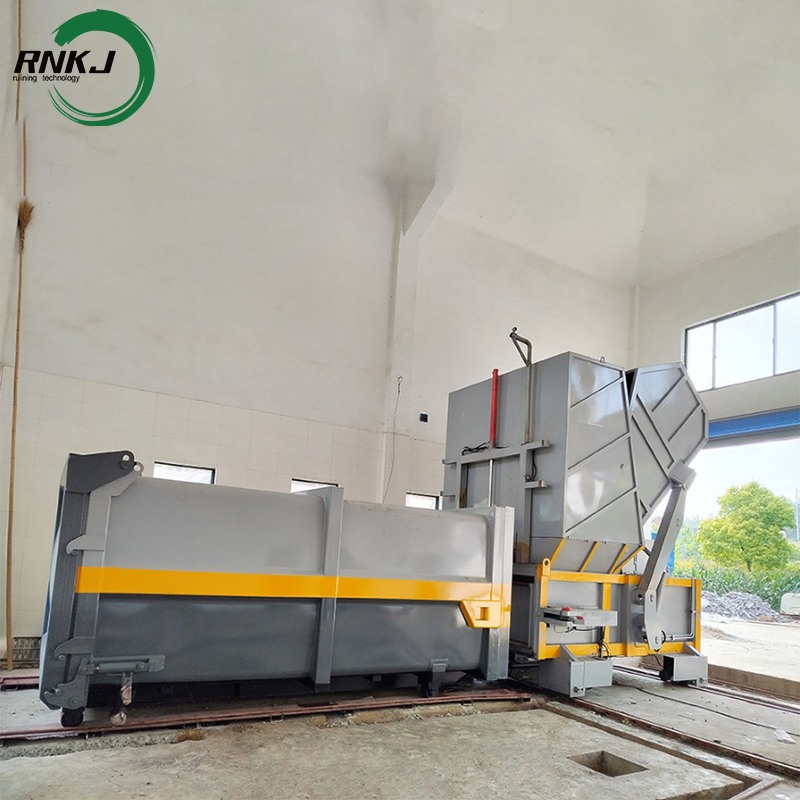
The Custom 6-30 CBM Multi-Container Exchange Hydraulic Split-type Waste Compactor is an advanced waste compaction solution designed for municipal solid waste collection, commercial waste management, industrial waste handling, and centralized waste transfer projects. Unlike traditional integrated waste compactors, this split-type system features a separate hydraulic compression unit and independent waste storage containers, providing greater flexibility in waste collection, transportation, and container management.
The system consists of a stationary hydraulic compression unit and multiple detachable waste containers. During operation, loose waste is loaded into the compression chamber, where a powerful hydraulic system drives the compression mechanism to push waste into the connected storage container. Once one container reaches its preset capacity, it can be disconnected and transported by a compatible hook lift truck. An empty container can then be positioned for continued waste compaction.
This multi-container exchange design allows the hydraulic compression unit to remain in operation while full containers are being transported or emptied. Instead of moving the entire compaction station, operators only need to replace the filled storage container, helping improve equipment utilization and reduce unnecessary transportation operations.
With customizable container capacities ranging from 6 CBM to 30 CBM, this hydraulic split-type waste compactor can be configured according to waste volume, collection frequency, available installation space, and local transportation requirements.
It is particularly suitable for projects that require continuous waste collection, flexible container replacement, and efficient hook lift transportation.


Split-type Structure and Independent Container DesignThe most important characteristic of a Split-type Waste Compactor is its separated equipment structure. The compression unit and waste storage container are designed as two independent functional components rather than one permanently integrated machine.
The stationary compression unit is the core operating component of the system. It contains the hydraulic power system, compression mechanism, control cabinet, feeding opening, and supporting structural frame.
During the compaction process, the hydraulic cylinder drives the compression plate or ram forward, pushing incoming waste into the storage container. The compression unit provides stable and consistent compaction performance for daily waste collection operations.
Because the compression unit remains installed at the collection site, it does not need to be transported whenever a container becomes full. This arrangement makes the equipment suitable for fixed waste collection points, commercial facilities, industrial plants, and municipal waste transfer locations.
The storage container is designed separately from the hydraulic compression unit and can be detached when full.
Its main functions include:
Receiving compressed waste from the stationary compaction unit.
Providing enclosed or configured storage space for accumulated waste.
Supporting transportation through a compatible hook lift truck.
Allowing quick replacement with an empty container.
Reducing the need to transport the entire compaction system.
The container can be customized according to required volume, structural strength, dimensions, and transportation specifications.
Product Type

Multi-Container Exchange ConfigurationFor waste collection projects with relatively high daily waste volumes, multiple independent containers can be configured to work with one compression unit.
For example, a project can use two or more containers in a rotation arrangement:
One container is connected to the compression unit and receives compressed waste.
When the container becomes full, it is disconnected from the stationary unit.
A hook lift truck transports the full container to a designated waste treatment or disposal facility.
An empty container is positioned and connected to the compression unit.
Waste compaction continues without waiting for the previous container to return.
This multi-container exchange waste compactor system helps minimize downtime caused by container transportation and supports more flexible waste collection scheduling.

Hook Lift Transportation SystemOne of the major advantages of this Hydraulic Split-type Waste Compactor is its compatibility with hook lift transportation systems.
The independent container is designed to work with a suitable hook lift truck, allowing the filled container to be lifted, loaded, transported, unloaded, and replaced without moving the stationary hydraulic compression unit.
The storage container is equipped with a compatible hook lift connection structure. The hook lift truck engages with the container's lifting point and uses its hydraulic loading mechanism to pull the container onto the vehicle chassis.
The transportation process generally includes:
Positioning the hook lift truck in front of the full container.
Connecting the hook mechanism to the container lifting point.
Pulling the container onto the truck chassis.
Securing the container for transportation.
Delivering the container to the designated waste treatment facility.
Returning with an empty container for replacement.
The hook lift system provides a practical transportation solution for detachable waste containers, especially in locations where waste needs to be collected and transferred regularly.
Compared with conventional integrated waste compaction equipment, a split-type compactor with hook lift transportation offers greater operational flexibility.
The compression station can remain at the original collection location, while only the filled container needs to be transported.
This configuration is particularly useful for municipal waste collection stations, industrial facilities, shopping centers, logistics parks, and large commercial properties.
The container dimensions, hook position, lifting structure, overall weight, and chassis matching requirements can be customized according to the customer's hook lift truck specifications.
Before production, customers can provide truck parameters and transportation requirements so that the container structure can be designed for suitable loading and unloading operations.
The hook lift transportation system should be matched with the rated lifting capacity and operating requirements of the selected vehicle.
Hydraulic Compression System and Working PerformanceThe hydraulic compression system is responsible for reducing loose waste volume and transferring compacted materials into the independent storage container.
The equipment uses a hydraulic power unit to generate the force required for the compression mechanism. Depending on the waste characteristics and project requirements, the hydraulic system can be configured with suitable cylinder specifications, working pressure, motor power, and control functions.
High-pressure hydraulic operation for waste compaction.
Stable compression movement for regular waste collection.
Customizable hydraulic cylinder configuration.
Adjustable operating parameters according to waste characteristics.
Integrated control system for convenient equipment operation.
Hydraulic protection functions based on project requirements.
The compression mechanism is designed to handle different types of municipal, commercial, and industrial waste. Actual compaction performance depends on waste composition, moisture content, material density, and equipment configuration.
Customizable 6-30 CBM Container CapacityDifferent waste collection projects have different storage requirements. A small commercial facility may require a compact container, while a large municipal waste transfer station may need a larger storage capacity to accommodate higher daily waste volumes.
This Custom 6-30 CBM Split-type Waste Compactor supports customized container capacity to meet different project conditions.
Container Capacity | Typical Application |
|---|---|
6-8 CBM | Small commercial properties and limited-space collection points |
10-12 CBM | Shopping centers, restaurants, and community waste collection |
15-20 CBM | Municipal waste stations and medium-sized industrial facilities |
25-30 CBM | Large commercial projects and high-volume waste transfer operations |
The above capacities are customization ranges and application references, not fixed standard configurations.
Container length, width, height, and overall structure can be designed according to the required storage capacity and available installation space.
The number of independent containers can be selected according to waste generation, collection schedules, transportation distance, and the frequency of container replacement.
For example, a two-container configuration can allow one container to remain connected to the compaction unit while the other is transported or emptied. Larger projects may require additional containers to support more flexible rotation.
Different steel materials can be selected according to the operating environment and load requirements.
Q235 Carbon Steel: Suitable for general waste collection and standard container fabrication.
Q355 High-Strength Steel: Suitable for applications requiring improved structural strength.
Reinforced Steel Structure: Available for demanding industrial waste handling conditions.
Container thickness, reinforcement beams, bottom structure, and wear-resistant components can also be adjusted according to project requirements.
Main Features and AdvantagesThe compression unit and waste storage container operate as separate components. This structure makes the system easier to manage when full containers need to be transported to another location.
The multi-container exchange configuration allows operators to replace full containers with empty ones while keeping the stationary compression unit at the collection site.
This helps reduce waiting time and improves the utilization of the hydraulic compaction equipment.
The independent storage container can be transported by a compatible hook lift truck. This reduces the need for additional container-handling equipment and provides a convenient connection between waste collection and waste treatment facilities.
With a container capacity range of 6-30 CBM, the system can be configured for different waste volumes and site conditions. Customers can select the appropriate storage capacity and container dimensions.
By compressing waste before transportation, the system can reduce the volume of waste stored in each container. This helps make better use of available container space and can improve transportation efficiency.
The stationary compression unit can be installed at a designated waste collection point, while detachable containers provide flexible transportation arrangements.
The separated equipment structure makes it possible to manage the stationary compression unit and storage containers according to their individual operating conditions. Maintenance planning can therefore be arranged around the different components.
Working Process of Multi-Container Exchange Waste CompactorThe complete operating process combines waste feeding, hydraulic compaction, container replacement, and hook lift transportation.
Loose municipal, commercial, or industrial waste is loaded into the feeding opening of the stationary hydraulic compression unit.
The hydraulic system activates the compression ram, pushing the waste into the connected independent storage container.
Waste is continuously collected and compacted until the storage container reaches its designed filling level.
Once the container is full, the operator follows the designated operating procedure to disconnect it from the compression unit.
A compatible hook lift truck engages with the container and transports it to the waste disposal, transfer, or treatment facility.
An empty container is transported back to the collection station and positioned for connection with the stationary compression unit.
The compaction process resumes with the replacement container, while the previously filled container can be emptied and prepared for the next rotation cycle.
This working arrangement makes the split-type compactor particularly suitable for waste collection projects where uninterrupted or frequently repeated compaction operations are required.
Wide Range of Waste Management ApplicationsThe Split-type Hydraulic Waste Compactor can be used in various waste collection and transfer environments.
Suitable for municipal waste collection points, community waste stations, and centralized waste transfer locations. The independent containers support scheduled waste transportation and flexible collection arrangements.
Designed for factories, manufacturing facilities, industrial parks, and production workshops that generate relatively large quantities of general industrial waste, packaging materials, and other suitable solid waste.
Suitable for shopping malls, supermarkets, hotels, restaurants, office buildings, and large commercial properties. The system helps manage daily waste accumulation while providing convenient container replacement.
Warehouses and logistics facilities often generate cardboard, plastic packaging, and other bulky waste. Hydraulic compaction helps reduce waste volume before transportation.
For centralized waste collection and transfer projects, multiple detachable containers can be arranged to support different collection schedules and transportation requirements.
What Should You Consider Before Purchasing a Split-type Waste Compactor?Selecting the right equipment requires more than choosing a container capacity. Several factors should be considered before confirming the final configuration.
Identify the waste materials to be processed, including municipal solid waste, commercial waste, industrial waste, cardboard, and packaging materials. Waste composition directly affects the compression mechanism and container design.
Choose a suitable capacity between 6 CBM and 30 CBM according to daily waste generation, collection frequency, and transportation arrangements.
Confirm the truck's lifting capacity, hook dimensions, chassis specifications, and container loading requirements before ordering.
Determine whether the project requires two containers or a larger multi-container configuration. The correct quantity depends on transportation distance and container emptying time.
Consider the available installation space, foundation requirements, vehicle access, and operating clearance around the compaction station.
The hydraulic power unit, compression force, operating cycle, and control system should be selected according to waste characteristics and project capacity requirements.
Consider spare parts availability, hydraulic system maintenance, operator training, technical documentation, and long-term service support.
Split-type Waste Compactor Manufacturer and Customized SolutionsAs a manufacturer of hydraulic waste compaction equipment, we provide customized Split-type Waste Compactor Systems for municipal, commercial, and industrial waste management projects.
Our solutions focus on the practical coordination of stationary hydraulic compression equipment, independent storage containers, and hook lift transportation systems.
Whether your project requires a compact 6 CBM container, a 12 CBM standard configuration, or a large 30 CBM industrial waste storage container, we can develop an equipment solution based on your actual operating conditions.
Our customization services include:
6-30 CBM customized container capacity.
Single or multiple independent storage containers.
Stationary hydraulic compression equipment.
Hook lift compatible container structures.
Customized hydraulic power and compression systems.
Reinforced steel container fabrication.
Customized dimensions, colors, and surface treatment.
Technical support for equipment installation and operation.
If you are looking for a reliable Hydraulic Split-type Waste Compactor Manufacturer, please contact us with your waste type, required container capacity, daily waste volume, and hook lift truck specifications. Our team can help you select a suitable multi-container exchange waste compaction solution.
FAQsA split-type waste compactor is a hydraulic waste compaction system consisting of a stationary compression unit and an independent detachable storage container. The compression unit compacts waste into the container, while the full container can be removed and transported separately.
The stationary hydraulic unit compresses waste into the connected container. Once full, the container is disconnected and loaded onto a compatible hook lift truck. The truck transports it to a disposal facility, and an empty container is installed to continue waste collection.
The equipment supports customized container capacities from 6 CBM to 30 CBM. Container dimensions and configurations can be adjusted according to project requirements.
Yes. One stationary compression unit can be configured with multiple independent storage containers. When one container becomes full, it can be replaced with an empty one while the full container is transported or emptied.
The container can be customized to match different hook lift truck specifications. Customers should provide the vehicle's hook dimensions, lifting capacity, chassis parameters, and relevant technical drawings before production.
It can be configured for suitable municipal solid waste, commercial waste, industrial solid waste, cardboard, packaging materials, and other general waste streams. The specific configuration should be selected according to the material characteristics.
A split-type waste compactor uses an independent compression unit and detachable storage container. The filled container can be transported separately by a hook lift truck. A bucket-type waste compactor uses an integrated equipment configuration with a bin-lifting and feeding mechanism, and its structure and operating process are different.
We are a professional manufacturer of sanitation machinery, providing customers with ex-factory prices and on-demand customization services. You can contact us via WhatsApp or email.


