




| Quantity: | |
|---|---|
 Product Overview
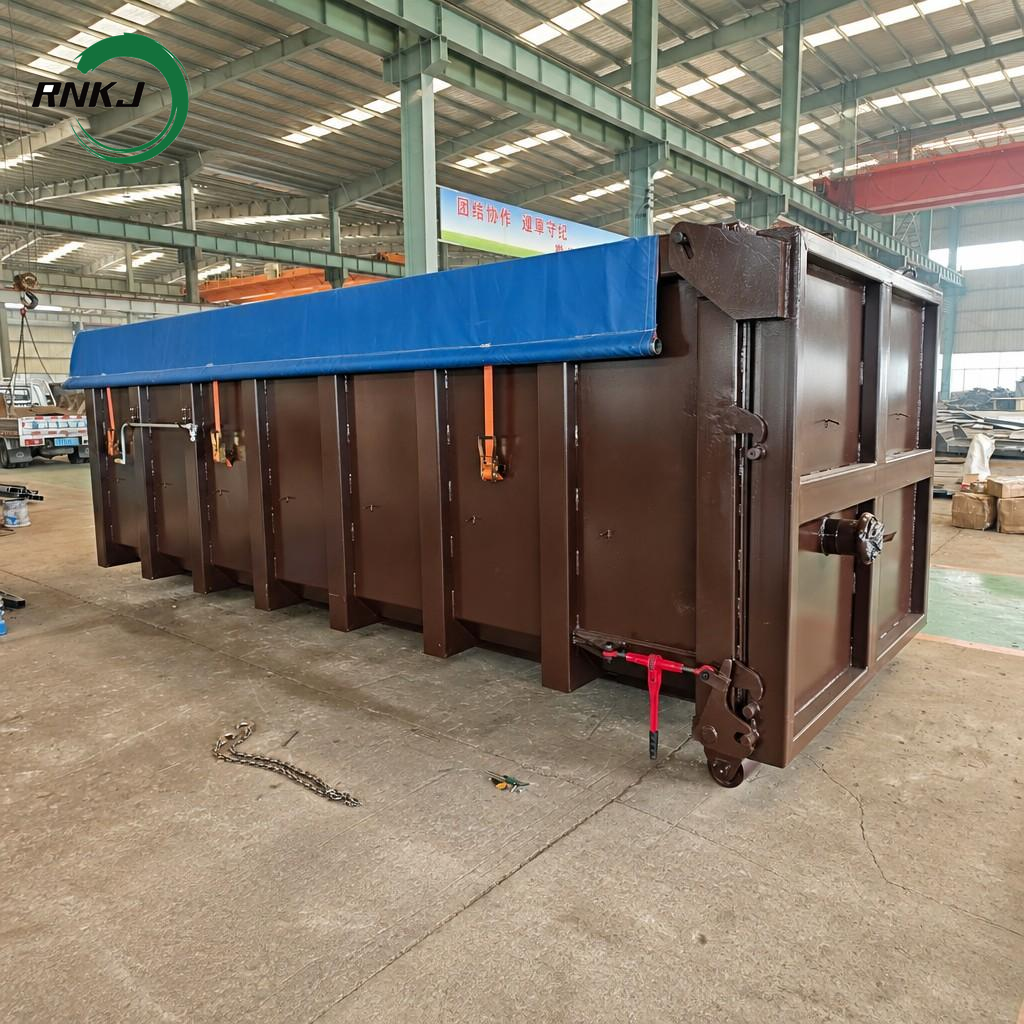
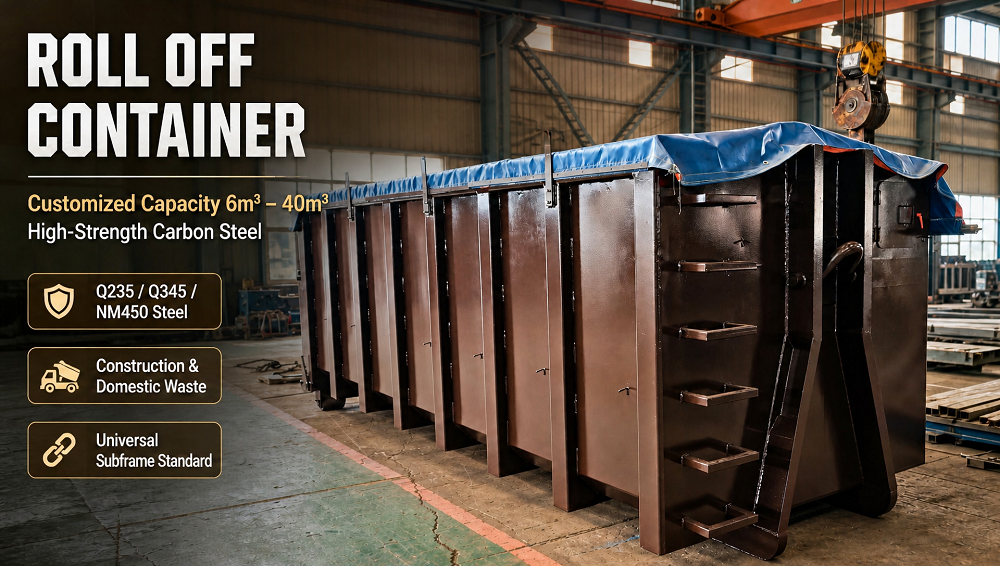
The 6-40 CBM Heavy-Duty Steel Hook Lift Roll Off Container for Industrial Waste Collection is designed for the collection, storage, and transportation of industrial solid waste, construction debris, manufacturing by-products, and other bulk materials. Manufactured from heavy-duty carbon steel, this hook lift roll off container features a reinforced steel structure, a durable welded body, and a loading design compatible with suitable hook lift handling systems.
With a customizable capacity ranging from 6 CBM to 40 CBM, this industrial waste container can be configured to meet different waste volumes, site conditions, and transportation requirements. Whether used in manufacturing plants, construction sites, recycling facilities, warehouses, or municipal waste collection projects, it provides a practical solution for centralized waste storage and efficient container transportation.
The heavy-duty hook lift roll off container is designed around the requirements of frequent loading, unloading, and waste transportation. Its dimensions, steel plate thickness, structural reinforcement, hook lifting arrangement, and other components can be evaluated and customized according to the intended application and the specifications of the customer's hook lift truck.
As a professional industrial waste collection container, it helps businesses organize waste handling operations, reduce scattered waste storage, and establish a more systematic collection and transportation process.
Customizable Capacity from 6 CBM to 40 CBMCapacity is one of the most important considerations when selecting a hook lift roll off container for industrial waste collection. Different facilities generate different waste volumes, and the appropriate container size depends on the type of waste, daily output, available installation space, and collection frequency.
This 6-40 CBM hook lift roll off container supports customized capacity options for different waste management requirements.
Smaller containers can be suitable for facilities with limited space, relatively low waste output, or frequent collection schedules. Medium-capacity containers can support general manufacturing waste collection and commercial waste handling. Larger containers are more suitable for high-volume waste collection at industrial plants, construction projects, and recycling facilities, subject to the payload and transportation limits of the handling vehicle.
The container's length, width, height, and overall configuration can be adjusted to achieve the required usable volume. When determining the capacity, customers should also consider the density of the waste. Lightweight packaging waste and bulky materials may require a larger container volume, while dense metal scraps or mineral-based waste can reach vehicle payload limits before the container is full.
Customized capacity helps buyers select a suitable industrial roll off container instead of relying on a single standard size for every project.
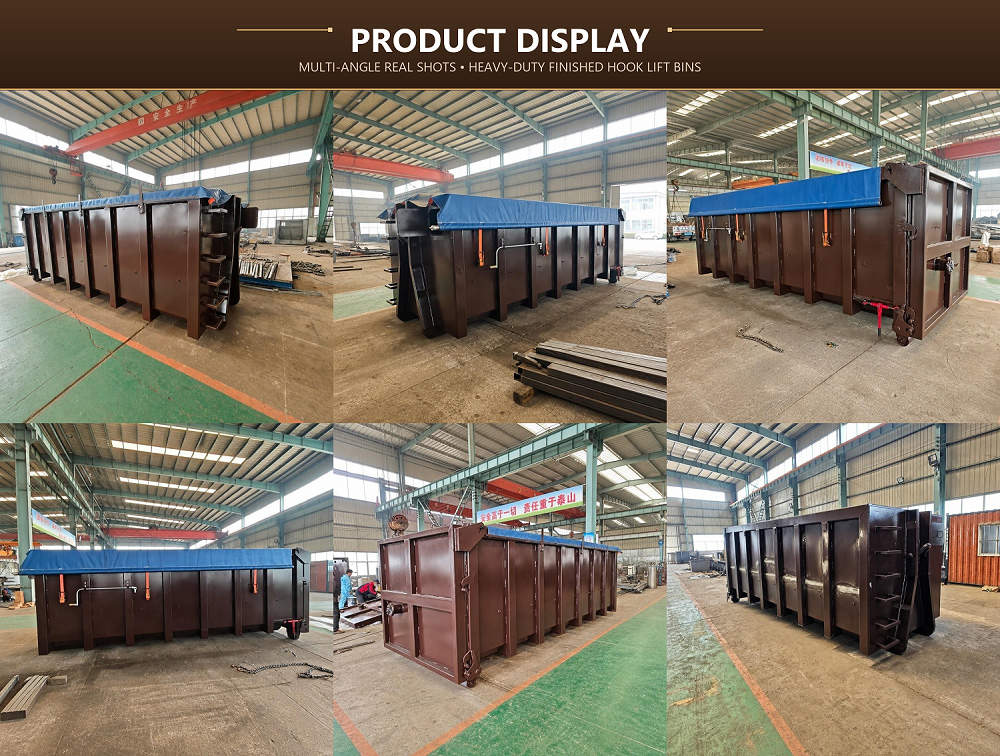
Heavy-Duty Carbon Steel ConstructionThe container body is manufactured from carbon steel selected according to the intended waste type, loading conditions, and operating environment. Steel grades such as Q235 and Q345 can be considered for different structural requirements, while other materials may be evaluated for projects with specific strength, wear resistance, or corrosion protection needs.
The steel plate thickness can be customized for the bottom, side walls, front wall, and other structural sections. Areas exposed to concentrated loads or repeated contact with heavy waste can be designed with additional reinforcement where required.
The main benefits of the heavy-duty steel construction include:
Structural strength: A reinforced steel body helps withstand the loads associated with normal waste collection and transportation when properly designed.
Wear resistance: Suitable plate selection and localized reinforcement can help address abrasion caused by scrap metal, construction debris, and other demanding waste materials.
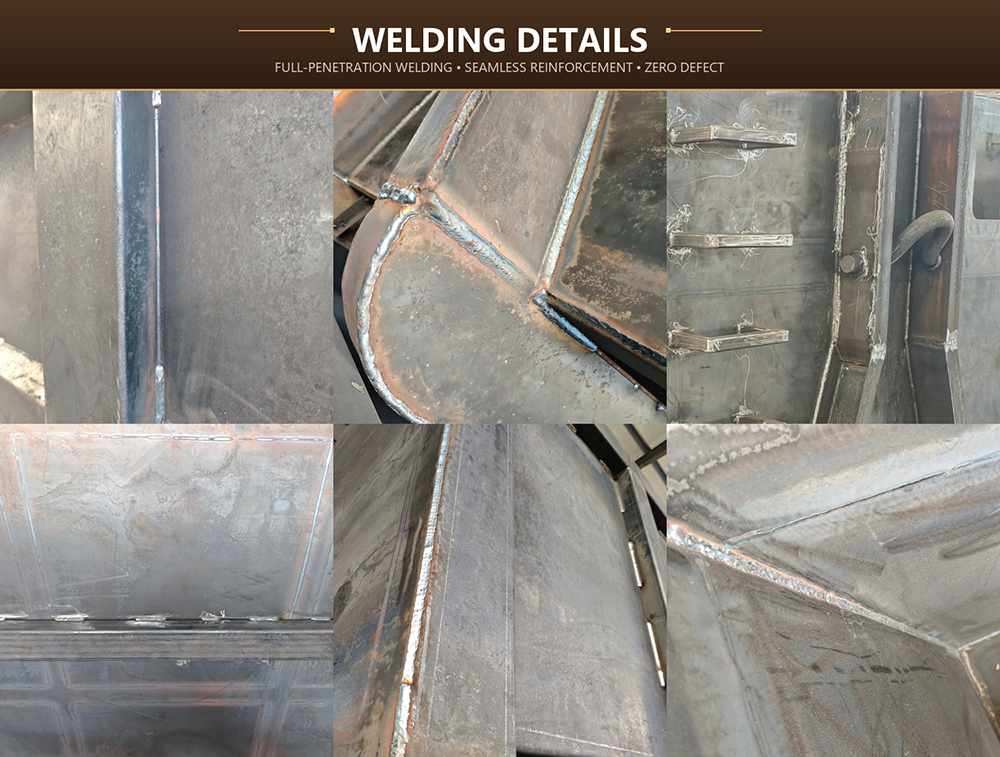
Durable welded construction: Properly designed welds help connect the main structural components and support long-term use.
Flexible customization: Steel grade, plate thickness, reinforcement layout, and dimensions can be specified according to project requirements.
Repairability: Steel structures can generally be inspected and repaired when necessary by qualified personnel using appropriate procedures.
The final steel specification should be determined according to the container's intended payload, waste characteristics, lifting loads, and operating conditions. Actual load capacity should not be determined by volume alone.
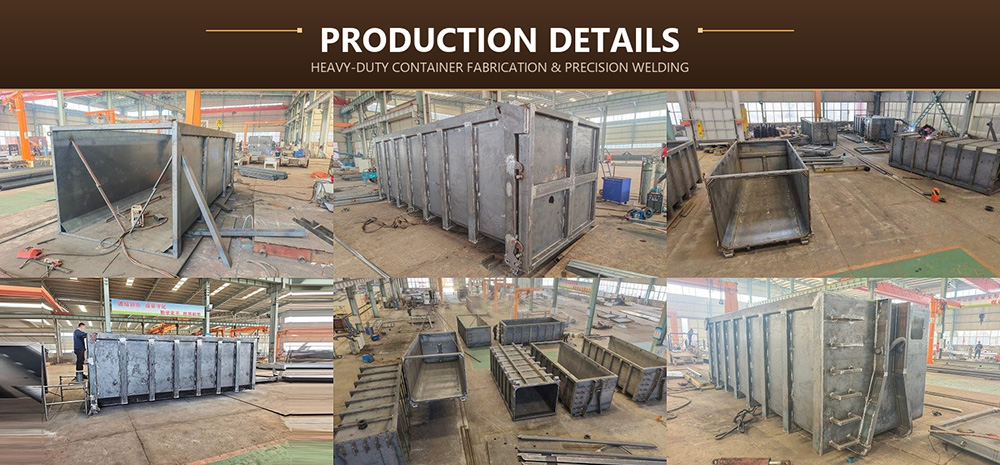
Reinforced Structure for Industrial Waste HandlingIndustrial waste containers may be exposed to repeated loading, unloading, movement, and contact with bulky or irregular materials. A suitable structural design is therefore essential for reliable operation.
The heavy-duty steel roll off container can incorporate reinforced bottom sections, strengthened side walls, reinforced corners, and other structural supports according to the intended application.
The bottom structure is particularly important when handling dense waste or materials that concentrate loads in specific areas. Side-wall reinforcement can help maintain the container's shape during normal use, while reinforced corner areas can provide additional structural support.
The front wall and hook lifting area must be designed to accommodate the lifting arrangement and loads associated with the compatible hook lift system. These components should be engineered according to the selected truck and lifting equipment rather than treated as interchangeable across all vehicles.
For customers handling sharp metal scraps, bulky manufacturing waste, or construction debris, the reinforcement layout can be discussed during the quotation stage. Providing information about the waste type, loading method, expected payload, and collection frequency helps the manufacturer develop a more suitable container configuration.
Hook Lift Design for Loading and TransportationThe hook lift roll off container is intended for use with a compatible hook lift truck or handling system. The truck engages the container's designated lifting interface and uses its lifting mechanism to load or unload the container according to the vehicle manufacturer's operating procedure.
This arrangement supports the movement of waste containers between collection points, industrial facilities, temporary storage areas, and waste treatment locations.
Compared with fixed waste storage containers that require separate handling equipment for relocation, a compatible hook lift container can be integrated into a vehicle-based collection and transportation process. Depending on the project configuration, containers can be positioned at designated waste collection points and transported when collection or disposal is required.
The hook lifting structure, container length, overall dimensions, roller arrangement where applicable, and other interface details must match the intended hook lift truck. Buyers should confirm compatibility before placing an order to avoid dimensional or operational mismatches.
The container itself is designed for waste storage and transportation. It is not a garbage compactor and does not compress waste unless a separate, specifically engineered system is included.
Practical Container Design and Custom OptionsDifferent waste collection projects may require different container layouts. The custom hook lift roll off container can be configured according to the materials being collected, loading methods, site access, and unloading requirements.
Depending on the project, available design options may include:
Open-top construction for loading from above.
Customized container length, width, and height.
Different steel grades and plate thicknesses.
Reinforced bottom and side-wall structures.
Customized hook lifting interface for compatible equipment.
Optional rear doors or discharge arrangements where required.
Suitable surface preparation and protective coating.
Customized external color and company identification.
Additional structural features for specific waste handling applications.
Not every option is necessary for every project. For example, an open-top container may be suitable for bulky industrial waste and construction debris, while a container intended for a particular material may require a different loading or discharge arrangement.
The final configuration should be confirmed through technical drawings and agreement on the operating requirements before manufacturing.
Surface Treatment and Corrosion ProtectionIndustrial waste containers are often used outdoors and may be exposed to rain, humidity, dust, and material residues. Appropriate surface treatment helps protect the steel body and maintain its appearance during service.
Depending on the operating environment and customer requirements, the container can be supplied with a suitable primer and protective topcoat following surface preparation. The coating system can be selected according to the expected exposure conditions, storage environment, and maintenance plan.
For applications involving moisture, corrosive residues, or aggressive industrial materials, customers should disclose these conditions before ordering. Additional coating protection or alternative material options may need to be evaluated.
Surface coating does not eliminate the need for inspection and maintenance. Periodic checks of the paintwork, welded joints, lifting interface, and areas exposed to impact can help identify damage before it develops into a more significant issue.
Product Description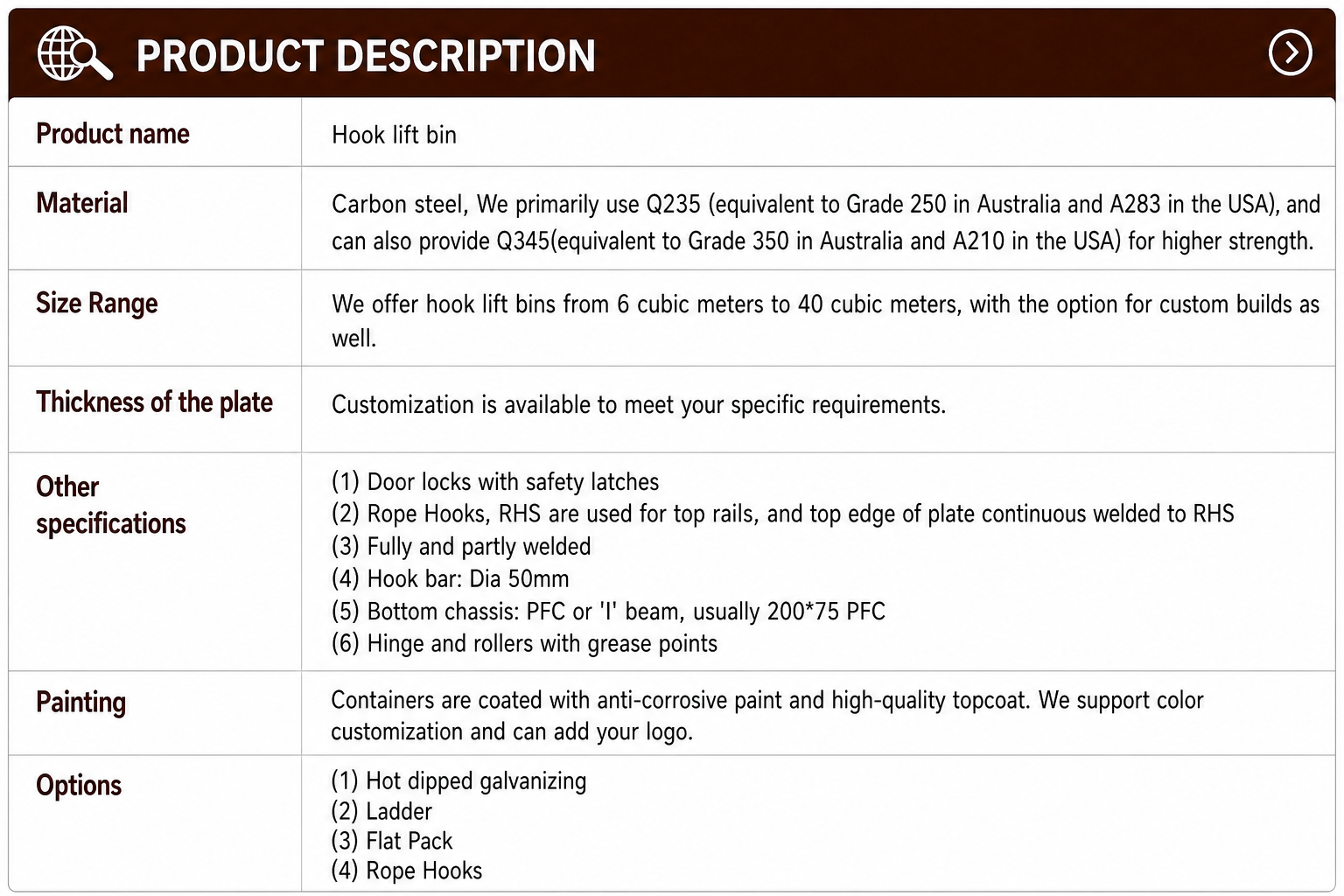
Applications of the Heavy-Duty Hook Lift Roll Off ContainerThe industrial waste roll off container can be used in a range of waste collection and material handling applications.
Factories may generate metal scraps, packaging materials, production offcuts, rejected components, and other solid waste. A dedicated hook lift container provides a designated collection point and supports scheduled removal of accumulated materials.
Construction projects often produce timber, packaging, masonry debris, metal scraps, and other bulky materials. A suitably sized construction waste roll off container can support centralized collection and transportation, provided that the container and truck are rated for the intended load.
Recycling facilities need containers for collecting and transferring different categories of recyclable or residual materials. Customized container dimensions and loading arrangements can help match the site's material flow and handling equipment.
Warehouses and logistics facilities may use roll off containers for cardboard, packaging waste, wooden pallets, and other non-hazardous solid waste. Selecting an appropriate capacity can help balance available yard space with waste collection frequency.
Commercial properties, public service facilities, and municipal waste management projects may use hook lift containers for centralized waste collection. The final design should reflect the waste category, site layout, transport arrangements, and local operating requirements.
For hazardous, corrosive, liquid, or other specially regulated waste, the container must be specifically assessed for compatibility and applicable regulatory requirements. A standard open-top steel container should not automatically be assumed suitable for these materials.
Key Factors When Choosing a 6-40 CBM Hook Lift Roll Off ContainerBefore selecting a container, buyers should evaluate several practical factors.
Waste type: Identify whether the container will hold lightweight packaging, general industrial solid waste, metal scraps, construction debris, or other materials. Waste characteristics influence plate thickness, reinforcement, loading design, and protective treatment.
Required capacity: Estimate the daily or weekly waste volume and collection frequency. A 6 CBM container may be suitable for smaller collection points, while higher-volume facilities may benefit from larger options up to 40 CBM.
Payload and transport limits: The container's usable volume and maximum allowable load are different considerations. Dense materials may reach the truck's payload or lifting limit before filling the container.
Truck compatibility: Confirm the hook lift truck model, lifting interface, container dimensions, and any relevant dimensional or operating requirements.
Loading and unloading method: Consider whether waste will be loaded manually, by forklift, by loader, or through another system. Door arrangements and access requirements should match the selected loading method.
Operating environment: Outdoor exposure, moisture, abrasive waste, and possible chemical contact can affect material selection, coating requirements, and maintenance.
Site dimensions: Check the available space for container placement, truck access, loading, and lifting operations. A larger container is not necessarily the best choice if the site has limited maneuvering space.
Considering these factors before requesting a quotation helps establish a clear technical specification and reduces the risk of ordering a container that does not match the intended application.
Customized Manufacturing for Different ProjectsAs a customized steel waste container, the 6-40 CBM Heavy-Duty Steel Hook Lift Roll Off Container can be configured to meet project-specific requirements rather than relying solely on standard dimensions.
Customization may cover container capacity, body dimensions, steel material, plate thickness, structural reinforcement, hook lifting interface, door arrangement, surface coating, and external finish.
For buyers with an existing fleet of hook lift trucks, providing the vehicle model and relevant interface drawings is particularly important. For new projects, the manufacturer can review the intended application, estimated waste volume, payload requirements, and available site space before recommending a suitable configuration.
The manufacturing process should include confirmation of technical drawings, material specifications, structural details, welding requirements, and surface treatment. Inspection and verification should be carried out according to the agreed specifications and applicable requirements.
This project-based approach allows industrial waste collection companies, factories, contractors, and equipment distributors to obtain a container configuration suited to their actual operating needs.
FAQ
The container can be customized within a capacity range of 6-40 CBM. The appropriate size depends on waste volume, material density, collection frequency, available space, and vehicle payload limits.
Carbon steel grades such as Q235 and Q345 can be considered, depending on structural requirements. Other materials can be discussed for projects requiring specific strength, wear resistance, or corrosion protection.
Yes. Capacity, dimensions, plate thickness, reinforcement, lifting interface, door configuration, and surface coating can be customized according to the project requirements and compatible handling equipment.
It can be designed for suitable industrial waste applications, including certain metal scraps and bulky solid waste. The required plate thickness, structural reinforcement, payload, and lifting arrangement must be assessed for the actual waste type.
No. Compatibility depends on the truck's lifting system, interface dimensions, container geometry, and rated operating limits. These specifications should be confirmed before manufacturing.
Yes, subject to an appropriate protective coating and maintenance plan. The coating system should be selected according to the local environment and expected exposure conditions.
Request a Quote for Your Hook Lift Roll Off ContainerLooking for a 6-40 CBM Heavy-Duty Steel Hook Lift Roll Off Container for Industrial Waste Collection for your factory, construction site, recycling facility, or waste management project?
We can discuss customized container capacity, carbon steel specifications, plate thickness, structural reinforcement, hook lift compatibility, dimensions, and surface treatment according to your application.
To help us prepare a suitable quotation, please share your required capacity, waste type, preferred material, hook lift truck model, and any available drawings or dimensional requirements.
Contact us today to discuss your project and request a customized hook lift roll off container quotation. Our team can review your requirements and help you identify a suitable container configuration for your industrial waste collection and transportation needs.
We are a professional manufacturer of sanitation machinery, providing customers with ex-factory prices and on-demand customization services. You can contact us via WhatsApp or email.


