
Views: 0 Author: Site Editor Publish Time: 2025-11-27 Origin: Site


As cities continue to grow and waste generation increases, efficient waste management has become a critical challenge for municipalities, industrial facilities, commercial centers, and construction sites. Traditional waste collection methods often require multiple transportation stages, resulting in higher operational costs and environmental impacts.
A Mobile Garbage Compactor offers a modern, efficient, and cost-effective solution by combining waste collection, compression, storage, and transportation into a single mobile unit. This innovative equipment significantly reduces waste volume, improves transportation efficiency, and helps organizations maintain cleaner environments.
In this article, we explore the features, benefits, applications, and reasons why investing in a Mobile Garbage Compactor is an ideal choice for modern waste management operations.
A Mobile Garbage Compactor is a self-contained waste compaction system designed to collect, compress, store, and transport solid waste within a single mobile container. Unlike stationary compactors that require separate waste containers and transportation equipment, a mobile garbage compactor integrates all functions into one unit.
The system utilizes a powerful hydraulic compaction mechanism to compress waste materials, reducing their volume by up to 70%-80%. Once full, the entire compactor is transported to a disposal or recycling facility, where the waste is unloaded and the unit is returned for continued operation.
This all-in-one design makes the Mobile Garbage Compactor one of the most efficient waste handling solutions available today.
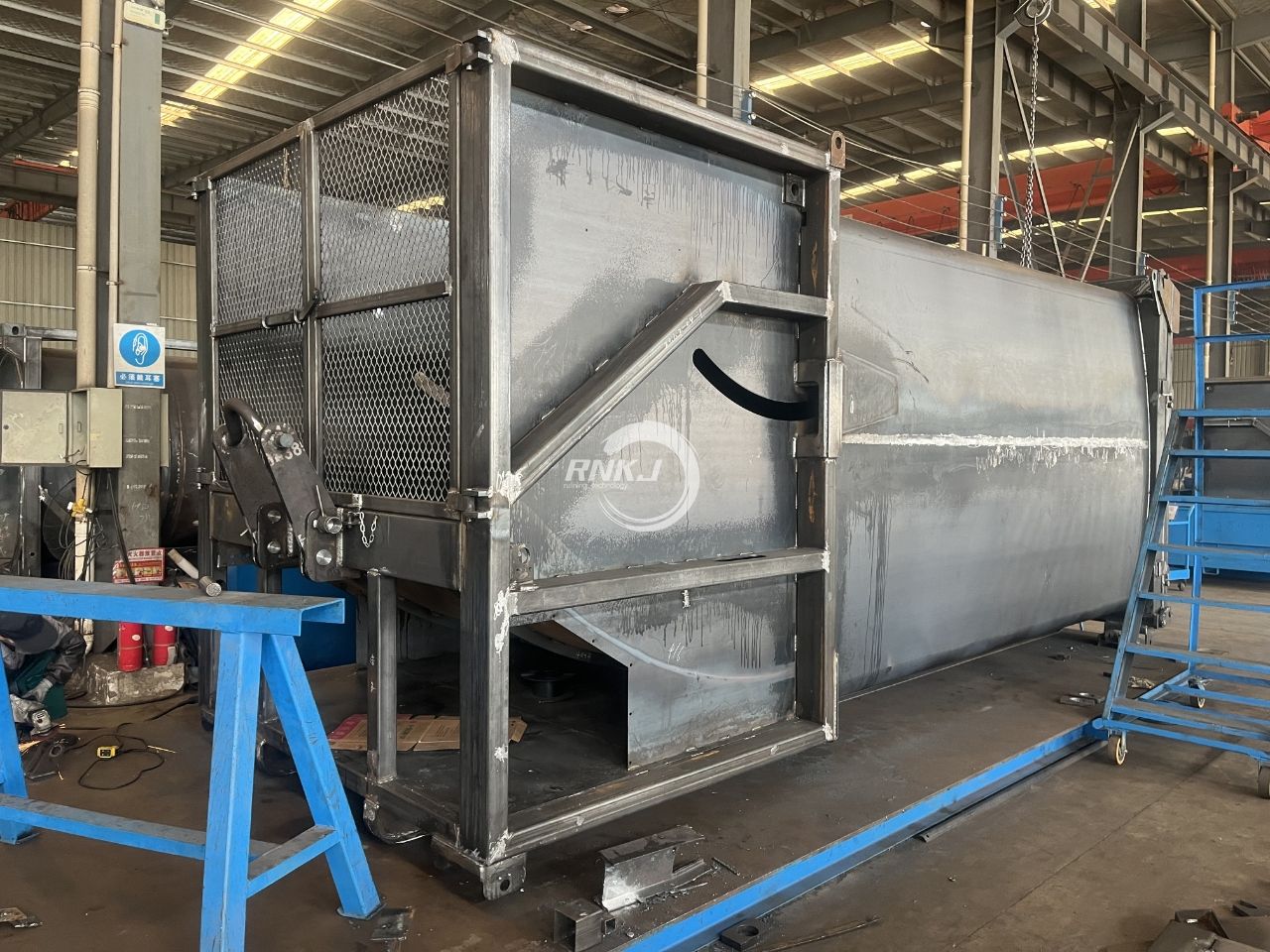
The hydraulic system generates substantial compression force, enabling the Mobile Garbage Compactor to reduce waste volume significantly. This allows users to maximize container capacity while minimizing collection frequency.
Modern Mobile Garbage Compactors feature sealed structures that prevent liquid leakage and odor emissions. This makes them ideal for handling wet waste, food waste, and municipal solid waste.
Because the waste container and compactor are combined, the unit can be transported directly to disposal facilities without transferring waste between containers.
Many advanced Mobile Garbage Compactors include:
PLC control systems
Automatic compaction cycles
Safety interlock devices
Remote monitoring capabilities
These features improve operational efficiency and reduce labor requirements.
Built from heavy-duty steel, the Mobile Garbage Compactor is designed to withstand harsh working environments and continuous operation.
One of the primary advantages of a Mobile Garbage Compactor is the significant reduction in transportation expenses. By compacting waste before transport, operators can move larger quantities of waste in fewer trips.
Benefits include:
Lower fuel consumption
Reduced vehicle wear
Lower labor costs
Improved route efficiency
Compaction ratios often reach 3:1 to 6:1 depending on waste composition. This means facilities can store much more waste within the same footprint.
A sealed Mobile Garbage Compactor helps prevent:
Waste leakage
Odor pollution
Pest infestations
Windblown litter
This contributes to cleaner and safer surroundings.
The automated operation of a Mobile Garbage Compactor minimizes manual waste handling, reducing worker exposure to hazardous materials and injury risks.
Combining collection, compaction, storage, and transportation into a single unit simplifies operations and reduces total waste handling expenses.
Cities and municipalities use Mobile Garbage Compactors to efficiently collect and transport household waste from residential communities and public areas.
Large commercial properties generate substantial volumes of packaging waste, food waste, and general refuse. A Mobile Garbage Compactor helps maintain cleanliness while reducing collection frequency.
Manufacturing plants often produce large amounts of production waste. Mobile compactors streamline waste management and reduce disposal costs.
Hospitals require hygienic waste handling systems. The sealed design of a Mobile Garbage Compactor helps contain odors and liquids while improving sanitation.
Hospitality facilities benefit from reduced waste storage requirements and improved aesthetics through the use of compacted waste systems.
High-traffic transportation facilities generate continuous waste streams. A Mobile Garbage Compactor ensures efficient waste collection while minimizing operational disruptions.
Temporary projects often require flexible waste management solutions. Mobile compactors can be relocated easily as project needs change.
| Feature | Mobile Garbage Compactor | Traditional Waste Collection |
|---|---|---|
| Waste Compression | Yes | No |
| Transportation Efficiency | High | Low |
| Odor Control | Excellent | Limited |
| Leakage Prevention | Excellent | Moderate |
| Labor Requirements | Low | Higher |
| Storage Capacity | Large | Limited |
| Operating Cost | Lower Long-Term | Higher Long-Term |
| Environmental Impact | Reduced | Higher |
The integrated design of the Mobile Garbage Compactor provides clear advantages in efficiency, sanitation, and overall cost savings.
Determine the average daily waste generation to select the appropriate container capacity.
Different waste streams require different compaction forces and container designs. Consider whether the unit will handle:
Municipal solid waste
Commercial waste
Industrial waste
Food waste
Recyclable materials
Higher compaction ratios result in greater transportation savings and improved storage efficiency.
Available loading configurations include:
Rear loading
Side loading
Top loading
Hopper feeding systems
Choose a Mobile Garbage Compactor with accessible hydraulic components and reliable service support to minimize downtime.
Sustainability has become a major priority for organizations worldwide. A Mobile Garbage Compactor supports environmental initiatives by:
Reducing carbon emissions from transportation
Lowering fuel consumption
Minimizing landfill trips
Preventing waste leakage into the environment
Improving waste collection efficiency
Supporting cleaner urban environments
As governments implement stricter environmental regulations, mobile compaction technology is becoming increasingly important for sustainable waste management.
The next generation of Mobile Garbage Compactors is expected to incorporate:
IoT-enabled sensors can monitor:
Fill levels
Equipment status
Hydraulic performance
Maintenance schedules
Operators can optimize collection routes and improve equipment utilization through cloud-based monitoring platforms.
Advanced hydraulic technologies will further reduce energy consumption and operating costs.
Future smart city waste management systems will increasingly rely on intelligent Mobile Garbage Compactors connected to centralized management platforms.
As waste management demands continue to grow, investing in a high-quality Mobile Garbage Compactor can help organizations improve sustainability, reduce costs, and achieve more efficient waste handling operations.
For businesses and municipalities seeking a reliable and environmentally responsible waste management solution, the Mobile Garbage Compactor remains one of the most practical and cost-effective options available today.
A Mobile Garbage Compactor is designed to compress waste and transport it within the same unit, reducing waste volume and transportation costs.
Depending on waste type, a Mobile Garbage Compactor can reduce waste volume by 70% to 80%.
Yes. Most mobile compactors feature sealed and leak-proof designs specifically intended for handling wet waste and food waste.
Municipalities, shopping centers, hospitals, factories, hotels, airports, logistics centers, and construction sites frequently use Mobile Garbage Compactors.
Yes. By reducing transportation frequency and preventing leakage and odor emissions, a Mobile Garbage Compactor contributes to more sustainable waste management.


