
Views: 0 Author: Site Editor Publish Time: 2026-09-20 Origin: Site


Procurement of heavy waste management equipment carries high capital risk. Selecting an under-specced or incompatible unit directly results in operational bottlenecks, accelerates component wear, and inflates daily disposal costs. Buyers often rely on top-line marketing specifications rather than evaluating site-specific waste density and hydraulic cycle realities. They also overlook long-term maintenance liabilities and true space-saving potential. Facility managers must establish a rigorous, evidence-based framework before issuing a purchase order. Evaluating a hydraulic bucket waste compactor requires deep technical due diligence. You must analyze structural integrity, hydraulic pressure ratings, and electrical compatibility. This guide breaks down the engineering specifications and operational metrics needed to make an informed procurement decision. We focus on aligning equipment capabilities with actual site demands, ensuring your infrastructure investment handles peak loads without unexpected downtime.
Capacity Must Match Waste Profile: Selecting between a 9 m³ hydraulic bucket compactor or a 12 CBM bucket garbage compactor requires calculating waste density, not just daily volume, especially for wet or high-density materials.
Technology Alignment: Ensure a hydraulic press system is chosen over an auger system based on the specific need to crush bulky solids versus processing continuous streams.
Hydraulic Integrity is Non-Negotiable: The reliability of a bucket trash compactor hinges on cylinder quality, operating pressure, and fluid thermal management.
Standardization Reduces Downtime: Proprietary components inflate operating expenses; prioritize equipment that utilizes standard hydraulic fittings and readily available replacement parts.
Vendor Vetting Mitigates Risk: A reliable bucket waste compactor manufacturer must provide transparent warranty terms, guaranteed parts availability, and verifiable safety compliance.
Uncompacted volume rarely equals compacted weight. Buyers frequently make the mistake of sizing equipment based solely on loose trash volume. You must calculate true waste density to ensure optimal equipment selection. Loose cardboard behaves differently under pressure than heavy, moisture-laden organic waste. You must measure the weight of the material entering the hopper rather than estimating based on bin counts.
Calculate volume by weight using specific gravity metrics. Address liquid displacement carefully for wet waste applications. Wet materials do not compress; they displace. If your facility processes high-moisture content, the compaction chamber must account for this fluid volume. Failure to calculate displacement leads to hydraulic stalling, structural strain, and blown cylinder seals.
Follow these steps to determine your actual site requirements:
Weigh a representative sample of uncompacted waste in a standard collection container.
Measure the exact cubic volume of that specific container to establish a baseline.
Divide the total weight by the volume to calculate your baseline loose density.
Factor in the moisture content percentage, adjusting for fluid displacement rather than solid compression.
Multiply the adjusted density by your peak daily waste generation to find your required compaction force.
Compare hydraulic bucket compactors against commercial auger compactors. A hydraulic ram provides superior crushing force for bulky, rigid materials. It uses a flat steel face to flatten and compress solids into dense blocks. Auger systems work better for continuous, shreddable streams. Choose the hydraulic ram when dealing with mixed municipal waste, wooden pallets, or dense industrial byproducts. Under-sizing your equipment triggers frequent hauling schedules, increasing monthly logistics expenses. Over-sizing wastes upfront capital and consumes valuable facility footprint.
Choosing the correct capacity requires analyzing your daily throughput and available space. A 9 m³ unit suits mid-sized retail or light industrial sites with moderate waste generation. A larger 12 CBM unit serves high-volume municipal transfer stations or large manufacturing plants that require maximum payload per haul.
| Specification Criteria | 9 m³ Hydraulic Compactor | 12 CBM Hydraulic Compactor |
|---|---|---|
| Ideal Application | Retail centers, mid-size manufacturing | Municipal stations, heavy industrial |
| Footprint Requirement | Compact; fits standard loading docks | Requires extended reinforced concrete pad |
| Hauling Frequency Impact | Moderate; requires regular weekly pickups | Low; maximizes payload per haul |
| Hydraulic Demand | Standard cycle times, lower fluid volume | High pressure, requires robust cooling |
| Target Material Density | Light to medium commercial waste | Heavy municipal and industrial solids |
Evaluate your site constraints meticulously. Measure overhead clearance for the bucket lift at its maximum extension. Calculate the turning radius required for collection trucks to safely engage the unit. Verify the concrete pad load-bearing capacity. The pad must support both the static weight of the machine and the dynamic forces generated during compaction. Asphalt surfaces will sink and crack under these loads.
Wet waste demands specialized containment. Standard compactors leak fluids, causing corrosive pooling and severe odor issues. Specify liquid-tight seals on all access doors. Require integrated drainage ports to channel runoff safely into designated wastewater systems. This prevents environmental fines and extends the lifespan of the steel floor by mitigating rust.
The hydraulic power unit acts as the heart of the compactor. You must scrutinize its architecture. Check the motor size and pump displacement. Verify the operating pressure, typically measured in PSI or Bar. Industrial units should operate between 2,000 and 3,000 PSI. Higher pressure yields denser compaction, but it requires heavier structural reinforcement across the frame and ram face.
Inspect the hydraulic cylinders closely. Look at the bore size and rod thickness. A 4-inch to 6-inch bore provides substantial pushing force. A thicker, chrome-plated rod resists bending under uneven loads when waste shifts in the chamber. Demand high-grade polyurethane seals to prevent fluid bypass. Cheap seals degrade quickly, causing pressure drops and sluggish operation.
Thermal management dictates high-cycle reliability. Hydraulic fluid heats up during continuous use. Hot oil loses viscosity, accelerating internal component wear and reducing compaction force. Ensure the power unit includes an adequate cooling system, such as an air-to-oil heat exchanger. Verify the reservoir holds enough fluid to dissipate heat naturally during standard operation.
When evaluating demo or refurbished units, check the hydraulic oil. Pull a sample from the reservoir. Dark, sludgy, or milky oil indicates severe neglect. It points to internal component failure, water contamination, or burnt fluid. Walk away from units showing these warning signs, as the internal pump components are likely compromised.
Cycle time measures how long the ram takes to fully extend and retract. This metric directly impacts your peak operational hours. A standard cycle time ranges from 30 to 45 seconds. If your staff dumps large volumes of waste at the end of a shift, a slow cycle time creates a massive bottleneck. Operators will waste time waiting for the hopper to clear before dumping the next load.
Balance ram speed against compaction force. Faster cycle times often require lower gear ratios or smaller pumps, which reduces crushing power. Do not sacrifice density for speed. A slightly slower, high-pressure stroke packs more material into the container. This reduces your overall hauling frequency and lowers logistics expenses.
Ignore marketing claims about heavy-duty construction. Demand verifiable metallurgical metrics. The compaction floor and the ram face endure extreme abrasion. Specify AR400 steel or an equivalent high-tensile, abrasion-resistant alloy for these high-stress zones. Standard mild steel will warp, gouge, and eventually tear within months of heavy use.
Examine the welding techniques used on the frame. Look for continuous, deep-penetration MIG welds along all structural joints. Spot welding or stitch welding fails under the dynamic stress of a 3,000 PSI hydraulic stroke. The immense pressure generated by the cylinders will tear weak welds apart, leading to catastrophic structural failure and massive repair bills.
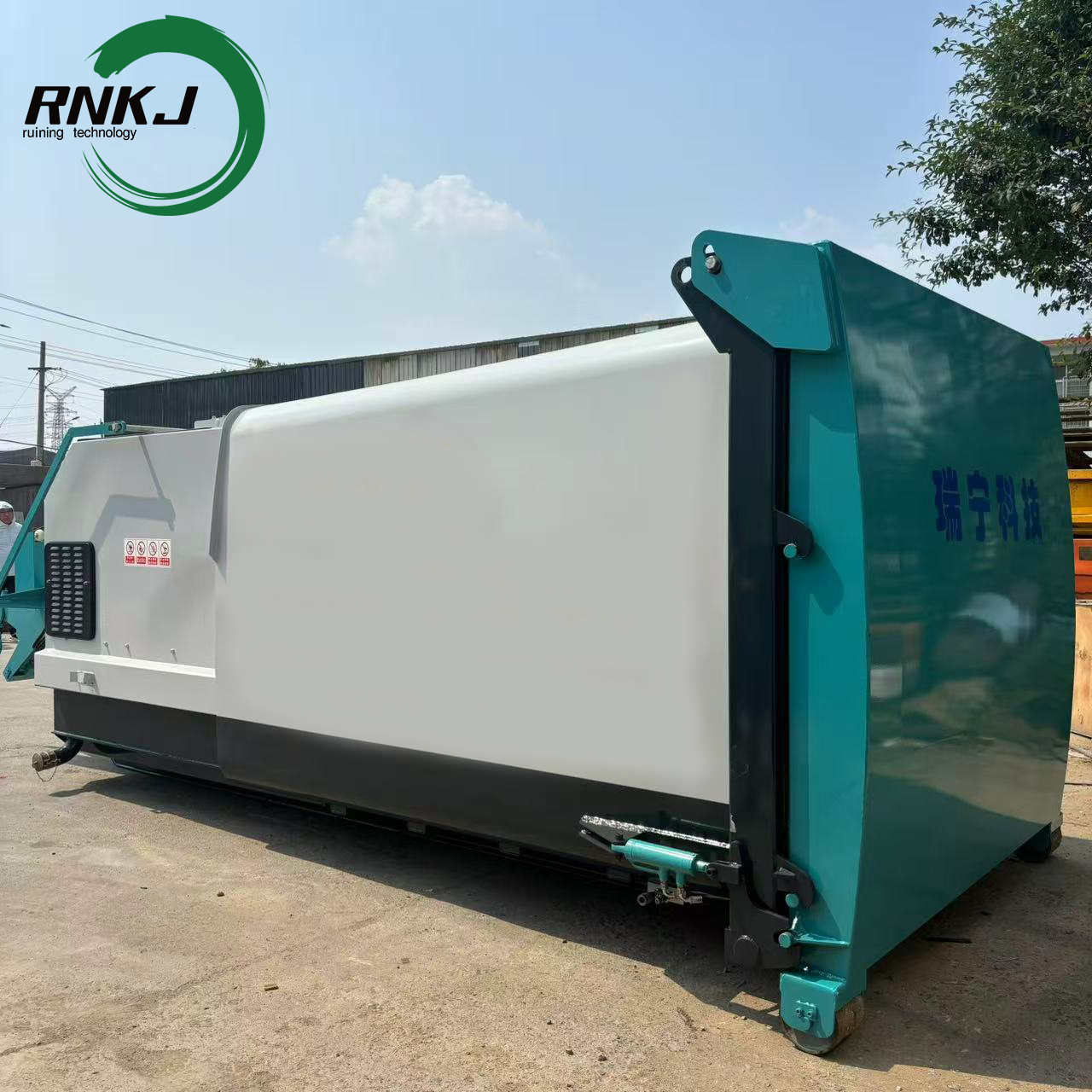
The bucket lift mechanism must integrate seamlessly with your current bin fleet. Mismatched equipment causes daily operational friction and safety hazards. Verify the lifting trunnions or comb lifters on the compactor. They must align perfectly with the geometry of your facility's carts. Field modifications to lifting arms compromise the structural integrity of the machine.
If you use large commercial bins, evaluate an 1100L bucket type waste compactor. The lifting arms must handle the maximum gross weight of a fully loaded 1100-liter bin, which can easily exceed 400 kilograms when filled with wet waste. Watch for structural deflection during the lift cycle. The hydraulic system must lift the load smoothly without stalling, shuddering, or dropping pressure.
Heavy compaction equipment presents severe crushing hazards. Safety interlocks are mandatory. Verify the placement of emergency stop buttons. They must be accessible from multiple angles and clearly marked. Ensure physical guarding surrounds the tipping zone to prevent operator access during the lift cycle. The bucket mechanism must feature anti-fall valves to prevent a sudden drop if a hydraulic hose ruptures.
Evaluate the control panel interface. It should utilize a reliable Programmable Logic Controller. The screen must display clear fault-code readouts for rapid troubleshooting. The buttons must be large, tactile, and housed in a NEMA 4 rated enclosure for weather resistance. Operators wearing heavy leather or rubber protective gear must be able to operate the controls without removing their gloves.
Assess the electrical draw before purchasing. Check the phase, voltage, and amperage requirements of the motor. Most industrial compactors require a 3-phase, 480V electrical service. If your site only has single-phase or 208V power, you face expensive electrical upgrades. Running a high-horsepower motor on inadequate voltage causes excessive amperage draw, tripping breakers and burning out motor windings.
Consider energy-efficient motor options. Variable Frequency Drives adjust the motor speed based on the load. They draw less current during the retraction stroke and ramp up power only when the ram meets resistance. While these drives increase the initial purchase price, they significantly reduce monthly electrical consumption. Calculate the realistic return on investment based on your local utility rates and daily cycle counts.
Map out a strict preventative maintenance schedule. Routine care prevents catastrophic breakdowns. Plan for bi-annual hydraulic fluid sampling to check for particulate contamination. Schedule regular filter replacements to keep the oil clean. Identify all grease zerks and establish a weekly lubrication routine for the lift pivot points, cylinder pins, and door hinges.
| Maintenance Task | Frequency | Component Focus |
|---|---|---|
| Visual Inspection | Daily | Hydraulic hoses, safety interlocks, E-stops |
| Lubrication | Weekly | Pivot points, cylinder pins, guide tracks |
| Debris Clearing | Weekly | Behind the ram, hopper floor, drainage ports |
| Fluid Analysis | Bi-Annually | Hydraulic oil viscosity, water contamination |
| Wear Part Replacement | Annually | Nylon guide shoes, wiper seals, door gaskets |
Budget for consumable wear parts. Nylon guide shoes keep the ram aligned within the chamber. Wiper seals keep debris out of the hydraulic cylinders. These parts wear out predictably. Calculate the cost of the parts and the labor required to replace them. Ignoring wear parts leads to steel-on-steel friction, gouged chamber walls, and expensive structural damage.
Integrate automated fullness monitors to optimize your hauling schedule. Telemetry systems use pressure transducers to gauge container capacity accurately. They alert your hauler via cellular modem only when the unit reaches maximum density. This eliminates unnecessary pickup fees. Reducing half-empty hauls drastically lowers your long-term operating expenses and reduces site traffic.
Avoid equipment built with obscure, proprietary components. Your machine must use standard, off-the-shelf hydraulic valves, hoses, and electrical relays from recognized brands. Proprietary parts lock you into expensive, single-source purchasing and long lead times. Explicitly avoid buying discontinued models, as sourcing spares becomes nearly impossible after a few years.
Interrogate the manufacturer about their supply chain. Ask for a guaranteed multi-year parts availability lifecycle. Verify they hold domestic inventory for critical spares like cylinders, pumps, and logic modules. A machine sitting idle for weeks waiting for an overseas shipment destroys operational efficiency and forces you to rent temporary open-top dumpsters.
Deconstruct the standard warranty language carefully. Manufacturers often bundle terms to look generous. Separate the coverage periods for structural steel, hydraulic components, and electrical parts. A standard benchmark is one year for labor, three years for parts, and five years for the structural frame. Check the labor coverage specifically. A parts-only warranty leaves you paying high hourly rates for technicians.
Ensure a robust local service infrastructure exists. You need certified technicians trained on your specific make and model nearby. When a compactor goes down, trash piles up immediately, creating health hazards and blocking loading docks. Prompt emergency service is non-negotiable. Verify the manufacturer has authorized service centers within a reasonable driving distance of your facility.
Draft a formal Request for Proposal detailing your exact waste density, daily volume, and peak operational hours.
Demand detailed engineering drawings and hydraulic schematics from all shortlisted vendors to verify structural claims.
Request a comprehensive breakdown of projected maintenance requirements and consumable part lifespans over a five-year period.
Physically inspect a deployed unit of the same model at an active facility to observe cycle times and noise levels before signing the contract.
A: A well-maintained unit typically lasts 10 to 15 years. Lifespan depends heavily on daily cycle counts, operating environment, and strict adherence to preventative maintenance. Units processing highly corrosive wet waste or abrasive industrial materials require major overhauls sooner if not properly cleaned and lubricated.
A: Base your choice on daily waste generation weight, your hauler's pickup frequency, and available footprint. A 9 m³ unit fits tighter spaces and suits moderate volumes. A 12 CBM unit requires a larger concrete pad but reduces hauling frequency for high-volume facilities, saving long-term logistics costs.
A: Yes, but it requires specific engineering. If mixing waste streams, the compactor must feature liquid-tight door seals and integrated drainage ports. Without these, wet waste leaks, causing severe odor issues, environmental hazards, and accelerated corrosion of the steel floor.
A: Look for increased cycle times, reduced compaction density, and unusual whining noises from the pump. Physical signs include visible fluid leaks around cylinder seals and dark, sludgy, or burnt-smelling hydraulic oil in the reservoir. These indicate internal wear or thermal degradation.
A: Budget approximately 3% to 5% of the initial purchase price annually. This covers routine hydraulic fluid changes, filter replacements, structural inspections, and consumable wear parts like nylon guide shoes and wiper seals. Neglecting this budget leads to expensive emergency repairs.
A: Yes. You must install a reinforced, level concrete pad. Asphalt sinks and cracks under the extreme weight. The pad must handle the static weight of the machine, the dynamic forces of the compaction ram, and the axle load of the collection trucks.


