
Views: 0 Author: Site Editor Publish Time: 2026-11-18 Origin: Site


Waste collection projects often require more than a conventional garbage compactor. For commercial facilities, municipal waste collection points, residential communities, and industrial sites, equipment must be capable of handling garbage bins efficiently, compacting waste, and transporting collected waste to designated disposal locations.
A Bucket-type Garbage Compactor equipped with an automatic bin lifting system and hook lift transportation structure provides an integrated solution for these requirements. The automatic bin lifting mechanism transfers waste from garbage bins into the feeding hopper, while the hydraulic compression system reduces waste volume. Meanwhile, the hook lift structure allows the entire compactor to be loaded onto and transported by a compatible hook lift truck.
Combining these two functions creates a more flexible waste collection system. Instead of relying on separate waste loading equipment and fixed waste compaction stations, operators can use one integrated piece of equipment for bin lifting, waste feeding, compression, storage, and transportation.
In this article, we explore the benefits of combining automatic bin lifting with hook lift transportation, explain how this configuration works, and discuss why a customized hydraulic bucket-type garbage compactor is suitable for different municipal, commercial, and industrial waste management projects.
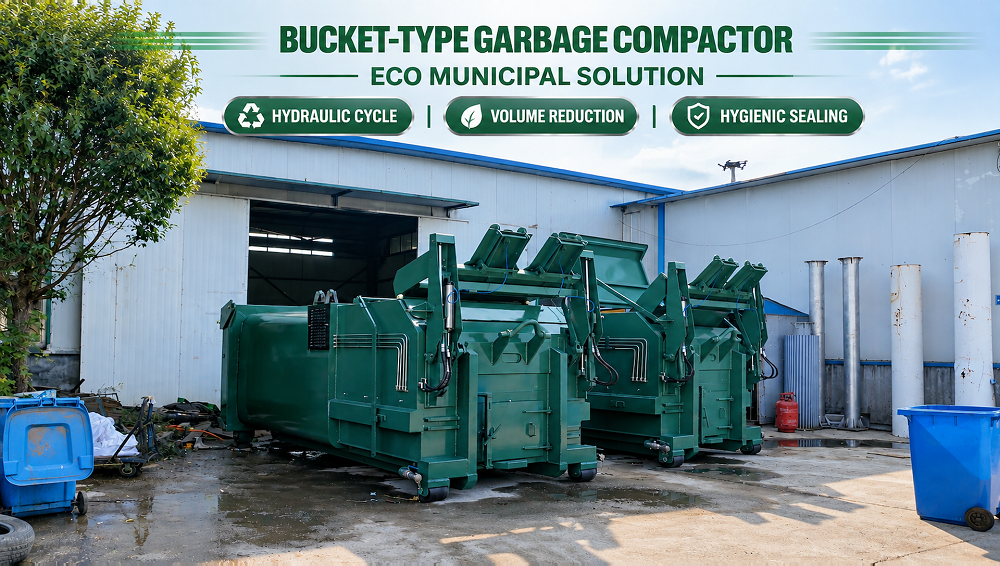
A Bucket-type Garbage Compactor is a waste compression machine designed to collect garbage from bins or containers through a bucket lifting and overturning mechanism. The waste is discharged into a feeding hopper and then compressed by a hydraulic system into a storage chamber.
When equipped with an automatic bin lifting system, the equipment can handle garbage bins with different capacities, including 240L, 660L, and 1100L bins, depending on the customized lifting mechanism.
The hook lift transportation structure allows the complete garbage compactor to be transported by a compatible hook lift truck. This means the equipment is not limited to one permanently installed waste collection location. It can be relocated according to waste collection schedules, project requirements, or changes in operating conditions.
The integrated system typically consists of the following components:
Automatic hydraulic bin lifting mechanism
Waste feeding hopper
Hydraulic waste compression mechanism
Waste storage chamber
Hydraulic power unit
Electrical control system
Hook lift transportation frame
Safety protection structure
The automatic bin lifting mechanism and hook lift frame can be customized according to the customer's garbage bin specifications, hook lift truck model, storage capacity, and waste collection requirements.
The automatic bin lifting system is designed to reduce the need for manual garbage loading and simplify the waste feeding process.
The operator moves the garbage bin to the designated lifting position.
The bin lifting mechanism is designed according to the dimensions and structural characteristics of the selected garbage bins. Common configurations include 240L, 660L, and 1100L garbage bins.
For projects using different bin sizes, the lifting structure can be customized according to the required dimensions, lifting height, and mechanical connection configuration.
Once the garbage bin is properly positioned, the hydraulic lifting mechanism raises the bin toward the feeding hopper.
The hydraulic cylinders provide the mechanical force required to lift the bin and control its movement during the lifting process.
The lifting mechanism can be designed according to the size, weight, and operating requirements of the garbage bin.
The bin is lifted and overturned above the feeding hopper, allowing garbage to be discharged into the compactor.
The overturning angle and feeding position can be configured according to the equipment design and bin specifications.
This process helps reduce manual handling and provides a more convenient waste loading method for daily collection operations.
After the garbage is discharged into the hopper, the hydraulic compression mechanism pushes the waste into the storage chamber.
The compression system applies mechanical pressure to reduce the volume of collected garbage, allowing more waste to be stored within the available container space.
The compressed waste remains inside the storage chamber until the equipment reaches its designated transportation or disposal condition.
The entire bucket-type garbage compactor can then be transported by a compatible hook lift truck to the designated waste transfer station, disposal facility, or another collection location.
This integrated operating process connects automatic bin loading, waste compaction, storage, and transportation.
One of the main benefits of an automatic bin lifting system is the reduction of manual garbage loading.
In conventional waste collection operations, workers may need to manually empty garbage bins into collection vehicles or waste compaction equipment. This process can involve repeated lifting, pushing, and handling of heavy bins.
A hydraulic bucket-type garbage compactor with automatic bin lifting can mechanically lift and overturn garbage bins into the feeding hopper.
The lifting mechanism reduces the amount of manual work involved in waste feeding and provides a more convenient operating process for waste collection personnel.
For commercial facilities, municipal sanitation departments, residential communities, and industrial waste collection sites, automatic bin lifting can help simplify daily garbage collection operations.
The system is particularly useful when waste collection points use standardized garbage bins and require frequent loading.
Traditional fixed garbage compaction stations are usually installed at designated locations. Moving the equipment may require additional installation work, transportation arrangements, or infrastructure modifications.
A Hook Lift Bucket-type Garbage Compactor offers greater flexibility because the entire equipment unit can be transported by a compatible hook lift truck.
The equipment can be deployed at different waste collection locations according to actual operational requirements.
For example, a waste management operator may use the same compactor at a commercial waste collection point during one period and relocate it to another site when waste collection demand changes.
This flexibility is useful for:
Temporary waste collection sites
Construction and renovation projects
Commercial waste collection areas
Municipal waste collection points
Industrial parks
Seasonal waste collection locations
Multiple community waste collection sites
Combining automatic bin lifting with hook lift transportation allows operators to manage waste collection and equipment deployment more flexibly.
The automatic bin lifting mechanism and feeding hopper work together to provide a more organized waste loading process.
Garbage bins are positioned at the lifting mechanism, mechanically lifted, and overturned into the hopper. The waste then enters the compression chamber through the configured feeding mechanism.
This integrated design eliminates the need for separate manual unloading equipment in many applications.
The Automatic Bin Lifting Garbage Compactor can be customized to accommodate different garbage bin specifications, helping waste management operators use existing collection bins without completely changing their waste collection infrastructure.
For projects using 240L, 660L, or 1100L bins, the lifting mechanism can be designed according to the customer's specific bin dimensions.
Automatic bin lifting is responsible for waste feeding, while the hydraulic compression system improves waste storage efficiency.
After garbage is loaded into the feeding hopper, the compression mechanism pushes the waste into the storage chamber and applies pressure to reduce its volume.
The compressed waste occupies less space than loose garbage, allowing the storage chamber to accommodate more waste before transportation.
This can help waste collection operators reduce the frequency of transportation, depending on the waste type, moisture content, density, storage capacity, and compression performance.
A Hydraulic Bucket-type Garbage Compactor is suitable for collecting general municipal solid waste, commercial garbage, packaging waste, and other compatible waste materials.
The compression system can be customized according to the customer's waste characteristics and required operating performance.
The combination of automatic bin lifting and hook lift transportation creates a practical solution for centralized waste collection.
Garbage can be collected from multiple bins at a designated location, automatically loaded into the compactor, and compressed inside the storage chamber.
When transportation is required, a compatible hook lift truck can transport the entire equipment unit to the designated disposal facility.
This configuration helps connect several stages of the waste management process:
Waste collection from garbage bins
Automatic waste loading
Hydraulic waste compression
Waste storage
Hook lift transportation
Centralized disposal or transfer
For municipal sanitation projects and commercial waste management operations, this integrated configuration can simplify equipment deployment and waste handling arrangements.
A hook lift transportation structure is particularly useful when waste collection requirements change over time.
Instead of permanently installing the garbage compactor at one location, operators can relocate the equipment using a compatible hook lift truck.
This is useful for waste collection projects with multiple sites, temporary operating locations, or changing waste generation patterns.
For example, a construction project may require waste collection equipment at different stages of development. A hook lift bucket-type garbage compactor can be moved to the appropriate collection area when necessary.
Similarly, municipal waste management operators may relocate equipment between collection points according to operational requirements.
The hook lift frame, equipment dimensions, loading structure, and overall weight must be designed to match the transportation vehicle.
For waste management companies operating several collection locations, equipment utilization is an important consideration.
A fixed garbage compaction station is generally designed for one specific location. A hook lift garbage compactor can be relocated when necessary, allowing the operator to deploy the equipment according to actual waste collection requirements.
The automatic bin lifting system also helps make the equipment compatible with standardized garbage bins used at different collection points.
This combination can be useful for:
Waste collection contractors
Municipal sanitation service providers
Commercial property management companies
Industrial waste management operators
Construction waste collection projects
Centralized waste collection service providers
The equipment configuration can be customized according to the operational requirements of each project.
A conventional waste collection system may require separate equipment for garbage bin handling, waste loading, and compaction.
A bucket-type garbage compactor with automatic bin lifting integrates the bin lifting mechanism directly into the compaction equipment.
The automatic lifting system transfers garbage from the bin into the hopper, while the hydraulic compression mechanism handles waste compaction.
This integrated configuration helps reduce the need for additional loading equipment in compatible waste collection applications.
The hook lift transportation structure also allows the entire compactor to be transported using a compatible hook lift truck, providing a combined waste collection and transportation solution.
Different waste collection projects may use different garbage bins, generate different waste volumes, and require different equipment transportation arrangements.
A customized automatic bin lifting hydraulic garbage compactor can be configured according to these differences.
The lifting mechanism can be designed for 240L, 660L, or 1100L garbage bins. The compression chamber capacity, hydraulic system, feeding hopper, hook lift frame, and equipment dimensions can also be customized.
This makes the equipment suitable for a wide range of waste collection environments, including commercial facilities, residential communities, municipal sanitation projects, and industrial waste collection locations.
The combination of automatic bin lifting, hydraulic compression, and hook lift transportation brings several waste handling functions together in one piece of equipment.
Instead of treating garbage loading, compaction, storage, and transportation as separate processes, the integrated equipment provides a coordinated solution.
For waste collection projects requiring flexible deployment and customized equipment configurations, this integrated design can simplify operational planning and equipment selection.
The actual benefits depend on waste characteristics, equipment capacity, site conditions, transportation arrangements, and the operating schedule.
Automatic bin lifting provides a different waste feeding method compared with conventional manual loading.
| Comparison Item | Automatic Bin Lifting | Manual Waste Loading |
|---|---|---|
| Waste Feeding Method | Hydraulic lifting and overturning | Manual loading |
| Garbage Bin Compatibility | Customized for specified bin sizes | Depends on manual handling |
| Loading Process | Mechanized bin lifting | Manual waste transfer |
| Operating Labor | Reduces manual handling | Requires more manual handling |
| Feeding Configuration | Integrated lifting mechanism | Manual feeding opening |
| Suitable Bin Sizes | 240L, 660L, 1100L, customized | Depends on loading arrangement |
| Waste Collection | Bin-based collection | Manual or mixed collection |
| Equipment Configuration | Customized hydraulic lifting system | Simpler loading structure in some configurations |
Automatic bin lifting is particularly useful for projects where standardized garbage bins are used and repeated waste loading operations are required.
The transportation configuration is another important difference between a hook lift bucket-type garbage compactor and conventional fixed waste compaction equipment.
| Comparison Item | Hook Lift Bucket-type Garbage Compactor | Fixed Garbage Compactor |
|---|---|---|
| Equipment Installation | Designed for transportation and deployment | Usually installed at a designated site |
| Relocation | Transported by compatible hook lift truck | Relocation may require additional arrangements |
| Site Flexibility | Suitable for changing collection locations | Generally operates at a fixed location |
| Transportation Structure | Customized hook lift frame | May not have hook lift structure |
| Application | Multiple or temporary collection sites | Permanent waste collection facilities |
| Equipment Configuration | Customized for truck compatibility | Customized for site installation |
| Waste Collection | Automatic bin lifting and compaction | Depends on loading configuration |
For projects requiring equipment relocation, the hook lift design provides a transportation option that may be more suitable than a permanently installed compaction station.
The automatic bin lifting mechanism can be customized according to the customer's garbage bin specifications.
240L garbage bins are commonly used in residential communities, public facilities, small commercial businesses, and other waste collection locations.
A customized 240L bin lifting system can be designed according to the bin dimensions, lifting position, and feeding requirements.
This configuration is suitable for projects where smaller garbage bins are used for distributed waste collection.
660L garbage bins are commonly used in commercial facilities, municipal sanitation operations, office buildings, and medium-sized waste collection locations.
The lifting mechanism can be customized to accommodate the dimensions and weight of the 660L bin.
The hydraulic lifting system provides the force required to raise and overturn the bin into the feeding hopper.
1100L garbage bins are suitable for larger commercial and municipal waste collection applications.
The automatic lifting mechanism can be designed according to the bin's dimensions, structural characteristics, and lifting requirements.
For projects using large-capacity bins, the lifting structure, hydraulic cylinders, mechanical connection, and feeding position should be configured according to the actual operating conditions.
In addition to standard 240L, 660L, and 1100L bins, the lifting mechanism can be customized according to other garbage bin sizes.
Customers can provide bin drawings, photographs, dimensions, and relevant specifications to help determine the appropriate lifting structure.
Municipal sanitation projects may require garbage collection equipment that can handle standardized bins and transport collected waste to designated disposal facilities.
The automatic bin lifting mechanism can be configured for municipal garbage bins, while the hook lift transportation structure allows the equipment to be relocated when required.
Shopping centers, supermarkets, restaurants, hotels, office buildings, and commercial complexes generate waste from daily business activities.
A hydraulic bucket-type garbage compactor can collect garbage from commercial bins, compact it, and store it before transportation.
The automatic bin lifting system is particularly useful for locations using 660L or 1100L commercial waste bins.
Residential communities often use standardized garbage bins for daily waste collection.
A customized bucket-type garbage compactor can be configured to accommodate 240L, 660L, or 1100L bins according to the community's waste collection system.
The hook lift transportation structure provides additional flexibility when equipment relocation is required.
Factories, warehouses, industrial parks, and manufacturing facilities may generate packaging waste, general industrial waste, and other compatible waste materials.
The equipment can be customized according to the waste type, waste generation volume, bin specifications, storage capacity, and transportation requirements.
Construction projects and temporary waste collection sites may require equipment that can be moved between different locations.
A hook lift bucket-type garbage compactor can be transported by a compatible hook lift truck, allowing operators to deploy the equipment according to project progress.
The automatic bin lifting mechanism can be configured for the garbage bins used at the project site.
When selecting a bucket-type garbage compactor with automatic bin lifting and hook lift transportation, buyers should consider several important factors.
Confirm the garbage bin size, dimensions, weight, and structural characteristics.
Common configurations include 240L, 660L, and 1100L bins.
The automatic lifting mechanism should be designed according to the selected bin specifications.
Different types of waste have different compression characteristics.
Municipal solid waste, commercial garbage, packaging waste, and general industrial waste may require different compression configurations.
The equipment should be selected according to the actual waste composition and operating conditions.
Determine the required storage capacity according to daily waste generation volume, collection frequency, transportation schedule, and available operating space.
The storage chamber capacity can be customized according to project requirements.
The compression force, hydraulic cylinder configuration, hydraulic power unit, and operating cycle should be selected according to the waste type and required compression performance.
The hook lift frame must be compatible with the customer's transportation vehicle.
Important parameters include hook height, frame dimensions, loading structure, equipment weight, and transportation requirements.
Providing the hook lift truck model or technical specifications before manufacturing helps ensure compatibility.
Consider the available operating space, garbage bin positioning area, equipment loading and unloading conditions, and transportation access.
These factors may affect the equipment dimensions, bin lifting configuration, and hook lift transportation structure.
A customized Bucket-type Garbage Compactor with automatic bin lifting and hook lift transportation provides an integrated solution for waste loading, hydraulic compression, storage, and equipment transportation.
Our customized equipment can be designed according to the customer's garbage bin specifications, waste type, storage capacity, hook lift truck model, and project operating requirements.
The automatic bin lifting mechanism can accommodate 240L, 660L, and 1100L garbage bins, while the hydraulic compression system helps reduce waste volume and improve storage utilization.
The entire garbage compactor is designed with a hook lift transportation structure, allowing it to be loaded onto and transported by a compatible hook lift truck.
Whether you need a Hydraulic Bucket-type Garbage Compactor, an Automatic Bin Lifting Waste Compactor, or a Hook Lift Bucket-type Garbage Compactor for municipal, commercial, industrial, or residential waste collection, we can provide customized equipment solutions based on your project requirements.


