
English
Views: 0 Author: Site Editor Publish Time: 2026-11-23 Origin: Site


Large-scale food manufacturing facilities face a hidden profit killer that quietly drains operational budgets every single day. The culprit is the sheer weight and volume of wet organic waste. Imagine the pungent odor of fermenting brewery mash or tomato processing byproducts on a humid July afternoon. Waste management in the food sector is rarely just about clearing away debris. Rather, it is a complex, high-stakes logistical challenge centered entirely around moisture control.
Food processing naturally generates tons of organic byproducts with exceptionally high water content. If this moisture-heavy refuse is not managed with precision, it rapidly triggers a domino effect of operational failures. Foul odors permeate the facility. Severe pest infestations take root. Environmental compliance fines pile up. Worst of all, dispatching uncompacted wet waste means you are essentially paying premium industrial transportation rates just to haul water to a landfill.
Standard waste protocols fail here. To truly optimize daily operations, maintain peak hygiene standards, and aggressively cut disposal costs, facility managers must upgrade their core infrastructure. Implementing purpose-built equipment is no longer an optional upgrade. It has become a critical operational necessity.
Liquid Weight Drives Up Costs: Wet waste is exceptionally heavy. Removing and safely routing the liquid content significantly reduces hauling frequency and weight-based disposal fees.
Hygiene is Non-Negotiable: A fully enclosed system prevents highly contaminated wastewater leaks, controls bacterial odors, and ensures compliance with strict sanitation standards.
Standard Equipment Fails: Traditional dry waste machines rapidly rust, leak hazardous fluids, and suffer electrical failures when exposed to acidic food processing runoff.
Customization is Key: Large facilities benefit most from tailored compression stations designed to integrate seamlessly with existing conveyor belts and wastewater drainage systems.
Partnering Matters: Selecting an experienced equipment supplier guarantees durable machinery, site-specific installation, and reliable maintenance programs.
Industry analysts note a massive shift in how municipalities handle industrial runoff. Wastewater treatment plants are aggressively tightening limits on Biological Oxygen Demand and Total Suspended Solids. Consequently, food processors face steeper surcharges for liquid-heavy waste. With municipal landfill tipping fees rising annually by an average of five to seven percent globally, the old paradigm of dumping everything into an open roll-off container is dead. Facilities must now treat waste processing as an extension of the production line itself.
Managing wet waste presents highly specific logistical hurdles that dry industrial refuse simply does not. Fruit peels, vegetable scraps, and meat processing byproducts demand specialized handling.
Waste management companies generally calculate their removal fees based on total tonnage and collection frequency. In the food manufacturing sector, water typically makes up seventy to ninety percent of organic waste by weight. Without proper liquid extraction, facilities bleed capital. Every ton of trapped water hauled away represents a direct hit to the bottom line, inflating transportation invoices and escalating fuel surcharges.
Wet organic matter decomposes at an alarming rate, especially in warm processing environments. When left in open bins, this decomposing material creates severe bacterial odor issues that permeate the entire plant. Furthermore, exposed organic sludge acts as a magnet for rodents and flies. These infestations disrupt operations and pose a severe threat to food safety protocols, potentially leading to product contamination and forced facility shutdowns.
The environmental risks associated with wet waste are substantial. Picture the slip hazards and contamination risks when liquid from a standard dumpster leaks onto an active loading dock. If forklift tires track this acidic wastewater into the facility, or if it flows into municipal storm drains, the consequences are severe. Regulatory bodies monitor industrial runoff strictly. Facilities found in violation face massive fines, legal liabilities, and long-term reputational damage.
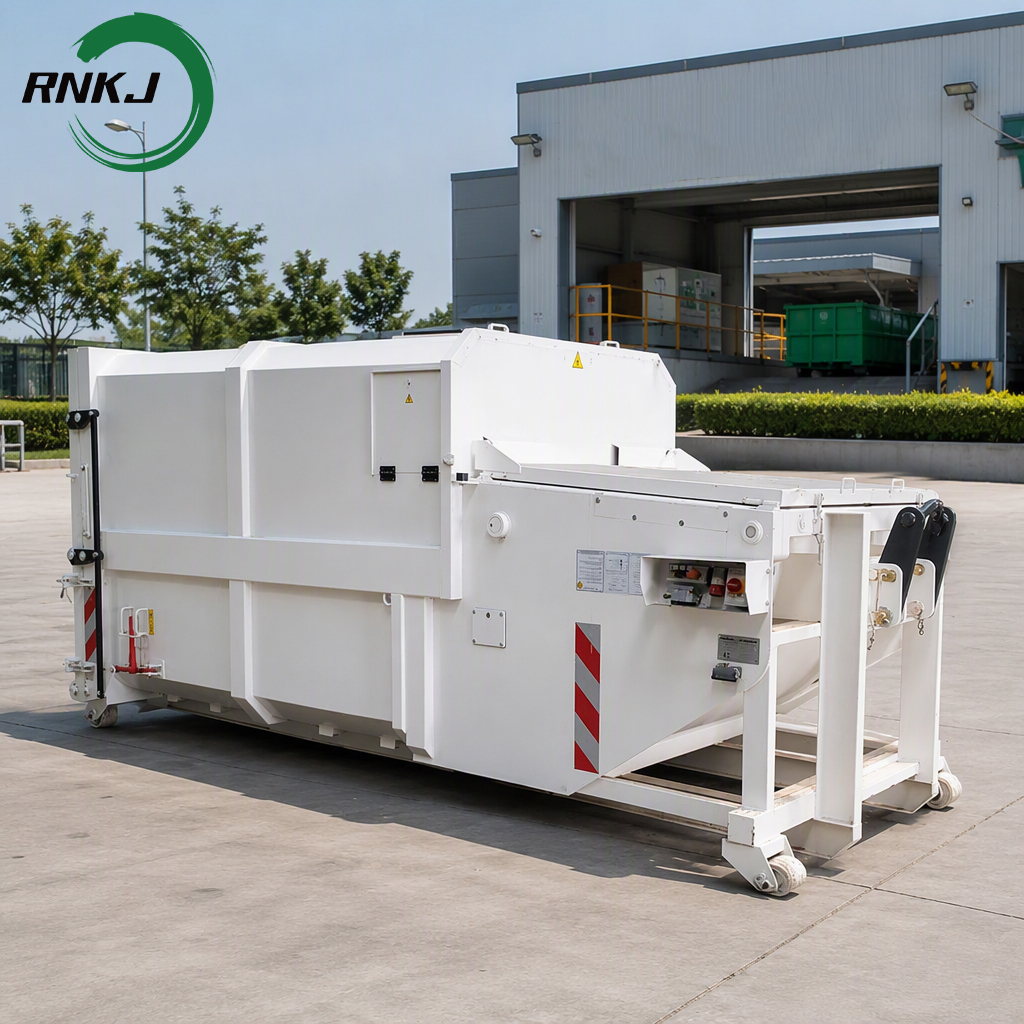
Many procurement teams mistakenly attempt to handle high-moisture byproducts using standard dry waste equipment. This is a costly miscalculation. Traditional machines are engineered for cardboard and plastics. They are fundamentally incompatible with organic sludge. To maintain compliance and efficiency, upgrading to a specialized Wet Refuse Trash Compactor is a necessary operational pivot.
Standard compactors rely on basic spot welding and feature unsealed access doors with simple latches. When wet waste is subjected to high-pressure compression, the trapped liquid acts like a violently squeezed sponge. In a standard machine, this contaminated liquid follows the path of least resistance. It squeezes out through structural gaps and door hinges. The result is a flooded loading dock covered in hazardous, foul-smelling wastewater that requires continuous manual cleanup.
Food waste is inherently corrosive. Byproducts like citrus juices, tomato paste residues, and dairy runoff contain high levels of organic acids that aggressively attack standard mild steel. Traditional compactors lack necessary marine-grade protective coatings. When continuously exposed to these acidic liquids, they suffer from accelerated oxidation, structural rust, and premature mechanical failure. What initially seems like a cost-saving equipment choice quickly morphs into a maintenance nightmare.
Food processing environments demand rigorous and frequent washdowns to maintain sanitary conditions. Standard compactors are simply not designed to withstand high-pressure water jets or constant environmental moisture. Their standard electrical panels and exposed hydraulic power units are highly susceptible to water ingress. This vulnerability leads to frequent short-circuiting, blown sensors, and catastrophic operational downtime.
| Engineering Feature | Standard Dry Compactor | Specialized Wet Waste Compactor |
|---|---|---|
| Structural Welding | Spot/Stitch welded seams | 100% Continuous seam welding |
| Liquid Containment | Unsealed doors, prone to leaking | Ratcheting locks with liquid-tight gaskets |
| Corrosion Protection | Standard industrial enamel paint | Marine-grade epoxy and stainless steel sumps |
| Electrical Enclosures | NEMA 1 or NEMA 12 rated | NEMA 4 or NEMA 4X waterproof rated |
To overcome the specific hurdles of high-moisture organic byproducts, facility managers must look toward heavy-duty infrastructure upgrades. The definitive solution for industrial food plants is the Wet Waste Compactor. This machinery is engineered specifically to handle the physical and chemical properties of organic sludge.
The core mechanics rely on heavy-duty, high-pressure hydraulic rams capable of generating massive force. As raw organic material is deposited into the hopper, the ram cycles forward against a reinforced steel barrier. This compression physically crushes the cellular structure of the organic matter. It aggressively squeezes out the trapped liquid content while simultaneously compacting the remaining solid mass into a dense block.
Unlike conventional units that allow liquid to pool dangerously, these specialized machines are engineered with sophisticated liquid management systems. They feature built-in drainage sumps, baffled floors, and heavy-duty filtration screens located beneath the compaction chamber. As liquid is extracted, it passes through the screens to block solid particulates. The fluid is then channeled directly into the facility wastewater treatment system or secure holding tanks, ensuring zero spillage.
By systematically extracting the water weight and crushing the solid matter, these compactors achieve an impressive compaction ratio. Performance often reaches a four-to-one or five-to-one reduction. This drastic reduction in physical volume means a container takes significantly longer to fill. As a result, the facility requires far fewer truck pickups, directly slashing hauling invoices and lowering the overall carbon footprint.
When evaluating equipment upgrades, procurement teams must look beyond basic specifications. Ensuring sanitary compliance and long-term durability requires identifying specific engineering features that guarantee performance in harsh environments.
The absolute most critical feature is guaranteed liquid containment. Investing in a Fully Sealed Wet Waste Compactor provides the necessary safeguards against leaks and contamination. Engineers achieve this through continuous, seam-welded construction rather than stitch welding. Furthermore, the discharge doors must be equipped with specialized heavy-duty gaskets and ratcheting locking mechanisms that form an impenetrable seal, even on large ten cubic meter models.
To combat the rapid decomposition of organic matter, high-end compactors integrate advanced odor neutralization technologies. Depending on facility requirements, these units can be outfitted with ozone generators that destroy odor-causing bacteria at the molecular level. Other effective options include activated carbon exhaust filters or automated deodorizing misting systems that trigger during each compaction cycle.
To survive the acidic nature of food waste and the rigor of daily high-pressure chemical washdowns, specialized materials are mandatory. Premium units utilize marine-grade epoxy coatings and stainless steel components for critical wear areas, such as the sump and filtration screens. In addition, all electrical enclosures must be weather-proof to ensure internal circuitry remains fully protected from moisture degradation.
Large-scale food manufacturing plants operate with highly specific workflows and spatial constraints. Relying on generic waste management equipment often creates operational bottlenecks. Maximizing efficiency requires implementing a Custom Wet Waste Compression Station engineered to match the exact throughput and physical layout of the plant.
Manual waste handling is incredibly labor-intensive and introduces unnecessary contamination risks. A custom-designed station eliminates this by interfacing directly with the production line. Engineers design the loading hopper to accept waste automatically via continuous conveyor belts, pneumatic transport tubes, or through-the-wall gravity chutes. This creates a closed-loop system that physically isolates waste from the clean production environment.
Capacity must be calculated using empirical data rather than guesswork. Application engineers evaluate the specific daily tonnage of organic waste generated by the plant, the density of the material, and the required hauling schedule. Based on this precise data, they design a station with optimal hopper dimensions, hydraulic cylinder force, and receiver container volume. Systems typically range from ten cubic meters to thirty cubic meters. This ensures the equipment handles peak production loads without ever bottlenecking the factory floor.
Industrial environments demand rigorous fail-safe safety protocols. Custom stations are outfitted with advanced automation and safety interlocks to protect operators. Key features include automated photoelectric sensors triggered only when waste is present. Physical magnetic interlock switches disable the ram if access doors are opened. Remote monitoring telemetry sends automated alerts to facility managers when the container reaches maximum capacity.
Securing capital expenditure approval from executive leadership requires a clear demonstration of financial return, alongside alignment with corporate sustainability goals. Upgrading waste infrastructure delivers highly measurable benefits across both domains.
The financial justification for specialized compaction equipment is highly empirical and fast-acting. By extracting liquid and compacting solids, a facility can typically reduce its hauling frequency by up to fifty percent. Furthermore, removing the water weight entirely eliminates the punitive overweight fines commonly levied by transport companies. In many high-volume processing plants, the combination of reduced hauling fees, eliminated fines, and lower labor costs allows the equipment to achieve a full return on investment within just twelve to twenty-four months.
Modern corporations are under intense pressure to improve their sustainability profiles. A specialized compaction system directly supports these broader initiatives. There is a massive industry shift toward circular economy practices. Compacted and liquid-drained organic waste is significantly easier and more cost-effective to divert away from traditional landfills. The processed material is highly suitable for transport to anaerobic digesters for renewable biogas production or to commercial composting facilities.
The final phase of upgrading facility infrastructure is selecting the right manufacturing and service partner. The sheer complexity of handling wet and acidic organic matter means that evaluating a Waste Compactor Supplier requires strict vetting of their industry expertise and long-term support capabilities.
Not all equipment manufacturers possess the engineering acumen to handle food processing waste. Many specialize only in dry retail cardboard. A top-tier supplier should demonstrate a proven track record specifically within the food, beverage, or agricultural sectors. They must possess robust in-house engineering capabilities, allowing them to provide custom integration drawings, modify hopper designs, and tailor hydraulic specifications to meet the exact demands of your facility.
Industrial equipment requires professional and precise implementation. The ideal supplier offers comprehensive turnkey solutions. This includes conducting initial on-site surveys, managing the physical installation, and providing thorough operational training for your facility staff. Beyond installation, they should offer round-the-clock preventative maintenance programs to ensure the equipment operates at peak efficiency during high-yield production seasons.
Equipment durability must be backed by contractual guarantees. Procurement teams must scrutinize warranty terms, specifically looking for robust coverage on structural welds, liquid seals, and hydraulic cylinders. The supplier must guarantee that their machinery fully complies with all relevant occupational safety standards, local environmental regulations regarding wastewater containment, and regional electrical codes.
Managing wet waste in a large food processing facility does not have to be a messy and expensive headache. By upgrading to a fully sealed and custom-designed compactor, plant managers can transform waste management from a hazardous liability into a streamlined, hygienic, and highly cost-effective process. Evaluate your current monthly hauling expenses today. Visit SDRNKJ to explore high-performance ten to thirty cubic meter models, and reach out to our engineering team for a comprehensive site audit and a custom quote.
Standard compactors are designed strictly for dry trash, such as cardboard and plastic packaging. Because they utilize basic spot welding and unsealed doors, they inevitably leak foul liquids when compressing organic matter. In contrast, a wet waste compactor is engineered with fully sealed and continuously welded seams. It features watertight doors and built-in drainage systems to separate liquid from solid waste, safely routing it away from the loading dock.
Yes. High-quality industrial compactors utilize heavy-duty steel rams and exceptionally powerful hydraulic power units, often exceeding three hundred kilonewtons of force. These systems are specifically engineered to crush dense, solid organic materials. They easily process animal bones, thick fruit rinds, and hard agricultural waste without damaging the structural integrity of the machine.
The compactor is typically hard-plumbed directly into the existing plumbing infrastructure of the facility. During the compaction cycle, the squeezed liquid flows through a specialized internal sump and heavy-duty filtration screen. From there, it is routed via drainage pipes directly into the approved wastewater treatment system of the plant, or into a secure holding tank for later extraction.
Proper sizing is an exact science that depends on your daily organic waste tonnage, the physical footprint available on your loading dock, and your preferred hauling schedule. A reputable equipment supplier conducts a comprehensive site audit. They analyze your specific waste stream data to recommend the exact hopper size, cylinder force, and container specifications required to optimize your operations.
These units are specifically designed for rapid and thorough sanitation to meet strict food industry standards. Most feature accessible clean-out doors and self-cleaning ram designs that prevent sticky material buildup. Waterproof electrical components rated NEMA 4 or higher allow facility maintenance crews to safely pressure-wash the entire unit. This specialized engineering ensures strict hygiene standards are maintained with minimal manual labor.
Pricing varies significantly based on capacity, hydraulic power, and custom integration features. A base model may start at a lower tier, while fully automated, thirty cubic meter custom stations with integrated conveyor loading and advanced odor control will require a larger capital investment. However, due to drastic reductions in hauling fees and overweight fines, most food processing facilities achieve a full financial return within twelve to twenty-four months.
Routine maintenance focuses heavily on hydraulic and sealing integrity. Facility teams must regularly inspect the liquid-tight door gaskets for wear and tear, clean the internal filtration screens to prevent drainage blockages, and grease the moving hydraulic ram tracks. Annual preventative maintenance by a certified technician is highly recommended to check hydraulic fluid levels, test safety interlock switches, and ensure the structural welds remain impervious to corrosion.


