
Views: 0 Author: Site Editor Publish Time: 2026-09-09 Origin: Site


High-volume waste management operations frequently misidentify their primary bottleneck. Facility managers often prioritize raw compaction force, yet the true limiting factors are loading speed and operator safety. Relying on manual loading or deploying mismatched tipping mechanisms directly inflates labor hours. Operators face elevated risks of musculoskeletal injuries when lifting heavy containers. Inefficient cycle times leave the machine’s true compaction capacity underutilized. Aligning the loading mechanism with specific facility throughput requirements resolves these inefficiencies. A purpose-built bin tipping waste compactor transforms the waste handling workflow. By lifting and emptying containers directly into the compaction chamber, these systems eliminate manual double-handling. They accelerate processing speeds and protect operators from physical strain. Evaluating the engineering behind these mechanisms reveals exactly how loading design dictates overall operational success on the ground.
Throughput Dependency: Loading efficiency is dictated by the cycle time and weight capacity of the tipping mechanism, making semi-automated and fully automated solutions critical for high-volume sites.
Mechanical vs. Hydraulic Reliability: Selecting a hydraulic bin tipping system requires balancing faster loading times and high-capacity lifts against strict maintenance schedules and fluid management.
Mobility and Footprint: Integrating tipping mechanisms with a hook lift mobile waste compactor ensures seamless transition between static loading and transport phases without requiring secondary handling equipment.
Customization for Compliance: Off-the-shelf lifters often fail edge-case safety compliance; a custom waste compactor loading system is frequently required to meet specific site enclosures, recyclable waste streams, and unique bin dimensions.
Manual waste handling drains operational resources fast. Operators waste valuable labor hours breaking down materials, dragging heavy containers across warehouse floors, and physically lifting debris into hoppers. This manual intervention creates a severe bottleneck on the loading dock. Even the most powerful compaction ram sits idle while workers struggle to feed the machine at a consistent pace. The physical mechanics of lifting a standard 240L bin place immense strain on the lower back, specifically the L4 and L5 vertebrae.
Physical limitations compound this inefficiency daily. As shifts progress, operator fatigue sets in, causing feed rates to drop significantly. Lifting heavy, uneven loads increases the likelihood of workplace injury claims. Back strains and crush injuries happen frequently when workers handle wet organic waste manually. A system reliant on human strength cannot maintain the continuous, high-volume throughput required in demanding industrial or retail environments. We see facilities lose thousands of dollars annually just in lost time and medical claims because they refuse to upgrade their loading protocols.
Here are the primary operational failures associated with manual loading:
Inconsistent feed rates due to natural operator fatigue over an eight-hour shift.
Increased risk of musculoskeletal injuries from lifting heavy, wet waste.
Higher labor costs as multiple workers are required to empty large containers.
Underutilization of the compactor's ram speed and chamber capacity.
Excessive time spent sweeping the dock after manual spills.
Evaluating a loading mechanism requires strict baseline metrics. Cycle time stands as the primary indicator of efficiency. You must measure the exact seconds required for a complete tip-and-return motion. Maximum lift capacity dictates whether the machine can handle dense, wet waste without stalling out mid-cycle. Compatibility with standard wheelie bins ensures the lifter integrates seamlessly with your existing container fleet. You need a system that grips the comb bar securely without warping the plastic rim.
Continuous feed capability is non-negotiable on a busy site. The lifter must deposit materials smoothly to prevent bridging or hopper jams. Bulky recyclable waste, such as cardboard or rigid plastics, tends to interlock. A well-designed tipping arc drops the material at an optimal angle. This allows gravity to pull the waste directly into the path of the compaction ram without manual clearing. If an operator has to use a pole to push waste down into the chamber, the tipping geometry is flawed.
| Bin Size (Liters) | Typical Waste Type | Required Lift Capacity (kg) | Recommended Cycle Time (Seconds) |
|---|---|---|---|
| 240L | General Office Waste | 100 - 150 | 15 - 20 |
| 660L | Mixed Retail Waste | 250 - 300 | 20 - 25 |
| 1100L | Wet Organic/Industrial | 450 - 600 | 25 - 35 |
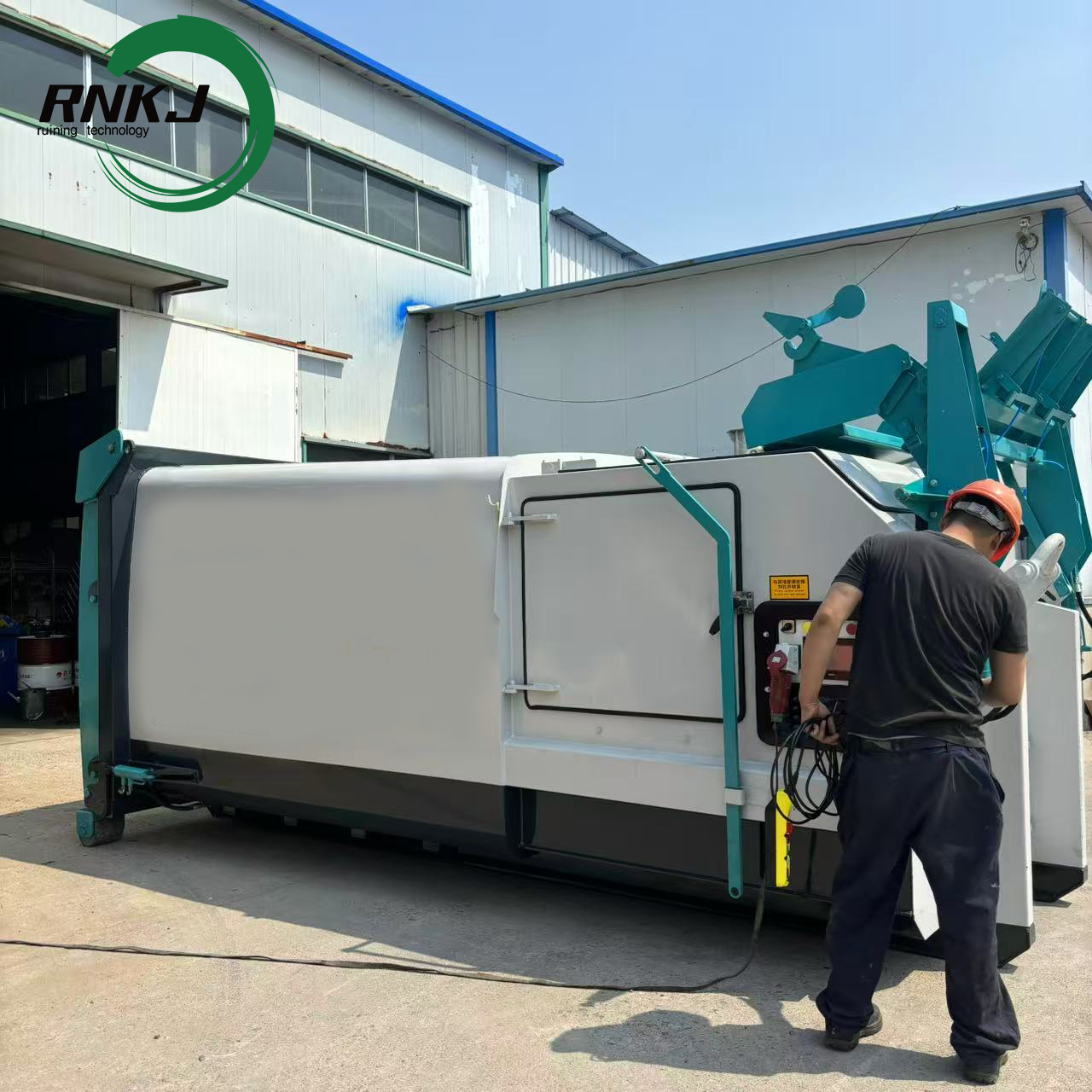
Engineering a reliable lifter requires robust components built for abuse. A hydraulic bin tipping system relies on heavy-duty cylinders, reinforced pivot points, and precision control valves. These components work together to generate massive lifting force in a compact footprint. The hydraulic fluid transfers power smoothly. This prevents the jerking motions that can dislodge bins mid-lift and spill waste across the yard. We specify ISO 46 hydraulic oil for most climates to maintain proper viscosity during rapid cycling.
Hydraulics offer a superior force-to-weight ratio compared to mechanical winch systems. When handling heavy, wet, or unevenly distributed loads, hydraulic cylinders provide consistent upward pressure. Mechanical chains or geared winches often struggle with sudden weight shifts, leading to accelerated wear on the sprockets. Hydraulics maintain controlled descent speeds. This protects both the machine framework and the plastic waste containers from impact damage when returning to the ground. We always check the cylinder rod thickness and seal quality during site inspections to gauge long-term durability.
Automation redefines loading efficiency on the dock. Semi-automated machines require an operator to hold a button throughout the lift cycle. This ensures they monitor the process but ties up their hands. Fully automated systems utilize one-touch operation via a programmable logic controller (PLC). An operator simply stages the bin, presses a single button, and steps away. Integrated safety interlocks and auto-return functionality handle the rest of the cycle safely. The PLC monitors proximity sensors to confirm the bin is seated correctly before initiating the lift.
This transition to an automatic bin tipping waste compactor multiplies labor productivity. While the machine lifts, empties, and compacts the waste simultaneously, the operator can retrieve the next bin. They can also perform other facility tasks like sweeping the dock. Synchronizing the lifter and the ram eliminates dead time. It pushes the equipment to its maximum rated throughput. You stop paying workers to watch a machine run and start moving material faster.
Standard comb lifters cannot accommodate every operational scenario. Industrial sites often utilize non-standard containers. These include tipping skips, forklift-operated hoppers, or custom-fabricated carts designed for specific recyclable materials. These heavy-duty containers require specialized lifting cradles. They need reinforced trunnion mounts to secure the load during the tipping arc. We often use Hardox 450 steel for these custom cradles to prevent deformation under heavy industrial loads.
Engineering a custom waste compactor loading system involves distinct trade-offs. Custom hoppers generally require a larger footprint on the concrete pad. They demand specialized safety cages to protect workers from wider swing radii. Designers must also ensure these custom attachments do not interfere with standard transport mechanisms. They must maintain compatibility with both hook-lift trucks and skip lorries. If you modify the hopper too much, the hauler might not be able to tarp the load properly. We always verify the transport envelope before approving a custom lifter design.
Lifter cycle speed must perfectly match the compactor’s ram cycle. If a lifter empties a bin in 15 seconds but the ram takes 45 seconds to clear the hopper, the system bottlenecks immediately. High-capacity portable units process up to 1,000 gallons of waste volume efficiently only when these two mechanisms operate in harmony. Synchronized timing prevents hopper overflow. It maximizes the tons-per-hour processing rate. Volumetric displacement calculations dictate exactly how fast the ram needs to move to keep up with the lifter.
Operators must understand the rhythm of the machine. Feeding materials too quickly into a slow-clearing hopper causes blockages. Advanced control panels sequence the lifter to pause if the ram is currently in a forward stroke. This intelligent timing protects the equipment from jams. It ensures every cubic inch of the compaction chamber is utilized effectively. You want the ram to sweep the floor clean just as the next bin reaches the tipping apex.
A common operational misconception is that loading the hopper to its absolute maximum capacity yields the best efficiency. Forcing oversized or excessively dense loads into the tipping mechanism creates severe mechanical stress. Overloading strains hydraulic cylinders and stretches pivot pins. It forces the compaction ram to work beyond its rated pressure, drastically shortening equipment lifespan. Structural fatigue on the hopper floor becomes evident within months if operators consistently overload the lifter.
Modern systems incorporate safeguards against operator error. Integrated weight sensors detect when a bin exceeds the safe lifting threshold. They halt the cycle before damage occurs. Pressure-relief valves within the hydraulic circuit bypass fluid if the ram encounters an immovable object like a steel beam or engine block. We typically set these relief valves at 2200 PSI to balance compaction force with structural safety. These features protect the structural integrity of the machine. They prevent catastrophic failures and expensive downtime. We frequently see bent lifter arms on sites that bypass these pressure settings to force heavier loads.
Space limitations dictate equipment selection in retail alleys and tight loading docks. Integrated tipping mechanisms add physical dimensions to the unit. You must account for height clearance during the tipping arc and depth for the safety cage. Facility managers must measure overhead obstructions. Look out for sprinkler pipes, HVAC ducts, or low door frames to ensure the lifter can fully extend without collision. A standard high-level lifter requires at least 14 feet of overhead clearance to operate safely.
Deploying a mobile trash compactor requires careful attention to ground conditions. Top-heavy tipping systems shift the center of gravity dynamically during operation. The deployment surface must be flat, reinforced concrete. Operating a heavy lifter on uneven asphalt or gravel compromises structural stability. It risks equipment tipping and severe safety hazards. We mandate a minimum 6-inch thick, 3000 PSI rebar-reinforced concrete pad for any unit equipped with a high-level bin lifter.
Integrating the loading mechanism directly onto a transportable chassis streamlines logistics. A hook lift mobile waste compactor must withstand extreme physical forces. The tipping mechanism, hopper, and compaction body are dragged, tilted, and pulled onto the back of a truck. The lifter frame must feature heavy-duty welds and locking pins to survive these transport stresses without vibrating loose on the highway. The 36-inch hook height must align perfectly with the hauler's truck specifications.
Self-contained units consolidate assets. The lifter, compaction chamber, and power unit travel as a single, road-legal entity. This design eliminates the need to decouple static compactors from separate receiver bins. Multi-site operations benefit immensely from this standardized approach. Any standard hook-lift truck can swap full units for empty ones. This drastically lowers hauling costs and turnaround times. The driver never has to exit the cab to disconnect hydraulic lines or unbolt safety cages.
Integrated lifters introduce specific wear parts that demand routine inspection. Hydraulic hoses degrade from UV exposure and constant flexing during the lift cycle. Pivot pins bear the entire weight of the loaded bins. They require regular greasing to prevent metal-on-metal grinding. Safety limit switches confirm doors are closed before operation. They frequently suffer damage from debris strikes and require recalibration. You cannot ignore these components without risking a catastrophic mid-lift failure.
Comparing an integrated lifter to a standalone static bin tipper reveals different maintenance burdens. Standalone tippers isolate the lifting mechanics from the harsh, high-vibration environment of the compactor body. However, integrated systems expose the lifting hydraulics to the same debris and shock loads as the main ram. Strict adherence to preventative maintenance schedules is mandatory. You must prevent fluid leaks and sensor failures.
Inspect hydraulic hoses weekly for abrasions or weeping fittings.
Grease all pivot points and trunnion mounts every 50 operating hours.
Test emergency stop buttons and door interlocks daily before the first shift.
Clear debris from behind the compaction ram to prevent cylinder scoring.
Verify the alignment of the comb bar to prevent plastic bin damage.
Automated heavy machinery poses severe crush and pinch hazards. Meeting ANSI Z245.2 or regional equivalent standards requires comprehensive safety integrations. Physical safety cages must surround the lifting zone. This prevents personnel from walking under a suspended load. Interlocked access doors immediately cut power if opened during a cycle. Two-hand controls ensure the operator remains at the console, away from moving parts. We install NEMA 4X rated enclosures to protect these sensitive electrical controls from weather and washdowns.
Technology cannot replace proper training on the ground. Operators must understand how to manage automated tipping cycles safely. They need specific instruction on clearing material jams using lockout/tagout (LOTO) procedures rather than bypassing safety switches with a screwdriver. Routine training drills ensure staff respect the equipment's power. They must adhere strictly to established safety protocols. We fire operators who bypass interlocks because the liability is simply too high.
Selecting the right equipment requires scrutinizing the manufacturer. A reliable waste compactor supplier should offer transparent maintenance service level agreements (SLAs). They must demonstrate proven case studies within your specific industry. You must verify if they possess in-house fabrication capabilities to design and build custom lifters. Outsourcing critical structural components often leads to warranty disputes down the line when welds fail under load.
A pre-installation site audit is a mandatory step in the vetting process. The supplier must physically inspect your loading dock. They need to verify three-phase 480V power availability and measure spatial clearances for the tipping arc. They must confirm the unit's dimensions align with your waste hauler's truck fleet. Skipping this audit guarantees installation delays and operational friction. Demand a stamped site drawing before signing any purchase order.
Execute the following steps to finalize your equipment selection and site preparation:
Conduct a one-week waste volume audit to calculate your peak hourly throughput and determine the necessary ram cycle speed.
Measure the exact dimensions, weight limits, and comb-bar specifications of your existing bin fleet to ensure lifter compatibility.
Survey your loading dock to confirm overhead clearances and verify the concrete pad meets a minimum 3000 PSI structural rating.
Schedule a technical consultation with a specialized manufacturer to design a loading system tailored to your specific material streams.
A: Standard comb lifters typically handle wheelie bins ranging from 240L to 1100L. Weight capacities are generally capped between 400kg and 600kg. When processing larger volumes or heavier industrial loads, you need custom trunnion lifts or skip-fed designs to safely manage the increased weight and dimensions.
A: Hydraulic systems use fluid-filled cylinders to provide smooth, high-capacity lifting. This makes them ideal for heavy or uneven loads. Mechanical systems rely on chains, gears, or winches. While mechanical lifters have simpler designs, they often struggle with the sudden weight shifts that hydraulics handle effortlessly.
A: Yes, retrofitting is possible. However, it requires significant structural welding and electrical integration to tie the new lifter into the compactor's existing PLC and safety circuits. We recommend factory-integrated systems because they are engineered holistically for better reliability, weight distribution, and safety compliance.
A: Critical mandatory safety features include physical perimeter cages and interlocked access doors that halt operation when opened. You also need dual-button controls to keep operator hands clear, and anti-drop valves on hydraulic cylinders to prevent bins from falling if a hose bursts.
A: A hook lift mobile unit combines the lifter, hopper, and compactor into one transportable asset. This reduces the overall equipment footprint and eliminates the mess of double-handling waste between separate units. It also simplifies transport logistics for multi-site operations using standard roll-off trucks.


