
Views: 0 Author: Site Editor Publish Time: 2026-08-24 Origin: Site


As cities continue to grow, municipal waste management systems are facing increasing pressure from higher waste volumes, rising transportation costs, limited land availability, and stricter environmental requirements. Traditional waste collection and transportation methods may require frequent trips, large storage areas, and significant labor input.
A Split-Type Waste Compactor provides a more efficient approach by combining high-density waste compression with flexible container handling. Unlike conventional integrated compactors, the compression unit and waste container are designed as separate components. Once the container is filled, it can be removed and transported while the compaction system remains in place.
For municipal sanitation projects, waste transfer stations, residential communities, commercial areas, and other high-volume waste collection sites, this configuration can significantly improve operational efficiency and waste transportation management.
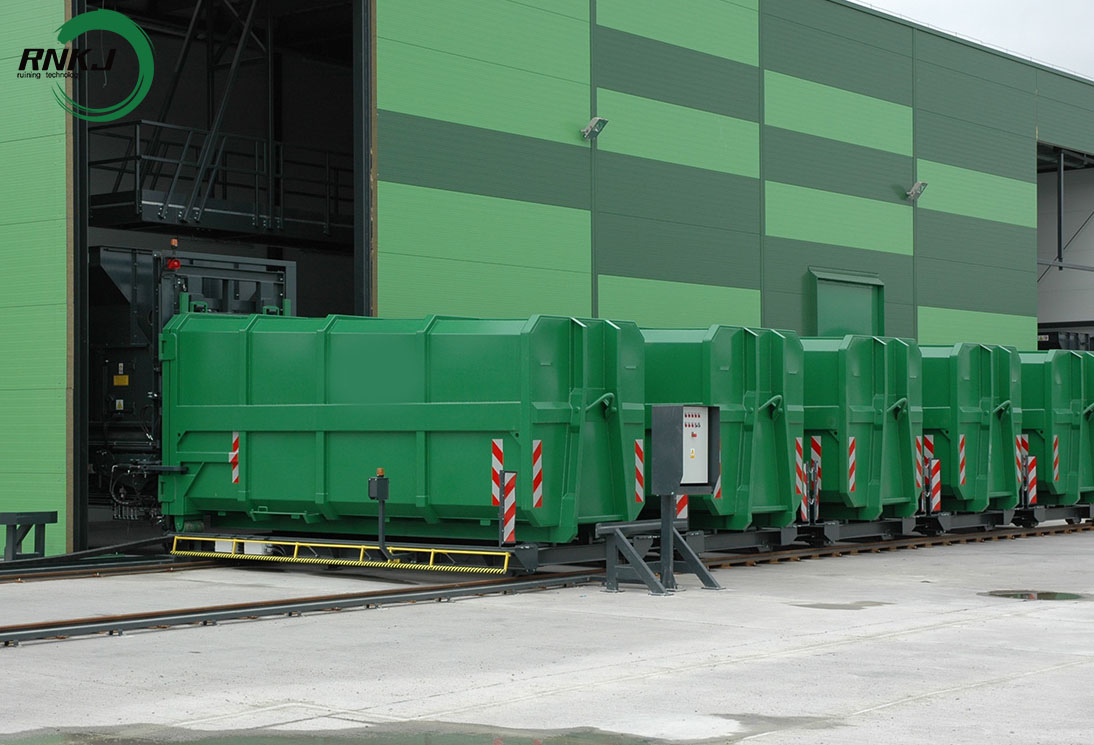
A Split-Type Waste Compactor, also known as a Separate-Type Waste Compactor or split-type garbage compression station, is a hydraulic waste compaction system consisting mainly of a stationary compression unit and a detachable waste container.
The system receives municipal solid waste through a hopper or feeding area. A hydraulic compression mechanism then pushes and compresses the waste into the container, reducing its volume and increasing the amount of waste that can be transported in a single trip.
When the container reaches its maximum loading level, the filled container can be separated from the compression equipment and transported to the disposal or treatment facility. A new empty container can then be positioned for continued operation.
This design makes the Split-Type Waste Compactor particularly suitable for waste transfer stations that require continuous waste collection and efficient container turnover.
The operating process is relatively straightforward:
Municipal solid waste is collected from residential areas, commercial buildings, public facilities, industrial parks, or other designated collection points.
The collected waste is delivered to the compactor through waste bins, collection vehicles, or other feeding systems.
Waste enters the hopper or compression chamber of the Split-Type Waste Compactor.
Depending on the project requirements, the feeding system can be customized for different waste collection methods and waste container sizes.
The hydraulic system activates the compression mechanism. A powerful compression plate or ram pushes the waste into the container.
Repeated compression reduces the volume of loose waste and increases the effective loading capacity of the container.
Compressed waste is continuously transferred into the waste container. Because the waste has already been compacted, more material can be loaded into the same container compared with loose waste.
When the container is full, it can be separated from the stationary compression unit.
The filled container is then transported away, while the compression equipment remains at the transfer station.
An empty container can be positioned immediately after the full container is removed, allowing the compression station to resume operation.
This container exchange process is one of the major advantages of the Separate-Type Waste Compactor design.
The primary purpose of a garbage compactor is to reduce the volume of waste before transportation.
A hydraulic Split-Type Waste Compactor applies strong compression force to municipal solid waste, helping reduce the amount of space occupied by loose garbage.
Higher waste density means the container can hold more waste before reaching its transport limit.
This is especially valuable for cities and municipalities dealing with large daily waste volumes.
Waste transportation is one of the largest operating expenses in municipal waste management.
When uncompressed waste is transported, trucks may reach their available volume before reaching their maximum allowable payload. This can result in more frequent transportation trips.
By compressing waste before transportation, a Split-Type Garbage Compactor can increase the amount of waste transported per trip.
Potential benefits include:
Fewer transportation trips
Better vehicle utilization
Lower fuel consumption
Reduced labor requirements
Lower transportation-related operating costs
The actual savings depend on waste composition, compression ratio, transport distance, container capacity, and local operating conditions.
One of the most important characteristics of a Split-Type Waste Compactor is its separate configuration.
The compression equipment can remain installed at the waste transfer station while the filled container is transported away.
This differs from systems where the entire compaction unit must be moved with the waste container.
The separation of compression and transportation can make the overall waste transfer process more flexible.
For large municipal sanitation projects, this is particularly useful when the collection point needs to process waste continuously while full containers are being transported to a landfill, incineration plant, or waste treatment facility.
Municipal waste collection does not stop simply because one container is full.
A major advantage of a Separate-Type Waste Compactor Station is that the compression equipment can remain in operation while containers are exchanged.
Once a full container is removed, another empty container can be installed.
This creates a practical workflow:
Waste Collection → Waste Feeding → Hydraulic Compression → Container Filling → Full Container Removal → Empty Container Installation → Continued Compaction
For busy waste transfer stations, this can help minimize downtime.
A split-type configuration allows containers to be managed independently from the compression equipment.
Full containers can be transported to different destinations according to the municipal waste management plan, while the compression system remains at the fixed transfer location.
This can improve container scheduling and fleet utilization.
For example, a municipal sanitation department may operate several containers in rotation:
Container A — receiving compressed waste
Container B — being transported to the treatment facility
Container C — waiting as a replacement container
This type of rotation can make waste transfer operations more flexible.
A Split-Type Waste Compactor is especially suitable for locations where large quantities of waste are generated every day.
Typical applications include:
Municipal waste transfer stations
Residential communities
Urban sanitation projects
Commercial districts
Shopping centers
Industrial parks
Public institutions
Large residential developments
Tourist areas
Airports and transportation hubs
For projects with high waste generation, centralized compression can reduce the number of individual waste transportation trips required.
Traditional municipal waste collection often relies on garbage trucks to collect relatively loose waste and transport it directly to a disposal facility.
Although this method is simple, it may become less efficient as waste volumes increase.
A Split-Type Waste Compactor introduces an additional compression stage before long-distance transportation.
| Feature | Traditional Waste Collection | Split-Type Waste Compactor |
|---|---|---|
| Waste compression | Limited | High hydraulic compression |
| Waste density | Relatively low | Higher |
| Transport frequency | Potentially higher | Potentially lower |
| Container management | Conventional | Independent container exchange |
| Transfer station efficiency | Standard | High |
| High-volume waste handling | Limited | Suitable |
| Transportation flexibility | Moderate | High |
The most significant difference is that waste is compressed before it enters the transportation stage.
A waste transfer station acts as an intermediate point between waste collection and final treatment.
Instead of sending small collection vehicles directly to distant disposal facilities, municipal waste can be brought to a centralized transfer station.
Here, the Split-Type Waste Compactor compresses the waste and loads it into a high-capacity container.
The full container can then be transported using an appropriate heavy-duty transport vehicle.
This process can create a more efficient logistics chain:
Local Collection → Transfer Station → Waste Compaction → Container Transportation → Final Treatment
The result is a more centralized and organized waste transportation system.
Waste compaction can contribute to more efficient transportation.
When more waste is transported per trip, the number of vehicle journeys required for a given amount of waste may decrease.
This can potentially reduce:
Fuel consumption
Vehicle mileage
Transportation emissions
Road congestion caused by waste vehicles
Noise associated with frequent waste transportation
In addition, centralized waste transfer can help municipalities organize waste collection routes more efficiently.
However, environmental performance depends on the complete waste management system, including vehicle type, transport distance, waste composition, energy consumption, and final waste treatment methods.
Different municipalities have different waste collection conditions. Therefore, a standard machine may not always be the best solution.
A Custom Split-Type Waste Compactor can be designed according to project-specific requirements, including:
Different projects may require different container volumes depending on daily waste generation and transportation distance.
The hydraulic compression force can be selected according to waste type, waste density, and required compaction performance.
The feeding area can be designed according to the available waste collection equipment and operating method.
Container dimensions can be customized to match the transportation vehicle and project layout.
Manual, semi-automatic, or PLC-controlled systems can be considered depending on the required automation level.
The equipment can be configured according to available site space, waste flow direction, vehicle access, and container transportation requirements.
This customization makes the Separate-Type Waste Compactor suitable for different municipal and commercial waste management projects.
Before purchasing a Split-Type Waste Compactor, several factors should be evaluated.
Estimate the average and peak daily waste generation.
Household waste, commercial waste, industrial waste, and other waste streams can have different physical properties.
Choose a container size based on waste generation, transportation frequency, available space, and vehicle capacity.
The container design should match the transportation equipment used by the municipal sanitation system.
Consider the equipment footprint, vehicle access, container exchange area, and maintenance space.
For large municipal projects, PLC control and automatic operating functions may improve operational convenience.
Choose a system with accessible hydraulic and electrical components and a practical maintenance structure.
For municipalities handling large quantities of solid waste, a Split-Type Waste Compactor can provide an effective combination of high-density compaction, flexible container transportation, and efficient transfer station operation.
Its biggest advantage is not simply the ability to compress garbage. Instead, the split configuration creates a more flexible relationship between waste compression and waste transportation.
The compression unit can remain at the transfer station, while filled containers can be removed and transported independently. This can help municipalities optimize container rotation, reduce unnecessary transportation trips, and improve the overall efficiency of their waste management system.
For city sanitation projects, waste transfer stations, residential developments, industrial parks, and other high-volume applications, a properly designed Separate-Type Waste Compactor can be an important part of a modern municipal solid waste management system.


