
Views: 0 Author: Site Editor Publish Time: 2026-11-19 Origin: Site


Subterranean waste management infrastructure optimizes urban space. It effectively eliminates unsightly street-level dumpsters. However, flood-prone locations demand rigorous planning. The installation process requires specialized engineering and meticulously selected equipment. Flooding inflicts severe damage on sensitive electrical components. It can trigger hazardous groundwater contamination. In worst-case scenarios, massive concrete bunkers become buoyant and violently breach the surface.
This comprehensive guide explores the critical factors engineers and urban planners must evaluate. We will cover initial site assessments, anti-buoyancy engineering, and emergency protocols. Implementing these strategies ensures your subterranean investment remains secure, functional, and safe during extreme weather events.
Site Assessment is Crucial: Always conduct a thorough geological and historical flood data analysis before excavation. This determines the maximum potential water table and soil permeability.
Anti-Buoyancy Engineering: Concrete bunkers must be heavily anchored. Engineers utilize micro-piles or extended flanges to prevent the station from floating during a flood.
Waterproofing is Non-Negotiable: All electrical and hydraulic components must be hermetically sealed with an IP68 rating. Alternatively, they should be elevated safely above the historical flood line.
Equipment Selection Matters: Deciding between vertical and horizontal compaction depends on specific site drainage capabilities and excavation depth limitations.
Customization is the Solution: Standard off-the-shelf units frequently fail in flood zones. Investing in bespoke infrastructure ensures the system meets specific environmental risks.
Deploying infrastructure below the surface introduces unique engineering hurdles. Regions susceptible to heavy rainfall, storm surges, or rapidly rising water tables face amplified risks. Grasping these physical and environmental threats is the foundational step in designing a resilient system.
Hydrostatic uplift presents the most severe structural threat to an underground installation in a wet environment. According to Archimedes principle, any object submerged in a fluid experiences an upward buoyant force. This force equals the weight of the displaced fluid. An empty or partially filled underground waste container acts remarkably like a ship hull. The surrounding soil becomes saturated during heavy rains. Consequently, the water table rises above the base of the concrete pit. The displaced water exerts immense upward force.
This upward pressure can exceed the combined downward weight of the concrete housing, the internal bins, and soil friction. When this happens, the entire structure violently lifts out of the ground. This pop-out effect causes catastrophic structural failure. It shatters surrounding pavement and necessitates a costly re-installation.
Modern compaction stations rely on sophisticated electromechanical systems. These systems maximize waste capacity and monitor fill levels. Delicate components face immediate peril when floodwaters breach the subterranean containment area. Submerged standard electric motors suffer immediate dielectric breakdown. This leads to permanent equipment destruction and severe electrical shock hazards for nearby pedestrians.
From a mechanical standpoint, hydraulic systems are incredibly robust but highly vulnerable to water ingress. Floodwater bypassing compromised hydraulic seals mixes with the fluid to create a milky emulsion. This contaminated mixture rapidly loses its lubricating properties. Internal corrosion accelerates, leading to pump failure and the ultimate destruction of the compaction mechanisms.
Inundated waste stations present alarming environmental hazards beyond immediate mechanical failures. Municipal and commercial garbage contains a complex blend of decaying organic matter and potentially hazardous materials. Floodwaters infiltrating the waste receptacle mix with the garbage to produce toxic leachate. If the bunker lacks perfect sealing, this contaminated slurry seeps into the surrounding soil. Such cross-contamination violates strict environmental compliance regulations. It poses a direct threat to community drinking water supplies and creates massive liability for property developers.
Mitigating catastrophic risks begins long before excavation starts. A rigorous, empirical site assessment is mandatory. This data informs the precise engineering specifications of the project.
A comprehensive geotechnical survey serves as the prerequisite for subterranean installations in challenging climates. Engineers drill test boreholes to analyze soil stratigraphy and determine permeability rates. Highly permeable soils, such as loose sand and gravel, allow water to rise rapidly around the bunker. This instantly spikes hydrostatic pressure. Conversely, cohesive soils like dense clay trap water. This creates long-term saturation zones that slowly degrade concrete.
The survey must pinpoint the Seasonal High Water Table. This metric establishes the baseline hydrostatic load the structure will endure. Continuous groundwater monitoring over several months is often required. This captures accurate data on water table fluctuations during heavy precipitation.
Relying solely on current groundwater metrics is insufficient. Urban planners must also analyze historical flood topographies. This process involves reviewing century flood plain maps, local topographical surveys, and regional drainage patterns. Engineers calculate the maximum potential flood elevation by understanding historical high-water marks. This critical data dictates the precise positioning of the installation. Positioning the waste station on the highest possible micro-elevation significantly reduces water exposure during a localized flash flood.
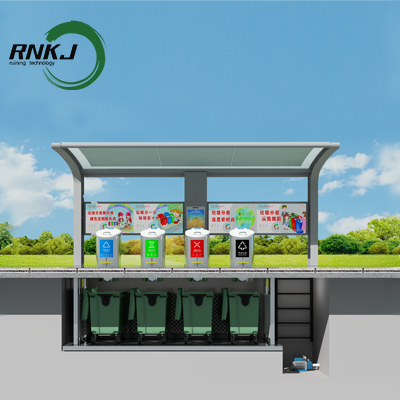
Structural engineers implement robust physical countermeasures once site risks are accurately quantified. These solutions guarantee the station remains firmly anchored and completely dry under extreme conditions.
The outer casing must utilize high-density, low-permeability concrete to counteract the relentless threat of buoyancy. Contractors frequently treat this concrete with crystalline waterproofing admixtures. These chemical agents actively seal micro-cracks as they form. However, sheer weight rarely defeats hydrostatic pressure entirely. Engineers must deploy active ground anchoring systems.
This anchoring typically involves driving helical soil anchors or deep micro-piles into stable bedrock. These anchors securely bolt to the base of the concrete bunker. Alternatively, the bunker design can incorporate extended concrete flanges at its base, known as a spread footing. The massive weight of the backfilled soil resting on these flanges provides exceptional downward resistance.
Minor condensation and surface water ingress remain inevitable realities even with premium waterproofing. Therefore, the concrete pit requires an active water management ecosystem. The bunker floor features a slight gradient. This channels intruding moisture toward a central sump pit. Industrial-grade, float-activated submersible pumps operate inside this pit.
These devices automatically activate the moment water reaches a critical threshold. They aggressively expel water into the municipal storm drain before it threatens electrical components. Crucially, discharge lines must feature heavy-duty check valves. These valves prevent floodwaters from flowing backward into the pit.
Electrical resilience requires uncompromising adherence to Ingress Protection standards. Any subterranean electrical connections or junction boxes must carry an IP68 rating. This certifies they are hermetically sealed and capable of continuous submersion. Yet, the most foolproof protection method removes sensitive electronics from the hazard zone entirely.
Best engineering practices dictate relocating primary control panels and programmable logic controllers to an above-ground utility pillar. This strategic separation ensures the operational brain of the system remains secure even if the pit floods.
The mechanical architecture of the compactor plays a pivotal role in overall flood resilience. Decision-makers must carefully evaluate compaction technologies based on spatial requirements and groundwater vulnerability.
Hydraulic systems are widely favored for their immense crushing force. Advanced units can deliver upwards of 120 kN of compaction pressure. This maximizes waste capacity and drastically reduces collection fleet frequency. However, operating an Underground Hydraulic Waste Compactor in a high-water zone requires meticulous adaptation. Manufacturers must forge hydraulic cylinders from marine-grade 304 stainless steel. Advanced anti-corrosion epoxies prevent rapid rusting in humid pits.
Furthermore, hydraulic hoses and fittings require specialized waterproof seals. Engineers strongly advocate for eco-friendly, biodegradable hydraulic fluids in environmentally sensitive flood zones. Biodegradable fluids drastically minimize the ecological footprint in the unlikely event of a catastrophic system breach.
The required installation depth directly correlates with groundwater exposure. Traditional vertical compactors demand deep excavation. This frequently pushes the bunker base well below the natural water table. Deep excavation becomes too risky or financially prohibitive in areas with shallow groundwater.
In these scenarios, an Underground Horizontal Garbage Compactor provides a brilliant strategic alternative. The compaction ram operates on a horizontal axis, reducing the required pit depth to approximately 1.5 meters. This shallow configuration actively minimizes interaction with the groundwater table. It drastically reduces the hydrostatic pressure exerted on the concrete housing.
| Feature | Vertical Hydraulic Compactor | Horizontal Garbage Compactor |
|---|---|---|
| Excavation Depth | Deep 2.5 to 3 meters | Shallow 1.2 to 1.5 meters |
| Hydrostatic Risk | High requires heavy ground anchoring | Moderate easier structural management |
| Space Efficiency | Minimal surface footprint | Requires wider surface area |
| Flood Resilience | Relies heavily on IP68 seals and pumps | Inherently safer due to shallow profile |
Standardized, off-the-shelf waste stations are engineered for dry soil conditions with predictable drainage. Deploying a generic model in a flood-prone area represents a high-risk gamble. Ensuring long-term viability requires an adaptive approach.
Investing in a Customized Underground Waste Station empowers site planners to alter the physical footprint of the unit. If geotechnical surveys reveal an exceptionally high water table, engineers design a wider, longer station. This maintains the required 3000L to 5000L waste volume capacity while keeping the foundation safely above the critical water line. Custom fabrication allows for the integration of marine-grade weather stripping. Heavy-duty, gasket-sealed surface lids actively block surface floodwater from pouring into the receptacle.
Modern customized systems incorporate Internet of Things technology for real-time environmental monitoring. Ultrasonic water level sensors continuously monitor moisture levels inside the concrete pit. These smart sensors feed data directly into the main control unit.
The system triggers an automated preservation protocol if water accumulates faster than the sump pump can expel it. It dispatches immediate SMS alerts to facility managers and automatically disables the compaction machinery. This automated shut-off prevents motors from operating while submerged, saving equipment from catastrophic electrical failures.
Robust engineering requires active human management during extreme weather. Establishing strict operational routines is critical to mitigating equipment failure. Facility managers must transition immediately from routine operation to emergency preservation when severe weather warnings occur.
The brief window between a storm forecast and rising floodwaters is critical for asset protection. Facility managers should implement standard Lockout Tagout procedures at the main breaker panel. Shutting down the main power completely eliminates the risk of electrical fires should water breach the primary seals.
Simultaneously, securing the physical components of the Underground Waste Collection System is paramount. Partially empty subterranean bins represent a massive buoyancy risk. Facility managers must schedule an immediate emergency waste extraction. Removing existing garbage prevents toxic leachate creation. Technicians must engage mechanical locking mechanisms on all surface lids and rapidly inspect weather stripping for debris.
The delicate recovery phase begins once floodwaters recede. It is absolutely imperative that operators do not restore power immediately. Even systems rated for submersion require thorough inspection before reactivation.
Water evacuation is the initial recovery step. Industrial vacuum trucks must clear the concrete bunker of residual sludge and mud. Following this, technicians conduct a rigorous inspection of hydraulic lines. Operating the compactor with contaminated fluid will destroy internal cylinders. Finally, maintenance crews must sanitize the entire concrete bunker using industrial disinfectants to neutralize biological hazards.
Global climate change accelerates the frequency of extreme weather events and flash flooding. This environmental shift fundamentally alters urban waste management strategies. The industry focus has transitioned from aesthetic considerations to building climate-resilient infrastructure. Municipal tenders increasingly demand advanced hydrological engineering and integrated flood defense mechanisms.
Furthermore, regulatory bodies are tightening environmental compliance standards regarding groundwater contamination. Manufacturers innovate rapidly, moving away from traditional mild steel components. Specialized marine-grade alloys and biodegradable hydraulic fluids are becoming standard offerings. Smart telemetry integration allows city planners to monitor subterranean moisture levels across entire grids in real-time. This is no longer a luxury add-on, but a mandatory feature for future-proofing urban sanitation networks.
The resilience of your waste management infrastructure ties directly to the expertise of your manufacturing partner. Standard equipment is statistically highly likely to fail in flood-prone regions. The procurement process must prioritize vendors possessing specialized engineering capabilities.
Glossy brochures are insufficient when evaluating an Underground Waste Compactor Supplier. Demand empirical evidence of past success in challenging terrains. Request comprehensive case studies detailing installations in coastal cities or areas with known shallow water tables. A competent supplier engages in a consultative engineering process. They request detailed geotechnical surveys before proposing a solution. They must articulate exactly how they calculate hydrostatic pressure and specify anti-buoyancy flanges.
Project financial viability heavily depends on warranty terms. Standard contracts frequently categorize flood damage under force majeure clauses, leaving buyers unprotected. Procurement officers must negotiate specialized warranty terms explicitly covering waterproof seal failure under hydrostatic stress. The supplier post-installation support network is equally important. You require a partner maintaining a local inventory of critical replacement parts, such as IP68 relays and marine-grade sensors.
Installing an underground waste station in a flood-prone area is highly rewarding when approached with engineering foresight. Prioritizing rigorous site assessments, robust anti-buoyancy measures, and uncompromising waterproofing shields your investment from extreme weather. Partnering with an experienced supplier ensures your system withstands unique hydrological challenges. Explore advanced, climate-resilient waste management solutions tailored to your specific site conditions by consulting with industry-leading manufacturers at SDRN today. Build a secure, safe, and highly efficient underground network that stands the test of time and weather.
Yes, an improperly installed underground waste station can become highly buoyant. An empty subterranean bin displaces water and generates massive upward hydrostatic pressure. The surrounding concrete housing must be engineered with specific anti-buoyancy measures to prevent this pop-out effect. These measures include extending concrete flanges at the base, adding heavy ballast weights, or driving ground anchors deep into the bedrock.
It is safe only if the system has been explicitly engineered for wet environments. Standard models pose severe electrocution and mechanical failure risks when exposed to water. All electrical components must carry an IP68 rating for safe operation. The hydraulic system must utilize hermetically sealed cylinders to prevent water emulsification. The pit should also feature an automatic float-activated sump pump.
Standard models are manufactured for dry soil conditions with highly predictable drainage. A one-size-fits-all approach introduces unacceptable structural risks in a flood-prone area. Customization allows facility managers to widen the station to reduce required excavation depth. This avoids the high water table entirely. Custom builds also integrate marine-grade stainless steel and specialized IoT flood sensors.
Yes, the mechanical compaction process occurs along a horizontal axis rather than a vertical one. This significantly reduces the overall machinery height. Consequently, the required excavation depth drops to approximately 1.5 meters. This provides a massive strategic advantage in coastal regions. A horizontal configuration minimizes groundwater interaction and structural leaks.
A high water table can increase installation costs by 20 to 40 percent compared to dry sites. This premium covers specialized geotechnical surveys, active dewatering during excavation, and enhanced structural materials. The addition of helical ground anchors, crystalline waterproof concrete, and IP68-rated electrical components drives up initial capital expenditure. However, these upfront investments prevent catastrophic failures that cost significantly more to repair.
Even minor flooding requires immediate professional attention before reactivating the system. Maintenance teams must pump out any residual water from the concrete pit and vacuum out accumulated silt. Technicians must inspect the hydraulic fluid reservoir for milky discoloration, which indicates water contamination. Additionally, all limit switches and safety sensors must be tested for continuity. Finally, the bunker should be sanitized to prevent mold growth.


