
Views: 0 Author: Site Editor Publish Time: 2026-11-19 Origin: Site


Are mounting repair bills from your aging waste system draining your operational budget? Keeping outdated equipment online creates hidden costs and daily inefficiencies that ripple throughout your entire facility. Imagine arriving at your loading dock on a busy Monday morning only to find overflowing bins, a jammed hydraulic ram, and puddles of foul-smelling liquid seeping onto the pavement. The stench of uncollected refuse permeates the area. Worse still, your hauling provider is billing you for yet another emergency pickup or a dry run for a half-empty container.
Applying a quick mechanical fix might seem appealing to minimize immediate capital expenditure. However, the cumulative financial drain of ongoing repairs rapidly outpaces the price of a full replacement. Transitioning to a modernized refuse management setup is a highly strategic investment. It fundamentally improves site hygiene, reclaims valuable physical space, and drastically cuts logistical expenses. This comprehensive guide will walk you through the critical steps of evaluating your current infrastructure, identifying the ideal equipment type, and selecting a vendor that aligns with your long-term operational goals.
Analyze Component Fatigue: Constant breakdowns, recurring hydraulic leaks, and rising maintenance bills are the primary physical indicators that your old equipment is beyond saving.
Audit Site Requirements: Always evaluate your current daily refuse volume, available site footprint, and specific material types before navigating the machinery market.
Match Equipment to Workflow: Understand the operational differences between stationary units, mobile systems, and split configurations to find the perfect mechanical fit for your facility.
Calculate Hidden Liabilities: Older machines silently drain budgets through high electrical consumption, frequent hauling fees caused by poor compaction ratios, and potential safety compliance fines.
Prioritize Tailored Engineering: A custom setup from a reputable manufacturer ensures your facility’s unique spatial limitations and workflow demands are met seamlessly.
Deciding whether to patch up an aging industrial baler or invest in fresh infrastructure is a pivotal financial crossroad for facility managers. Industry professionals typically rely on the fifty percent rule to make this determination objectively. If the quoted cost of repairing your current equipment exceeds half the price of a brand-new machine, replacing it is undeniably the more fiscally responsible choice. Throwing good money after bad components only delays the inevitable.
Beyond baseline financial calculations, several physical signs of irreversible mechanical fatigue dictate that a machine has reached the end of its functional lifecycle. Chronic hydraulic failure is the most glaring red flag. When steel hydraulic cylinders become deeply scored or rubber seals continuously blow out despite recent replacement, the pump experiences internal bypass. The system permanently loses its ability to maintain the intense pressure required for optimal material compression. Consequently, you end up with loosely packed containers, forcing you to pay premium hauling rates for transporting empty air.
Structural integrity is another non-negotiable safety factor. Over years of processing heavy, abrasive, or highly acidic wet materials, the steel frame and ram guide shoes suffer from severe rust and metal fatigue. Compromised structural components not only bottleneck efficiency but pose severe physical hazards to operators. Furthermore, as machinery ages past the ten-year mark, finding original replacement parts becomes a logistical nightmare. Relying on fabricated aftermarket modifications can instantly void safety certifications and leave your business exposed to tremendous liability.
Before exploring the equipment market, conducting a rigorous internal audit of your site disposal profile is absolutely essential. Purchasing a machine that is massively over-engineered for your needs wastes capital. Conversely, installing one inadequate for your daily volume results in immediate operational bottlenecks. The first metric to scrutinize is your daily generation volume and current hauling frequency. Calculate exactly how many uncompacted cubic yards of material your facility produces daily. A modern high-pressure system should compress material so densely that it reduces hauling trips by up to eighty percent.
Spatial constraints heavily dictate the physical dimensions and operational style of the machinery you can safely install. You must measure the available square footage in alleyways, dedicated enclosures, or elevated loading docks. Crucially, you must account for the turning radius required by the municipal or private hauling truck to safely extract and return the heavy steel container. If space is severely restricted, traditional horizontal configurations might need to be swapped for vertical balers or specialized low-profile designs.
The specific type of refuse generated is equally critical. Waste streams are generally bifurcated into dry and wet categories. Dry materials, such as corrugated cardboard, shrink wrap, and general office refuse, require immense crushing force but minimal liquid retention. Wet waste demands fully sealed, watertight environments to prevent toxic leakage, bacterial blooms, and severe odor complaints from neighboring properties.
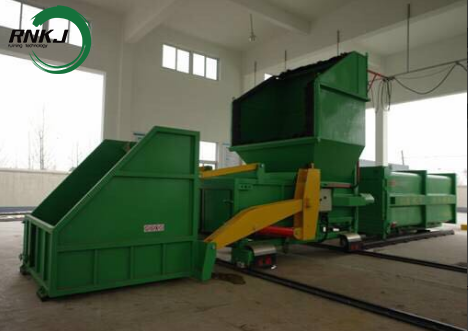
Understanding the distinct mechanical categories of disposal equipment is vital for aligning machinery with your workflow. Each class of compactor is engineered to solve specific logistical hurdles based on material type, throughput volume, and architectural layout. Selecting the wrong configuration will severely limit your return on investment.
For large-scale facilities that primarily generate dry bulky materials, a Stationary Waste Compactor is often the most durable and efficient choice. In this traditional configuration, the heavy compaction mechanism is permanently bolted to a reinforced concrete pad. It forcefully pushes refuse into a separate detachable steel receiver box. Driven by robust motors typically ranging from 15 to 20 horsepower, these units generate upwards of fifty thousand pounds of packing force. When the receiver box reaches capacity, the hauling truck only removes the container. The mechanical crushing unit remains safely on-site. This setup is highly favored by retail distribution centers, manufacturing plants, and large warehouses because it handles massive volumes of cardboard and plastics with exceptional longevity.
High-traffic restaurants, regional hospitals, supermarkets, and hospitality venues battle high volumes of wet organic refuse daily. These environments rely heavily on a Mobile Waste Compaction Station. Engineered as a self-contained system, the hydraulic ram and the storage container are welded together into a single liquid-tight structure. Standard capacities usually range between 15 and 35 cubic yards. When the unit is full, the entire machine is loaded onto the truck, emptied at the landfill or digester, and returned. This seamless integration ensures contaminated liquids never leak onto loading docks, thereby eliminating foul odors, mitigating slip-and-fall hazards, and preventing devastating pest infestations.
Municipal transfer stations, sprawling industrial complexes, and dedicated recycling centers process extreme non-stop volumes of refuse. For these demanding applications, a Split Type Waste Compactor provides unparalleled heavy-duty processing power. This advanced system physically separates the primary compaction engine from the collection bins. It frequently utilizes automated conveyor belts, hydraulic tippers, or continuous gravity-feeding mechanisms. The split design allows for uninterrupted operation. The moment one massive collection bin is full and hauled away, another empty bin can be instantly rotated into place without shutting down the feeding process.
To simplify the selection process, review the core engineering differences and ideal applications for each major equipment category.
| Equipment Type | Ideal Material Stream | Liquid Retention | Typical Motor / Power | Primary Advantage |
|---|---|---|---|---|
| Stationary System | Dry waste, cardboard, plastics, pallets | Low to None | 15 HP - 20 HP (3-Phase) | Maximum crushing force; protects motor from transport wear. |
| Mobile / Self-Contained | Wet waste, food scraps, medical organics | 100% Liquid-Tight Seal | 10 HP - 15 HP (3-Phase) | Prevents dock leakage; controls severe odor and pests. |
| Split Configuration | Mixed municipal, high-volume industrial | Moderate to High | 20 HP+ with Dual Cylinders | Continuous feeding; zero downtime during bin swap. |
Upgrading is not merely about replacing rusty metal with shiny metal. It is a rare opportunity to integrate contemporary engineering that fundamentally transforms site operations. Recent industry market analyses indicate a massive paradigm shift in commercial refuse handling. Facility managers are no longer just looking for raw mechanical crushing power. They are increasingly prioritizing environmental reporting and data-driven logistics. The modern trend leans heavily toward intelligent systems that integrate into broader building management networks to track carbon emissions and optimize truck routing.
Internet of Things integration is arguably the most valuable feature in this new landscape. Traditional compactors rely on visual guesswork to determine when they are full, leading to haulers being called too early or too late. Modern systems feature remote monitoring ultrasonic sensors that track internal capacity in real-time. These intelligent systems automatically dispatch digital alerts to your hauling provider only when the container reaches a precise fullness threshold. This ensures you never pay for an unnecessary pickup.
Advanced hydraulics have also revolutionized equipment performance. Contemporary Variable Frequency Drive power units dynamically adjust motor speed based on the exact resistance of the material being crushed. This results in lightning-fast cycle times, significantly lower energy consumption, and a drastic reduction in operational decibel levels.
Off-the-shelf disposal equipment is designed for standard predictable operational environments. Yet, many modern facilities possess unique architectural quirks or specialized logistical challenges that render standard rectangular models highly ineffective. In these complex scenarios, investing in a Custom Waste Compactor Solution is the most strategic approach to optimizing your workflow without requiring expensive building renovations.
Unique industry requirements often dictate the need for bespoke engineering. A facility located in a dense urban footprint might have an awkwardly shaped subterranean loading dock that cannot accommodate a standard unit. Custom engineering can alter the orientation of the feed hopper, integrate side-loading security doors, or design walk-on safety decks that align perfectly with elevated warehouse platforms. Similarly, facilities operating in extreme northern climates may require custom-built power units enclosed in heated housing to prevent hydraulic fluid from freezing solid during winter months.
Tailored engineering extends seamlessly into automated feeding mechanisms. If your facility processes refuse across multiple floors, a custom solution can integrate secure gravity chute-feed systems. These drop material directly into the compression chamber without any manual handling by staff. Cart tippers can be custom-fitted to lift and empty specific proprietary bins used exclusively within your warehouse, drastically reducing physical strain on your workforce.
The final step in upgrading your infrastructure is selecting the right vendor. The long-term reliability of your new machinery is inextricably linked to the engineering expertise and corporate reputation of the partner you choose. Procuring equipment directly from a specialized Waste Compactor Manufacturer offers distinct measurable advantages over buying through third-party liquidators or generic industrial supply catalogs.
Experience and a proven manufacturing track record are paramount. A dedicated primary-source manufacturer possesses deep in-house engineering knowledge. They can provide objective data regarding structural steel thickness, such as the use of AR400 abrasion-resistant steel plate on the chamber floor. Because they control the entire production process from raw material sourcing to final factory assembly, they ensure strict adherence to quality standards and safety protocols. Look for vendors who utilize NEMA 4 rated weatherproof control panels and premium hydraulic cylinder seals.
Equally critical is the commitment to post-installation support. A superior machine is only as good as the service network backing it up. Scrutinize the specifics of their warranty coverage, ensuring clear distinctions between structural frame guarantees and electrical component coverage. A manufacturer that maintains a robust domestic inventory of spare parts and offers proactive preventative maintenance programs will ensure your new investment operates flawlessly for decades to come.
Replacing an old failing refuse system is a proactive strategy that immediately removes hidden operational costs. It drastically improves site hygiene, protects your workforce from safety hazards, and optimizes your daily logistical workflow. Always ensure you align your equipment choice with your specific spatial constraints, power availability, and material requirements. By matching the machinery to your exact daily profile, you guarantee maximum return on investment. Evaluate your current operational bottlenecks, review the technical parameters of stationary, mobile, or split systems, and reach out to our engineering team at SDRNKJ to design a future-proof management system tailored precisely to your facility.
Under standard commercial usage, a well-maintained system typically lasts between 10 to 15 years. The exact lifespan depends heavily on the operational environment, the abrasiveness of the materials being processed, and strict adherence to preventative maintenance schedules. Machines located indoors generally outlast those exposed to harsh corrosive weather conditions. Regular greasing of moving parts and annual hydraulic fluid flushes are proven to extend the functional life of the machinery well beyond a decade.
The primary difference lies in their structural configuration and intended application. A stationary unit is permanently bolted to the ground and features a fixed ram that pushes dry materials into a detachable box. Only the box is hauled away. In contrast, a mobile unit combines the machinery and the storage container into a single fully sealed structure. Because it prevents toxic leakage, the mobile unit is the industry standard for processing wet, organic, and food-based refuse.
Most industrial-grade compaction systems require a 3-phase electrical supply to operate efficiently. Standard configurations typically run on 208, 230, or 460 volts, depending on the horsepower of the hydraulic power unit. Before purchasing, it is critical to have a certified electrician verify your site available amperage and voltage to ensure the new control panel and motor can be integrated without requiring a massive electrical service upgrade.
Upgrading to modern equipment significantly lowers your carbon emissions by drastically reducing the frequency of hauling trucks visiting your site. High-pressure cylinders pack more material into every cubic yard, which means fewer diesel-burning trucks on the road. Additionally, modern variable frequency drive motors consume less electricity per cycle, directly improving your facility environmental reporting metrics.
Absolutely. Upgrading does not always necessitate tearing down your existing building infrastructure. Reputable engineering teams can perform comprehensive site audits to design tailored retrofits that integrate seamlessly with your current layout. This includes fabricating bespoke hoppers to fit unusual dock heights, installing secure enclosures, or integrating modern smart sensors and upgraded control panels into older mechanical frameworks.
While an initial capital expenditure is required, the return on investment is typically realized within 18 to 36 months. The most significant financial savings stem from the drastic reduction in hauling frequencies, often cutting required pickups by fifty to eighty percent due to superior compression ratios. When you factor in lowered electrical bills from efficient motors, the elimination of emergency repair invoices, and the mitigation of municipal sanitation fines, the long-term financial benefits are highly substantial.


