
Views: 0 Author: Site Editor Publish Time: 2026-08-11 Origin: Site


Rising waste hauling fees, stringent environmental regulations, and facility space constraints force operations managers to transition from open-top dumpsters to mechanized waste management infrastructure. Uncompacted waste creates severe operational bottlenecks. It increases pest risks and results in paying haulers to transport empty air. Procuring capital equipment without auditing the specific composition and volume of the waste stream leads to equipment failure, safety hazards, or negative returns on investment.
Every facility generates a unique blend of refuse. A commercial bakery produces heavy, wet organic matter, while a distribution center outputs massive volumes of dry, rigid cardboard. Applying the wrong compaction technology to these streams causes immediate problems. Liquid waste destroys stationary units, while bulky wooden pallets jam standard hydraulic rams. This guide provides a technical framework for categorizing facility waste streams. It helps you match them to the correct compaction technology and evaluate long-term operational expenses before procurement.
Waste Composition Dictates Equipment: Wet or organic waste strictly requires self-contained units to prevent leakage, while dry, bulky, or recyclable waste is best managed by stationary systems.
Volume Thresholds Drive ROI: Compaction becomes economically viable for facilities generating upwards of 40 cubic yards of uncompacted waste per week, significantly reducing hauling frequency.
Specialized Handling: High-volume, continuous-feed applications or destructive compaction (e.g., pallets, crates) require specialized auger systems rather than standard ram-style presses.
Vendor Selection: Partnering with a qualified industrial waste equipment supplier for a site audit is a mandatory step to ensure power, footprint, and hydraulic requirements align with facility capabilities.
Understanding the distinction between waste volume and waste weight drives operational planning. Volume refers to the physical space your refuse occupies, typically measured in cubic yards. Weight measures the actual mass of the material, calculated in tonnage. Open-top dumpsters fill up quickly with loose, bulky items. This creates a high-volume, low-weight scenario where you pay haulers to transport mostly air.
An industrial trash compactor primarily solves volume issues. It crushes materials under extreme hydraulic pressure, drastically reducing the physical footprint of the refuse. This reduction directly decreases hauling frequency. However, compaction significantly increases the weight of individual pickups. A compacted receiver box holds three to five times more material than an uncompacted bin. Operations managers must coordinate closely with waste haulers to ensure these compacted loads do not exceed the maximum legal weight limits of the transport trucks or the lifting capacity of the hauling equipment. Overweight loads result in heavy municipal fines and refused pickups.
Determining the financial viability of compaction requires a detailed audit of current waste management costs. You must calculate your monthly pull charges, tonnage fees, and any existing equipment rental fees. Pull charges are flat fees assessed every time a truck empties your container. Tonnage fees fluctuate based on the actual weight of the disposed material at the landfill.
The baseline success criteria for compaction ROI hinges on achieving a compaction ratio between 3:1 and 5:1. Reaching this ratio allows a facility to cut hauling trips by at least 50%. If your facility currently requires four dumpster pulls per week, a proper machine should reduce this to one or two pulls. Compaction becomes highly economical for operations generating 40 cubic yards or more of loose waste weekly. Below this threshold, the capital investment and maintenance costs may outweigh the savings generated from reduced pull charges.
To accurately assess your current hauling expenses, follow these audit steps:
Collect the last six months of waste hauling invoices.
Isolate the flat pull charges from the variable tonnage fees.
Identify any hidden environmental fees or fuel surcharges tied to each pickup.
Calculate the average weekly cubic yardage generated by your facility.
Project the new hauling frequency based on a conservative 3:1 compaction ratio.
Dry commercial waste represents the most common refuse stream across retail, logistics, and corporate environments. This category includes mixed office trash, paper products, non-organic cafeteria waste, plastic containers, and light disposable packaging. These materials contain negligible moisture and do not pose significant leakage risks during the crushing cycle.
Managing dry waste typically yields the highest compaction ratios. Standard ram-style stationary equipment excels in these environments. The hydraulic ram forces the dry materials into a receiver box, easily flattening hollow plastics and loose paper. Because the waste lacks liquid, the receiver box can be detached and hauled away while the compaction unit remains bolted to your facility floor. This setup maximizes operational uptime and minimizes hauling complexities.
Wet waste presents entirely different handling requirements. Food processing facilities, high-volume restaurants, grocery stores, and medical facilities generate heavy organic refuse. This material contains high moisture levels, which are aggressively squeezed out during the compaction process. Processing wet waste through standard stationary equipment causes contaminated liquids to leak onto loading docks, creating severe sanitation and environmental hazards.
Handling organic waste strictly requires self-contained compaction units. In these systems, the compactor and the receiver box are permanently welded together into a single, liquid-tight container. The entire unit is loaded onto the hauling truck and emptied at the disposal site. These units must feature robust liquid-tight seals and integrated odor control systems, such as ozone generators, to maintain environmental compliance and prevent pest infestations.
Many facilities generate massive quantities of recyclable materials rather than general trash. Old Corrugated Cardboard (OCC), shrink wrap, commercial plastics, aluminum cans, and textiles dominate this category. Compacting these materials effectively transitions your waste stream from a hauling expense into a revenue-generating commodity. Clean, compacted recyclables hold significant market value.
The handling method depends heavily on the specific material. Cardboard and plastics are often diverted to balers rather than standard compactors, creating dense, stackable cubes for recycling mills. However, if a standard machine is used for mixed recyclables, flat ram-style mechanics are required. Textiles, rags, and long plastic films can easily tangle in auger-based systems, causing catastrophic motor failure. Ram-style compaction avoids these tangling risks while maximizing load density.
Heavy manufacturing plants, construction sites, and large-scale distribution centers produce highly rigid waste. This stream includes manufacturing scrap, wooden pallets, heavy shipping crates, and large-scale dunnage. Standard commercial compactors lack the structural integrity and hydraulic force to process these materials. Attempting to crush solid wood or thick metal scrap in a standard unit will bend the ram or blow the hydraulic cylinders.
Processing bulky industrial debris requires specialized heavy-duty equipment. These machines often feature pre-crushing capabilities to break down rigid structures before the primary compaction cycle begins. Specialized auger systems are also highly effective here. They continuously grind and shred wooden pallets and crates into smaller fragments, allowing for maximum density in the receiver box without stressing the machine's structural frame.
Strict exclusions apply to all mechanical waste processing equipment. You must never introduce hazardous materials, chemicals, or flammables into a compactor. This includes industrial solvents, motor oils, wet paint, aerosol cans, and cleaning chemicals. The compaction chamber operates under extreme pressure, often exceeding 2,000 PSI.
Subjecting aerosol cans or sealed chemical containers to this pressure causes violent ruptures. The resulting friction or sparks from metal-on-metal contact can easily ignite flammable liquids or vapors. Mixing different chemical compounds under pressure can trigger dangerous chemical reactions, releasing toxic gases into the facility. Contaminating the machine with hazardous waste also turns the entire load into a regulated hazardous material, resulting in astronomical disposal fines.
Electronic waste, particularly lithium-ion batteries, poses one of the most severe threats to waste management infrastructure. These batteries are ubiquitous in power tools, handheld scanners, laptops, and mobile devices. They must be strictly excluded from all compaction streams.
Puncturing a lithium-ion battery during a compaction cycle causes an immediate thermal runaway event. This chemical reaction generates intense heat and explosive fires that are notoriously difficult to extinguish. A battery fire inside a highly pressurized, enclosed steel box filled with combustible waste usually results in the total loss of the equipment and severe damage to the surrounding facility. Operations managers must establish strict compliance protocols and separate e-waste recycling streams to keep these hazards away from the loading dock.
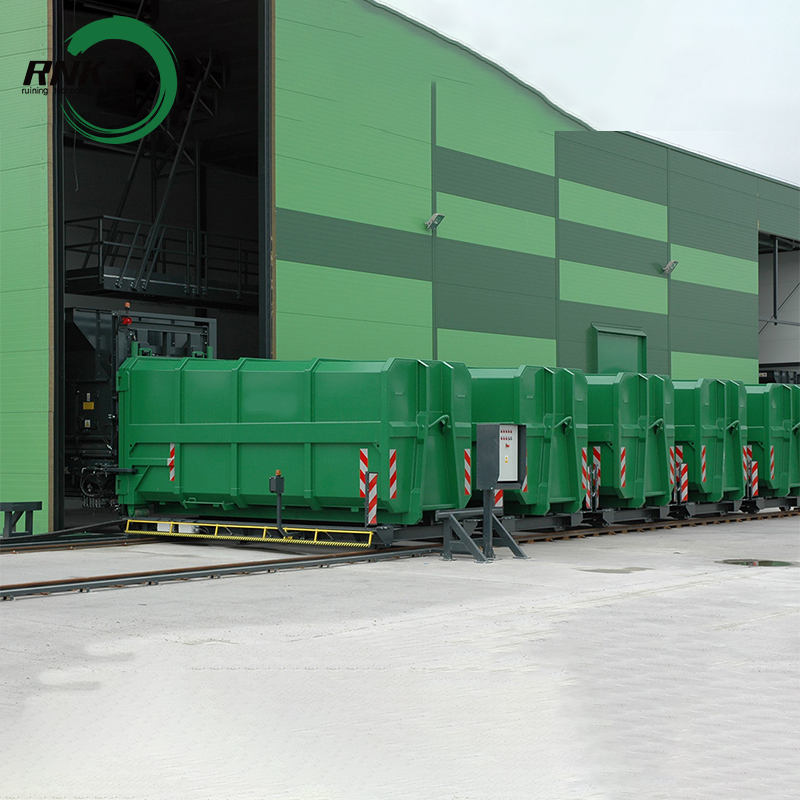
Selecting the correct base architecture is the most critical step in equipment procurement. Stationary compactors are the industry standard for dry waste applications. The mechanical compaction unit is bolted securely to the concrete pad. Only the attached receiver box is detached and hauled away when full. This allows the mechanical components to remain on-site, reducing wear and tear from transportation.
Self-contained units are the mandatory choice for wet or organic waste streams. The compaction ram and the storage container are manufactured as one continuous, welded unit. When the container reaches capacity, the hauler loads the entire machine onto the truck. This design eliminates the separation joint between the compactor and the box, ensuring zero liquid leakage on your loading dock.
Compactor Architecture Comparison
| Feature | Stationary Compactor | Self-Contained Compactor |
|---|---|---|
| Target Waste Type | Dry waste, cardboard, plastics | Wet waste, organics, food refuse |
| Hauling Mechanism | Receiver box only | Entire welded unit |
| Leakage Prevention | Low (seams exist between units) | High (liquid-tight welded seams) |
| Footprint Flexibility | High (customizable receiver sizes) | Moderate (fixed unit dimensions) |
Facility layout dictates the physical orientation of your waste equipment. Horizontal units are ideal for high-volume, continuous loading environments. They are typically installed at dock level, allowing employees to walk directly up to the machine or use forklifts to dump large hoppers into the chamber. Horizontal units offer the highest throughput capacity.
Vertical models provide the optimal solution for facilities facing severe footprint constraints. Retail alleys, urban restaurants, and small manufacturing sites often lack the space for a horizontal footprint. Vertical units compress waste downward into a front-loading or rear-loading container. They deliver high-pressure dry waste compaction while occupying a fraction of the square footage required by horizontal systems.
The internal crushing mechanism must align with the physical properties of your waste. Traditional hydraulic ram-style units use a large steel plate pushed by hydraulic cylinders to flatten refuse. This design is best suited for heavy, rigid, or bulky waste that requires brute force to break down. Ram-style units operate in distinct cycles, requiring the operator to wait for the ram to retract before loading more material.
Rotary-style trash compactors utilize a continuous rotating drum equipped with heavy steel teeth. As the drum spins, it aggressively tears, crushes, and bags mixed waste. This makes rotary compactors highly efficient for continuous-feed environments. They excel in locations with limited space where operators need to constantly throw small to medium-sized trash into the machine without waiting for cycle times.
Automated facilities require waste systems that integrate seamlessly into their existing material handling infrastructure. A hopper waste compactor features an enlarged, flared opening designed to catch material dropped from above. This configuration is essential for continuous-feed operations.
Hoppers integrate directly with multi-story gravity chutes, automated conveyor belts, or hydraulic cart tippers. In automated manufacturing lines, scrap material travels down a conveyor and drops continuously into the hopper. A photo-eye sensor detects when the hopper is full and automatically triggers the compaction cycle. This eliminates manual loading labor and keeps production lines moving without interruption.
Certain materials resist flat hydraulic pressure. Wooden pallets, large furniture, and massive cardboard boxes often bridge across the compaction chamber, preventing standard rams from functioning efficiently. A screw waste compactor replaces the flat ram with a massive, heavy-duty steel auger.
The auger system continuously draws material into the chamber, aggressively shredding and tearing it apart before forcing it into the receiver box. This destructive compaction method eliminates empty voids in the waste load. It is the optimal solution for distribution centers that need to continuously destroy wooden pallets and large-scale dunnage without manually breaking them down first.
Facilities committed to sustainability often struggle with the space required to separate trash from recyclables. Installing two separate machines consumes valuable dock space and requires significant electrical upgrades. A split waste compactor solves this problem by utilizing dual-chamber mechanics.
These units feature a single hydraulic power unit driving two separate compaction chambers side-by-side. Operators can throw general trash into one side and clean OCC into the other. The machine compacts both streams simultaneously into a partitioned receiver box. This configuration delivers immense value for retail and logistics operations that must process dual streams without investing in two separate footprints.
Extreme environments destroy standard commercial equipment within months. Heavy manufacturing plants, municipal transfer stations, and scrap metal processing yards require specialized engineering. A heavy duty garbage compactor features significant structural upgrades to survive relentless abuse.
These machines utilize half-inch or thicker steel plating on the ram face and chamber floors. They incorporate larger hydraulic cylinders capable of generating massive PSI, often exceeding 100,000 pounds of crushing force. The structural frame is heavily reinforced with cross-bracing to prevent warping under maximum pressure. These specifications ensure continuous operation when processing dense, unyielding industrial scrap.
Physical space dictates your equipment options. You must outline the exact space requirements for the compaction machine, the attached receiver box, and the necessary safety clearances. Beyond the machine's footprint, you must calculate the turning radius required for the hauling truck. A roll-off truck needs up to 60 feet of clear linear space to safely align, hook, and pull a receiver box.
Loading configurations also impact layout. Dock-level installations allow operators to load waste horizontally, which is safer and faster. Ground-level installations require walk-on ramps or hydraulic cart tippers to elevate the waste into the loading chamber. You must measure dock heights and concrete pad dimensions accurately before finalizing any equipment selection. The concrete pad itself must typically be at least 3,000 PSI steel-reinforced concrete, measuring a minimum of 10 feet wide by 40 feet long, to support the immense weight of a fully loaded receiver box and the hauling truck.
Industrial compaction equipment requires robust electrical infrastructure. Standard 110V wall outlets cannot power these machines. Most units require a 3-phase electrical supply, typically running at 208, 230, or 460 volts. Attempting to run a heavy-duty machine on insufficient voltage will burn out the motor and void the warranty.
Motor size, measured in horsepower (HP), and hydraulic cylinder size dictate the machine's performance. A larger motor drives the hydraulic pump faster, resulting in shorter cycle times. Larger hydraulic cylinders generate higher compaction force. You must balance the need for speed against the need for crushing power based on your specific waste volume and material rigidity.
Standard Electrical and Hydraulic Requirements
| Machine Type | Typical Motor Size | Electrical Requirement | Average Cycle Time |
|---|---|---|---|
| Light Commercial | 2 to 5 HP | Single or 3-Phase, 208V | 45 to 60 seconds |
| Standard Industrial | 10 to 15 HP | 3-Phase, 230V/460V | 30 to 45 seconds |
| Heavy Duty Industrial | 20+ HP | 3-Phase, 460V | 20 to 35 seconds |
Outdoor installations and organic waste streams require specific environmental controls. Wet waste ferments rapidly, creating severe odor issues that attract rodents and trigger municipal fines. You must integrate optional features necessary for compliance.
Ozone generators neutralize airborne bacteria and eliminate odors inside the compaction chamber. Automated deodorizer spray systems provide additional odor masking during the summer months. For outdoor installations, weather-proofing is mandatory. This includes NEMA 4-rated waterproof electrical enclosures, specialized hydraulic fluids that resist freezing, and heavy-duty steel covers to prevent rainwater from entering the waste chamber.
Mechanized waste equipment presents severe safety hazards if operated incorrectly. The risk of workplace injuries increases dramatically when employees bypass safety interlocks or attempt to clear jams manually while the machine is energized. Crushing injuries and amputations are real threats on the loading dock.
Mitigating these risks requires mandatory, OSHA-compliant training for all authorized operators. Facilities must implement strict lockout/tagout (LOTO) procedures. Maintenance personnel must physically lock the power disconnect switch before entering the compaction chamber for any reason. Safety interlock switches on loading doors must be tested weekly to ensure the ram cannot operate while the chamber is open.
Standard LOTO procedures for compaction equipment include:
Notify all affected employees that maintenance is beginning.
Shut down the machine using the primary control panel.
Isolate the machine from the main electrical disconnect switch.
Apply a physical padlock and standardized warning tag to the disconnect.
Verify zero energy state by attempting to start the machine.
A failed machine creates an immediate operational bottleneck. Waste piles up on the loading dock within hours, disrupting facility logistics and creating sanitation hazards. Relying on reactive repair strategies guarantees extended downtime and expensive emergency service calls.
Operations managers must establish Service Level Agreements (SLAs) with their equipment providers. Preventative maintenance schedules are non-negotiable. Technicians must perform routine hydraulic fluid checks, inspect high-pressure hoses for abrasion, and grease all moving pivot points. Structural maintenance, including checking the ram guide shoes for wear, prevents catastrophic metal-on-metal failures during peak operational hours.
A standard preventative maintenance checklist should include:
Checking hydraulic fluid levels and inspecting for leaks around cylinder seals.
Greasing all turnbuckles, hinges, and moving mechanical joints.
Testing all emergency stop buttons and door safety interlocks.
Inspecting the structural integrity of the receiver box hooks and rails.
Cleaning debris from behind the compaction ram to prevent binding.
Audit your facility's waste stream to determine the exact ratio of wet organic matter to dry recyclable material.
Calculate your current monthly hauling expenses by isolating pull charges and tonnage fees from your recent invoices.
Measure your loading dock dimensions, concrete pad thickness, and available turning radius for hauling trucks.
Verify your facility's electrical infrastructure to ensure you have the required 3-phase power available at the installation site.
Contact a reputable industrial waste equipment supplier to schedule a formal site survey and request a detailed ROI projection.
A: Compaction becomes financially viable when a facility generates at least 40 cubic yards of uncompacted waste per week. Reaching this threshold allows the equipment to reduce hauling frequency by 50% or more. The savings generated from eliminating weekly pull charges offset the initial capital investment and ongoing maintenance costs.
A: Yes, dual streams can be managed using a split waste compactor. These units feature two separate loading chambers and a partitioned receiver box powered by a single hydraulic system. This allows facilities to process general trash and clean recyclables simultaneously without requiring the floor space for two separate machines.
A: Stationary compactors separate from their receiver boxes, creating a mechanical seam. When wet food waste is compressed, the liquid is squeezed out and will leak through this seam onto your loading dock. Wet waste strictly requires a self-contained unit, which features a liquid-tight, fully welded body to contain all moisture.
A: Most commercial and industrial compactors require a 3-phase electrical supply. Standard configurations operate on 208V, 230V, or 460V. Standard 110V single-phase wall outlets cannot provide the necessary amperage to drive the heavy-duty hydraulic pumps required for high-pressure compaction.
A: Standard ram compactors use a flat steel plate to push and flatten waste. Auger compactors use a massive rotating steel screw to aggressively shred, tear, and pull material into the chamber. Augers are superior for destroying rigid items like wooden pallets and large furniture that would otherwise jam a flat ram.
A: Yes. The immense weight of the machine, the fully loaded receiver box, and the hauling truck requires a reinforced concrete pad. Industry standards typically dictate a 3,000 PSI steel-reinforced concrete pad measuring at least 10 feet wide by 40 feet long to prevent structural cracking and sinking.


