
Views: 0 Author: Site Editor Publish Time: 2026-08-28 Origin: Site


Managing high-liquid-content waste introduces operational liabilities that standard dry compactors cannot handle. Facilities processing organic materials face corrosive damage, toxic runoff, and severe odor issues. Attempting to force wet refuse into conventional equipment results in seal failures and environmental hazards.
Purchasing the wrong equipment or selecting an unverified vendor leads to environmental compliance fines, premature equipment failure due to structural fatigue, and inflated hauling costs. When a machine cannot properly contain liquids, the surrounding infrastructure suffers. Mitigating these risks requires a rigorous technical evaluation of both the equipment’s engineering—specifically liquid containment and hydraulic force—and the supplier’s implementation capabilities before signing a purchase order.
A successful procurement strategy demands analyzing site infrastructure, auditing waste streams, and verifying manufacturer credentials to ensure long-term operational stability.
Liquid Containment is the Primary Failure Point: A true wet waste solution requires fully integrated liquid retention systems, not just retrofitted seals.
Capacity Must Align with Peak Output: Sizing equipment based on average daily volume rather than peak operational surges leads to overflow and sanitation breaches.
ROI Hinges on Accurate Waste Audits: Justifying the investment requires calculating current hauling frequencies against the projected compaction ratios of a specialized unit.
Vendor Accountability Dictates Long-Term Value: Evaluating a supplier requires looking past the initial quote to assess warranty exclusions, maintenance SLAs, and structural engineering standards.
Site Infrastructure Dictates Feasibility: Power availability, drainage access, and hauler clearance are hard constraints that must be mapped before equipment selection.
Before committing capital to heavy machinery, facility managers must rigorously calculate current daily and weekly waste generation metrics. You need to track the exact number of weekly hauls, the tonnage per haul, and the associated landfill tipping fees. Compare these baseline metrics against the projected capital expenditure of a new unit. By applying the expected compaction ratio of a specialized machine, you can accurately forecast the reduction in hauling frequency.
Determine if the facility generates enough high-liquid waste to justify a dedicated system versus alternative disposal methods. If wet waste comprises less than a quarter of your total volume, a heavy-duty standard compactor with minor modifications might suffice. Operations like food processing plants, large commercial kitchens, or agricultural facilities generating heavy, saturated organics require purpose-built machinery to prevent rapid equipment degradation and leachate spills.
To build a solid justification model, follow these specific tracking steps:
Log every waste pickup over a 30-day period to establish a reliable baseline.
Request weight tickets from your hauling partner to identify actual tonnage rather than estimated volume.
Calculate the current monthly spend on waste removal, factoring in any overweight penalties previously incurred.
Project the new hauling schedule based on a conservative 3:1 or 4:1 compaction ratio for wet organics.
Analyzing the specific composition of the waste stream dictates the necessary compaction force and internal drainage requirements. Food processing organics behave very differently under pressure than mixed commercial refuse. High-liquid organics require specialized sumps and drain ports to channel water away from the compaction ram. Fibrous wet waste requires higher shear force to break down materials effectively without jamming the cylinder.
Measure the physical size of the largest waste items entering the stream. The hopper and feed opening must be adequately sized to prevent bridging, where large items lock together and block the chamber. If operators spend time manually breaking down boxes or oversized organic matter to fit the feed opening, the operational efficiency of the machine is lost.
Implementing a wet waste system requires establishing strict protocols for separating dry recyclables from the wet waste stream prior to compaction. Mixing cardboard, plastics, or metals with saturated organics contaminates the recyclables, rendering them unmarketable and sending them straight to the landfill.
Design the facility floor plan to include distinct sorting stations upstream from the compactor. Clear signage, dedicated bins, and routine staff training ensure that only non-recoverable wet waste enters the hopper. This workflow maximizes the efficiency of the compaction equipment and protects delicate internal components from rigid, non-compressible items that could score the hydraulic cylinders or damage the ram face.
Calculating volume by weight and liquid displacement is mandatory for selecting the correct wet waste compactor capacity. Wet waste is significantly heavier and denser than dry trash. A container sized purely on cubic yardage without accounting for the weight of the liquid will quickly exceed the legal weight limits for highway transport, resulting in heavy fines or the hauler refusing the load.
Evaluate the risks of improper sizing. Under-sizing the unit leads to frequent hauling requirements, negating the expected return on investment and causing bottlenecks during peak production hours. Over-sizing the unit means waste sits in the chamber for extended periods before reaching capacity. In warm climates, this leads to rapid putrefaction, severe odor complaints, and localized pest infestations.
Outline the spatial requirements for the unit long before delivery. A compactor requires a substantial concrete pad capable of supporting the static weight of the machine and the dynamic impact of the compaction cycles. Map out necessary clearances for operators to load the machine safely, ensuring no pinch points or trip hazards exist in the immediate vicinity.
Maintenance access is equally critical. Technicians need adequate space to access hydraulic power units, electrical panels, and clean-out doors. Calculate the turning radius and overhead clearance required for roll-off hauling trucks. If the truck cannot align perfectly with the guide islands, the container cannot be swapped safely, bringing waste operations to a complete halt.
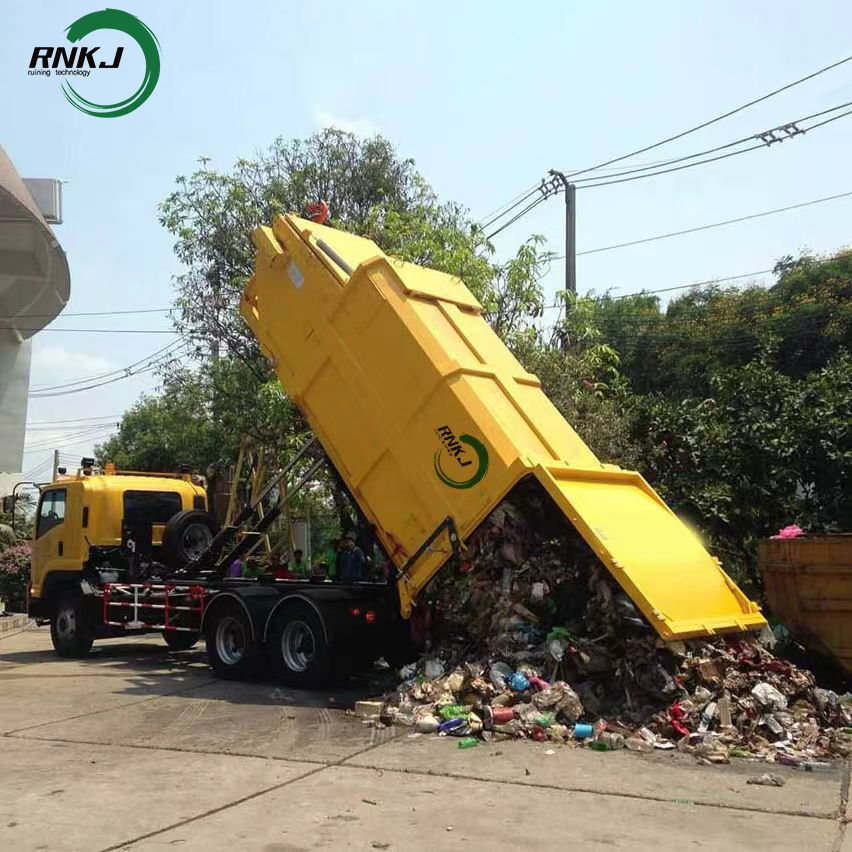
The critical difference between standard compactors and self-contained units lies in liquid management. Standard stationary compactors feature a separate compaction ram and detachable container, creating a seam where liquids inevitably escape during operation. A true sealed wet waste compactor permanently attaches the compaction chamber to the storage container, eliminating the primary leakage point.
Evaluate the liquid-tight door seals meticulously. Look for heavy-duty, custom-molded neoprene or specialized synthetic rubber seals that resist acidic degradation. The unit must feature integrated sumps to collect runoff and internal drainage ports that allow operators to hook up hoses and direct leachate straight into the facility's sanitary sewer system, preventing environmental contamination on the loading dock.
The hydraulic system is the engine of the operation. You must evaluate cylinder size, operating pressure (PSI), and cycle times. A larger cylinder bore operating at a lower PSI often extends the lifespan of the hydraulic seals and pump. A smaller cylinder pushed to maximum pressure generates excessive heat and wear.
Consider the trade-off between high compaction force and energy consumption. A highly aggressive hydraulic wet waste compactor maximizes payload density, resulting in fewer hauls. This requires a robust hydraulic power unit that draws significant electrical current. Ensure the cycle time—the time it takes for the ram to extend and retract—aligns with your peak loading speeds so operators are not left waiting for the machine to clear.
Key hydraulic specifications to verify include:
Normal operating pressure versus maximum shock pressure ratings.
Hydraulic fluid reservoir capacity to ensure adequate cooling during continuous operation.
Presence of oil heaters for outdoor installations in freezing climates.
Quality of hydraulic hoses and abrasion-resistant protective sleeves.
Decomposing organic waste produces highly acidic leachate that rapidly corrodes standard mild steel. Inspect the steel gauge thickness of the floor plates, ram face, and hopper walls. Heavy-duty applications demand at least 1/4-inch or 3/8-inch steel plate in high-wear zones. Continuous seam welding is mandatory for wet waste applications to prevent liquids from seeping into structural joints. Stitch welding is unacceptable.
Examine the protective coatings applied to the machine. Standard industrial paint will strip away within months. Demand specialized two-part epoxy coatings, zinc-rich primers, or coal tar epoxies that withstand acidic environments. For extreme applications, specify stainless-steel components for the hopper and floor plates to guarantee long-term structural integrity.
Evaluate how staff will interact with the machine daily. If loading the compactor requires heavy lifting or awkward physical maneuvers, workplace injuries will occur. The loading mechanism must match the facility's specific workflow. Ground-level loading requires walk-on decks with anti-slip grating and robust safety rails.
If waste is transported via carts, specify automated cart tippers to eliminate manual lifting. For facilities with elevated loading docks, dock-fed hoppers allow operators to dump waste directly from the building interior. Ensure all access doors feature safety interlocks that immediately disable the hydraulic pump if opened during a compaction cycle.
Equipment Configuration Matrix
| Configuration Type | Ideal Application | Primary Advantage | Infrastructure Requirement |
|---|---|---|---|
| Dock-Fed Hopper | Warehouses, Large Retail | Weather protection for operators | Elevated concrete loading dock |
| Ground-Level Walk-On | Restaurants, Small Manufacturing | Easy access for manual loading | Reinforced concrete pad with safety rails |
| Automated Cart Tipper | Hospitals, Campuses | Eliminates manual lifting injuries | Standardized waste carts |
| Chute-Fed System | High-Rise Residential, Hotels | Continuous gravity-fed disposal | Vertical building chute integration |
Off-the-shelf models fail when subjected to extreme operational parameters. Facilities operating in sub-zero temperatures require hydraulic oil heaters and specialized hoses to prevent system sluggishness or line ruptures. Highly acidic waste streams, such as citrus processing or dairy manufacturing, demand a custom wet waste compactor built entirely from stainless steel or lined with high-density polyethylene (HDPE) wear pads.
Unusual spatial constraints also necessitate custom engineering. If a loading dock features low overhead clearance or a narrow turning radius, the manufacturer must design a low-profile unit or a side-loading hopper. Integrating doghouse enclosures—weatherproof structures built around the feed opening—protects the internal building environment from outside drafts, pests, and unauthorized access.
High-volume industrial facilities rarely rely on a standalone machine. Evaluate a multi-component system that integrates seamlessly with existing facility infrastructure. A fully realized wet waste compression station connects to overhead conveyor belts, gravity chutes, or pneumatic transport tubes, creating a continuous, touchless waste removal process.
Centralized control panels are required for these complex setups. Advanced stations feature programmable logic controllers (PLCs) that automate compaction cycles based on hopper fullness rather than relying on manual operation. Automated fullness monitoring systems send alerts directly to the hauling company when the unit reaches 80% capacity, ensuring just-in-time pickups and eliminating the risk of overflowing hoppers.
Not all waste equipment builders understand the nuances of liquid containment. Assess a manufacturer's history specifically with wet waste applications, rather than general dry waste management. A reputable wet waste compactor manufacturer has a proven portfolio of self-contained units operating in demanding environments like abattoirs, breweries, or municipal organic processing centers.
Request case studies or reference sites with waste profiles similar to your own. Speak directly with facility managers at those sites to verify the equipment's uptime, the integrity of the door seals over time, and the manufacturer's responsiveness to warranty claims. Partnering with a verified wet waste compactor supplier ensures you receive engineering support tailored to high-liquid challenges.
If a supplier offers used or refurbished units, execute physical checks before purchase. While refurbished equipment offers lower upfront capital requirements, the risk of hidden structural failure is high. Inspect the compactor body meticulously for hidden corrosion, especially underneath fresh paint.
Look for cracks, dents, and patchwork repairs on the ram face and hopper walls. Evidence of structural fatigue, particularly at high-stress weld points where the hydraulic cylinders mount to the frame, indicates the machine was pushed beyond its limits. Check the hydraulic hoses for dry rot and ensure the power unit has been fully rebuilt, not just cleaned.
When inspecting a refurbished unit, follow this checklist:
Test the control panel for responsive emergency stop functions.
Examine the floor plates for thinning or warping caused by acidic wear.
Verify that all neoprene door seals have been replaced with brand-new stock.
Request maintenance logs to identify any recurring hydraulic failures.
Inspect the guide islands and ground rollers for excessive metal-on-metal wear.
Break down common warranty loopholes before signing the contract. Many standard warranties explicitly exclude damage caused by corrosion or seal degradation—the two most common failure points in wet waste applications. Ensure the warranty covers structural integrity against acidic leachate for a minimum of three to five years.
The Service Level Agreement (SLA) is just as critical as the hardware. Guaranteed response times for hydraulic failures or seal breaches are non-negotiable. If a machine goes down, wet waste accumulates rapidly, creating a severe health hazard. Demand an SLA that guarantees a technician on-site within 24 hours and mandates that the supplier stocks proprietary replacement parts locally.
Industrial compaction equipment must adhere to strict safety standards to protect operators from crushing injuries and electrical hazards. Outline the required safety standards, such as ANSI Z245.2 in the United States or regional equivalents, which dictate the design and placement of safety mechanisms.
Verify the presence of easily accessible emergency stop buttons on all control panels and remote pendants. The machine must feature physical interlocks that prevent the ram from operating if access doors are open. Operator shielding, lock-out/tag-out (LOTO) points, and clear warning decals are mandatory compliance items that inspectors will check during facility audits.
Industrial compactors require substantial electrical power to drive high-pressure hydraulic pumps. Verify 3-phase power availability at the installation site. Attempting to run heavy machinery on single-phase power requires phase converters, which introduce inefficiency and potential failure points.
Match the facility's electrical capacity to the compactor's motor requirements. A standard 10-horsepower motor requires a dedicated 480V, 3-phase circuit with a fused disconnect mounted within line-of-sight of the machine. Coordinate with a licensed electrician to ensure the building's main breaker panel can handle the amperage draw during the motor's startup phase without tripping.
Proper site grading is a hard requirement for wet waste installations. The concrete pad must slope slightly toward a designated drain to ensure any incidental spills or washdown water flows away from the machine and building foundation. Standing water accelerates corrosion and creates slip hazards for operators.
Connect the drainage system to sanitary sewers, where permitted by local municipal codes. Never route compactor runoff into storm drains. Installation often requires integrating oil/water interceptors or heavy-duty grease traps to filter out suspended solids and fats before the leachate enters the municipal water system, preventing costly plumbing blockages and environmental fines.
The most robust machine will fail if operated incorrectly. Equipment failure frequently stems from operator error, such as overloading the hopper, bypassing safety interlocks, or ignoring unusual hydraulic noises. Mandatory, documented training sessions must be conducted for all staff interacting with the equipment.
Outline a baseline preventative maintenance schedule required to maintain liquid-tight integrity. This includes daily visual inspections of the door seals, weekly clearing of debris from behind the compaction ram, and monthly hydraulic fluid monitoring. Establish a protocol for regular pressure washing of the hopper and ram face to prevent acidic buildup from eating through the protective coatings.
Initiate a formal waste audit immediately to quantify your liquid-to-solid ratio and daily tonnage.
Request detailed engineering drawings, electrical requirements, and comprehensive site surveys from your top three shortlisted suppliers.
Verify the availability of 3-phase power and sanitary sewer access at your intended installation site.
Establish a dedicated sorting workflow upstream to prevent rigid recyclables from entering the compaction chamber.
A: Stationary compactors bolt to the ground and push waste into a detachable container, creating a seam where liquids easily escape. Self-contained units keep the compaction chamber and storage container permanently welded and sealed together. This prevents liquid leakage during both operation and transport, making self-contained units mandatory for wet waste applications.
A: Calculate your daily waste generation by weight and volume, factoring in the heavy density of liquid-saturated organics. Compare this against your desired hauling frequency and available physical space. Ensure the hopper opening accommodates your largest waste items to prevent bridging, and verify the total loaded weight complies with local highway transport limits.
A: Routine maintenance focuses on liquid containment and hydraulic health. Operators must inspect and clean the neoprene door seals daily. Weekly tasks include washing down the hopper to remove acidic residue and checking hydraulic fluid levels. Annual preventative maintenance should include replacing worn seals, changing hydraulic filters, and inspecting structural welds.
A: Converting a standard compactor carries a high risk of failure. Retrofitted rubber seals rarely withstand the intense hydraulic pressure and acidic nature of wet waste. Standard units also lack the integrated sumps, specialized drainage ports, and heavy-duty epoxy coatings necessary to prevent severe corrosion and toxic leachate spills.
A: Inspect the unit thoroughly for structural fatigue, particularly around the hydraulic cylinder mounts. Look for hidden corrosion beneath fresh paint, patchwork steel repairs, and compromised weld integrity. Check the condition of the door seals and ensure the hydraulic power unit has been professionally rebuilt, not just externally cleaned.
A: A well-maintained commercial unit typically lasts between 7 and 12 years. The exact lifespan depends heavily on the daily usage volume, strict adherence to preventative maintenance schedules, and the corrosiveness of the specific waste stream. Highly acidic organic waste will degrade equipment faster if protective coatings are not maintained.
A: Installation requires a reinforced, level concrete pad capable of supporting the machine's dynamic weight. You must provide a dedicated 3-phase electrical disconnect matched to the motor's amperage. Additionally, the site needs proper grading for runoff and access to a sanitary sewer line equipped with a grease trap for safe leachate disposal.


