
Views: 0 Author: Site Editor Publish Time: 2026-01-24 Origin: Site


With the rapid growth of urban populations and increasing waste generation, municipalities are facing greater challenges in waste collection, transportation, and disposal. Traditional waste management methods often suffer from low transportation efficiency, high operating costs, environmental pollution, and excessive labor requirements.
To address these challenges, our integrated waste collection and transportation solution combines smart waste collection equipment, garbage transfer stations, waste compactors, hook lift containers, and large-scale transportation vehicles to create a highly efficient and environmentally friendly waste management system.
This complete waste handling process covers waste generation, collection, transfer, compression, transportation, and final treatment, helping cities achieve waste reduction, harmless disposal, and resource recovery.
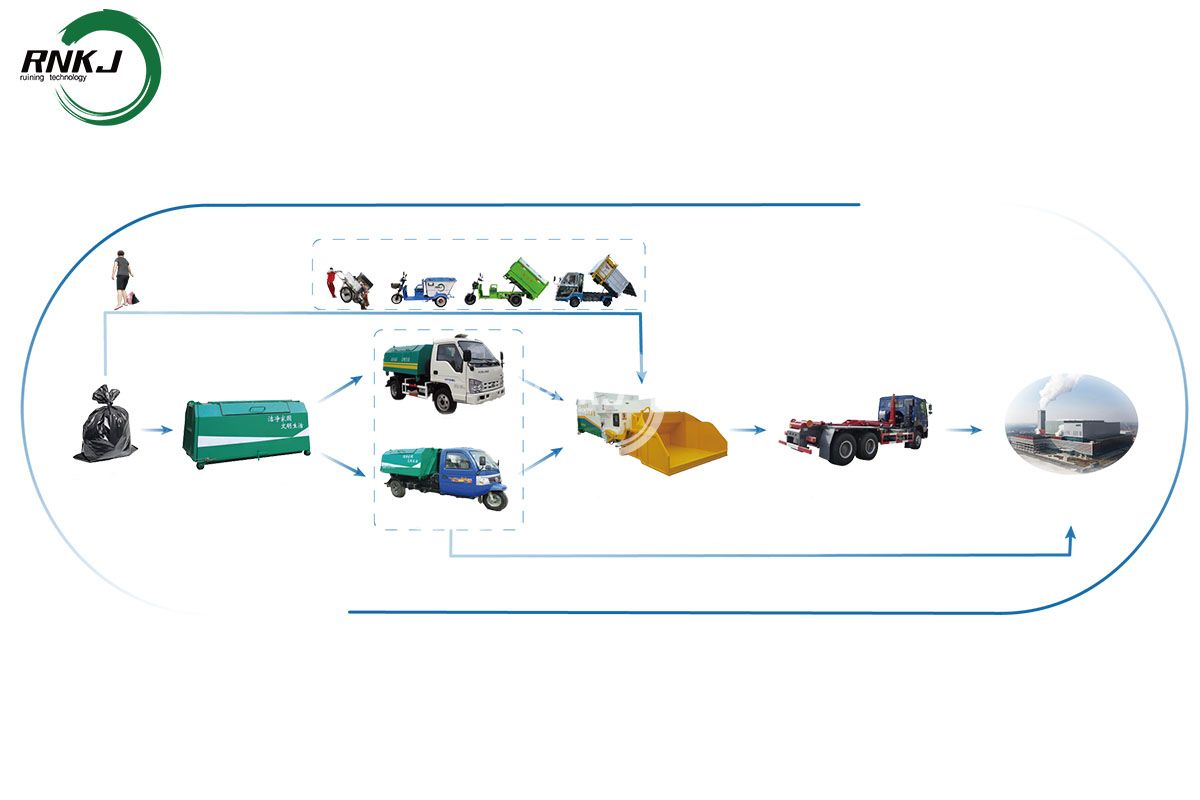
The waste management process begins with daily waste generated by residents, commercial areas, schools, hospitals, office buildings, and public facilities.
Residents place household waste into garbage bags and dispose of them in designated waste collection containers located throughout communities, residential areas, streets, parks, and public spaces.
Improved sanitation and cleanliness
Reduced odor and pest infestation
Convenient waste disposal for residents
Efficient preparation for downstream transportation
Common collection equipment includes:
Plastic waste bins
Metal waste containers
Underground waste collection systems
Smart waste bins
Community collection stations
After waste is deposited into collection points, sanitation workers collect scattered waste using:
Electric sanitation tricycles
Small garbage collection vehicles
Human-powered collection carts
Mini waste transport trucks
These vehicles navigate narrow streets, residential communities, and densely populated areas where large garbage trucks cannot easily operate.
Collected waste is transported to nearby transfer points or directly loaded into larger waste collection containers.
This stage serves several important purposes:
Centralizes dispersed waste
Reduces labor intensity
Improves collection efficiency
Optimizes transportation routes
Electric sanitation vehicles
Small refuse collection trucks
Mobile waste collection carts
Community waste containers
Once waste has been concentrated in large collection containers, medium-sized sanitation vehicles transport it to a garbage transfer station.
The transfer station serves as the core hub of the entire waste management system.
At the transfer station, advanced waste compactors compress the collected waste using hydraulic systems.
The compaction process can reduce waste volume by 50%–80%, depending on waste composition.
Compressed waste occupies much less space, allowing more waste to be transported in each trip.
Reduced transportation frequency results in:
Lower fuel consumption
Reduced vehicle wear
Lower labor costs
Compaction minimizes:
Waste leakage
Odor emissions
Wind-blown litter
Secondary pollution
After compaction, waste is loaded into sealed hook lift containers or mobile compactor containers.
Large hook lift trucks transport the compacted waste from transfer stations to final treatment facilities.
Compared with traditional dump trucks, hook lift systems offer several advantages:
| Feature | Traditional Transport | Hook Lift System |
Loading Efficiency | Medium | High |
Container Replacement | Difficult | Fast |
Leakage Risk | Higher | Lower |
Transportation Cost | Higher | Lower |
Operational Flexibility | Limited | Excellent |
Increased payload capacity
Reduced transportation frequency
Better route optimization
Lower carbon emissions
Improved operational efficiency
Hook lift trucks
Roll-off trucks
Mobile compactor containers
Large-capacity waste containers
Sealed transportation systems
Compacted waste is transported to waste incineration power plants, where it undergoes high-temperature combustion.
Modern waste-to-energy facilities convert municipal solid waste into electricity that can be supplied to the power grid.
Depending on waste characteristics, final disposal may include:
Suitable for non-combustible residual waste.
Food waste and organic materials are processed through:
Anaerobic digestion
Composting
Biogas generation
Recover valuable materials such as:
Plastics
Metals
Paper
Glass
Modern treatment facilities help achieve:
Waste reduction
Harmless disposal
Resource recovery
Green energy generation
Reduced greenhouse gas emissions
Waste Generation → Community Collection Containers
Small Collection Vehicles → Local Collection Points
Medium Transfer Vehicles → Garbage Transfer Station
Waste Compaction → Volume Reduction
Hook Lift Trucks → Long-Distance Transportation
Waste-to-Energy Plant / Landfill / Recycling Facility
Electricity Generation and Resource Recovery
This creates a closed-loop municipal solid waste management system.
Integrated collection, transfer, compaction, and transportation significantly improve operational efficiency.
Compaction technology reduces transportation trips and overall operating expenses.
Sealed containers and compaction systems minimize pollution and odor.
Equipment can be customized according to:
Community size
Waste volume
Urban layout
Local regulations
Optional IoT monitoring systems provide:
Real-time equipment status
Fill-level monitoring
Route optimization
Data analytics
Our waste collection and transportation solution is widely used in:
Municipal sanitation departments
Residential communities
Industrial parks
Commercial centers
Airports
Railway stations
Universities
Hospitals
Tourist attractions
Smart city projects
An efficient waste collection, transfer, and disposal system is essential for modern urban management. By combining front-end collection, waste compaction technology, transfer stations, hook lift transportation systems, and advanced treatment facilities, cities can significantly improve waste management efficiency while reducing operating costs and environmental impact.
Our complete waste management solutions provide reliable, cost-effective, and environmentally friendly equipment for every stage of the waste handling process, helping municipalities and enterprises build cleaner, smarter, and more sustainable cities.


