Views: 0 Author: Site Editor Publish Time: 2025-10-07 Origin: Site


As urban populations continue to grow, cities around the world face increasing challenges in managing municipal solid waste efficiently. Traditional waste collection methods often result in high transportation costs, overflowing bins, unpleasant odors, and environmental pollution. To address these issues, the Garbage Compression Station has become an essential part of modern waste management systems.
A Garbage Compression Station significantly reduces the volume of waste through hydraulic compression technology, enabling more efficient waste collection, transportation, and disposal. Today, these systems are widely used in residential communities, commercial districts, industrial parks, airports, hospitals, and municipal sanitation projects.
This article explores the functions, advantages, applications, and future trends of Garbage Compression Stations and explains why they are indispensable for modern waste management.
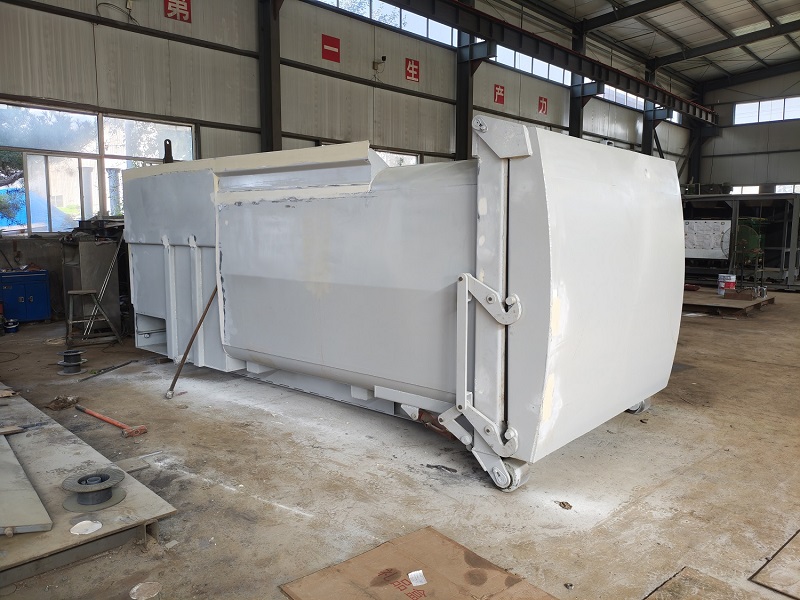
A Garbage Compression Station is a waste handling facility designed to collect, compact, temporarily store, and transfer municipal solid waste. By using powerful hydraulic systems, the station compresses waste into a much smaller volume before transportation.
Compared with conventional waste collection methods, a Garbage Compression Station can reduce waste volume by 60%–80%, significantly increasing transportation efficiency while lowering operational costs.
A typical Garbage Compression Station consists of:
Hydraulic compaction system
Waste receiving hopper
Compression chamber
Control system
Transfer container
Leachate collection system
Odor control equipment
Safety monitoring devices
Together, these components create a highly efficient waste transfer solution.
The operation process is relatively straightforward:
Household, commercial, or industrial waste is collected and delivered to the Garbage Compression Station.
Waste is discharged into the receiving hopper using collection vehicles or manual feeding systems.
A hydraulic ram compresses the waste inside the chamber, reducing its volume significantly.
Compressed waste is pushed into a transfer container or enclosed compactor unit.
Once the container reaches capacity, it is transported to a landfill, incineration plant, recycling center, or waste treatment facility.
This process minimizes transportation frequency and maximizes vehicle utilization.
Transportation represents one of the largest expenses in waste management operations.
By compressing waste before transport, a Garbage Compression Station allows each truckload to carry significantly more waste, reducing:
Fuel consumption
Driver labor costs
Vehicle wear and tear
Transportation frequency
This can lead to substantial long-term savings for municipalities and private waste operators.
A Garbage Compression Station can process large quantities of waste quickly and continuously.
Benefits include:
Faster waste handling
Increased collection capacity
Reduced waiting times for collection vehicles
Improved sanitation service quality
Modern Garbage Compression Stations are equipped with:
Sealed compression chambers
Leachate collection systems
Odor control devices
Dust suppression systems
These features effectively reduce:
Secondary pollution
Wastewater leakage
Air contamination
Pest infestation
As a result, surrounding communities enjoy a cleaner and healthier environment.
Urban land resources are increasingly limited.
Many modern Garbage Compression Stations utilize:
Underground garbage compression stations
Semi-underground waste compactors
Intelligent landscape garbage stations
These designs occupy less surface area while maintaining high processing capacity.
Advanced Garbage Compression Stations include:
PLC intelligent control systems
Automatic monitoring sensors
Emergency stop devices
Remote control functions
These features improve operational safety and reduce manual intervention.
The most common design for municipal waste transfer applications.
Features:
Large processing capacity
High compression ratio
Suitable for urban waste collection
Ideal for areas with limited space.
Advantages:
Compact footprint
Efficient loading process
Lower installation requirements
Designed to blend into urban landscapes.
Benefits include:
Improved aesthetics
Reduced odor emissions
Lower noise levels
Better environmental performance
A flexible solution for temporary or remote waste collection sites.
Common applications:
Construction projects
Large public events
Industrial zones
Rural communities
Garbage Compression Stations help maintain clean living environments by reducing waste accumulation and odor.
Shopping malls, supermarkets, hotels, and office buildings generate large amounts of waste daily. Compression systems improve waste handling efficiency while reducing collection costs.
Industrial waste often occupies substantial storage space. Waste compaction improves logistics and waste transfer efficiency.
Large transportation facilities require continuous waste management solutions. Garbage Compression Stations ensure uninterrupted waste handling operations.
Proper waste containment and transfer are essential for maintaining hygiene and safety standards.
Many city governments use Garbage Compression Stations as the core infrastructure of urban sanitation systems.
Smart city initiatives are driving the adoption of intelligent waste management technologies.
Modern Intelligent Garbage Compression Stations offer:
Operators can monitor:
Fill levels
Equipment status
Hydraulic pressure
Maintenance alerts
Cloud-based systems allow centralized management of multiple stations.
Collected data helps optimize:
Collection routes
Transportation schedules
Equipment utilization
Maintenance planning
This improves overall waste management efficiency and reduces operating costs.
When selecting a Garbage Compression Station, consider:
Estimate the average amount of waste generated per day.
Higher compression ratios result in fewer transportation trips.
Choose between:
Above-ground stations
Underground garbage compression stations
Mobile garbage compactors
Modern systems can offer fully automatic operation and remote monitoring.
Look for features such as:
Odor control
Leachate treatment
Noise reduction systems
The future of waste management is becoming increasingly intelligent and sustainable.
Emerging trends include:
AI-powered waste monitoring
IoT-enabled smart compaction systems
Solar-powered garbage stations
Fully automated waste transfer systems
Carbon-emission reduction technologies
As cities strive to become cleaner and more sustainable, Garbage Compression Stations will continue to play a critical role in urban waste infrastructure.
A Garbage Compression Station is far more than a waste collection facility—it is a strategic investment in efficient, environmentally responsible, and cost-effective waste management.
By reducing waste volume, lowering transportation costs, improving sanitation conditions, and supporting smart city development, Garbage Compression Stations have become a key component of modern waste management systems worldwide.
Whether for residential communities, commercial districts, industrial facilities, or municipal waste transfer projects, investing in a high-performance Garbage Compression Station can deliver significant operational and environmental benefits for years to come.