
Views: 0 Author: Site Editor Publish Time: 2026-11-16 Origin: Site


Facility managers across industrial and commercial sectors frequently encounter identical operational bottlenecks. You walk out to the loading dock. It is a familiar, frustrating sight. Overflowing dumpsters dominate the space. Wind-blown debris litters the pavement. The looming realization of skyrocketing hauling fees sets in. High-volume refuse generation remains an inevitable reality for large-scale operations. Shopping malls, manufacturing plants, large retail centers, and regional hospitals generate tons of trash weekly. Relying on traditional open-top receptacles is highly inefficient. These conventional containers consume valuable real estate. They demand constant monitoring. Furthermore, they harm the environment due to the frequent heavy-truck trips required for emptying.
The ultimate solution to this compounding headache requires upgrading your infrastructure with a heavy-duty commercial compactor. Strategic compaction goes far beyond simply crushing trash. It acts as a calculated operational upgrade that significantly saves money and streamlines dock labor. Specifically, it aligns with strict Environmental Protection Agency guidelines and modern corporate sustainability goals.
This comprehensive guide provides actionable, evidence-based strategies for managing facility-wide refuse. By understanding your unique generation profile, choosing the correct machinery, and partnering with industry-leading experts, commercial facilities can optimize their disposal protocols. Ultimately, this strategic pivot guarantees a substantial return on investment.
Understanding your facility's specific waste streams through a baseline audit is the foundational first step to effective high-volume management.
Implementing mechanized compaction reduces overall refuse volume by up to 80 percent, which drastically cuts down on hauling frequencies and logistical costs.
Different operational environments require specific mechanical solutions. These range from hopper-fed systems for continuous dry loading to mobile units for leak-proof liquid containment.
Investing in tailored infrastructure ensures that overlooked areas in facility-wide strategies—such as internal transport and specialized loading docks—are properly addressed.
Choosing a reliable equipment provider remains critical for ensuring long-term structural durability, favorable return on investment, and responsive maintenance support.
The commercial refuse sector is undergoing a massive technological transformation. Industry analysts observe a rapid shift away from reactive hauling schedules toward proactive, data-driven logistics. Driven by stringent municipal landfill diversion mandates, commercial facilities face unprecedented pressure to modernize. Corporate boards now demand rigorous Environmental Social and Governance compliance. Consequently, facility managers can no longer rely on visual guesswork or outdated collection contracts.
Smart compaction technology leads this new era. Advanced facilities increasingly integrate Internet of Things fullness sensors directly into their hydraulic equipment. These digital monitors transmit real-time capacity data, ensuring haulers are dispatched only when a machine reaches maximum density. This predictive approach dramatically lowers carbon emissions associated with unnecessary garbage truck routes. In addition, there is a distinct industry-wide push toward Zero Waste-to-Landfill initiatives. Modern operations prioritize source separation and high-density baling to transform everyday refuse into lucrative recycling revenue streams.
Before a facility can effectively process its daily output, management must conduct a thorough material audit. High-volume refuse handling is never a one-size-fits-all endeavor. A comprehensive baseline audit requires categorizing the specific types of materials generated across the entire property. Granular data collection is now the industry standard.
Common high-volume categories include corrugated cardboard, organic food scraps, mixed dry office refuse, and specialized industrial byproducts. Understanding the exact ratio of wet to dry material is paramount. This specific metric directly dictates the structural design and seal requirements of the machinery needed to handle the load safely.
The baseline audit should meticulously track overall cubic volume, peak generation times during operating hours, and current hauling schedules. Managers must document exactly how many cubic yards are produced weekly. Identifying the precise times when bins reach capacity helps establish a solid data-driven foundation. This empirical data proves essential for calculating the required hydraulic processing power and optimal container footprint.
Sticking to outdated disposal methods acts as a silent drain on your operational budget. When facilities use standard open-top dumpsters for massive output, they essentially pay to haul air. Uncompacted trash contains massive amounts of void space. Consequently, dumpsters fill up rapidly and necessitate multiple pickups per week. Each collection incurs tipping fees, fuel surcharges, and base hauling rates. Over a fiscal year, these accumulated costs represent a massive, unnecessary expenditure.
Beyond direct financial losses, inadequate containment introduces severe hygiene and safety risks. Overflowing receptacles quickly attract pests, rodents, and insects. This creates an unsanitary environment. Furthermore, decomposing organics generate foul odors that permeate the facility, negatively impacting the business's reputation among clients. Loose, uncontained combustible materials also pose severe fire hazards. They create safety risks for dock employees, potentially leading to costly compliance violations.
Environmental scrutiny adds another layer of risk. Modern commercial properties face increasing pressure to minimize their carbon footprint. Maximizing landfill use through inefficient transport contradicts modern sustainability mandates. Facilities that fail to optimize their output risk regulatory fines and lasting reputational damage.
To combat the logistical and financial challenges of massive refuse generation, integrating mechanized volume reduction provides the most effective solution. The underlying engineering is straightforward yet highly impactful. Powerful hydraulic rams crush loose materials. This drastically reduces their physical footprint. Depending on the material density, a high-quality machine easily achieves a compaction ratio of 4:1 or even 5:1. Four to five times the amount of trash fits into the same cubic space compared to a standard open-top bin.
The cost savings are mathematically compelling. By reducing the physical volume, facilities require significantly fewer pickups. Imagine cutting hauling frequency from four times a week to just once a week. This strategic shift instantly eliminates 75 percent of associated transportation fees. In addition, it reduces the labor costs associated with staff constantly breaking down boxes or sweeping up wind-blown debris around the loading dock.
Enclosed systems provide enhanced security and superior aesthetics. Fully sealed units prevent unauthorized dumping from external parties. This common issue is known in the industry as service theft. Enclosed systems keep back-of-house areas looking pristine, professional, and free of unauthorized scavengers.
Selecting the appropriate machinery requires analyzing the specific mechanical advantages of different designs. Commercial properties must match the equipment to their unique operational demands. Evaluating key engineering parameters ensures maximum processing efficiency.
For operations dealing with continuous streams of dry, bulky materials, a Hopper Waste Compactor is highly recommended. This configuration features a large, accessible chute designed for easy, continuous loading. Premium models typically feature a robust 15 HP motor delivering a swift 40-second cycle time. This allows warehouse employees to deposit materials safely from an elevated dock without interacting directly with the compression chamber. It generates up to 35 tons of compaction force, making it exceptionally well-suited for distribution centers and large retail stores that generate substantial amounts of corrugated cardboard.
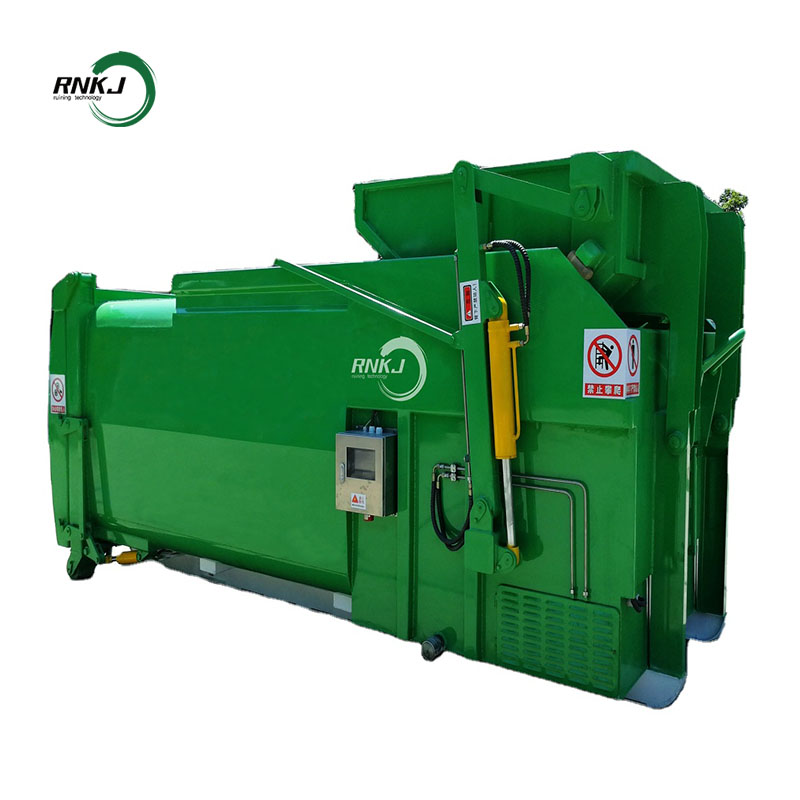
When a facility generates high volumes of wet or organic refuse, liquid containment becomes the primary engineering concern. A Mobile Garbage Compactor provides the ideal leak-proof solution. This design integrates the hydraulic mechanism and the storage container into a single, seamless machine. Built with 100 percent continuous welded seams and specialized liquid-tight door seals, these units typically offer 20 to 30 cubic yard capacities. Because the unit is entirely sealed and hauled away as one piece, it completely prevents contaminated liquid runoff on the concrete. This makes it the premier choice for regional hospitals, commercial kitchens, and grocery stores.
For operations generating extreme volumes that standard commercial units cannot process efficiently, a High Capacity Garbage Compression Station is required. Unlike standard models, these heavy-duty, stationary systems are designed for relentless, continuous throughput. They boast massive 50-ton dual-cylinder hydraulic rams capable of processing upwards of 150 cubic yards per hour. Bolted to a reinforced concrete pad, they utilize massive hydraulic force to pack refuse into large, detachable receiver boxes. This industrial-grade equipment is mandatory for municipal transfer stations, massive manufacturing parks, and mega-malls.
| Equipment Type | Best Suited For | Key Engineering Feature | Typical Compaction Ratio | Ideal Facility Application |
|---|---|---|---|---|
| Hopper Waste Compactor | Dry, bulky materials, cardboard, packaging | Elevated continuous-feed chute, swift cycle time | Up to 4:1 | Warehouses, Distribution Centers, Retail Stores |
| Mobile Garbage Compactor | Wet refuse, organic food waste, mixed liquids | 100% continuous welded seams, liquid-tight seals | Up to 5:1 | Hospitals, Supermarkets, Large Restaurants |
| High Capacity Station | Extreme volume mixed industrial refuse | Dual-cylinder hydraulic rams, heavy-duty anchoring | Up to 6:1 | Municipal Transfer Stations, Mega-Malls, Factories |
Effective refuse management extends far beyond the loading dock. Trash generates continuously across the entire facility. Materials flow from commercial kitchens and administrative offices down to manufacturing floors and assembly lines. A common blind spot in facility management involves failing to address how materials are transported from these internal generation points to the exterior disposal area. Imagine a hospital where orderlies push heavy carts of cafeteria scraps across a crowded visitor parking lot. This represents a clear logistical failure.
Because every commercial building possesses a unique architectural layout, standard off-the-shelf products rarely integrate flawlessly. This is exactly where investing in Custom Waste Compaction Equipment becomes essential. Facilities frequently require tailored engineering. Solutions may include custom chutes that pass safely through exterior brick walls. Engineers might design specific hopper angles to accommodate existing dock heights. Specialized interlock enclosures are often fabricated to protect employees in high-traffic corridors.
Custom integration ensures that the disposal process flows smoothly alongside existing daily workflows. By minimizing the distance and physical effort required to transport materials internally, tailored equipment prevents bottlenecks. It guarantees that rigorous safety protocols never disrupt overall employee productivity.
Deploying advanced machinery represents only one part of the equation. How your staff actually utilizes that equipment determines your true operational success. Source separation acts as a critical strategy. Facility managers must mandate the strict separation of valuable recyclables from general mixed trash before it enters the main crushing chamber. Diverting clean corrugated cardboard, shrink wrap, and metals away from landfills generates significant recycling revenue. This capital directly offsets daily operational costs.
Employee training proves equally vital. Staff must be thoroughly trained on how to safely and efficiently operate the heavy machinery. Comprehensive training protocols prevent workplace accidents. Strict adherence to standard Lockout Tagout procedures protects the hydraulic systems from severe damage caused by improper loading or jammed materials.
The longevity and financial return of your infrastructure depend heavily on the quality of the steel fabrication. Choosing a reliable Waste Compactor Manufacturer is a critical procurement decision. Buying directly from an established fabrication expert guarantees superior quality control. These entities possess a deep understanding of the structural steel integrity required to withstand continuous hydraulic pressure over a decade of rigorous use.
When evaluating potential partners, prioritize their engineering and customization capabilities. Ensure the technical team has the expertise to design tailored hoppers, modify footprint sizes, and navigate your specific spatial limitations. A generic machine forced into an incompatible space inevitably leads to operational friction and premature mechanical wear.
Finally, rigorously assess the after-sales support network. Heavy-duty hydraulic equipment requires routine preventative maintenance, fluid changes, and cylinder seal inspections. Emphasize the importance of comprehensive warranties, professional installation services, and highly responsive local maintenance teams. Reliable technical support acts as your primary defense against unexpected downtime. It ensures your loading dock remains clear, safe, and highly functional.
Handling massive refuse volumes does not have to be a costly, messy, or hazardous ordeal. By objectively auditing your generation streams and implementing facility-wide logistical strategies, businesses regain total control over their operational environment.
Transitioning from inefficient open dumpsters to mechanized hydraulic solutions represents a strategic investment. It consistently pays for itself through drastically reduced hauling fees and vastly improved labor efficiency. Ultimately, partnering with a trusted fabrication expert to design and install the exact machinery for your specific needs streamlines daily operations. It ensures strict regulatory compliance and robustly supports long-term corporate sustainability goals.
Ready to transform your loading dock from a chaotic bottleneck into a streamlined, cost-saving operation? Evaluate your facility's specific output and explore the industry-leading solutions available at https://www.sdrnkj.com. Whether you require a specialized mobile unit for organic refuse or a heavy-duty stationary station for industrial manufacturing, selecting the right engineered equipment is your first step toward achieving zero-waste efficiency.
By compressing loose refuse and reducing overall volume by up to 80 percent, commercial facilities cut their hauling frequencies dramatically. Because you no longer pay high freight rates to transport empty space, this reduction in pickups often results in a 30 to 50 percent decrease in overall disposal costs. The exact savings depend heavily on your baseline municipal hauling rates and current fuel surcharges.
Stationary models are bolted directly to a concrete ground pad and detach from a separate receiver box when full. They are engineered primarily for dry, bulky materials like cardboard and wooden pallets. In contrast, mobile or self-contained models are integrated single units where the crushing chamber and storage container are permanently welded together. The entire unit is hauled away for emptying. This design makes them completely leak-proof and perfect for wet or liquid-heavy refuse.
Sizing depends on your weekly uncompacted volume, the physical footprint of your loading dock, and the specific density of your materials. A facility generating 100 cubic yards of loose dry waste weekly might require a standard 2-yard stationary compactor paired with a 40-yard receiver box. Conducting a professional waste audit with your equipment manufacturer is the most accurate way to match hydraulic power and container capacity to your specific needs.
While designed for heavy-duty use, industrial compactors require routine preventative maintenance to ensure longevity. Standard protocols include checking hydraulic fluid levels, inspecting hoses for abrasions, greasing moving pivot points, and verifying the integrity of door seals. Partnering with a responsive vendor for bi-annual professional inspections minimizes the risk of sudden hydraulic failure and costly operational downtime.
Yes. A reputable engineering and fabrication team possesses the advanced capabilities to design custom hoppers, specialized loading chutes, and modified footprint sizes. These tailored engineering solutions ensure the heavy machinery fits seamlessly into specific spatial limitations, tight alleyways, and strict architectural constraints of any commercial property.


