
Views: 0 Author: Site Editor Publish Time: 2026-07-27 Origin: Site


Container failure on an active job site stops operations immediately. Floor blowouts, warped side walls, and sheared A-frames during high-stress lifts create severe safety hazards and fleet downtime. Standard-duty bins fail when misapplied in high-density waste, scrap metal, and demolition environments. This leads to accelerated replacement cycles and compromised site safety. Procuring a true heavy duty hook lift bin requires looking past basic cubic yard metrics. Fleet managers and site operators must rigorously evaluate steel thickness, metallurgical grades, and structural reinforcement specifications. You need equipment that withstands punishing daily abuse. We will break down exactly what specifications matter when handling aggressive materials.
Thickness Dictates Lifespan: Floor and wall steel thickness is the primary predictor of a bin's resistance to impact, puncturing, and abrasion in harsh environments.
Material Grade Overcomes Weight Challenges: High-strength, low-alloy (HSLA) steels or specialized wear plates (e.g., AR400/Hardox) provide superior durability without adding excessive tare weight.
The Payload vs. Tare Weight Trade-Off: Thicker steel increases the empty weight of a steel hook lift container, directly reducing the maximum legal payload capacity of the transport vehicle.
Engineering Quality Beats Raw Steel Volume: A heavy-duty spec sheet is only as reliable as the hook lift dumpster manufacturer's structural welding standards, cross-member spacing, and subframe engineering.
Certain waste streams and loading processes push containers past their structural limits. Environments handling heavy demolition debris like concrete, brick, asphalt, and rebar demand robust containment. Industrial scrap metal and heavy machinery components introduce sharp edges and massive point loads. High-frequency cycling involving multiple pulls per day with aggressive compaction accelerates wear on standard equipment.
A standard municipal or light commercial bin typically features 10-gauge or 12-gauge floors and walls. These are designed primarily for household waste or light commercial refuse. Heavy-duty designs utilize 1/4-inch or thicker structural plate steel. This fundamental difference in material volume provides the necessary backbone to survive harsh industrial applications.
The physical stress factors a construction waste hook bin faces are immense. Point-loading occurs when heavy excavators drop jagged materials from significant heights. This concentrates force on a small surface area. Abrasive wear from sliding stone, gravel, and sheared metal during the tipping process continuously grinds away at the interior surfaces. Without adequate steel thickness, these forces quickly compromise the structural integrity of the container.
Site operators must evaluate the specific gravity of the materials they haul. Dense materials require a container built to handle concentrated weight rather than just high volume. Upgrading to a heavy-duty specification prevents the sidewalls from blowing out when a loader operator packs the load tight.
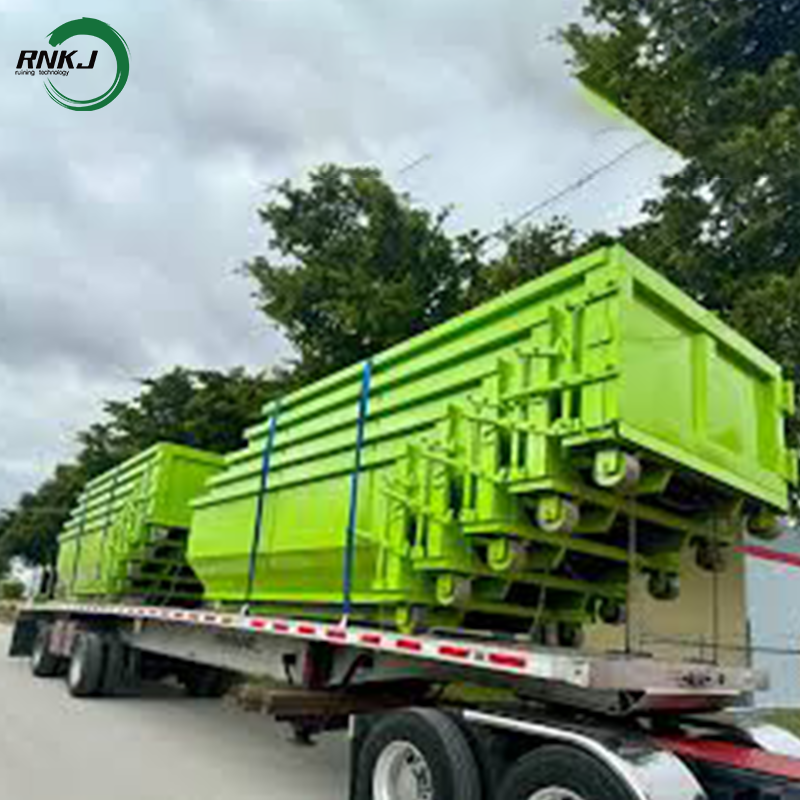
The floor of any roll-off or hook lift container absorbs the brunt of daily abuse. It requires the thickest steel, typically ranging from 1/4-inch to 3/8-inch. When heavy, jagged materials are dropped from an excavator bucket, the kinetic energy transfers directly into the floor plate. Insufficient thickness results in structural dimpling. The metal stretches and deforms. Over time, these dimples become weak points susceptible to tearing and accelerated rust.
Heavy-duty side walls generally require steel ranging from 7-gauge up to 1/4-inch. Wall thickness, combined with proper profile geometry, prevents bowing and bulging. When dense materials are compacted or tightly packed against the sides, outward pressure increases dramatically. Thicker steel resists this deflection. It ensures the bin maintains its rectangular shape, which is mandatory for safe transport and proper alignment on the truck chassis.
Selecting the right steel grade is just as important as choosing the right thickness. Different alloys offer distinct advantages depending on the application.
| Steel Grade | Characteristics | Best Application |
|---|---|---|
| ASTM A36 (Standard Carbon Steel) | Easily weldable, but highly susceptible to denting, rapid wear, and rust-through. | Light to medium-duty waste hauling. |
| ASTM A572 Grade 50 (HSLA) | Higher yield strength (50,000 psi) for improved structural performance under heavy loads. | General heavy-duty construction and demolition. |
| AR400 / Hardox | Hardened steel designed to resist extreme wear and sliding abrasion. | Scrap metal, concrete, and highly abrasive materials. |
The subframe acts as the spine of the container. Main rails typically consist of 6-inch by 2-inch by 1/4-inch structural steel tubing or heavy C-channel. Proper integration of the subframe with the container floor prevents twisting and torsional stress when lifting unevenly distributed loads. A weak subframe will eventually crack under the strain of pulling heavy debris.
The A-frame plate assembly bears the entire weight of the loaded bin during the initial pull. This critical junction requires 1/2-inch to 3/4-inch steel plate. Pull hooks must utilize solid steel lift pins, usually 2 to 2.5 inches in diameter, forged from high-tensile steel. Robust reinforcement gussets are mandatory to distribute the pulling force and prevent the A-frame from tearing away from the front wall during maximum-capacity lifts.
Cross-members support the floor plate and prevent washboarding. This is a condition where the steel sags between the supports. Standard bins often use 16-inch to 18-inch spacing. Heavy-duty applications demand 12-inch on-center spacing utilizing 3-inch or 4-inch structural C-channel. This tighter grid provides superior impact resistance and load distribution.
Inspect the cross-member spacing visually from the underside of the bin.
Measure the distance between the centers of the C-channels.
Verify the thickness of the C-channel material itself.
Top rails resist crushing forces from wheel loaders and keep the box square. They are often constructed from 4-inch by 3-inch or 4-inch by 4-inch heavy structural tubing. Sloped top rails are highly recommended. They shed dirt and debris, preventing accumulation that leads to localized corrosion. Uprights and corner posts tie the top rails to the subframe, creating a rigid external skeleton.
Heavy-duty ground rollers must feature thick-walled steel pipe with greaseable zero-turn pins. This protects asphalt and concrete surfaces during loading and unloading. Rear door hinges require heavy-duty pins and grease zerks to maintain smooth operation. Multi-point lock systems ensure tight tailgate seals and prevent accidental door openings during transit.
Oxidation aggressively strips gauge thickness from any steel hook lift container. A rusty 10-gauge wall can quickly degrade to the structural equivalent of a much thinner, weaker material. Protecting the steel is essential for maintaining the heavy-duty characteristics of the bin.
Surface preparation dictates the success of any coating system. Commercial grit or sandblasting removes mill scale and existing rust. This provides an optimal profile for paint adhesion. Without proper blasting, even the best paint will eventually flake and peel.
Industrial primers and topcoats provide the primary defense against the elements. Zinc-rich epoxy primers offer superior galvanic protection compared to standard shop primers. Direct-to-metal polyurethane or acrylic industrial enamel topcoats resist chemical attacks from waste materials. They withstand UV degradation, keeping the container sealed against moisture. Applying asphaltic or chemical undercoating to the bin's underside protects the structural cross-members and main rails from highly corrosive road salt and standing water.
The quality of fabrication separates a true heavy-duty bin from an imitation. Evaluate the welding practices used on critical seams. These include floor-to-wall joints, the A-frame assembly, and main rails. Continuous welding provides superior strength and seals out moisture. Stitch welding leaves gaps susceptible to rust and structural failure. Buyers should verify that the hook lift dumpster manufacturer utilizes welders certified to recognized structural codes. This ensures consistent, high-quality penetration on every joint.
Compatibility with existing fleet equipment is another critical vetting step. Hook height, rail width, and locking mechanisms must align perfectly with the truck chassis. This ensures safe operation and prevents equipment damage during loading cycles.
Assess your primary waste streams to determine the exact steel thickness and metallurgical grade required for your operations.
Inspect the cross-member spacing and subframe design of any prospective container to ensure it can handle point-loading and heavy lifts.
Verify the surface preparation and coating specifications to guarantee long-term protection against corrosion and material thinning.
Confirm that the manufacturer uses continuous welding on all critical structural joints and holds recognized fabrication certifications.
A: 1/4-inch steel is significantly thicker and heavier than 10-gauge steel. 1/4-inch plate provides superior impact resistance and structural rigidity. It is the standard for heavy demolition and scrap metal applications, whereas 10-gauge is suited for lighter municipal waste.
A: Tighter cross-member spacing, such as 12-inch on-center, provides more frequent support to the floor plate. This prevents the steel from sagging or washboarding under the weight of dense materials and heavy point loads.
A: AR400 is an abrasion-resistant steel that is significantly harder than standard carbon steel. It withstands the sliding wear of concrete, gravel, and scrap metal much better. This allows for thinner, lighter plates that maintain high durability.
A: Rust physically consumes the steel, reducing its thickness over time. As the steel thins, it loses its ability to resist impacts and deflection. This eventually leads to holes, structural cracking, and complete failure.
A: Continuous welding creates a solid, uninterrupted bond that maximizes structural strength. It completely seals the joint against moisture. Stitch welding leaves unsealed gaps where water can penetrate, accelerating internal corrosion.
A: Using a standard bin for concrete disposal is highly discouraged. The heavy point loads and abrasive nature of concrete will quickly dent the floor, bow the side walls, and potentially cause catastrophic structural failure during lifting.


