
Views: 0 Author: Site Editor Publish Time: 2026-05-18 Origin: Site


Every day, commercial facilities generate massive amounts of refuse. Open dumpsters quickly overflow under this heavy burden. They create an expensive, messy logistical nightmare for management. Businesses often pay premium hauling rates just to transport empty air. Mechanical compression solves this inherent logistical inefficiency directly. It fundamentally transforms how industrial sites handle daily refuse streams. Facilities can dramatically lower their hauling costs using this specific equipment. They also mitigate serious workplace hazards and meet strict environmental targets simultaneously. This evidence-based guide helps operations directors evaluate heavy-duty equipment investments. We will explore measurable financial ROI and compare distinct machine categories. We also outline vital implementation realities you must consider before buying. You will learn exactly how to align commercial hardware with your specific site constraints.
Immediate Cost Reduction: Commercial compactors typically reduce waste hauling frequencies by up to 50-80%, delivering positive ROI within the first year.
Biochemical Control: Extreme compaction (utilizing tens of thousands of PSI) reduces oxygen exposure, significantly slowing bacterial decomposition, odors, and pest attraction.
Architectural Fit Matters: Choosing between static, portable, or a custom on-site waste compactor depends entirely on the waste fraction (wet vs. dry) and physical site constraints.
Hidden Complexities: Successful rollout requires evaluating concrete foundation limits, vertical headroom, and leachate management protocols.
Reducing collection trips serves as the primary financial driver for this upgrade. Many facilities currently pay vendors for daily refuse pickups. Compacting your materials can drop this frequency to just two or three times weekly. You immediately stop paying contractors to haul empty space. Implementing mechanical waste volume reduction directly transforms your balance sheet. This logistical efficiency also supports broader corporate sustainability mandates. Fewer hauling trucks arriving at your loading dock means less fuel burned. This reduction directly lowers your measurable Scope 3 greenhouse gas (GHG) emissions. You achieve operational savings while actively hitting critical ESG targets.
Space represents a premium asset in any commercial operation. Standard open dumpsters consume massive amounts of your valuable real estate. Facilities often string together five or six bins to handle daily output. One high-capacity compression unit easily replaces this entire disorganized row. You consolidate your refuse footprint into a single, tightly managed zone. Clearing these bins frees up vital square footage around your loading docks. Forklifts and delivery trucks gain much better turning maneuverability. You ultimately streamline your entire inbound and outbound logistics flow.
Odor control relies heavily on simple physical mechanics. Loose refuse features massive surface area and abundant air pockets. Oxygen fuels the rapid aerobic decomposition of organic matter. Crushing this material under extreme pressure eliminates those internal air pockets. You technically stall the biological decomposition process by removing oxygen. Sealed containment also improves your baseline safety compliance metrics. Overflowing bins often create severe trip hazards for your floor workers. Closed units eliminate loose debris and effectively deter rodents and insects. This proactive hygiene management significantly aids in passing stringent health inspections.
Understanding distinct equipment categories prevents costly procurement mistakes. You must match the hardware exactly to your specific material output. The table below illustrates how different solutions handle varying refuse streams.
| Equipment Type | Material Capability | Operational Footprint | Best Application Scenario |
|---|---|---|---|
| Open Dumpsters | Low-volume, unsegregated items. | Large, spread out. | Small businesses lacking budget or commercial generation volumes. |
| Balers | Dry, source-separated recyclables (cardboard, plastics). | Minimal, vertical orientation. | Retail stores or warehouses selling high-value recyclables. |
| Trash Compactors | Heavy-duty, unsegregated, wet or bulky residual refuse. | Large, requires dedicated pad. | Hospitals, large manufacturers, and high-traffic hospitality venues. |
The status quo relies on standard open dumpsters. They remain suitable only for low-volume, non-commercial generation. Open bins leave you highly vulnerable to illegal dumping from outsiders. They also expose your refuse directly to rain and harsh weather.
Balers provide the optimal route for dedicated recycling efforts. They handle source-separated, dry recyclables yielding high resale value. Operators must manually tie off the compressed bales using heavy wire. Balers occupy minimal space inside a facility. However, they absolutely cannot process wet or mixed refuse streams safely.
A heavy-duty trash compactor handles unsegregated, wet, or bulky materials easily. These robust machines maximize density within a fully closed steel container. They require higher electrical power input and a larger dedicated footprint. They represent the ultimate solution for heavy commercial environments.
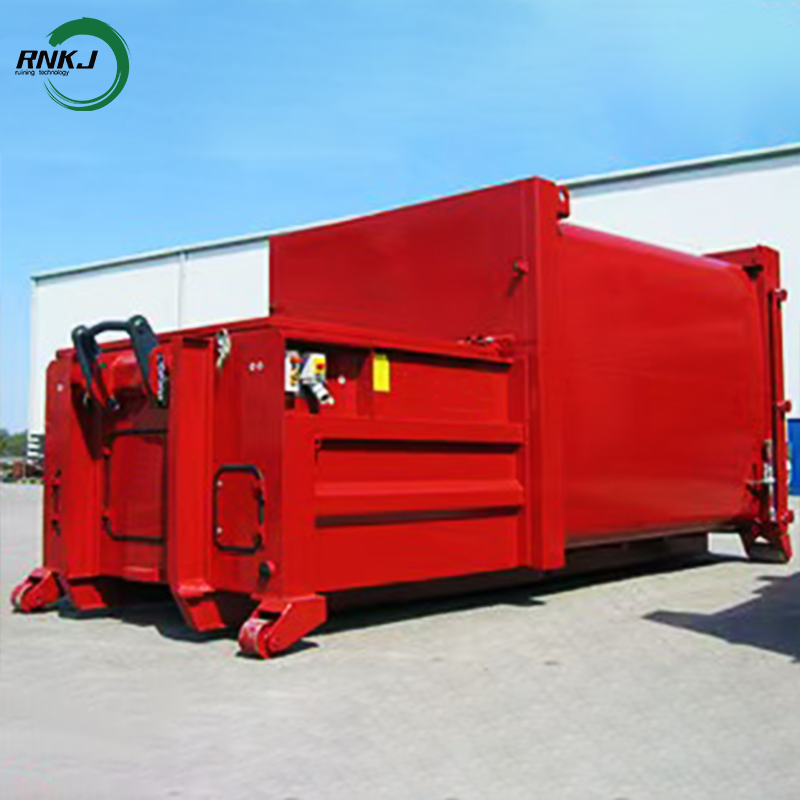
Static machines feature a two-part operational architecture. The main compression mechanism remains permanently bolted to your concrete ground. Only the separate collection bin detaches when it reaches full capacity. The hauling truck takes away this bin and leaves the mechanical ram behind. You secure a new empty bin to the stationary machine.
These breakaway units suit continuous, high-throughput commercial environments perfectly. They excel in manufacturing plants and sprawling logistics hubs. These sites produce massive volumes of dry, bulky commercial refuse daily. The permanent ground fixing allows the machine to exert maximum crushing force continuously.
Portable designs merge the mechanical ram and the container together. They form a single, fully sealed, leak-proof unit. The truck loads the entire machine onto its bed for transport. The hauler empties the unified machine at the processing facility before returning it.
These self-contained units dominate the food service, healthcare, and hospitality sectors. Their completely sealed design remains mandatory for processing wet materials safely. Compressing food scraps generates highly toxic liquid runoff. This sealed architecture prevents dangerous leachate from spilling onto your premises.
Facility upgrades require realistic planning and transparent risk assessments. You must understand the physical and financial hurdles before finalizing any equipment contracts.
High Initial CapEx: Heavy-duty commercial hardware demands significant upfront capital expenditure. You face substantial initial costs for both the equipment and the specialized installation. Many facilities evaluate leasing options instead of purchasing units outright. Leasing helps preserve internal cash flow while securing immediate logistical savings.
Infrastructure Prerequisites: You cannot place these heavy machines on standard asphalt. Successful implementation strictly requires the following site conditions:
Footprint: Standard commercial units demand substantial ground space. You must allocate an area roughly 3 to 5 meters wide and 7 to 14 meters long.
Headroom: Indoor or canopy-covered installations require massive vertical clearance. You typically need 7 to 8 meters of open vertical height. This space ensures safe mechanical operation and allows hauling trucks to lift the bins.
Foundation: The equipment requires a heavily reinforced concrete pad. Normal paving will crack under the extreme operational pressure. The pad must also withstand the constant friction of heavy truck traffic during collection.
Leachate and Environmental Risks: Extreme mechanical pressure physically squeezes liquid out of your refuse. You must manage this hazardous runoff proactively. Modern machines must feature dedicated drainage channels and leachate sumps. Missing these features risks severe local soil contamination and regulatory fines.
The "Masking" Problem: Never use compression hardware as an excuse to ignore upstream generation. Shrinking your refuse does not mean you produce less actual material. Compaction should always complement broader corporate sustainability programs. It must not replace your internal "reduce and reuse" initiatives.
Selecting the right vendor determines your long-term operational success. You must evaluate your garbage compaction machine manufacturer carefully against stringent engineering standards.
Customization Capabilities: A rigid, one-size-fits-all approach routinely fails in complex industrial settings. Your site features unique loading docks, workflow patterns, and spatial limits. Discuss the necessity of designing a Custom on-site waste compactor tailored to your daily operations. You might need custom hopper designs for bulky items. You may require seamless integration into your existing building chute systems. Some sites also demand specific automated bin-lift mechanisms to protect floor staff.
Power & Actuation Requirements: Heavy machinery demands robust utility connections. Assess whether your site can support heavy-duty 3-phase electrical connections safely. Some older facilities lack this industrial electrical capacity. In those scenarios, you must determine if hydraulic or pneumatic actuation systems align better.
Hauler Compatibility: Your new equipment must physically match your current hauling contractor's fleet. You must coordinate the machine's specific pickup mechanism. Determine whether your local vendor uses Roll-on/Roll-off trucks or Hook-lift systems. A mismatch here renders your expensive new equipment entirely useless.
Safety Interlocks and Maintenance: Industrial crushers pose severe risks to untrained operators. Look for mandatory compliance features built into the core design. You need easily accessible emergency stops and heavy-duty safety cages. You also need visible hydraulic checkpoints for daily inspections. Always assess the manufacturer's warranty depth. Secure a strict preventative maintenance Service Level Agreement (SLA) before signing.
| Evaluation Category | Key Requirement to Verify | Operational Impact |
|---|---|---|
| Electrical Infrastructure | Availability of 3-Phase power supply. | Determines if the site can run high-PSI hydraulic rams. |
| Hauler Fleet Match | Roll-on/Roll-off vs. Hook-lift interface. | Ensures local vendor trucks can successfully grab and transport the bin. |
| Safety Features | OSHA-aligned safety cages & emergency stops. | Prevents catastrophic workplace injuries during loading cycles. |
| Service Agreement | Guaranteed response time for hydraulic failures. | Prevents facility workflow paralysis due to machine downtime. |
Volume reduction via mechanical compression remains a highly effective logistical strategy.
You can drastically cut vendor transportation fees and lower vehicle emissions.
Site hygiene improves significantly when you eliminate loose refuse and control decomposition odors.
Success strictly requires matching the hardware architecture (static vs. portable) to your specific material stream.
You must secure proper vertical headroom and reinforce your concrete foundations prior to installation.
We encourage operations stakeholders to conduct a comprehensive internal audit immediately. You should measure your dry versus wet material ratios carefully. Track your current hauling frequencies and monthly vendor invoices. Use this baseline data to request a detailed site survey from a qualified equipment provider.
A: Depending on the raw material, commercial units achieve reduction ratios between 3:1 and 5:1. This represents a 50% to 80% total volume reduction. Specialized, highly porous materials like EPS (Styrofoam) can see up to a 98% reduction under extreme pressure.
A: Operators must perform daily visual checks for pooling hydraulic leaks. They must conduct routine lubrication of all heavy moving parts. Staff should verify the structural integrity of the steel container frequently. You also need an annual deep inspection performed by a certified technician.
A: Yes, you can mix them. However, processing mixed or wet materials strictly requires a portable, self-contained unit. This specific sealed design safely manages the resulting contaminated liquids. It prevents hazardous leachate from dripping onto your property during storage and transport.


