
Views: 0 Author: Site Editor Publish Time: 2026-08-14 Origin: Site


Choosing the right Garbage Compression Station is an important decision for municipalities, commercial properties, industrial facilities, residential communities, and waste management companies. The right equipment can improve waste collection efficiency, reduce unnecessary transportation, optimize available space, and create a more organized waste handling process.
However, garbage compression stations are not one-size-fits-all equipment. Different projects have different waste volumes, waste types, site conditions, transportation methods, loading requirements, and capacity needs.
A small residential community may require a compact underground waste compression system, while a municipal transfer station may need a high-capacity hydraulic garbage compression station. Industrial facilities may prefer a Mobile Garbage Compactor that can be transported by a Hook Lift Truck, while commercial complexes may benefit from an underground or landscape-integrated waste collection solution.
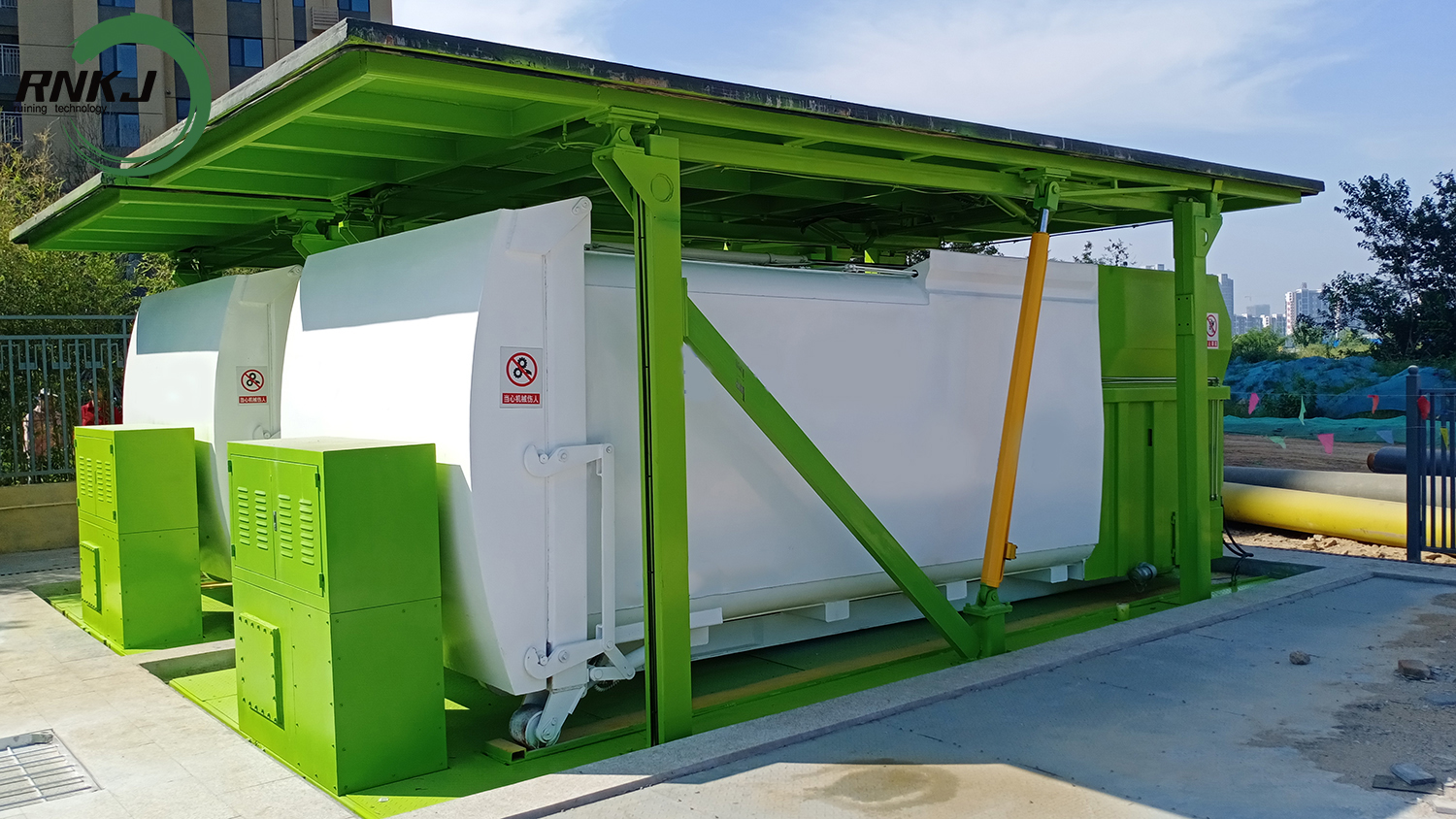
A Garbage Compression Station is a waste management system designed to collect, temporarily store, and compress solid waste before transportation to a transfer station, landfill, incineration plant, recycling facility, or other designated disposal location.
The main purpose of waste compression is to reduce the volume of loose waste and make better use of available storage capacity.
A typical system may include:
Waste receiving area
Garbage storage container
Hydraulic compression mechanism
Compression plate or ram
Hydraulic power unit
Electrical control system
Safety protection system
Loading or lifting mechanism
Waste discharge system
Transportation interface
Depending on the project, the equipment can be designed as a mobile garbage compression station, underground garbage compression station, bucket-type garbage compactor, hopper-type garbage compression station, or split-type garbage compression station.
Therefore, selecting the right model requires understanding how the equipment will be used rather than simply choosing the largest available capacity.
The first question to ask is:
How much waste does your project generate every day?
Daily waste generation directly affects the required storage capacity, compression frequency, transportation schedule, and equipment size.
For example, a small residential community may generate a relatively moderate amount of household waste, while a large shopping center, industrial park, hotel, or municipal collection point may generate significantly more waste.
Before selecting equipment, consider:
Average daily waste volume
Peak daily waste volume
Seasonal variations
Number of waste collection points
Waste collection frequency
Transportation frequency
Expected future growth
It is generally better to evaluate both current and future waste generation rather than selecting equipment based only on today's requirements.
If the garbage compression station is too small, it may need frequent emptying and transportation.
If it is significantly oversized, the initial investment and installation requirements may be unnecessarily high.
The objective is to find a suitable balance between capacity, waste generation, transportation frequency, and project budget.
Not all waste behaves in the same way during compression.
Household waste, commercial waste, cardboard, packaging materials, plastic, industrial general waste, and other solid waste streams can have different densities, moisture levels, and compression characteristics.
Before purchasing a garbage compression station, identify the main waste stream.
Common applications include:
Household and community waste is one of the most common applications for garbage compression equipment.
Shopping malls, supermarkets, hotels, markets, restaurants, and commercial buildings can use waste compactors to manage daily commercial waste.
Factories and warehouses often generate packaging materials, cardboard, plastic, and other general solid waste suitable for compaction.
Residential communities can use centralized garbage compression stations to improve waste collection efficiency and reduce the space occupied by waste.
Some projects handle mixed non-hazardous solid waste. In this case, the supplier should evaluate the material composition before recommending the appropriate compression system.
Heavy construction materials, hazardous waste, liquids, and other unsuitable materials should not be processed unless the equipment is specifically designed for them.
One of the most important decisions is selecting the correct equipment configuration.
Different projects may require different types of garbage compression stations.
A Mobile Garbage Compression Station integrates waste collection, compression, storage, and transportation into a movable unit.
It can be particularly useful for:
Municipal waste collection
Industrial parks
Construction projects
Commercial facilities
Temporary waste collection points
Remote collection locations
When designed for Hook Lift Truck transportation, the complete unit can be loaded and transported by a compatible hook lift vehicle.
This provides greater flexibility than a permanently installed system.
An Underground Garbage Compression Station places the main waste storage or compression equipment below ground level.
This type of system can help improve the appearance of urban environments while utilizing underground space.
It is particularly suitable for:
Residential communities
Commercial complexes
Urban streets
Public spaces
Landscape-sensitive locations
High-density urban areas
An underground system can help reduce the visual impact of conventional above-ground waste containers and provide a cleaner appearance.
A Bucket-Type Garbage Compactor is designed with a bucket-style waste receiving structure.
It can be configured for loading from compatible garbage bins, such as 240L, 660L, or 1100L bins, depending on the equipment design.
This makes bucket-type equipment suitable for projects that collect waste from standardized municipal garbage containers.
A hopper-type system provides a larger receiving area where waste can be loaded directly into the hopper.
This configuration can be useful when waste is delivered by collection vehicles, loaders, or other feeding equipment.
The choice between a bucket-type and hopper-type design depends mainly on the waste loading method and site requirements.
The waste loading method is often overlooked when selecting a garbage compression station.
Ask yourself:
How will waste enter the equipment?
There are several possibilities.
If the project uses standardized garbage bins, a compatible lifting mechanism can be designed for bins such as:
240L
660L
1100L
The exact compatibility depends on the lifting mechanism and equipment configuration.
Some projects may require workers or collection vehicles to load waste directly into a hopper.
Industrial and municipal projects with high waste volumes may use mechanical feeding equipment.
The loading method affects the design of the receiving hopper, lifting mechanism, equipment height, site layout, and operating process.
Waste compression is only one part of the waste management process.
You also need to determine:
How will the compressed waste be transported?
For mobile equipment, a Hook Lift Truck is a common transportation solution.
A compatible hook lift truck can lift the garbage compactor or container and transport it to the required destination.
The transportation system should be considered during the equipment selection stage.
Important factors include:
Hook height
Container dimensions
Overall equipment weight
Truck lifting capacity
Container length
Connection structure
Road transportation requirements
Loading and unloading space
A garbage compression station and hook lift truck should be properly matched. Choosing the compactor first and checking truck compatibility later can create unnecessary engineering problems.
The physical site can strongly influence the equipment configuration.
Before selecting a garbage compression station, measure:
Available installation area
Access road width
Vehicle turning radius
Loading area
Equipment height
Underground depth
Maintenance space
Electrical connection location
Drainage requirements
Safety clearance
For an underground garbage compression station, additional considerations may include excavation depth, foundation structure, drainage, waterproofing, and local construction conditions.
For mobile equipment, sufficient space should also be available for hook lift trucks to approach, load, and remove the equipment safely.
Garbage compression stations are available in different capacities.
Common project capacities may include approximately:
8 m³
9 m³
10 m³
12 m³
Other customized capacities
The correct capacity should not be selected based simply on container volume.
Instead, consider:
Daily waste generation + compression performance + collection frequency + transportation schedule + available space
For example, a project that collects waste every day may not require the same storage capacity as a remote collection site where transportation occurs every few days.
The equipment should be sized according to the complete waste collection cycle.
Compression performance is one of the core functions of a garbage compression station.
The purpose of compression is to reduce the volume of loose waste and improve storage efficiency.
However, compression performance depends on several factors:
Waste composition
Waste moisture
Waste density
Compression force
Compression chamber design
Compression cycle
Hydraulic system
Waste feeding method
Therefore, when comparing different garbage compactors, do not look only at the advertised compression ratio.
Ask the supplier whether the stated performance is based on your actual waste type and operating conditions.
How often will the equipment operate?
A residential community may operate the garbage compression station several times throughout the day, while an industrial facility may have different operating patterns.
High-frequency applications require attention to:
Hydraulic system durability
Cylinder performance
Structural strength
Electrical components
Control system reliability
Maintenance accessibility
Wear-resistant components
If the equipment will operate continuously or under heavy-duty conditions, the machine should be designed accordingly.
Waste management equipment may operate outdoors and in challenging environments.
Depending on the project location, you may need to consider:
Rain
Humidity
High temperatures
Dust
Corrosive environments
Waste leakage
Odor control
Noise
Drainage
Surface treatment
For outdoor installations, corrosion-resistant materials and appropriate protective coatings can help improve equipment durability.
For underground systems, waterproofing and drainage are particularly important.
If your project already has garbage trucks, hook lift trucks, waste bins, or transfer stations, the new garbage compression station should be compatible with the existing system whenever possible.
Check:
Garbage bin dimensions
Truck specifications
Hook lift dimensions
Loading height
Container size
Electrical requirements
Waste disposal method
Existing site infrastructure
Good compatibility can simplify installation and reduce the need for additional equipment.
If you are not sure which garbage compression station is suitable for your project, use the following selection process.
Determine what type of waste will be collected and compressed.
Estimate average and peak daily waste volumes.
Decide how often the equipment needs to be emptied or transported.
Determine whether waste will be loaded through 240L, 660L, or 1100L bins, a hopper, direct feeding, or another system.
Choose between mobile, underground, bucket-type, hopper-type, split-type, or other configurations.
If using a Hook Lift Truck, verify the truck's dimensions, hook height, and lifting capacity.
Check installation space, access, drainage, electrical supply, and maintenance clearance.
Choose manual, semi-automatic, or automatic operation according to project requirements.
Evaluate purchase price, transportation, installation, maintenance, and operating costs.
Work with the manufacturer to confirm technical specifications before production.
The best option depends on waste volume, available space, collection frequency, and local site conditions. Underground garbage compression stations can be suitable where appearance and space utilization are important.
Municipal projects may use mobile garbage compactors, underground garbage compression stations, hydraulic waste compactors, or larger transfer-station systems depending on collection and transportation requirements.
Yes. Mobile garbage compression stations can be designed for compatible hook lift transportation. The equipment and truck should be matched according to hook height, dimensions, weight, and lifting capacity.
The appropriate capacity depends on daily waste generation, waste density, compression performance, collection frequency, transportation schedule, and available installation space.
Certain bucket-type garbage compactors can be designed to work with 1100L garbage bins, as well as 240L and 660L bins, depending on the lifting system and equipment configuration.
Waste compression can increase the amount of waste transported per trip by reducing the volume of loose waste. A mobile garbage compactor with hook lift transportation can also provide flexible collection and transportation.
If you are planning a new waste management project, providing the manufacturer with your waste type, daily waste volume, required capacity, garbage bin size, site dimensions, and Hook Lift Truck specifications is a good starting point for selecting the right garbage compression solution.


