
Views: 0 Author: Site Editor Publish Time: 2026-09-14 Origin: Site


A Hydraulic Underground Garbage Compaction Station provides an alternative approach by combining underground waste storage with hydraulic compression technology. By compacting waste before transportation, the system can make better use of available storage capacity and support a more organized municipal waste collection process.
For municipalities, residential communities, commercial districts, public facilities, and other high-density areas, an underground hydraulic garbage compaction station can be designed according to local waste collection requirements, available installation space, waste volume, and transportation methods.
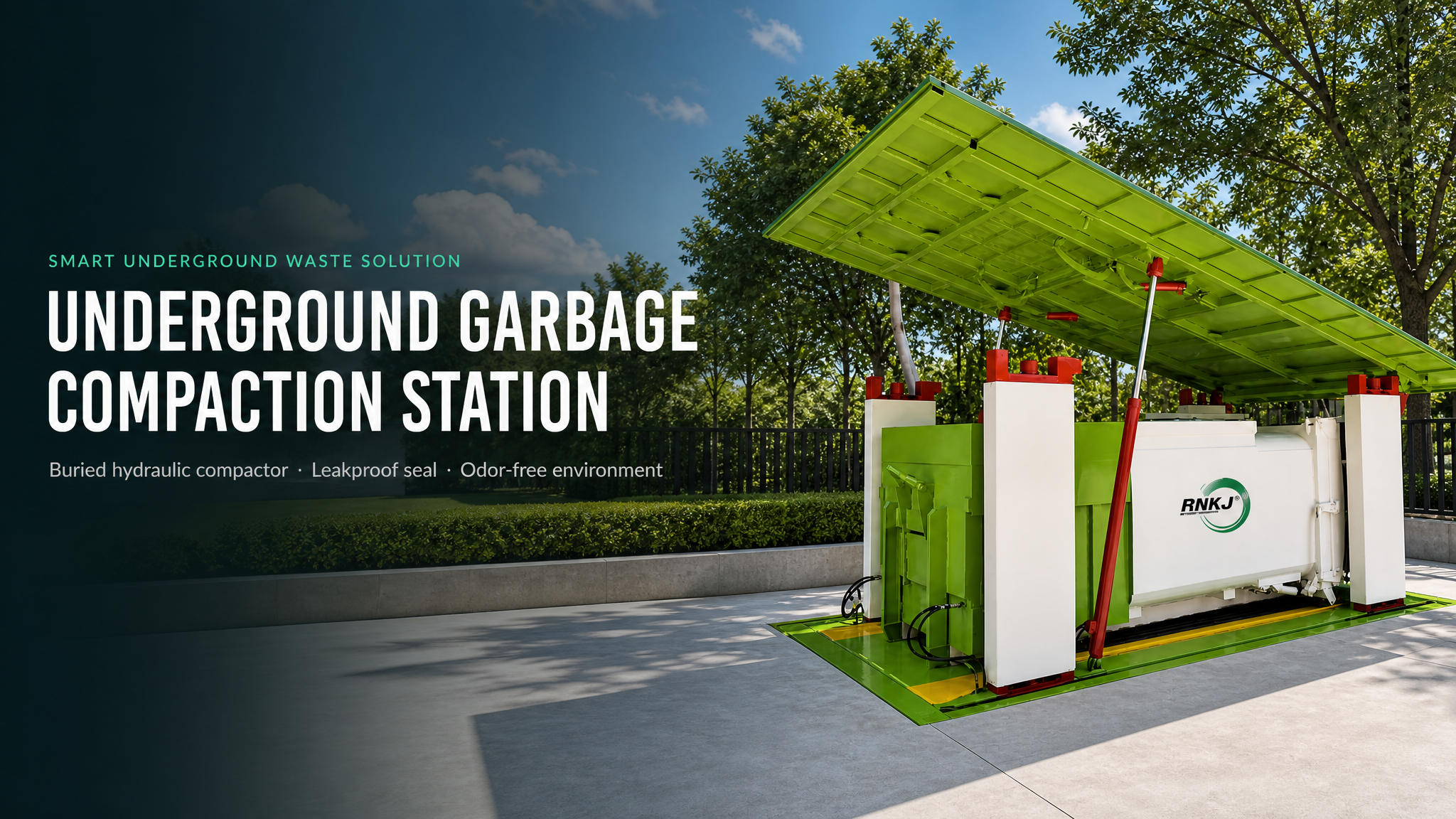
A Hydraulic Underground Garbage Compaction Station is a waste collection and compaction system installed partially or fully below ground level. It generally consists of an underground compaction chamber, hydraulic compression mechanism, waste receiving area, control system, and lifting or transfer components.
Unlike a conventional waste container that mainly provides storage space, the hydraulic system actively compresses loose waste into a denser form. This allows more waste to be stored within a relatively compact installation area.
The underground configuration also keeps most of the waste collection equipment below ground level. Depending on the project design, the visible part above the ground can be minimized to help maintain a cleaner appearance in residential communities, streets, public areas, and municipal facilities.
A typical hydraulic underground garbage compactor may include:
Hydraulic compression system
Underground waste storage chamber
Waste receiving or feeding structure
Hydraulic power unit
Electrical control cabinet
Safety protection system
Lifting mechanism
Sealed or leak-resistant structural components
Waste transfer interface
Customized container or bin configuration
The exact structure can be adjusted according to the project's waste volume, available underground space, collection method, and transportation requirements.
The operating process is relatively straightforward.
Waste is first deposited into the designated receiving area. Once sufficient waste has accumulated, the hydraulic compression mechanism is activated. The hydraulic cylinder drives the compaction plate or compression mechanism to push the waste into the storage area.
As the compression cycle continues, loose municipal solid waste is compressed into a denser mass. When additional waste is added, the compaction process can be repeated to make better use of the available storage volume.
Depending on the equipment configuration, the compressed waste can later be lifted, transferred, or transported using the corresponding municipal waste collection vehicle.
The basic process can be summarized as:
Waste Receiving → Hydraulic Compression → Underground Storage → Collection → Transportation
This approach separates the waste receiving and storage functions from the final transportation process, allowing municipalities to organize waste collection according to actual operating requirements.
Space is an important consideration in municipal waste management, especially in densely populated urban areas.
Traditional surface-level garbage containers can occupy valuable public space. Multiple containers may also create visual clutter in residential streets, commercial districts, and public areas.
A Hydraulic Underground Garbage Compaction Station places the main waste storage and compaction structure underground. This can reduce the amount of equipment occupying the surface and provide a more organized waste collection point.
For projects with limited land availability, underground installation can be particularly useful because the system makes use of underground space that would otherwise remain unused.
Loose municipal waste contains a significant amount of empty space. When waste is collected without compaction, containers can become full relatively quickly even though the actual volume of solid material is much lower.
Hydraulic compression reduces the volume of loose waste by applying mechanical pressure.
As a result, the underground storage chamber can accommodate a greater amount of waste before collection is required.
This is one of the main reasons municipalities consider hydraulic waste compaction equipment for locations where waste generation is relatively high but collection space is limited.
The actual compaction ratio depends on waste composition, moisture content, equipment design, compression force, and operating conditions, so project-specific testing and engineering should be considered when determining capacity.
When waste is stored in a compacted condition, the available storage volume can be used more effectively.
Instead of arranging waste collection solely according to how quickly a conventional container reaches its physical capacity, operators can plan collection based on actual waste accumulation and equipment capacity.
This can support a more flexible municipal waste collection schedule.
For example, high-volume residential communities may benefit from larger-capacity underground compaction equipment, while smaller public facilities may require a more compact configuration.
The appropriate collection frequency should always be determined according to local waste generation patterns and operational requirements.
Transportation is an important part of the municipal waste management process. The cost and efficiency of waste transportation depend on factors such as collection frequency, vehicle capacity, travel distance, and the amount of waste collected during each trip.
By compacting waste before transportation, a Hydraulic Underground Garbage Compaction Station can help consolidate more waste at the collection point.
This can make the transfer process more organized and may reduce unnecessary collection trips when the equipment is properly matched to the waste generation volume.
For municipal projects with long transportation routes or high labor costs, optimizing the amount of waste handled during each collection cycle can be an important operational consideration.
Waste collection points can become difficult to manage when overflowing containers, scattered waste, and exposed materials are common.
An underground garbage compaction system can provide a more structured receiving and storage area.
With appropriate enclosure and sealing arrangements, the waste can remain contained inside the equipment rather than being continuously exposed in open containers.
This is particularly useful for:
Residential communities
Apartment complexes
Municipal streets
Shopping districts
Schools and campuses
Hospitals and public facilities
Tourist areas
Industrial parks
Large commercial developments
The final appearance and degree of concealment depend on the specific station design and civil installation conditions.
Waste leakage and odor are common concerns in municipal waste collection, particularly in warm or humid environments.
A properly designed underground compaction station can incorporate sealed structures, drainage arrangements, covers, and leak-resistant components to help contain waste and liquids.
Keeping waste enclosed can also reduce direct exposure to rainwater, sunlight, wind, and other environmental conditions.
However, equipment alone cannot completely eliminate odor. Waste composition, storage duration, temperature, moisture, cleaning practices, and ventilation design all influence odor generation.
For this reason, a municipal project should consider both equipment sealing and daily maintenance procedures when developing an odor-control strategy.
The underground installation concept provides several potential advantages beyond waste storage.
The primary waste storage and compaction components are located below ground, allowing the surface area to be used more efficiently.
When designed with suitable access covers and above-ground structures, the equipment can be integrated into streets, residential communities, and public areas with less visual obstruction.
Underground waste collection can be considered during the planning stage of new residential developments, municipal projects, commercial districts, and urban renewal projects.
Where conventional surface waste containers would require a large collection area, underground equipment can provide a more compact waste handling solution.
A hydraulic underground garbage compaction station is primarily intended for municipal solid waste and similar general waste streams.
Potential applications include:
Household solid waste
Residential community waste
Commercial waste
Public-area waste
General municipal solid waste
Certain non-hazardous institutional waste
Waste composition is an important factor when selecting the equipment.
Hazardous waste, liquid waste, medical waste, construction debris, oversized materials, and other specialized waste streams may require dedicated handling equipment rather than a standard municipal garbage compactor.
Therefore, the waste characteristics should be confirmed before selecting a specific compaction system.
Yes. Customization is often important because municipal waste collection conditions vary considerably from one project to another.
A Customized Hydraulic Underground Garbage Compaction Station can be developed according to factors such as:
Different projects generate different amounts of waste. The equipment capacity can therefore be selected according to expected daily waste generation and collection frequency.
The hydraulic system can be configured according to required compression performance, operating conditions, and equipment size.
The receiving structure can be designed according to the way residents, sanitation workers, garbage bins, or collection vehicles deliver waste to the station.
For projects using standardized municipal garbage bins, the receiving and lifting structure can be designed according to the required bin dimensions and handling method.
The equipment can use a suitable electrical or PLC control configuration depending on the automation requirements of the project.
The final waste transfer method is another important design consideration. Depending on the equipment configuration, the station can be designed to work with suitable municipal collection vehicles or transfer equipment.
The underground chamber, access opening, lifting structure, and above-ground components can be designed according to available site dimensions and local civil engineering requirements.
Selecting an underground garbage compaction station should not be based only on equipment capacity.
Municipalities and project contractors should evaluate several factors.
Estimate the average and peak amount of waste generated at the proposed location.
The underground chamber requires sufficient space for installation, maintenance, drainage, and safe operation.
Determine whether the waste consists primarily of household solid waste, commercial waste, or another waste stream.
The transportation method should be considered during the initial design stage rather than after the equipment has already been installed.
Hydraulic components, electrical systems, sensors, and mechanical structures need accessible inspection and maintenance points.
Rainfall, groundwater level, temperature, humidity, and soil conditions can affect underground equipment design and civil construction requirements.
The station should include appropriate safety protection, access control, emergency stop functions, and other protective measures required by the project.
Municipal waste management requires coordination between waste generation, collection, temporary storage, transfer, transportation, and final treatment.
A hydraulic underground garbage compaction station addresses the collection and temporary storage stages while connecting them with the transportation process.
Its value comes from combining several functions in one system:
Underground waste storage
Hydraulic waste compaction
Controlled waste receiving
Space-efficient installation
Organized waste transfer
Customizable capacity
Compatibility with different project requirements
Rather than simply increasing the size of a garbage container, the system introduces a mechanical compaction process that changes how waste is stored before transportation.
A Hydraulic Underground Garbage Compaction Station can provide municipalities with a practical solution for managing waste in locations where space, storage capacity, collection organization, and urban appearance are important considerations.
By combining underground installation with hydraulic compression, the system can increase waste storage density, make better use of limited urban space, support more organized collection schedules, and facilitate the transfer of larger quantities of compacted waste.
The most suitable configuration depends on waste generation, waste composition, available installation space, required capacity, bin compatibility, hydraulic requirements, transportation methods, and local site conditions.
For municipal solid waste management projects, choosing the right underground hydraulic garbage compactor should therefore begin with an assessment of the complete collection and transportation process rather than focusing on equipment capacity alone.
A properly engineered and customized underground compaction solution can become an important part of a modern municipal waste collection system, especially in residential communities, high-density urban areas, commercial developments, and other locations where conventional surface waste collection has limited space or operational flexibility.


