
Views: 0 Author: Site Editor Publish Time: 2026-05-25 Origin: Site


Businesses often view waste management as a fixed operational expense. You might accept escalating hauling fees and hidden labor costs simply as the cost of doing business. However, traditional open-top dumpsters are highly inefficient. Commercial waste is billed primarily by volume. This pricing model means companies essentially pay to haul empty space.
Implementing a commercial trash compactor and waste compaction machine transforms waste handling completely. It turns a passive drain on your budget into a measurable ROI center. This shift happens through direct hauling reductions, labor optimization, and significant risk mitigation.
You will discover how volume-based billing silently inflates your invoices. We will outline the exact mathematical shift required to achieve massive footprint reduction. By the end of this guide, you will understand how to select the right equipment for your facility and maximize your financial returns safely.
Volume-Based Savings: Compacting waste achieves a 4:1 to 10:1 volume reduction, directly slashing the frequency and cost of commercial hauling.
Hidden Operational ROI: Fewer vendor pickups mean less wear and tear on facility asphalt, reduced labor hours spent managing trash runs, and minimized pest control needs.
Strategic Implementation: Maximizing savings requires matching the exact waste profile (wet/organic vs. dry/recyclable) to the correct equipment type (e.g., self-contained vs. stationary).
To understand the actual cost of waste disposal, we must look at the standard commercial hauling pricing model. Haulers rarely bill commercial clients by weight alone. They charge a flat rate per pickup based on the physical size of your container. Common commercial dumpsters hold about 8 cubic yards of material. When you toss loose trash into these bins, you are discarding mostly air. Empty cardboard boxes, loose plastic wrap, and hollow food containers create massive internal voids. Your hauler bills you for the entire 8-yard container, even if 75% of it consists of trapped oxygen.
This is where the compaction multiplier changes the financial equation. A standard industrial compactor applies thousands of pounds of hydraulic pressure to compress loose material. It forces the air out and crushes items together tightly. Industry baselines show a conservative compaction ratio of 4:1. This means the machine reduces your waste to just 25% of its original physical footprint. For specific dry, hollow materials, this ratio can scale up to an impressive 10:1.
We can illustrate this cost swap mathematically. Imagine your current setup requires three weekly pickups of an 8-yard open-top bin. You pay for twelve pulls every month. By transitioning to a compactor, you compress that same volume into a single receiver box. You only need one hauler pickup per month instead of twelve. This immediate reduction in hauling frequency yields a drastic, measurable drop in your monthly invoice totals. You stop paying for air and start paying exclusively for actual waste removal.
Achieving maximum financial return requires more than simply crushing mixed garbage. You need a structured operational approach. We call this the "Divert, Recycle, Compact" framework. It separates your waste streams to optimize both savings and compliance.
The first crucial step involves isolating heavy, wet food waste and hazardous materials. Organic waste breaks down quickly and can contaminate dry recyclables. Hazardous materials bring steep regulatory fines if disposed of improperly. By diverting organics to dedicated composting or rendering bins, you optimize the remaining dry waste. Dry materials compact much tighter, allowing your equipment to achieve its maximum density rating.
Once you remove wet contaminants, you can target high-volume commodities. Cardboard, known in the industry as Old Corrugated Containers (OCC), takes up immense space. You should route OCC and clean plastics to a dedicated baler. This transitions your cardboard from an expensive disposal fee into a revenue-generating commodity. Paper mills and recycling centers pay valuable rebates for clean, dense cardboard bales.
You apply high-ratio compaction to the remaining non-recyclable refuse. Because you removed the messy organics and bulky cardboard, this residual trash consists mostly of standard mixed solid waste. The hydraulic ram can easily compress this dry material at optimal efficiency ratios.
Let us map out a standard financial scenario using this framework. We will look at a medium-sized retail facility.
Baseline Cost: You currently pay $1,200 per month for three weekly pickups of loose dumpsters.
New Hauling Cost: Compaction drops your frequency to one pickup per week. Your new hauling invoice drops to $400 per month.
Equipment Cost: You lease a machine for $350 per month, which includes preventive maintenance.
Net Savings: You subtract the new hauling cost ($400) and the lease ($350) from the baseline ($1,200). Your facility generates a net positive cash flow of $450 every month.
The monthly waste invoice only tells half the story. Traditional dumpsters create a cascade of hidden operational expenses. When you consolidate your waste stream, you eliminate these silent budget drains across your entire facility.
Heavy garbage trucks rapidly degrade commercial parking lots. A fully loaded front-loading refuse truck can weigh up to 80,000 pounds. Most commercial parking lots and loading docks are not engineered to withstand this intense, repetitive weight stress. Every time a truck rolls over your asphalt to empty an open-top bin, it causes micro-fractures in the pavement. Cutting truck visits by 75% significantly delays expensive pavement resurfacing. Saving thousands of dollars on concrete and asphalt repair is a massive operational victory.
Track the actual time your employees spend managing trash. In a typical restaurant or retail store, workers make multiple trips outdoors to throw away bags. They break down boxes manually. They sweep around overflowing bins. Centralized compaction integrates smoothly into your daily workflow Standard Operating Procedures (SOPs). Instead of making 15 to 20 daily trips out the back door, staff can load waste into a centralized indoor chute. This keeps employees on the floor serving customers rather than loitering in the alleyway.
Loose garbage acts as an open invitation to pests. It also creates overwhelming odor issues. Let us examine the basic science of odor. Bacteria require oxygen to break down organic matter aerobically. Compressed trash exposes drastically less surface area to oxygen. This physical change dramatically slows bacterial decay, which stops foul odors before they start. It cuts off the food supply for rodents and insects.
Furthermore, enclosed systems drastically reduce your liability footprint. Open dumpsters attract unauthorized dumping, known as theft of service. People fill your bins with their trash, forcing you to pay for their disposal. Enclosed machines also prevent unauthorized access. This eliminates the classic employee "out-the-back-door" inventory theft. Finally, sealed units prevent wind-blown debris from creating environmental violations or sudden fire hazards near your building.
Not all machines handle the same materials. Installing the wrong type of equipment can lead to structural leaks, mechanical breakdowns, and severe sanitary violations. You must align your equipment specifications exactly with your facility's waste profile.
The industry divides machines into two primary categories. The choice depends entirely on moisture content.
| Equipment Type | Primary Application | How It Works | Best Fit Industries |
|---|---|---|---|
| Stationary Compactor | Dry Waste | The compaction chamber remains permanently bolted to your concrete pad. Only the detachable receiver box gets hauled away. | Retail stores, distribution logistics, warehouses, and manufacturing plants. |
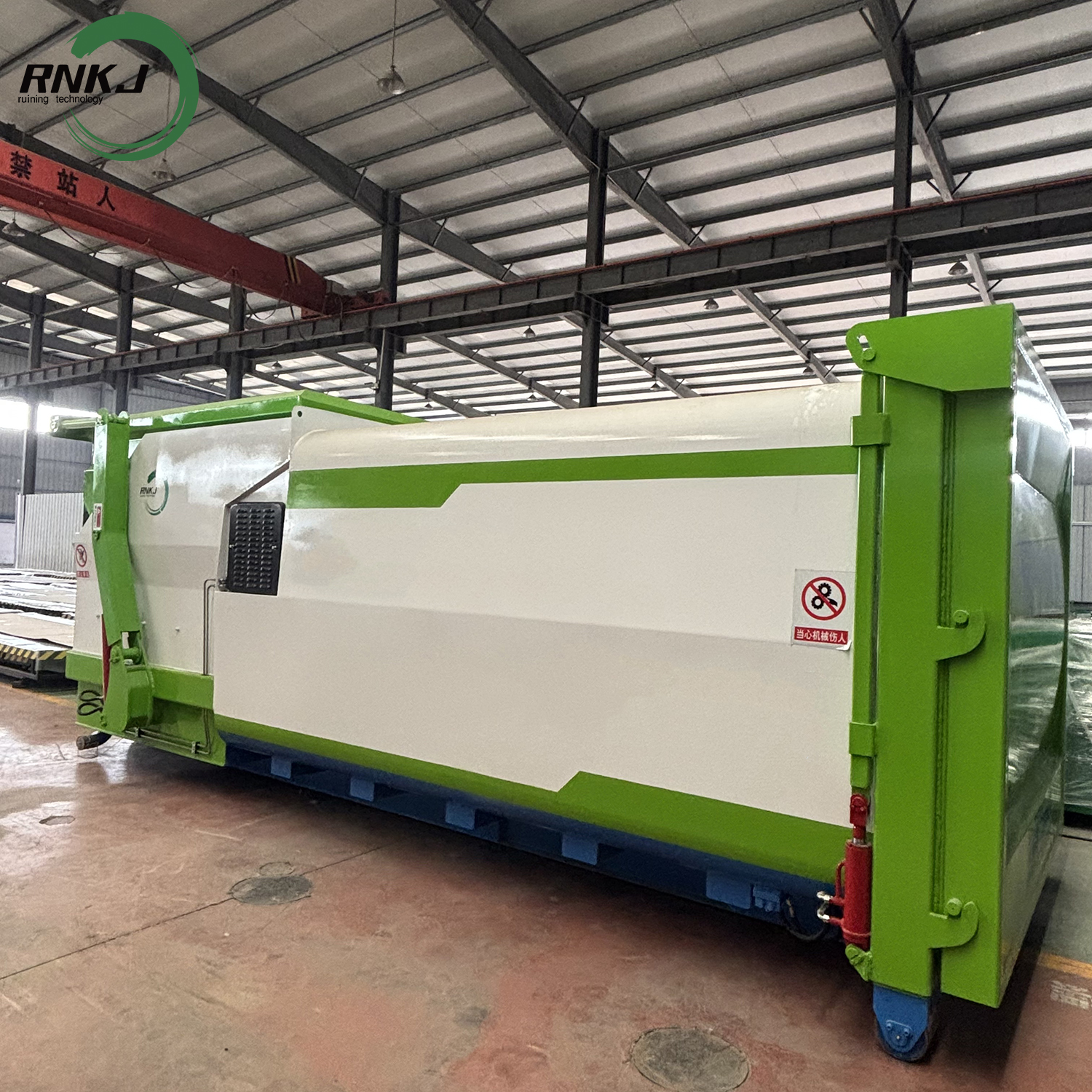
| Self-Contained Compactor | Wet/Organic Waste | The ram and the receiver box are welded into a single liquid-tight unit. The hauler takes the entire machine to the landfill and returns it. | Restaurants, hospitals, grocery stores, and food processing facilities. |
Savvy buyers look far beyond the initial sticker price. You must evaluate the internal engineering of the machine. The Hydraulic Power Unit (HPU) acts as the heart of the system. It dictates the overall crushing force. You need to verify the ram pressure. A higher pressure rating means denser loads and fewer pickups. Finally, consider cycle times based on your daily peak volume. If your facility generates sudden bursts of waste during shift changes, you need a machine with a fast 30-second cycle time to prevent bottlenecks on the dock.
Working with third-party resellers often complicates your service timelines. When a hose bursts or a limit switch fails, resellers must act as middlemen. We highly recommend partnering directly with a reputable garbage compression equipment manufacturer. Direct relationships ensure you receive immediate warranty coverage. You gain access to OEM replacement parts and skilled technicians who understand your exact machine model inside and out.
Purchasing the hardware is only the first phase. Proper installation and rigorous ongoing maintenance dictate how long your machine will survive in harsh industrial environments. Facility layouts differ wildly, meaning out-of-the-box solutions rarely succeed without minor modifications.
Not all loading docks are built the same. Facilities possess varying dock heights, spatial constraints, and traffic flows. You must require a comprehensive site survey before finalizing any order. Incorporating Custom cost-saving waste equipment ensures the unit fits your operational flow perfectly. You might need a through-the-wall chute-fed system to keep employees indoors during winter. Alternatively, you may require secure doghouse enclosures to prevent unauthorized access. Walk-on safety decks with handrails are mandatory if employees must approach the hopper from an elevated dock surface. Customizing the feed mechanism speeds up loading times and enhances worker safety.
Industrial machinery faces severe daily abuse. You must be completely transparent about the physical upkeep required. Achieving a 15-year operational lifespan requires strict adherence to preventive maintenance schedules. Facility managers must integrate specific equipment checks into their monthly SOPs.
Hydraulic Fluid Levels: Technicians must check the HPU oil levels quarterly. Low fluid causes the pump to overheat and fail prematurely.
Lubrication: You must grease all zerk fittings, door hinges, and turnbuckles to prevent metal-on-metal friction.
Structural Inspections: Operators must inspect the container weld integrity weekly. They should look for hairline cracks around the ram guide shoes.
Housekeeping: Workers must sweep debris from behind the ram plate. Trash buildup in the hydraulic cylinder area tears expensive seals and causes massive oil leaks.
Implementing these simple daily and monthly routines prevents catastrophic mid-shift breakdowns. An offline machine forces your staff to pile garbage on the ground, creating immediate health department violations.
Upgrading to centralized waste compression represents a definitive shift in facility management. You move away from managing symptoms, like overflowing bins and dirty alleys. Instead, you solve the root cause of the problem: highly inefficient volume. Removing trapped air from your trash reduces your invoice frequencies, protects your pavement, and safeguards your workers.
Your next steps should be methodical and data-driven. We recommend starting with a comprehensive 30-day waste audit. Measure your current waste volume, estimate the weekly tonnage, and review a year of historical hauling invoices. Map out how much time your staff actually spends breaking down boxes. Once you compile this data, you can solicit bids with confidence. Armed with your exact waste profile, you can deploy the right equipment and turn your disposal area into a highly efficient operational asset.
A: Equipment payback periods typically range between 6 to 18 months. This timeline depends heavily on your baseline hauling costs, local disposal rates, and the specific finance structure you choose. High-volume facilities usually see the fastest returns.
A: No. There are strict prohibitions to follow. You must never insert volatile chemicals, unapproved heavy metals, or flammable liquids. Large volumes of glass should be avoided unless the machine features specialized abrasive-resistant liners, as shattered glass destroys hydraulic seals.
A: You should wait for the chamber to reach about 50% capacity before running a cycle. Activating the machine for every single trash bag causes excessive, unnecessary wear on the electric motor and the hydraulic ram components.
A: Yes. Commercial-grade motors require 3-phase electrical setups (usually 208V, 230V, or 460V). Standard 110V wall outlets cannot provide the necessary amperage. You must factor this power requirement into your upfront installation and electrician scheduling.


