Views: 0 Author: Site Editor Publish Time: 2025-09-22 Origin: Site


As cities, industrial facilities, commercial centers, and construction sites generate increasing amounts of waste every day, efficient waste collection and transportation have become essential challenges. A Mobile Trash Compactor offers a practical and cost-effective solution by compressing waste directly at the collection point, reducing transportation frequency and lowering overall waste management costs.
But how exactly does a Mobile Trash Compactor work? In this article, we will explain the working principle, key components, operational process, and advantages of mobile waste compactors, helping businesses choose the right waste management equipment.
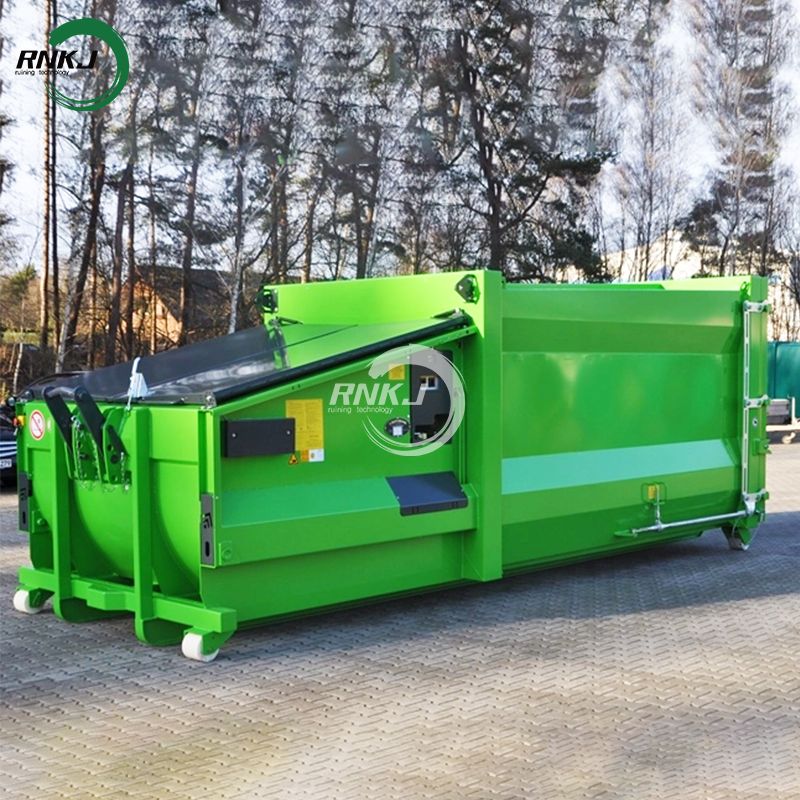
A Mobile Trash Compactor, also known as a Mobile Garbage Compactor or Portable Waste Compactor, is a self-contained waste compression unit designed to collect, compact, store, and transport solid waste in a single integrated system.
Unlike stationary compactors that require separate containers, mobile compactors combine the compaction chamber and storage container into one movable unit. Once full, the entire unit can be transported directly to a landfill, transfer station, or recycling facility.
These compactors are widely used in:
Residential communities
Shopping malls
Hotels and resorts
Airports and railway stations
Industrial parks
Manufacturing plants
Food processing facilities
Hospitals
Construction sites
Waste transfer stations
Understanding how a mobile trash compactor works begins with understanding its major components.
The hopper is the loading area where waste is deposited. It may be manually loaded or connected to waste bins, tipping devices, or conveyor systems.
This chamber contains the hydraulic ram that compresses waste materials. It is the core section responsible for reducing waste volume.
The hydraulic system powers the compaction process. It includes:
Hydraulic cylinders
Hydraulic pump
Oil tank
Control valves
Pressure sensors
The system generates high pressure to move the compaction ram.
The ram is a heavy-duty steel plate that pushes waste forward, compressing it into the storage container.
Compressed waste is stored in a sealed container until transportation.
Modern mobile waste compactors use PLC control systems to automate operation and monitor:
Pressure levels
Container capacity
Safety functions
Operating status
For wet waste applications, a drainage system collects liquid waste and prevents environmental contamination.
The working process of a Mobile Trash Compactor can be divided into several stages.
Waste is loaded into the hopper through:
Manual dumping
Wheelie bins
Front loaders
Rear loaders
Conveyor belts
The hopper serves as the entry point for all waste materials.
Many advanced mobile compactors are equipped with sensors that detect when enough waste has accumulated inside the hopper.
Once the preset level is reached, the system automatically initiates the compaction cycle.
The hydraulic pump activates and delivers pressurized hydraulic oil to the cylinder.
The hydraulic ram moves forward, applying tremendous force to compress the waste.
During this process:
Air pockets are eliminated
Waste volume is reduced
Material density increases
Depending on the waste type, volume reduction ratios can range from 3:1 to 8:1.
After compression, the waste is pushed deeper into the storage container.
The ram retracts and prepares for the next cycle.
This process repeats continuously until the container reaches its maximum capacity.
When the storage container becomes full, sensors notify operators through:
Indicator lights
Alarm systems
PLC display panels
Remote monitoring systems
This prevents overloading and ensures safe operation.
Once full, the entire mobile compactor is transported using a hook-lift truck or specialized collection vehicle.
At the disposal site:
The container is unloaded.
The rear door is opened.
Compressed waste is discharged.
The unit is cleaned and returned to service.
Without compaction, waste contains significant empty space.
For example:
| Waste Type | Volume Reduction After Compaction |
|---|---|
| Household Waste | 4:1 – 6:1 |
| Commercial Waste | 5:1 – 7:1 |
| Packaging Waste | 6:1 – 8:1 |
| Cardboard Waste | 5:1 – 7:1 |
| Plastic Waste | 4:1 – 6:1 |
By reducing waste volume, businesses can:
Decrease transportation frequency
Lower fuel consumption
Reduce labor costs
Improve site cleanliness
Increase storage capacity
A mobile trash compactor can hold significantly more waste than traditional dumpsters, reducing collection schedules and operational disruptions.
Since waste is compacted before transport, fewer trips are required to move the same amount of waste.
Sealed containers help prevent:
Odors
Leachate leakage
Pest infestation
Wind-blown litter
Compacted waste occupies far less space, making mobile compactors ideal for locations with limited waste storage areas.
Modern compactors include:
Emergency stop systems
Safety interlocks
Overload protection
Automatic operation modes
These features improve operator safety and equipment reliability.
Fewer collection trips mean lower fuel consumption and reduced greenhouse gas emissions.
Efficiently manage daily household waste while reducing collection frequency.
Handle large volumes of packaging materials, food waste, and commercial refuse.
Process manufacturing waste and production scrap efficiently.
Maintain clean environments while managing high daily waste volumes.
Equipped with leachate collection systems to handle wet waste safely.
Improve waste transportation efficiency and reduce operational costs.
When selecting a mobile garbage compactor, consider:
Different models are designed for:
General municipal waste
Recyclables
Industrial waste
Wet organic waste
Typical capacities range from:
8 m³
10 m³
15 m³
20 m³
24 m³
30 m³
Higher compaction forces provide greater waste density and transportation efficiency.
Choose a system compatible with existing waste collection equipment.
Outdoor installations may require corrosion-resistant materials and weatherproof control systems.
Modern waste management is becoming increasingly intelligent. New-generation mobile trash compactors now feature:
IoT monitoring
GPS tracking
Remote diagnostics
Automatic fill-level detection
Smart route optimization
Energy-efficient hydraulic systems
These technologies help municipalities and businesses achieve smarter and more sustainable waste management operations.
A Mobile Trash Compactor works by using a hydraulic compaction system to compress waste directly inside a transportable container. This simple yet highly effective process significantly reduces waste volume, lowers transportation costs, improves environmental hygiene, and enhances overall waste management efficiency.
Whether used in residential communities, industrial facilities, commercial centers, or waste transfer stations, a Mobile Waste Compactor provides a reliable and economical solution for handling growing waste volumes while supporting sustainable waste management goals.