
Views: 0 Author: Site Editor Publish Time: 2026-07-07 Origin: Site


In commercial waste management, construction, and municipal services, fleet efficiency and asset utilization directly dictate operational success. Operators must choose between standardized waste containment systems to handle daily material flows. Selecting the wrong system leads to stranded assets, increased cycle times, limited site access, and inflated maintenance schedules. You need equipment tailored to your specific logistical constraints.
This guide provides an objective, technical comparison between the hook lift dumpster, the traditional skip bin, and the roll off dumpster. We evaluate mechanical differences, operational trade-offs, and regional market variations. By understanding these structural and mechanical nuances, fleet managers can make data-driven equipment decisions that maximize daily pulls and minimize downtime.
System Versatility: Hook lift systems allow a single chassis to haul multiple body types (dumpsters, flatbeds, tanks, chippers), whereas skip bin trucks are generally restricted to a single operational function.
Placement Precision: A hook lift dumpster can be placed with high precision in tight, low-clearance environments, mitigating the spatial limitations often associated with cable-hoist roll off dumpsters or chain-lift skip bins.
Capital Allocation: While the initial expenditure for a hook lift truck is higher, the long-term ROI is frequently superior due to higher asset utilization, faster cycle times, and reduced driver labor costs.
Regulatory & Licensing Advantages: Smaller hook lift configurations can operate on non-CDL (Commercial Driver's License) chassis, easing the driver recruitment bottleneck compared to heavy roll-off setups.
Vendor Selection: Partnering with a certified hook lift bin manufacturer is critical to ensure structural integrity, proper steel grading, and compatibility with regional lifting standards.
Understanding the mechanical operation of each system is required to assess compatibility with existing fleet infrastructure. Driver capabilities, dumping requirements, and site conditions dictate which lifting mechanism performs best. We see many operators struggle because they buy equipment without analyzing how the mechanics fit their daily routes.
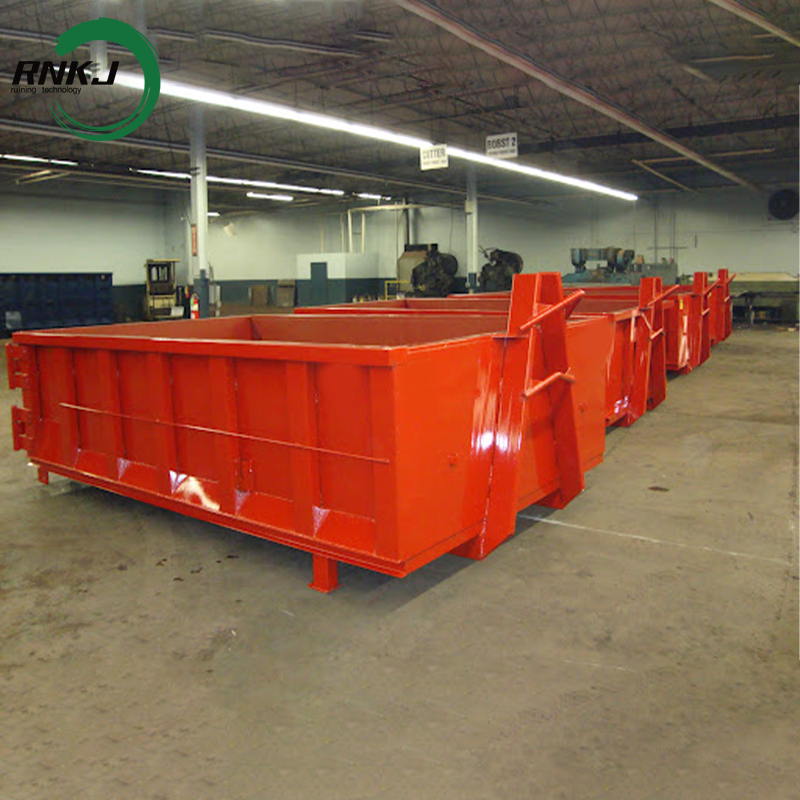
The hook lift system relies on a hydraulic articulating arm mounted to the truck chassis. This arm features a heavy-duty hook at the end. It engages a standardized curved bar called the A-frame, which is welded to the front of the container. The entire loading and unloading process happens at ground level. The operator controls the automated mechanical hook engagement directly from the cab. The hydraulic cylinders then pull the container up a sliding mechanism onto the truck bed.
This system offers dual-function capability. It loads and unloads containers horizontally, but it also functions as a standard dump truck. The hydraulic arm can achieve high-angle tipping, often reaching 50 to 60 degrees. This steep angle easily dislodges stubborn, compacted materials like wet dirt, frozen sludge, or concrete rubble. You do not have to send a worker into the bed with a shovel to clear stuck debris.
Safety remains a primary advantage here. Operators remain inside the cab during the entire loading cycle. This eliminates manual rigging, reduces exposure to moving parts, and keeps drivers away from hazardous job site traffic. When you run routes in busy urban alleys, keeping the driver in the seat prevents accidents.
The traditional skip loader uses a dual-chain or gantry lifting mechanism. This setup is highly prevalent in the UK, Australia, and parts of Europe. The truck features two large hydraulic arms that swing over the rear of the bed. Chains hang from these arms and attach to lugs on the sides of the bin.
Deployment involves a static placement process. The hydraulic arms lift the bin parallel to the ground. The system then swings the container directly behind the truck. Rear stabilizing jacks must deploy to prevent the truck from tipping backward during the lift. If the ground is soft or uneven, deploying these jacks becomes a serious safety hazard.
This system demands significant manual intervention. The driver must exit the cab, walk to the container, and manually hook heavy chains to the lifting lugs. They must also secure safety pins before operating the hydraulic levers. Tipping mechanics differ significantly from articulating arms. Skip loaders use tipping chains attached to the bottom of the bin while suspended. This method lacks precise hydraulic dump control.
The traditional cable hoist system operates differently from both articulating arms and skip loaders. A winch-and-cable mechanism pulls the container onto the truck bed. The driver must back up to the container, exit the cab, and manually attach a heavy steel cable to the front nose pull of the bin.
Cable hoists require perfectly aligned linear approaches. If the truck sits at an angle to the container, the cable can spool incorrectly or damage the guide rollers. Articulating arms offer much more forgiveness regarding approach angles. You can grab a container even if you are slightly off-center.
Furthermore, cable hoists require a steeper loading angle. The front of the container lifts high into the air before the rear wheels engage the ground or the truck rails. This steep angle often causes internal load shifts during transport and deployment. Materials can spill out the back doors if they are not perfectly secured.
| Feature | Hook Lift | Skip Bin (Chain Lift) | Cable Roll-Off |
|---|---|---|---|
| Loading Mechanism | Hydraulic articulating arm | Gantry arms with chains | Winch and steel cable |
| Driver Position | Inside the cab | Outside the cab (manual rigging) | Outside the cab (manual rigging) |
| Approach Angle | Forgiving (up to 30 degrees off-center) | Requires parallel alignment | Requires strict linear alignment |
| Dump Angle | 50 - 60 degrees | Suspended chain tipping | 45 - 50 degrees |
Aligning the physical capabilities of the waste container with the realities of urban, residential, and industrial job sites prevents operational bottlenecks. You must match the equipment to the environment. Sending the wrong truck to a tight residential driveway wastes time and fuel.
Every deployment requires a specific overhead and linear footprint. Articulating arm systems excel in confined spaces. The arm can push the container into tight warehouse bays or under low overhangs. The container slides off the back at a relatively low angle, minimizing the vertical clearance required during deployment. We frequently see these trucks operating inside parking garages where other trucks cannot fit.
Skip loaders require substantial vertical clearance. The gantry arms swing high above the truck cab to lift the bin. You cannot deploy these bins under carports, low tree canopies, or inside standard garages. Once lowered, the operator has limited ability to adjust the placement. If the bin drops two feet off the mark, the driver has to re-rig the chains to move it.
Cable hoist systems demand significant linear space. The truck must pull straight forward to drop the container. A standard 22-foot container might require 40 to 50 feet of clear space in front of the drop zone just to allow the truck to maneuver away. This makes them poorly suited for short residential driveways.
Volumetric capacity limits vary wildly between these systems. Chain-lift bins typically max out at lower volumes, generally ranging from 2 to 15 cubic yards. The physics of the swinging chain lift and the specific axle configurations of the trucks limit their maximum safe lifting capacity. Lifting heavy loads parallel to the ground creates massive stress on the truck frame.
Conversely, articulating arm and cable hoist systems easily accommodate high-volume, heavy-duty loads. You routinely see these systems handling 40+ cubic yard containers for industrial waste, demolition debris, and scrap metal. The rails support the weight evenly during the entire loading process.
Weight distribution impacts road compliance and axle weight limits. Articulating arms distribute weight evenly across the truck frame. They also offer a unique regulatory advantage. You can mount smaller configurations on Class 4 through 6 chassis. These lighter trucks bypass commercial driver licensing (CDL) requirements in many jurisdictions. Heavy cable hoist setups almost exclusively require Class 8 trucks, limiting your hiring pool to CDL-certified drivers.
A chain-lift truck serves a single purpose: moving waste bins. An articulating arm truck serves as a universal chassis. This multi-purpose capability transforms fleet operations. You do not have to buy dedicated trucks for every single task.
You can swap a waste container for a chipper body in the morning. By afternoon, you can load a flatbed for equipment transport. In winter, the same truck can carry a salt spreader or a liquid de-icing tank. This versatility maximizes year-round fleet utilization. When one sector slows down, you shift the truck to another revenue stream.
Accessory integration also differs. Articulating arm and cable hoist systems integrate seamlessly with automatic hydraulic tarping systems mounted on the truck. The driver deploys the tarp over the load from the cab. Chain-lift bins often require manual netting or manual tarping, increasing driver fatigue and cycle times.
Assessing the operational impact involves looking at daily workflows, maintenance demands, and how quickly drivers can complete their routes. Equipment that breaks down frequently or takes too long to operate destroys route profitability.
The primary advantage of articulating arm systems lies in asset utilization. Because the truck can change bodies in under two minutes, it rarely sits idle. A dedicated chain-lift truck sits idle if no waste bins need moving. You want your chassis working every single day.
Calculate the number of daily pulls your routes require. Faster loading and unloading directly translate to more pulls per shift. When drivers spend less time wrestling with cables or chains, they complete more tickets. Over a month, saving five minutes per stop adds up to dozens of extra completed jobs.
Every mechanical system requires specific maintenance schedules. Articulating arms rely on high-pressure hydraulics, mechanical slide wear pads, and the main hook. You must grease the pivot points and inspect the wear pads regularly. The solid steel arm resists severe damage under normal use. We recommend checking the hydraulic lines for chafing weekly.
Chain-lift trucks require constant inspection of lifting chains, locking pins, outrigger pads, and gantry arm pivot points. Chains stretch over time and require replacement to maintain safety standards. If a chain snaps under load, the results are catastrophic.
Cable hoist systems experience frequent wear on the steel cables. Cables drag across the ground, fray, and snap under heavy loads. Replacing a snapped cable in the field causes massive route delays. The solid steel arm of an articulating system eliminates this specific failure point entirely.
Time spent per drop-off and pick-up dictates daily route profitability. Articulating arm systems offer massive labor savings. A skilled operator completes a cycle in under two minutes. They never exit the cab. The system forgives slight misalignment, allowing faster hookups.
Manual rigging requires time. Chain-lift operators spend 5 to 10 minutes per cycle. They must exit the cab, manually hook chains, verify balance, and deploy outriggers. Cable hoist operators face similar delays dragging heavy cables and aligning the truck perfectly before winching. In bad weather, keeping the driver in the cab improves morale and speeds up the route.
Assess the drop zone for overhead wires and tree branches.
Verify the ground is level and stable enough to support the truck weight.
Align the truck chassis with the container A-frame or nose pull.
Engage the PTO and operate the hydraulic controls to lift the load.
Secure the load with the automated tarping system before transit.
Vetting suppliers ensures durability, compatibility, and safety compliance. You must partner with a certified hook lift bin manufacturer to guarantee the structural integrity of your containment assets. Buying cheap, poorly welded containers leads to dropped loads and severe liability.
Material specifications dictate container lifespan. Identify the necessary steel grade based on your specific waste type. Municipal solid waste allows for standard carbon steel like ASTM A36. Construction and demolition debris requires high-tensile steel or abrasion-resistant plates like Hardox 450. Throwing concrete blocks into a standard mild steel bin will destroy the floor in a matter of weeks.
Look for specific structural reinforcements. A quality container features reinforced A-frames, heavy-duty hinges, and gusseting on all high-stress corners. The structural C-channel subframe must withstand the immense pulling force of the hydraulic arm. If the subframe bends, the container will not slide onto the truck rails properly.
Always check the welding certifications of the manufacturer. Look for AWS (American Welding Society) standards or equivalent regional certifications. Poor welds on the A-frame or lifting lugs lead to catastrophic failures during lifting. We always inspect the continuous welds on the floor seams before accepting delivery.
Your containers must match your truck hoist specifications perfectly. Ensure the manufacturer builds to standardized hook heights. Common North American hook heights include 36-inch, 54-inch, and 62-inch configurations. A mismatch means the truck cannot lift the container. You cannot force a 54-inch hook to grab a 36-inch A-frame.
Rail width compatibility is equally critical. Verify the inside and outside rail widths. Standard outside widths are usually 36 inches or 41.5 inches. You must also specify the locking mechanisms required by your truck, whether they are inside or outside mechanical locks, or hydraulic hold-downs. If the locks do not engage, the container can slide off the truck during transit.
Address regional lifting standards before ordering. Ensure the manufacturer complies with ANSI standards in North America or the relevant safety directives in your operating region. Non-compliant equipment will fail DOT inspections and result in heavy fines.
Selecting the right waste containment system streamlines route logistics and maximizes fleet efficiency. Use these steps to finalize your equipment strategy:
Audit your current job sites to determine average vertical clearance and linear space availability.
Review your driver roster to see if utilizing non-CDL chassis with smaller articulating arm systems solves hiring bottlenecks.
Standardize your fleet specifications, ensuring all new containers match exact hook heights and rail widths.
Evaluate your daily route data to calculate how two-minute cycle times could increase your total daily pulls.
A: No, not without modifications. Standard cable containers lack the reinforced A-frame required for the articulating hook to engage. You can weld an A-frame adapter to a cable container, but the rail widths and locking mechanisms must also match the truck's specifications.
A: Most articulating arm systems can achieve a dump angle between 50 and 60 degrees. This steep angle functions exactly like a standard dump truck, allowing operators to easily discharge wet, compacted, or frozen materials without manual cleanout.
A: The gantry arm design and swinging chain mechanism limit the safe lifting capacity. Lifting massive volumes parallel to the ground creates severe stability issues for the truck chassis. Therefore, these bins generally max out around 15 cubic yards to maintain safe weight distribution.
A: It depends on the truck's Gross Vehicle Weight Rating (GVWR). You can mount smaller articulating hoists on Class 4, 5, or 6 chassis, which typically fall under the 26,000 lb GVWR threshold, allowing non-CDL operation. Larger systems on Class 7 or 8 trucks require a CDL.
A: You must measure the hook height of the specific hoist mounted on your truck chassis. Measure from the bottom of the container rail to the lifting bar inside the hook. Common standardized heights are 36 inches, 54 inches, and 62 inches.


