
Views: 0 Author: Site Editor Publish Time: 2026-05-11 Origin: Site


Transitioning from traditional open dumpsters to mechanical compaction represents a major capital decision for any facility. Rising hauling fees and stricter environmental compliance regulations heavily drive this operational shift. You can no longer rely on outdated, inefficient disposal methods. For facility managers and operations directors, a commercial trash compactor is not just a disposal bin. It serves as a critical bottleneck solution for massive waste volume reduction. Overflowing bins create dangerous safety hazards, invite pests, and drain operational budgets rapidly. Evaluating the true benefits of these mechanical systems requires analyzing direct hauling fee reductions. We will also explore risk mitigation strategies regarding sanitation and safety on your property. Finally, you will learn how to navigate facility-specific implementation realities to choose the correct heavy equipment for your daily operations.
Volume & Cost Reduction: Industrial compaction can reduce waste volume by up to 80% (ratios up to 6:1), significantly cutting weekly hauling frequency.
Risk Management: Enclosed systems eliminate pest intrusion, unauthorized scavenging (dumpster diving), and physical strain injuries associated with manual waste handling.
Equipment Alignment: Choosing between stationary and self-contained units depends entirely on your waste stream (dry vs. wet/organic).
Strategic Sourcing: Partnering with a reliable commercial garbage compactor manufacturer ensures access to custom waste management equipment tailored to specific spatial and electrical constraints.
Volume reduction drives massive financial savings immediately. You likely pay waste haulers based on pickup frequency. Standard dumpsters fill up quickly. They hold mostly empty air and bulky packaging. Industrial compaction crushes materials efficiently. It reduces waste volume by up to 80 percent. This creates a powerful 6:1 compaction ratio. You can drop hauling trips drastically. A facility needing five weekly pickups might only need one. This directly lowers your monthly contract costs.
Labor efficiency improves rapidly following installation. Manual waste handling wastes expensive labor hours daily. Employees spend significant time breaking down cardboard boxes. They take multiple trips to external bins. Staff members often wrestle overflowing trash bags into tight spaces. Mechanical compaction eliminates these tedious tasks completely. Workers simply toss intact boxes into the hopper. They press a button. The machine handles the heavy physical labor. You reclaim hundreds of annual labor hours. Teams can redirect their focus toward core operational duties.
We must also consider your corporate ESG impact. Fewer hauling trucks directly cut environmental harm. Heavy diesel trucks emit significant greenhouse gases during transit. Reducing their visits lowers your Scope 3 carbon emissions. Your sustainability metrics improve visibly. Furthermore, you can bale specific recyclables easily. Clean cardboard and plastics hold distinct market value. You transform a costly disposal process into a profitable revenue stream. Recycling organizations actively pay for condensed, uniform bales of material.
| Operational Metric | Traditional Open Dumpster | Industrial Compaction System |
|---|---|---|
| Weekly Hauling Frequency | 4 to 5 trips per week | 1 trip per week |
| Labor Time Spent Breaking Boxes | High (Manual crushing required) | Zero (Machine crushes intact boxes) |
| Carbon Footprint Impact | High (Frequent diesel truck visits) | Low (Optimized routing and fewer trips) |
| Waste Volume Profile | 80% Empty Air | Maximized Density (Up to 6:1 Ratio) |
Facilities face severe liabilities when ignoring proper waste management. Overflowing bins invite serious health risks. Liquid-tight seals completely enclose organic waste safely. They cut off food sources for rodents and insects. Typical dumpsters leak foul liquids across concrete pads. They create pungent odors quickly. Enclosed compactors contain these smells effectively. Healthcare facilities and restaurants require strict sanitation compliance. A sealed unit prevents health code violations. You protect your guests and patients from airborne pathogens.
Workplace safety requires urgent attention from operations directors. Safety managers worry about EHS compliance daily. Overflowing bins create dangerous slip-and-fall hazards. Loose cardboard piles pose severe fire risks. Staff members frequently suffer back injuries. They lift heavy bags into high-sided dumpsters manually. Mechanical loaders and low-height hoppers remove ergonomic strain. They prevent costly workers' compensation claims.
Property aesthetics directly influence your business reputation. Retailers and property managers hate dumpster overflow. Wind blows loose trash across open parking lots. Unsecured bins attract unauthorized scavenging easily. Dumpster diving creates massive liability concerns. People can injure themselves on your property. They might steal sensitive discarded data. Fully enclosed units lock securely. You maintain a pristine footprint. Tenants, customers, and site tours see a clean environment.
Common workplace hazards eliminated by mechanical compaction include:
Ergonomic strain from repetitive overhead lifting tasks.
Slip-and-fall incidents near leaky, unsealed dumpsters.
Fire hazards originating from loose combustible materials.
Pest infestations thriving around open food waste.
Lacerations from handling sharp metal or broken debris.
Equipment alignment ensures long-term operational success. You cannot buy a generic machine blindly. Facilities must match their specific waste profile. We typically categorize systems into three main architectures. Understanding these differences prevents expensive purchasing mistakes.
Stationary compactors handle dry waste exclusively. They work perfectly for retail stores and manufacturing plants. Logistics centers rely on them heavily. The hydraulic compaction unit remains permanently bolted down. Only the receiver box detaches. The hauling truck pulls this box away. Workers continue loading the hopper during pickup transitions. These units crush cardboard, plastics, and dry industrial scraps efficiently. They maximize payloads for dry recycling routes.
Self-contained compactors manage wet and mixed waste. Restaurants, hospitals, and grocery stores need these machines. They prevent organic waste leakage entirely. The entire machine operates as a single liquid-tight unit. Haulers take the complete assembly to the landfill. It empties and returns to your site. You never worry about toxic runoff staining your concrete. They often feature built-in ozone generators. These ozone systems neutralize severe odors common in food service environments.
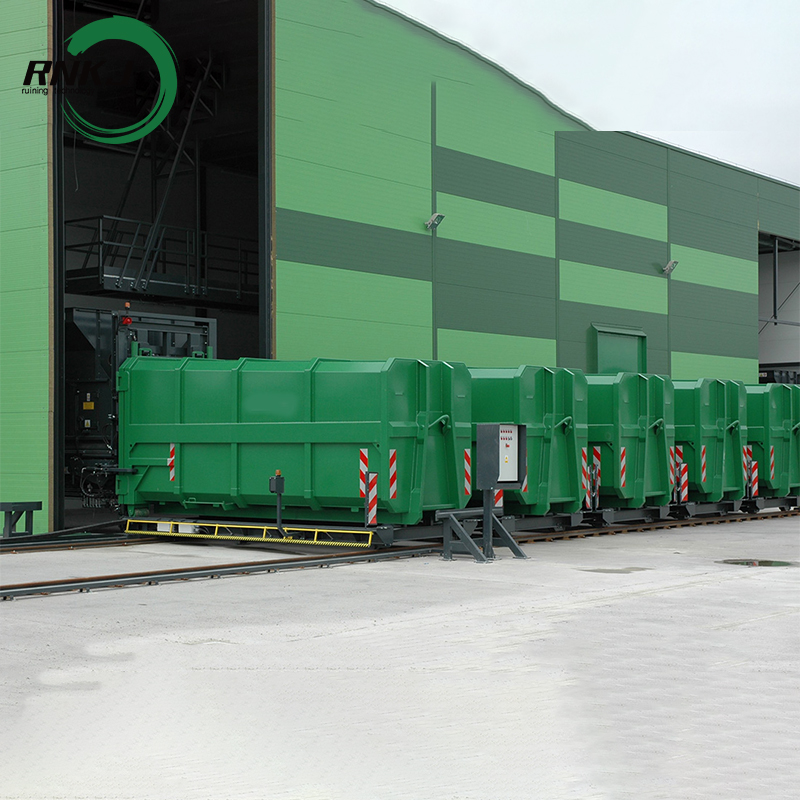
Municipalities and heavy industries face extreme volume demands daily. They often require a dedicated waste compression station. These transfer setups handle continuous heavy throughput. They easily process over 300 pounds per hour. Advanced hydraulic power units drive massive steel rams. They pack refuse into gigantic transfer trailers. We recommend these for regional logistics hubs. They keep municipal solid waste flowing seamlessly without bottlenecks.
| Compactor Type | Primary Waste Stream | Ideal Industry Applications | Key Architectural Feature |
|---|---|---|---|
| Stationary Unit | Dry Waste (Cardboard, Plastics, Wood) | Retail, Warehousing, Manufacturing | Detachable receiver box; fixed ram assembly. |
| Self-Contained Unit | Wet Waste (Food, Medical, Mixed) | Restaurants, Hospitals, Grocery Stores | 100% liquid-tight single body construction. |
| Transfer Setup | High-Volume Municipal Solid Waste | City Hubs, Large Industrial Complexes | Continuous throughput feed mechanisms. |
Off-the-shelf models often fail in complex environments. Facilities face unique structural barriers constantly. Standard footprints rarely fit perfectly into existing loading docks. You need specialized modifications to maintain efficiency. Custom waste management equipment solves these architectural puzzles smoothly.
Overcoming spatial constraints requires expert structural engineering. Multi-story residential buildings utilize chute-fed systems. Tenants drop trash down an internal shaft. It feeds directly into the ground-floor compactor. Warehouses use specialized hoppers spanning thick dock walls. Weather protection matters greatly in outdoor setups. Doghouse enclosures shield staff from rain and snow. They keep destructive moisture out of the electronic panels. You protect your investment from harsh environmental decay.
Integrating new machinery into existing workflows is critical. Modern units feature automated fullness sensors. These cellular devices monitor internal hydraulic pressure. They automatically text your hauler when the unit hits 80 percent capacity. You avoid paying for half-empty pickups. Safety interlock switches prevent operation while doors remain open. You eliminate catastrophic crushing accidents entirely. Advanced telemetry dashboards let facility managers track volume data remotely.
Vendor evaluation shapes your long-term success. You must choose supply partners carefully. A reputable commercial garbage compactor manufacturer does more than sell catalog items. They conduct thorough on-site waste characterization audits. They measure your exact wet-to-dry ratios. They calculate your peak volume hours. Avoid vendors pushing quick sales without auditing your physical site first.
Follow this structured vendor evaluation checklist before committing to a purchase:
Request a comprehensive physical waste audit at your facility.
Verify custom fabrication capabilities for specialized hoppers and chutes.
Confirm local technician availability for emergency maintenance repairs.
Review safety sensor options and remote telemetry capabilities.
Ensure the manufacturer provides documented safety training for your staff.
Proper implementation demands rigorous site preparation beforehand. You cannot drop heavy machinery onto standard asphalt. These machines generate immense ground pressure during operation. Poor site planning leads to immediate structural failures.
Infrastructure requirements dictate specific engineering upgrades. You need heavily reinforced concrete pads. We recommend a minimum 3,000 PSI concrete depth. The concrete withstands the heavy steel rollers safely. Haulers drag the steel bins across this surface weekly. Standard asphalt will crack and cave in immediately. You also require adequate 3-phase electrical access. Most commercial units need 208V or 480V dedicated power supplies. Single-phase power cannot drive industrial hydraulic pumps.
Analyze your truck clearance carefully. Haulers need wide turning radii. Overhead wires or low roofs often block the mechanical loading arms. A perfect machine becomes useless if trucks cannot reach it. You must map the entire approach path. Check for low-hanging branches or newly installed security gates.
Consistent maintenance cadence extends equipment life drastically. A well-maintained unit lasts 10 to 15 years easily. You must treat it like heavy industrial machinery. Ignore upkeep, and you face catastrophic breakdowns. Routine maintenance involves strict inspection schedules.
Technicians must check hydraulic fluid levels quarterly. Contaminated fluid destroys the pump system quickly. Staff should clean the ram tracks weekly. Debris builds up behind the compaction plate constantly. This hidden debris bends the hydraulic cylinders over time. Annual inspections should focus on structural steel integrity. Technicians must test emergency stop circuits thoroughly. Proper proactive care ensures safe, uninterrupted waste disposal operations for decades.
Implementing a mechanical trash compactor transforms facility operations significantly. Compaction slashes waste volume drastically, lowering hauling frequencies. Enclosed systems mitigate severe safety and health risks immediately. Equipment choice relies entirely on detailed waste stream analysis. Furthermore, proper site preparation prevents catastrophic infrastructure failure down the road.
Decision-makers should begin with a comprehensive waste audit today. Measure your current uncompacted volumes accurately. Track your monthly hauling costs closely over a single quarter. Determine your precise wet-to-dry waste ratios. Gather this baseline data before requesting custom equipment quotes. This data-driven approach ensures you select the optimal machine size and configuration. By matching the right technology to your specific footprint, you guarantee long-term operational resilience.
A: A commercial trash compactor typically lasts 10 to 15 years. You must maintain routine hydraulic maintenance to achieve this lifespan. Regular fluid changes, cylinder inspections, and daily clearing of debris behind the ram plate keep the system running efficiently for over a decade.
A: No. You must exclude glass, hazardous chemicals, and explosive materials. Glass shatters and destroys hydraulic seals. Chemicals and flammable items pose severe fire and safety hazards under intense pressure. You should also restrict highly rigid steel objects unless using a specialized pre-crusher unit.
A: The general threshold relies on your current hauling frequency. If you empty a standard 8-yard dumpster more than three times a week, compaction will likely yield positive operational results. High pickup frequencies indicate you are paying primarily to haul empty air.


