
Views: 0 Author: Site Editor Publish Time: 2026-09-02 Origin: Site


As urban populations continue to grow, efficient waste collection and transportation have become increasingly important for municipalities, commercial properties, industrial parks, residential communities, and public facilities. Traditional above-ground waste containers can occupy valuable space, create unpleasant odors, and require frequent collection. A Customized Underground Waste Compactor System provides a more efficient solution by combining underground waste storage with hydraulic compaction technology.
Unlike standard waste collection equipment, a customized underground waste compactor can be designed according to the available installation space, waste type, required capacity, transportation method, and operational requirements of a specific project. This makes it suitable for a wide range of municipal and commercial waste management applications.
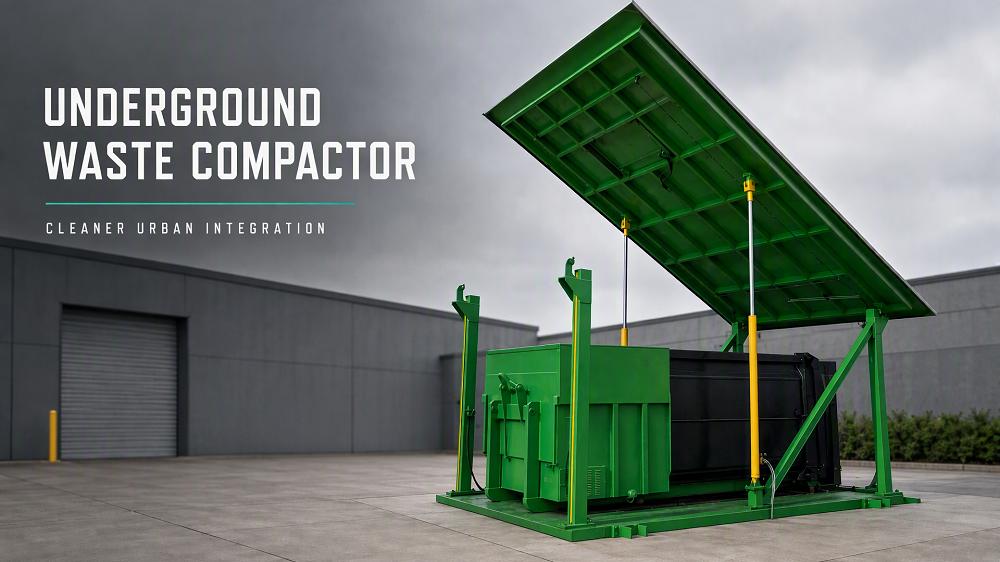
A Customized Underground Waste Compactor System is an underground waste collection and compaction solution designed according to the specific requirements of a project.
The system generally integrates a waste receiving area, underground waste container, hydraulic compression mechanism, discharge structure, hydraulic power unit, and electrical control system. Depending on the project, it can also be equipped with automatic sensing, PLC control, intelligent monitoring, odor-control features, waterproof structures, and customized lifting or transportation interfaces.
The main purpose is to collect waste underground and compress it before transportation. By reducing the volume of loose waste, the system can increase effective storage capacity and reduce the frequency of waste collection.
A customized system can be configured for different capacities, installation conditions, waste characteristics, and transportation vehicles, making it particularly useful for projects where standard equipment cannot fully meet operational requirements.
Every waste management project has different requirements. A residential community may have limited installation space, while an industrial park may generate large quantities of heavy waste. A transfer station may require high compression efficiency and compatibility with a specific transportation vehicle.
A standard underground waste compactor may not provide the ideal configuration for every site.
A customized underground waste compactor system allows key parameters to be adjusted according to the project, including:
Waste storage capacity
Overall equipment dimensions
Underground installation depth
Waste inlet design
Hydraulic compression force
Compression ratio
Discharge method
Container configuration
Transportation method
Electrical control system
PLC automation
Sensor configuration
Waterproof and leak-proof structure
Surface finishing and landscaping
Access and maintenance requirements
This project-oriented approach helps customers create a waste collection system that fits their actual operating environment.
One of the most important advantages of an underground waste compactor system is its ability to make better use of available land.
In densely populated cities, residential communities, shopping centers, hospitals, hotels, and commercial districts, above-ground waste containers can occupy valuable pedestrian or parking areas.
By installing the main waste storage and compaction equipment underground, the system reduces the amount of equipment exposed above ground.
The surface area can potentially be integrated with:
Landscaping
Pedestrian areas
Parking areas
Public spaces
Commercial facilities
Residential communities
Industrial parks
This makes a customized underground garbage compactor particularly suitable for urban environments where space is limited.
Loose waste occupies a large amount of space because of the air gaps between individual waste materials.
Hydraulic compaction significantly reduces the volume of waste by applying high compression force. This allows more waste to be stored within the same container volume.
For projects with high waste generation, a high-capacity underground waste compactor can provide a more practical alternative to multiple conventional waste containers.
Depending on the waste type and equipment configuration, customers can select different container capacities and compression specifications.
For example, the system can be customized for applications requiring:
Small-capacity underground waste collection
Medium-capacity municipal waste storage
Large-capacity commercial waste collection
Industrial waste compaction
Transfer station waste compression
The actual compression performance depends on waste composition, moisture content, equipment specifications, and operating conditions.
When waste is compacted before transportation, the storage container can hold more waste than a conventional uncompressed container of similar nominal capacity.
This can help reduce the number of collection trips required during normal operation.
For municipal sanitation departments and commercial waste operators, fewer collection trips can potentially mean:
Lower fuel consumption
Reduced vehicle mileage
Lower labor requirements
Reduced traffic congestion
Improved collection efficiency
Lower overall transportation costs
This is especially valuable for locations with large daily waste volumes.
A customized underground garbage compactor system can therefore become part of a more efficient waste collection and transportation process rather than simply functioning as a larger waste container.
Different customers generate very different quantities of waste. A small residential community and a large industrial park should not necessarily use the same equipment configuration.
Customized underground waste compactors can be designed around the expected daily waste generation of the project.
Capacity selection can consider:
Number of users
Daily waste generation
Waste collection frequency
Available underground space
Transportation schedule
Waste density
Required reserve capacity
Local sanitation requirements
This helps avoid two common problems: insufficient capacity and unnecessary equipment investment.
For projects with fluctuating waste volumes, multiple underground units can also be planned as part of an integrated waste collection system.
Waste compaction is only one part of the waste management process. The compressed waste must eventually be transported to a transfer station, treatment facility, recycling facility, or landfill.
A customized system can be designed around the customer's existing transportation method.
Depending on the project configuration, the system may be compatible with different waste transportation solutions, including specialized sanitation trucks or hook lift trucks.
For example, a hook-lift-compatible underground waste compactor can allow the waste container to be lifted and transported by a hook lift truck.
This type of configuration is particularly useful for projects that already operate hook lift vehicles and want to integrate underground waste compaction into their existing logistics system.
Traditional open or poorly sealed waste containers can expose waste to rainwater, insects, animals, and unpleasant odors.
A properly designed leak-proof underground waste compactor can help create a more enclosed waste collection environment.
Depending on the system design, features may include:
Sealed waste storage
Leak-resistant construction
Enclosed discharge structure
Waterproof components
Odor-control solutions
Automatic covers
Easy-to-clean surfaces
Because most of the waste storage volume is located below ground, visual exposure to accumulated waste can also be reduced.
This can help improve the cleanliness and appearance of residential and commercial areas.
Waste collection equipment is necessary, but it does not have to dominate the visual appearance of a public space.
A customized underground waste collection system can place most of the equipment below ground while maintaining a relatively clean surface installation.
This is particularly beneficial for:
Residential communities
Hotels
Shopping malls
Business districts
Scenic areas
Airports
Parks
Hospitals
Universities
Municipal streets
The above-ground structure can be customized to better match the surrounding environment.
For projects where landscape integration is important, an intelligent landscape underground garbage compression station can combine waste collection functionality with a more visually integrated surface design.
Modern customized underground waste compactors can incorporate hydraulic systems and intelligent electrical controls to improve operating efficiency.
A hydraulic compression mechanism provides the force required to compress collected waste. The electrical control system can manage equipment operation and safety functions.
A PLC-controlled system may support functions such as:
Automatic compression cycles
Equipment start and stop control
Sensor monitoring
Full-container detection
Safety interlocks
Fault alarms
Hydraulic system control
Operation status monitoring
Automatic sensing can further reduce the need for manual inspection.
For example, sensors can be configured to detect waste levels or equipment operating conditions and trigger specific control actions.
The exact level of automation can be customized according to the project's budget and operational requirements.
Safety is another important consideration when designing an underground garbage compactor.
A customized system can incorporate safety features according to the operating environment and applicable requirements.
Potential safety functions include:
Emergency stop buttons
Safety interlocks
Hydraulic protection
Electrical protection
Door-position detection
Overload protection
Sensor-based control
Automatic fault alarms
The control system can be configured so that certain operating conditions must be met before the compression cycle begins.
This helps create a more controlled operating process for municipal sanitation workers and facility operators.
A major advantage of customization is application flexibility.
A Customized Underground Waste Compactor System can be engineered for different waste collection environments rather than being limited to a single application.
Residential areas often require:
High storage capacity
Low visual impact
Easy waste disposal
Odor reduction
Safe operation
Regular collection compatibility
An underground compaction system can help centralize waste collection while reducing the number of conventional bins required.
Shopping centers, hotels, office buildings, and restaurants can generate large amounts of waste every day.
A customized commercial underground waste compactor can help increase storage efficiency and reduce waste collection frequency.
Industrial facilities often have higher waste volumes and more demanding operating conditions.
A heavy-duty underground waste compactor can be customized with stronger structural components, higher hydraulic force, and larger storage capacity for demanding applications.
Transfer stations require efficient waste consolidation before long-distance transportation.
A customized underground horizontal waste compactor or other high-capacity configuration can help reduce waste volume and improve transportation efficiency.
Airports, hospitals, universities, parks, and transportation hubs may require specialized waste collection systems that combine high capacity with good environmental performance.
Customization allows the equipment to be adapted to site-specific operational requirements.
A customized underground waste compactor does not necessarily need to operate as an isolated machine.
It can be designed as part of a complete waste management system.
For example, a project may integrate:
Waste Disposal → Underground Collection → Hydraulic Compaction → Container Storage → Hook Lift Transportation → Transfer Station → Waste Treatment
This creates a more organized waste collection workflow.
For large projects, multiple underground compaction units can also be distributed across different collection points and connected to a centralized waste transportation schedule.
This can help sanitation operators optimize vehicle routes and collection intervals.
Traditional waste collection can involve frequent manual inspection, container handling, and waste transfer.
A customized hydraulic underground compactor can automate many parts of the waste compression process.
Automatic sensing and PLC control can reduce the need for continuous manual operation.
Depending on the configuration, operators may primarily need to:
Monitor the equipment.
Perform routine inspections.
Respond to alarms.
Arrange transportation when the container reaches the required filling level.
Carry out scheduled maintenance.
This can improve operational consistency and help sanitation teams manage larger waste volumes with fewer manual interventions.
Not every installation site has the same dimensions or underground conditions.
A customized solution can take site limitations into account during the equipment design stage.
Important factors may include:
Available installation area
Underground depth
Ground conditions
Vehicle access
Waste disposal height
Electrical supply
Drainage requirements
Maintenance access
Building surroundings
Existing infrastructure
This is one of the key differences between a standard waste compactor and a project-specific custom underground waste compactor.
Instead of modifying the site extensively to accommodate a standard machine, the equipment can be engineered around the actual project conditions where practical.
The value of an underground compaction system should not be measured only by its initial equipment price.
A better evaluation should consider the complete operating lifecycle.
Potential long-term benefits include:
Higher waste storage efficiency
Fewer transportation trips
Lower fuel consumption
Reduced manual handling
Better space utilization
Improved site cleanliness
More efficient waste collection
Flexible transportation integration
Easier centralized management
For large municipal or commercial projects, these operational benefits can have a significant impact over the equipment's service life.
Before selecting a customized system, buyers should provide as much project information as possible.
Estimate the average and peak amount of waste produced each day.
Different materials have different compression characteristics. Municipal solid waste, commercial waste, industrial waste, and other materials may require different compression configurations.
Determine the desired storage capacity based on waste generation and collection frequency.
Provide available above-ground and underground dimensions so the equipment can be designed appropriately.
Identify whether waste will be transported using hook lift trucks, sanitation vehicles, roll-off systems, or another method.
Decide whether the project needs basic hydraulic control, PLC control, automatic sensing, remote monitoring, or other intelligent functions.
Projects in areas with high rainfall, strict hygiene standards, or sensitive surroundings may require additional waterproofing, sealing, drainage, or odor-control features.
| Feature | Customized Underground Waste Compactor | Conventional Waste Containers |
|---|---|---|
| Space utilization | Excellent | Moderate |
| Waste compaction | Yes | Usually no |
| Storage efficiency | High | Lower |
| Collection frequency | Potentially reduced | Generally higher |
| Visual impact | Low | Higher |
| Automation | Available | Limited |
| Capacity customization | High | Limited |
| Transportation integration | Customizable | Depends on container |
| Odor and leakage control | Can be optimized | Depends on container design |
| Suitable applications | Municipal, commercial, industrial | General waste collection |
The right choice depends on waste volume, project budget, available space, local regulations, and transportation requirements.
Customization is more than changing the size of a machine. A professional manufacturer should consider the complete operating process from waste disposal to final transportation.
An experienced manufacturer can help evaluate:
Waste characteristics
Required compression performance
Equipment capacity
Underground installation conditions
Hydraulic system configuration
PLC and electrical controls
Container structure
Transportation compatibility
Safety requirements
Maintenance requirements
This project-based approach helps ensure that the final customized underground waste compactor system is practical for its intended application.
A Customized Underground Waste Compactor System can provide significant advantages for modern waste management projects. By combining underground storage, hydraulic compaction, intelligent control, and flexible transportation integration, the system can help improve waste storage efficiency while reducing the frequency and complexity of waste collection.
The biggest advantage of customization is flexibility. Equipment capacity, dimensions, compression force, control system, container configuration, waterproofing, sensing technology, and transportation interfaces can be designed around the specific requirements of the project.
For municipalities, residential communities, industrial parks, commercial properties, transfer stations, and other high-volume waste generation sites, a customized underground garbage compactor can provide a practical solution for creating a cleaner, more space-efficient, and more organized waste collection process.
If you are planning an underground waste collection project, providing us with the required capacity, waste type, installation dimensions, transportation method, and automation requirements will help us develop a more suitable customized solution for your application.


