
Views: 0 Author: Site Editor Publish Time: 2026-08-31 Origin: Site


Modern cities, residential communities, commercial areas, industrial parks, and municipal sanitation projects are generating increasing amounts of waste every day. Traditional waste bins often require frequent collection, occupy valuable ground space, and can create unpleasant odors and visual pollution. For projects with limited space or high waste volumes, an underground waste compactor solution can provide a more efficient and cleaner approach to waste collection and compaction.
However, not every project has the same requirements. Waste volume, available installation space, container capacity, transportation method, control system, and site conditions can all affect the final equipment configuration.
Choosing the right Customized Underground Waste Compactor Solution therefore requires more than simply selecting a machine based on capacity. The system should be designed around the actual operating environment and waste management process.
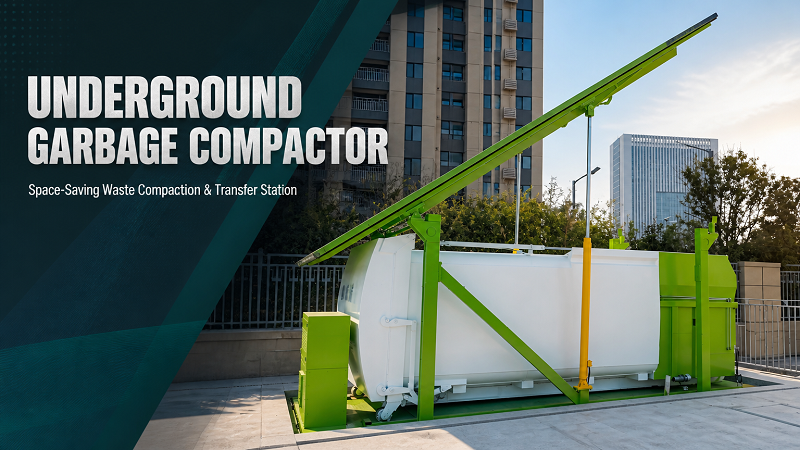
A customized underground waste compactor is a waste collection and compaction system designed according to the specific requirements of a project.
Unlike conventional above-ground garbage bins, an underground waste compactor is installed partially or completely below ground level. Waste is collected in an underground container and compressed by a hydraulic compaction mechanism, reducing the volume of waste and improving storage efficiency.
Depending on project requirements, the system can be customized with different:
Waste storage capacities
Compression ratios
Hydraulic systems
Container configurations
Garbage inlet designs
Bin lifting mechanisms
PLC control systems
Automatic sensing functions
Safety protection systems
Installation dimensions
Transportation methods
Appearance and landscape integration
This makes a Customized Underground Waste Compactor Solution suitable for a wide range of municipal, commercial, residential, industrial, and public waste management projects.
Every waste collection site has different operating conditions. A standard machine may not always fit the available installation area, waste volume, or transportation equipment.
For example, a residential community may need a compact underground garbage compactor with automatic operation, while a large industrial park may require a higher-capacity hydraulic compaction system with a stronger compression mechanism.
Customization helps ensure that the equipment matches the project's actual requirements.
A customized solution can help optimize:
Waste storage capacity
Collection frequency
Equipment footprint
Waste transportation efficiency
Labor requirements
Operating costs
Site utilization
Safety and accessibility
Instead of adapting the project to a standard machine, the equipment can be configured around the project.
The first step when choosing an underground waste compactor is to estimate how much waste the site generates.
Consider the following factors:
Number of residents or users
Number of commercial units
Industrial production volume
Waste generation per day
Peak waste generation periods
Waste collection frequency
Types of waste being collected
A small residential area may have relatively low daily waste generation, while a shopping center, hotel, industrial park, or municipal transfer station may generate much larger volumes.
The equipment capacity should provide sufficient storage between collection cycles without unnecessarily increasing the system size.
If the storage capacity is too small, the container may fill quickly and require frequent transportation. This can increase labor, fuel consumption, and transportation costs.
If the capacity is excessively large, the project may spend more on equipment and installation than necessary.
A properly designed underground garbage compactor system should balance storage capacity, compaction efficiency, and collection frequency.
Container capacity is another important factor when selecting a customized underground waste compactor.
Different projects may use different waste bins or containers, such as:
240L garbage bins
660L garbage bins
1100L garbage bins
Customized waste containers
Large-capacity underground storage boxes
For projects using standardized municipal garbage bins, the compactor can be designed with a suitable bucket or lifting mechanism to match the selected bin size.
For example, a project using 240L, 660L, or 1100L bins may require a customized feeding and lifting structure that allows waste to be transferred efficiently into the compaction chamber.
The container configuration should also consider the available space below ground and the expected waste collection frequency.
One of the biggest advantages of an underground waste compactor is its ability to compress waste before transportation.
Compression reduces the volume occupied by loose waste and allows more waste to be stored in the same physical space.
When selecting the equipment, consider:
Waste type
Waste density
Expected waste volume
Required compression ratio
Hydraulic pressure
Compaction chamber dimensions
Collection frequency
For general municipal waste, a hydraulic compaction system can significantly improve storage efficiency compared with conventional non-compacting garbage collection equipment.
For heavier or more demanding applications, a heavy-duty underground waste compactor may be more appropriate.
The compaction system should also be selected according to the actual waste characteristics rather than simply pursuing the highest possible compression force.
Underground projects are strongly influenced by site dimensions.
Before selecting equipment, measure:
Available ground area
Underground installation depth
Equipment length and width
Access routes
Surrounding buildings
Utility pipelines
Drainage facilities
Electrical connections
Maintenance access
The equipment dimensions should be compatible with the existing site.
A customized underground compactor can be designed according to the available installation space, which is particularly useful for projects located in:
Residential communities
Narrow urban streets
Commercial districts
Industrial parks
Tourist areas
Public squares
Municipal sanitation facilities
Proper site assessment can also reduce installation difficulties and avoid conflicts with underground infrastructure.
Hydraulic power is one of the key components of an underground hydraulic waste compactor.
The hydraulic system provides the force required for waste compression and may also operate lifting or other mechanical functions.
When evaluating the hydraulic system, consider:
Hydraulic power requirements
Cylinder configuration
Operating pressure
Cycle time
Hydraulic oil tank capacity
Component quality
Maintenance requirements
Protection against overload
A reliable hydraulic system should provide stable compression performance during repeated operating cycles.
For projects with high daily waste volumes, the hydraulic system should be designed for frequent operation and long-term durability.
Different projects have different requirements for automation.
A basic underground waste compactor can use manual controls, while more advanced systems can integrate automatic sensing and PLC control.
A PLC-controlled underground waste compactor can coordinate different operating functions and provide more precise control over the compaction process.
Depending on the project, automation may include:
Automatic waste detection
Bin or container detection
Automatic compaction
Full-load monitoring
Equipment status monitoring
Safety interlocks
Fault alarms
Emergency stop functions
Remote monitoring options
For smart city projects and modern residential communities, automatic control can improve operational convenience and reduce unnecessary manual intervention.
Not all waste has the same characteristics.
Before choosing a customized underground waste compactor, determine what type of waste will be processed.
Typical applications include:
Municipal solid waste
Household garbage
Commercial waste
Industrial waste
Food-related waste
General non-hazardous waste
Waste composition affects the compaction mechanism, container design, sealing requirements, and maintenance strategy.
For wet or high-moisture waste, a leak-proof underground waste compactor may be particularly important.
The equipment can be configured with appropriate sealing and drainage considerations to help reduce leakage and keep the surrounding area cleaner.
Underground waste collection systems are often installed in areas where cleanliness and appearance are important.
Residential communities, hotels, commercial centers, and tourist destinations may require additional environmental protection features.
A customized system can incorporate:
Sealed waste containers
Leak-resistant structures
Closed loading areas
Odor-control solutions
Drainage systems
Easy-clean surfaces
Enclosed storage areas
These features can help improve the overall sanitation conditions around the waste collection point.
For projects with strict environmental requirements, the customized underground waste compactor solution should be designed with both waste storage and environmental management in mind.
The waste collection process does not end when the garbage is compressed.
The full container or waste storage unit eventually needs to be transported to a disposal facility, transfer station, or treatment plant.
Therefore, transportation should be considered during the initial equipment design.
Depending on the project, transportation may involve:
Hook lift trucks
Roll-off waste containers
Municipal waste collection vehicles
Specialized transportation equipment
For projects using hook lift transportation, the underground waste compactor can be customized to match the dimensions and lifting requirements of the hook lift container.
This can create a more efficient workflow:
Waste Loading → Underground Storage → Hydraulic Compaction → Container Filling → Hook Lift Transportation → Waste Transfer or Treatment
Matching the compactor with the transportation system can help reduce handling time and improve overall waste collection efficiency.
An underground waste compactor should not only perform well during normal operation; it should also be easy to inspect and maintain.
Before purchasing equipment, consider access to:
Hydraulic cylinders
Hydraulic valves
Electrical components
PLC control cabinet
Sensors
Push head
Compression chamber
Garbage container
Lifting mechanism
Routine maintenance may include hydraulic system inspection, lubrication, sensor checks, electrical inspection, cleaning, and structural inspection.
A well-designed system should provide practical access for technicians while maintaining the underground installation structure.
Safety is particularly important for automated waste compaction equipment.
A customized underground waste compactor can incorporate multiple safety functions, such as:
Emergency stop buttons
Safety interlocks
Overload protection
Protective barriers
Door-position detection
Sensor-based operation
Hydraulic pressure protection
Electrical protection
Maintenance safety controls
If the equipment is installed in a public area, additional protection may be required to prevent unauthorized operation or accidental access to moving components.
Safety requirements should therefore be considered from the beginning of the design process rather than added after installation.
The surrounding environment can also affect equipment selection.
For outdoor installations, the system may need to withstand:
Rain
Humidity
Dust
Temperature changes
Frequent operation
Vehicle traffic
Long-term outdoor exposure
Material selection, surface treatment, sealing, electrical protection, and structural design should be evaluated according to the local climate and operating conditions.
For coastal or high-humidity locations, additional corrosion protection may be beneficial.
A standard underground waste compactor may be suitable for projects with conventional requirements.
However, customized equipment can provide greater flexibility.
| Feature | Standard Solution | Customized Solution |
|---|---|---|
| Equipment dimensions | Fixed | Adjustable according to project |
| Waste capacity | Standard options | Configurable |
| Bin compatibility | Limited options | Can match specified bins |
| Control system | Standard | Customizable |
| Hydraulic system | Standard configuration | Configurable |
| Installation conditions | General sites | Site-specific design |
| Transportation | Standard | Can match transport equipment |
| Appearance | Standard | Can be adapted to project |
| Automation | Basic/standard | Advanced options available |
The right choice depends on the project's requirements, budget, installation conditions, and expected operating volume.
To develop an appropriate solution, customers should provide as much project information as possible.
Useful information includes:
Project application – residential, municipal, commercial, industrial, etc.
Estimated daily waste volume
Waste type
Required storage capacity
Garbage bin size – such as 240L, 660L, or 1100L
Available installation dimensions
Required compression performance
Power supply
Preferred control method
Transportation method
Local environmental conditions
Special safety requirements
Required installation quantity
Preferred appearance or landscape requirements
Providing this information allows the equipment manufacturer to recommend a more suitable configuration instead of offering a generic machine.
A customized system can provide several practical benefits for modern waste management projects.
Installing the waste storage and compaction equipment underground reduces the amount of equipment occupying valuable surface space.
Hydraulic compaction reduces the volume of loose waste, allowing more waste to be stored before collection.
Higher storage efficiency can potentially reduce the number of collection trips required, depending on waste generation and operating conditions.
Underground installation and enclosed waste storage can help reduce visual pollution and improve the appearance of waste collection areas.
Equipment dimensions, capacity, control systems, lifting mechanisms, and other components can be configured according to the project.
PLC control, sensors, automatic operation, and safety systems can help simplify daily waste collection operations.
Choosing the right manufacturer is just as important as selecting the equipment configuration.
Look for a supplier that can provide:
Customized engineering solutions
Hydraulic system expertise
PLC and electrical control integration
Different equipment capacities
Garbage bin compatibility
Installation support
Technical documentation
Spare parts
After-sales service
Project-specific design
A manufacturer with experience in different municipal and commercial waste management applications can better understand the challenges associated with underground installation.
It is also useful to request technical drawings and equipment specifications before placing an order. This allows the customer to confirm dimensions, capacity, power requirements, transportation compatibility, and installation requirements.
Choosing the right Customized Underground Waste Compactor Solution starts with understanding the entire waste management process—not simply selecting a compactor based on its capacity.
Waste generation, container size, compression requirements, installation space, hydraulic performance, automation level, waste characteristics, environmental conditions, transportation methods, maintenance, and safety should all be evaluated together.
For residential communities, commercial areas, industrial parks, municipal sanitation projects, and other high-density waste collection locations, a properly engineered underground waste compactor system can provide a practical combination of high-density storage, efficient compaction, space saving, and automated waste handling.
The best solution is ultimately the one designed around the project's actual conditions. By working with an experienced manufacturer and providing detailed site and operational information, customers can develop a customized underground garbage compactor system that better matches their waste volume, installation environment, transportation requirements, and long-term waste management goals.


