
Views: 0 Author: Site Editor Publish Time: 2026-06-05 Origin: Site


Facility managers often face a critical bottleneck when scaling sanitation operations. They deploy resources on the wrong floor cleaning asset. Using a scrubber to pick up loose debris damages squeegees. It also clogs sensitive vacuum systems. Conversely, relying on a sweeper for sticky spills leaves unhygienic residue behind. Choosing incorrectly ruins equipment and severely compromises facility safety. You need proper alignment between your machinery and your floor conditions. This article provides an objective breakdown of mechanical differences and application suitability. You will learn how to evaluate your operational environment effectively. We outline essential implementation risks to help you confidently shortlist the exact machine for your facilities.
Primary Function: An electric sweeper machine collects dry, loose material and controls airborne dust; an electric floor scrubber machine uses water, chemicals, and agitation to remove ingrained grime and grease.
Operational Sequence: Facilities with both heavy debris and floor stains typically must sweep *before* scrubbing (or invest in a hybrid cylindrical sweeper-scrubber).
Cost Drivers: Scrubbers generally carry higher maintenance costs due to water management systems, squeegee replacements, and chemical consumption.
Compliance: Sweepers are critical for OSHA respirable dust compliance; scrubbers are essential for slip-and-fall prevention and sanitation audits.
Understanding mechanical workflows prevents catastrophic equipment failure. Each machine utilizes highly specialized engineering to tackle distinct waste profiles.
An electric sweeper machine acts as an industrial broom and dustpan system. It captures bulk debris while neutralizing airborne particulates. The engineering relies on three distinct actions.
Main Broom Agitation: Rotating cylindrical main brushes flick heavy debris upward into a collection hopper.
Edge Cleaning: Side brooms spin inward. They pull dirt away from walls, edges, and pallet racking.
Dust Control: An integrated vacuum filtration system traps fine particulate matter. This prevents hazardous dust clouds during operation.
An electric floor scrubber machine cleans hard surfaces through liquid agitation. It removes bonded soils, oils, and chemical spills. The mechanics follow a precise sequence.
Solution Dispensing: The machine drops a precise mixture of water and detergent directly onto the floor.
Active Agitation: Disc or cylindrical brush heads spin rapidly to lift bonded soils from the surface.
Recovery System: A rear squeegee channels dirty water into a centralized path. A powerful vacuum system extracts this slurry, leaving floors immediately dry and safe.
Common Mistake: Many operators force a standard disc scrubber to act as a sweeper. This leads directly to catastrophic vacuum motor failure. Standard scrubbers cannot ingest solid objects. Pallet splinters, bolts, and gravel will instantly tear squeegee blades. Once the blade tears, the vacuum loses suction. Solid debris then travels up the recovery hose and destroys the vacuum fan blades.
Selecting the right asset requires strict evaluation of your facility soil types. You must match the machine to the material.
Dedicated sweepers excel in dry, dusty environments. They handle high-volume bulk waste without smearing.
Target materials: Wood chips, pallet splinters, gravel, warehouse dust, paper scraps, and manufacturing shavings.
Ideal environments: Paved outdoor lots, raw concrete warehouse floors, lumber yards, and high-dust manufacturing zones.
Limitations: They are completely ineffective on wet spills. Oil, grease, or sticky organic matter will destroy paper-based filters and mat the bristles.
Scrubbers dominate environments requiring deep sanitation. They restore floor traction and remove sticky residues.
Target materials: Forklift tire marks, oil spills, dried food and beverage residue, mud, and fine ingrained dirt.
Ideal environments: Epoxy-coated floors, tile, hospital corridors, food processing plants, and retail aisles.
Pre-requisite: Floors must be pre-swept to remove large debris. You can only skip this step if you operate a specialized cylindrical scrubber designed to catch small solids.
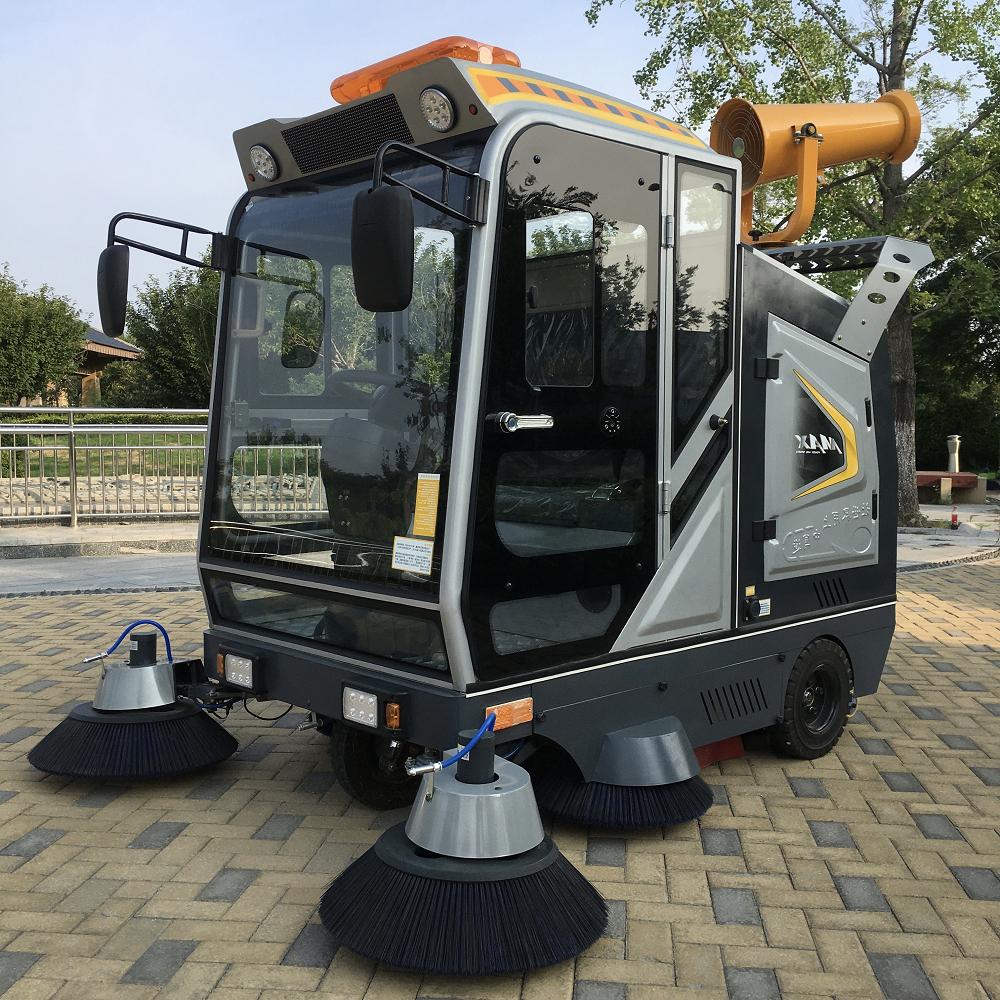
Machine capacity dictates operational efficiency. Choosing between walk-behind and ride-on units depends heavily on your facility layout.
You must size your equipment correctly to maintain realistic cleaning schedules. Undersized machines exhaust operators, while oversized machines cannot navigate tight spaces.
Walk-behind units: Best suited for tight aisles and highly congested areas. They effectively service spaces under 50,000 square feet.
Ride-on units: Necessary for wide-open spaces exceeding 75,000 square feet. They meet required productivity rates and drastically reduce labor hours.
You must calculate turning radiuses based on your specific warehouse racking. Retail layouts also demand precise maneuverability. Walk-behind machines turn on a dime. Ride-on units require wider intersecting aisles for safe U-turns. Always measure your tightest bottleneck before selecting a chassis size.
Analyzing operational productivity reveals the true value of larger machines. High-capacity ride-on units clean much faster than walk-behind models. They offset initial deployment scale within 12 to 18 months through drastically reduced operator hours. Faster cleaning allows your staff to focus on other critical facility maintenance tasks.
Equipment lifespan depends on daily maintenance discipline. Different mechanical systems present completely different operational risks.
Understanding daily upkeep prevents unexpected downtime. Managers must build these routines into daily shift schedules.
| Machine Type | Daily Routine Check | Wear Parts to Monitor | Risk of Neglect |
|---|---|---|---|
| Electric Sweepers | Empty hopper, shake panel filter | Main broom bristles, side brooms, dust filters | Filter clogging leads to severe dust blowback in the facility. |
| Electric Scrubbers | Drain and flush recovery tank, rinse squeegee | Squeegee blades, scrub brushes/pads, vacuum hoses | Bacterial growth in tanks causes severe odors; torn squeegees leave slip hazards. |
Modern cleaning fleets impact your corporate environmental, social, and governance (ESG) goals. Battery technology plays a huge role here. Evaluating battery types depends on shift lengths and charging discipline. Lead-Acid and AGM batteries require strict charging cycles and regular watering. Lithium-Ion batteries allow opportunity charging during short breaks without degrading the battery memory.
Water consumption presents another crucial metric. Modern scrubbers mitigate water waste through precise flow controls. Many advanced units recycle water on-board. This significantly aligns with corporate ESG goals regarding water conservation.
Staff resistance often derails new equipment rollouts. Sweepers generally have a much lower learning curve. Operators simply turn them on and drive. Scrubbers demand higher technical engagement. They require strict training on chemical dilution ratios. Operators must also understand post-shift machine hygiene to prevent bacterial buildup in the recovery tanks.
Executing a sound commercial cleaning equipment comparison guarantees operational success. Use this straightforward framework to diagnose your exact facility needs.
Scenario A: High Dry Debris, No Stains. Choose a dedicated electric sweeper. This rapidly controls dust and removes bulk waste.
Scenario B: High Liquid/Grease, Pre-swept Floors. Choose an electric floor scrubber (disc type). This provides maximum down-pressure for deep stain removal.
Scenario C: Moderate Dry Debris + Ingrained Grime. Consider a cylindrical brush scrubber. These units sweep small debris into a catch tray while simultaneously scrubbing the floor.
Scenario D: Heavy Debris + Heavy Grime. This environment requires a two-machine fleet. Alternatively, you can deploy a heavy-duty industrial sweeper-scrubber combination unit to handle both extremes simultaneously.
Best Practice: The Demo Mandate. Never guess how a machine will perform. You must test equipment on your actual facility floors. Introduce it to your specific debris profile before finalizing a decision. Real-world friction varies wildly from showroom specifications.
The choice between sweeping and scrubbing is rarely a matter of preference. It is dictated strictly by floor type, debris profile, and compliance needs. Attempting to scrub un-swept floors leads to equipment damage. Relying on sweepers for grease removal compromises sanitation.
Your next steps require precise facility auditing. Audit your floor conditions and identify your dominant debris types. Measure your tightest aisles to determine chassis constraints. Calculate your labor availability to decide between walk-behind and ride-on units. Finally, request an on-site demonstration from an authorized dealer to validate your selection in real-world conditions.
A: Standard disc scrubbers cannot handle solid debris and will quickly clog. Cylindrical scrubbers can handle small, loose debris like screws or pebbles. However, they cannot replace a dedicated sweeper for bulky materials like pallet shards or heavy gravel.
A: Yes. Because they are battery-powered, they emit zero exhaust fumes. This makes them perfectly ideal and safe for enclosed warehouses, retail spaces, and manufacturing floors, unlike propane-powered alternatives.
A: Run times typically range from 2.5 to 5 hours. Actual time depends heavily on the machine size, battery type (Lithium-ion versus AGM), down-pressure settings, and overall floor friction during the cleaning route.
A: Electric sweeper machines generally have lower maintenance demands. They lack water tanks, solution lines, and sensitive squeegee blades. Scrubbers require frequent wear-part replacements and daily tank flushing, making their operational upkeep slightly more complex.


