
Views: 0 Author: Site Editor Publish Time: 2025-10-09 Origin: Site


A Garbage Compression Station is an essential piece of equipment in modern waste management systems. It is widely used in municipalities, residential communities, industrial parks, commercial centers, transfer stations, and sanitation departments to reduce waste volume, improve transportation efficiency, and lower operating costs.
By utilizing advanced hydraulic technology, a Garbage Compression Station can compress large volumes of municipal solid waste into dense blocks, significantly reducing transportation frequency and landfill expenses. However, achieving maximum efficiency and extending equipment lifespan requires proper operation and maintenance.
This comprehensive guide explains the correct procedures for operating a Garbage Compression Station, including pre-operation inspections, waste loading, compression procedures, unloading processes, maintenance requirements, and safety precautions.
A Garbage Compression Station is a waste processing facility equipped with a hydraulic compaction system that compresses loose garbage into a smaller volume before transportation.
A typical Garbage Compression Station includes:
Hydraulic power unit
Compression chamber
Compression ram
Waste receiving hopper
Control system
Leachate collection system
Discharge door
Container or transfer trailer
These components work together to increase waste density and improve overall waste handling efficiency.
| Benefit | Description |
|---|---|
| Reduced Waste Volume | Compresses waste by up to 3–5 times |
| Lower Transportation Costs | Fewer collection and transfer trips |
| Improved Hygiene | Reduced odor and litter |
| Environmental Protection | Less leachate leakage and pollution |
| Labor Savings | Automated waste handling |
| Increased Efficiency | Faster waste processing |
Before starting a Garbage Compression Station, operators should conduct a complete inspection to identify potential hazards and ensure the equipment is functioning correctly.
The hydraulic system is the core of any Garbage Compression Station.
Check for:
Proper hydraulic oil level
Oil contamination
Hose damage
Loose fittings
Oil leakage around cylinders and valves
Insufficient hydraulic oil can lead to reduced compaction force and severe equipment damage.
Verify that:
Power cables are intact
Control panel functions properly
Emergency stop buttons are operational
Sensors and indicators work correctly
Electrical failures may cause unexpected shutdowns and safety hazards.
A well-functioning leachate system prevents environmental contamination.
Inspect:
Leachate storage tank
Drainage pipelines
Pumps
Filters
Remove any blockage before operation.
Ensure:
Guide rails are clean
No foreign objects are present
Chamber walls are undamaged
Discharge door seals are intact
Any obstruction can interfere with the movement of the compression ram.
Proper waste preparation greatly improves the performance of a Waste Compression Station.
Never load:
Batteries
Paint cans
Chemical waste
Flammable materials
Explosive materials
Medical waste
These materials may damage the equipment or create safety risks.
Bulky items should be reduced in size before entering the compression chamber.
Examples include:
Furniture
Wooden pallets
Large cartons
Construction debris
Smaller pieces compress more effectively and reduce the risk of jams.
Operators should remove:
Concrete blocks
Metal bars
Large steel components
Stones
These materials can damage the compression ram and hydraulic cylinders.
The loading stage directly affects the efficiency of a Garbage Compactor Station.
Do not overload the chamber.
Waste should remain approximately 10–15 cm below the top edge of the compression chamber.
Overloading may result in:
Waste overflow
Excessive hydraulic pressure
Equipment wear
Reduced compaction efficiency
Before beginning compression:
Turn on the power supply.
Start the hydraulic pump.
Allow a 3–5 minute warm-up period.
Monitor system pressure.
This procedure helps stabilize oil temperature and pressure.
Press the compression start button.
The hydraulic ram will gradually move forward, compressing the waste.
During operation, monitor:
Hydraulic pressure
Compression speed
Control panel indicators
Equipment noise
Normal operating pressure is generally between 15 MPa and 30 MPa, depending on the model.
Immediately stop operation if:
Unusual noises occur
Excessive vibration is detected
Hydraulic pressure spikes suddenly
The ram becomes stuck
Use the emergency stop button and inspect the equipment before restarting.
One of the primary goals of a Municipal Waste Compression System is maximizing waste density.
After each compression cycle:
The ram automatically retracts.
Additional waste can be loaded.
Compression can be repeated multiple times.
This process continues until the desired density level is achieved.
Benefits include:
Reduced transportation frequency
Lower fuel consumption
Improved transfer station efficiency
Reduced carbon emissions
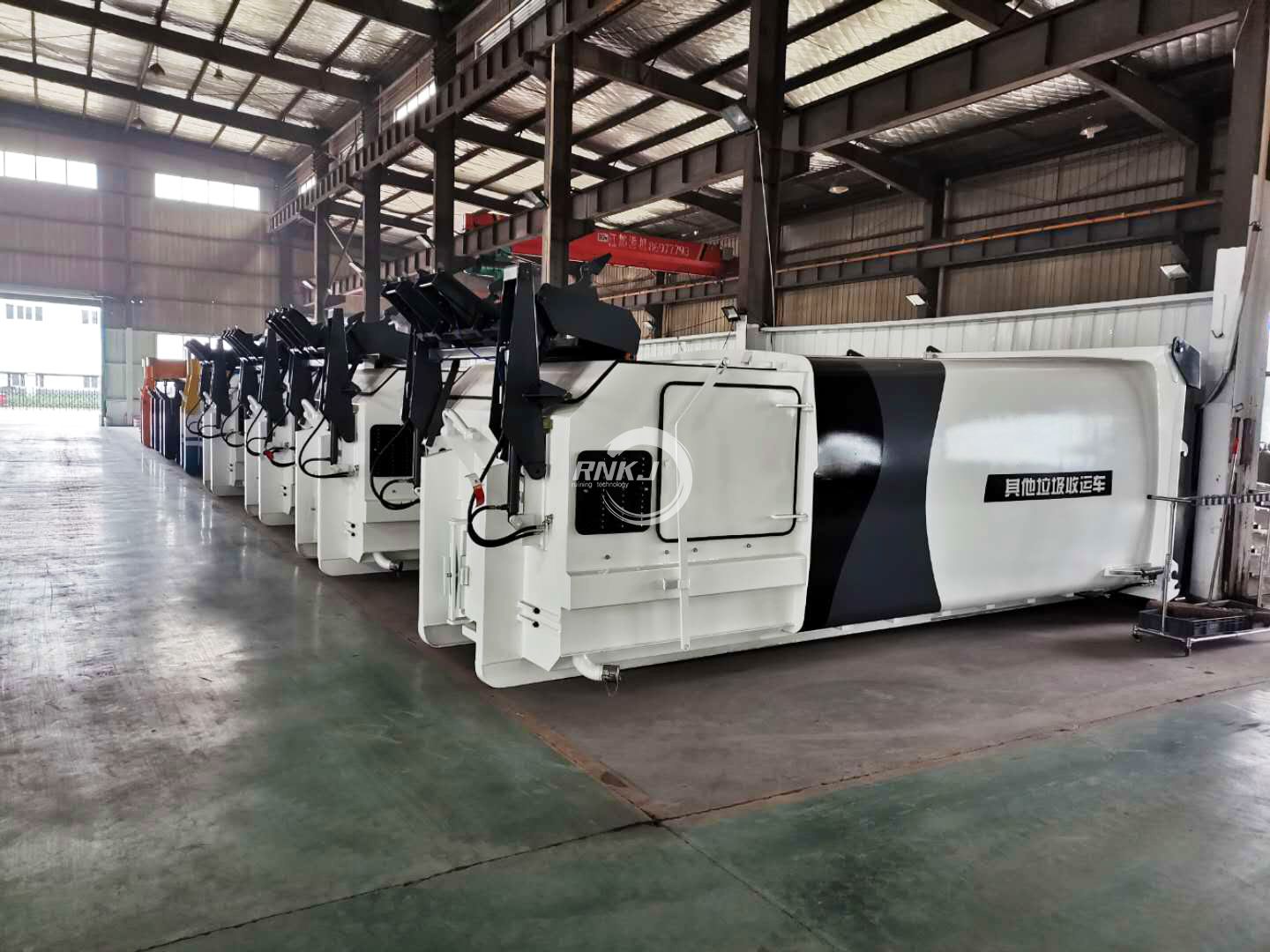
After compression, the waste must be transferred safely into a collection container or transport vehicle.
Before unloading:
Park on level ground
Engage the parking brake
Use wheel chocks
Verify container alignment
Proper positioning minimizes operational risks.
Connect the transport vehicle to the Garbage Compression Station using a sealed interface.
This helps prevent:
Waste leakage
Odor release
Leachate spillage
Use slow-opening mode whenever possible.
Compressed waste contains stored pressure and may shift suddenly.
A gradual opening process improves safety.
Observe waste movement carefully.
If residual waste remains:
Activate the pushing ram
Use the automatic ejection system
Never use metal rods or tools to pry waste from the chamber.
This can damage internal surfaces and seals.
Regular maintenance significantly extends the service life of a Garbage Compression Station.
Remove:
Residual waste
Leachate buildup
Dirt and debris
Recommended cleaning areas:
Compression chamber
Receiving hopper
Conveyor system
Discharge door
Clean equipment performs more efficiently and experiences fewer failures.
Apply high-quality grease to:
Guide rails
Hinges
Bearings
Sliding surfaces
Weekly lubrication reduces wear and extends component life.
Check:
Cylinders
Pumps
Valves
Hydraulic hoses
Replace damaged components immediately.
Quarterly inspections should include:
Terminal tightening
Sensor testing
Control panel verification
Cable inspection
Reliable electrical systems ensure uninterrupted operation.
Dirty filters reduce hydraulic efficiency.
A preventive maintenance schedule should include:
Monthly filter inspection
Regular filter replacement
Hydraulic oil quality testing
Many failures occur due to improper operation.
Avoid the following mistakes:
Can cause:
Hydraulic overload
Increased wear
Reduced productivity
May result in:
Equipment damage
Fire hazards
Safety incidents
Minor leaks often develop into major system failures.
Neglecting routine maintenance significantly shortens equipment lifespan.
Correct operation of a Garbage Compression Station provides several long-term benefits:
Increased equipment lifespan
Lower maintenance costs
Improved workplace safety
Higher waste processing efficiency
Reduced environmental impact
Lower transportation expenses
By following the principles of inspection before operation, safe compression during operation, and maintenance after operation, operators can maximize the performance and reliability of any Garbage Compression Station.
A modern Garbage Compression Station plays a critical role in efficient waste collection, transfer, and disposal. Proper equipment inspection, waste pre-treatment, controlled loading, safe unloading, and regular maintenance are essential for achieving maximum performance.
Whether used in municipal waste transfer stations, industrial facilities, commercial centers, or residential communities, a well-maintained Garbage Compression Station can significantly reduce waste management costs while improving environmental sustainability and operational efficiency.
By implementing best practices and preventive maintenance programs, organizations can ensure safe, reliable, and cost-effective operation for many years.


